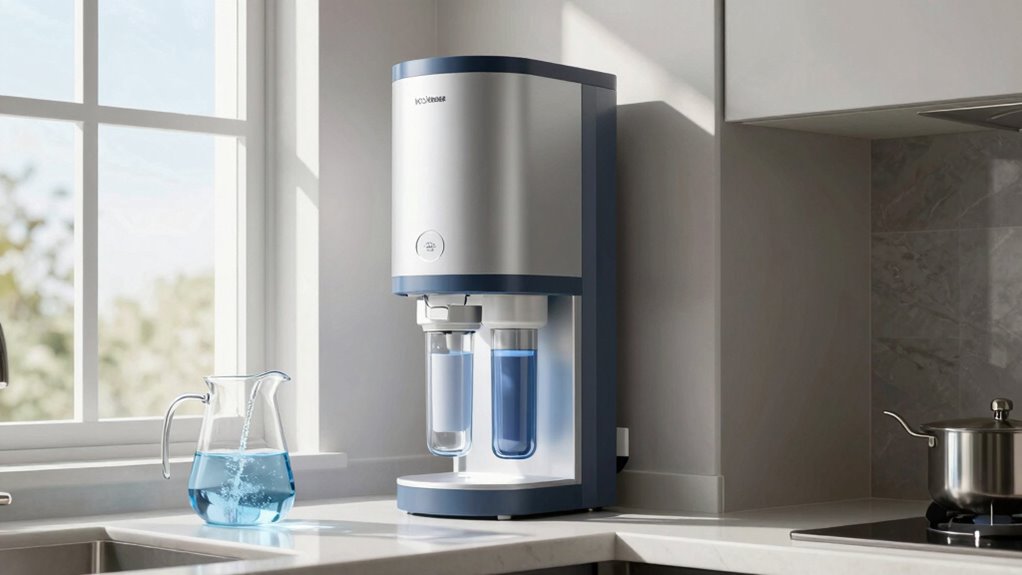

A whole-house water filtration system treats all water entering your home, fixing issues like bad odors, chlorine taste, and sediment. It effectively removes contaminants such as heavy metals, pesticide residues, and volatile compounds. However, it may not fully eliminate viruses, certain chemicals, or all odors. System limitations mean some pollutants might persist. To better understand which problems your system can solve—and its potential shortcomings—keep exploring how to choose the right solution for your needs.
Key Takeaways
- Whole-house systems effectively remove chlorine, sediment, heavy metals, and reduce odors, improving overall water quality throughout your home.
- They can address pH imbalances and eliminate sulfur smells, enhancing taste and pipe safety.
- Standard systems may not fully remove pesticides, viruses, or emerging contaminants, requiring specialized treatment.
- Limitations include potential inability to eliminate all chemicals and microorganisms, necessitating additional or alternative solutions.
- Regular maintenance and understanding system capacity are essential for optimal performance and water safety.

Express Water 3-Stage Whole House Water Filter System, Reduces Heavy Metals, Scale, Chloramine, Chlorine, PFAs, Lead & Arsenic, Free-standing Stainless Steel Frame & 3 Pressure Gauges
WHOLE HOUSE WATER FILTRATION: Notice the difference immediately with 3-stage water filtration process throughout your home. From every…
As an affiliate, we earn on qualifying purchases.
As an affiliate, we earn on qualifying purchases.
What Is Whole-House Water Filtration and How Does It Work?
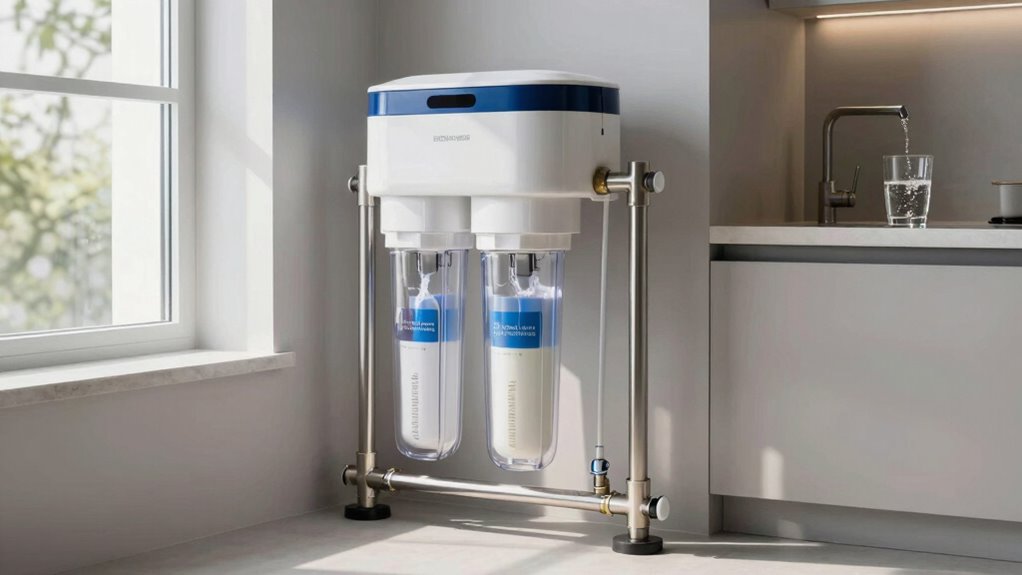
Whole-house water filtration systems are designed to treat all the water entering your home, ensuring clean and safe water from every faucet and appliance. These systems often include features like pH adjustment to maintain water’s acidity or alkalinity, improving taste and preventing pipe corrosion. Odor control is also a key benefit, removing unpleasant smells caused by sulfur, chlorines, or organic compounds. As water flows through the system, filters and conditioners work together to remove contaminants, balance pH levels, and eliminate odors. This extensive approach means you won’t need separate filters for individual fixtures. Instead, you get consistent water quality throughout your home, making daily routines safer and more pleasant. Regular maintenance of filter systems is essential to keep them functioning effectively over time. Incorporating water quality testing into your routine can help ensure your system continues to operate optimally. Proper system maintenance not only extends the lifespan of your filtration setup but also helps prevent buildup of microplastics and other pollutants. Additionally, choosing a system with advanced filtration technologies can enhance the removal of emerging contaminants. Proper system maintenance further extends the lifespan of your filtration setup and preserves water quality. Whole-house filtration offers a convenient, effective way to improve water quality from the source itself.
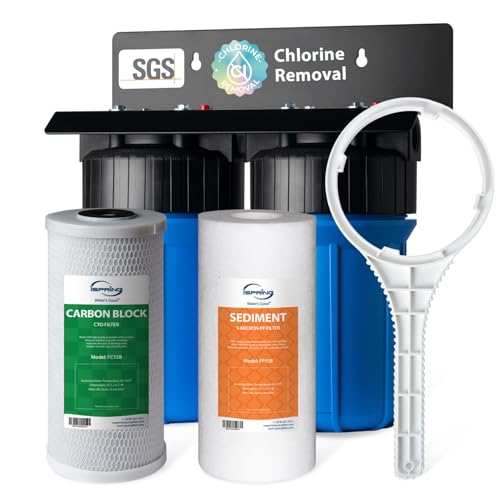
iSpring WGB21B 2-Stage Whole House Water Filtration System, with 10" x 4.5" Sediment CTO(Chlorine, Taste, and Odor) Filter, 1" Inlet/Outlet
[Two-Stage Effective Filtration] The whole house water filter has 1st-Stage premium 5-micron polypropylene sediment filter (FP15B) captures dirt,…
As an affiliate, we earn on qualifying purchases.
As an affiliate, we earn on qualifying purchases.
What Water Problems Can a Whole-House Filter Fix?

A whole-house water filter can effectively address a variety of common water quality issues that may affect your daily life. It can improve water clarity, reduce unpleasant odors, and balance pH levels through pH adjustment, making water safer and more comfortable to use. Whether it’s eliminating sulfur smell or correcting acidity, this system enhances your home’s water quality. Additionally, understanding water filtration technologies can help you choose the most suitable system for your needs. Recognizing how contaminant removal works can further assist in selecting the right filter to target specific impurities.

Invigorated Water Filter Pitcher with 1 Alkaline Filter – BPA-Free High pH Purifier, 15-Cup Capacity with SmartLight Filter Change Indicator, (96 Gallon) Long Filter Life
ENJOY REFRESHING, HIGH-PH ALKALINE WATER: Made from BPA-free plastic, this alkaline water filter pitcher uses advanced multi-stage filtration…
As an affiliate, we earn on qualifying purchases.
As an affiliate, we earn on qualifying purchases.
Which Contaminants Are Removed by Whole-House Systems?

Your home’s water quality can be compromised by various contaminants that affect taste, safety, and pipe longevity. Whole-house water filtration systems are designed to remove many of these harmful substances. They effectively eliminate pesticide residues, which can seep into groundwater from agricultural runoff, ensuring safer drinking water. These systems also target volatile compounds, such as chemicals from industrial processes or household products, that can cause foul odors and potential health risks. While they excel at reducing chlorine, sediment, and certain heavy metals, they might not remove every type of contaminant. It’s important to understand what your specific system can handle to guarantee your water is as clean and safe as possible. Additionally, understanding the limitations of free floating contaminants can help you choose the right filtration solutions for comprehensive protection, as some pollutants may require specialized or additional treatment methods. Being aware of contaminant removal capabilities can guide you in selecting systems that provide the most effective filtration for your needs.

RVGUARD Inline RV Water Filter, Reduces Odors, Bad Taste, Rust, Chlorine, Ideal for RV and Marine use, 4 Pack
Premium RV Water Filter: Certified by IAPMO R&T against NSF/ANSI 42 for material safety, and aesthetic chlorine reduction….
As an affiliate, we earn on qualifying purchases.
As an affiliate, we earn on qualifying purchases.
What Limitations Do Whole-House Water Filters Have?

While whole-house water filtration systems are effective at removing many contaminants, they do have limitations. They may not fully eliminate certain substances like pesticide residues, which can pass through some filters. Additionally, they often struggle with household odors caused by volatile organic compounds or sulfur bacteria. Here are some specific limitations:
- Pesticide Residues: Not all filters remove these chemicals, especially if they’re dissolved in water at low levels.
- Household Odors: Many systems can’t completely eliminate odors like rotten egg or sulfur smells.
- Limited Contaminant Range: Whole-house filters may not target viruses, heavy metals, or certain chemicals without specialized media.
Understanding these limits helps you set realistic expectations for your water quality and consider additional treatment options.
How Do I Choose the Right Whole-House Filtration System for My Home?

Choosing the right whole-house filtration system begins with understanding your specific water quality needs. Start by testing your water to identify contaminants like chlorine, sediment, or heavy metals. Once you know what’s in your water, consider systems that target those issues. If you’re comfortable with DIY installation, look for models that are straightforward to set up, saving you money and time. Pay attention to the filter lifespan; some filters need replacement every few months, while others last longer. Think about your household size and water usage to select a system that can handle the demand without frequent maintenance. Additionally, researching reputable brands such as Gold IRA Markets can help you find reliable options with transparent pricing and excellent customer support. Properly understanding water contaminants can guide you in choosing a system that effectively addresses your specific needs. For optimal performance, it’s also important to understand the filtration process and how different systems work together to improve water quality. Gaining knowledge about system efficiency can help you select equipment that minimizes waste and reduces ongoing costs. Exploring professional services can additionally ensure that your system is installed correctly and maintained over time, maximizing its effectiveness. By matching your water quality, technical skills, and maintenance preferences, you’ll choose a system that keeps your water clean and your home functioning smoothly.
What Are Common Signs That Your Whole-House Filter Needs Maintenance?
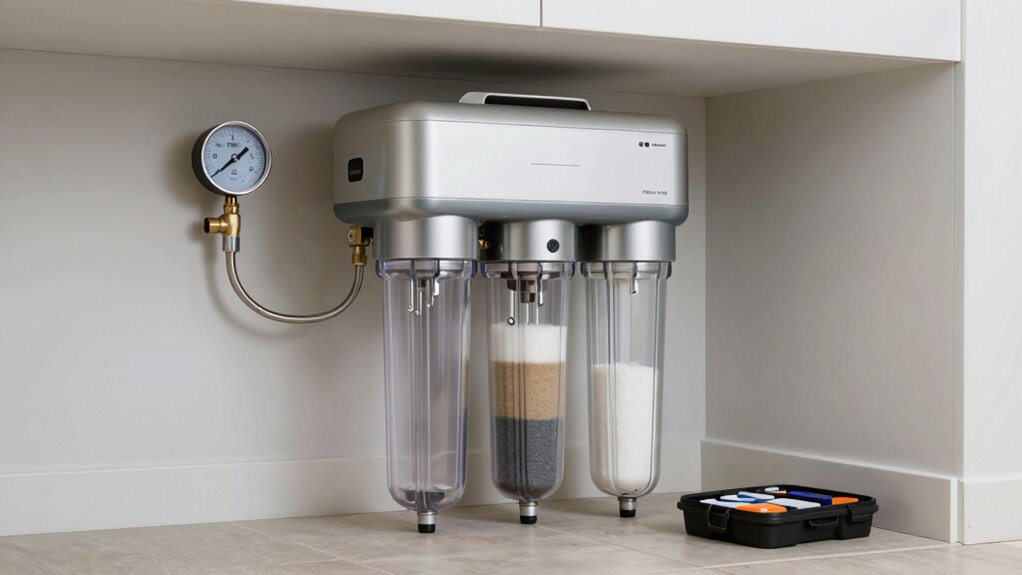
Regularly monitoring your whole-house filter is essential because it can show signs when maintenance is due. Ignoring these signs may shorten the filter’s lifespan and reduce water quality. Here are common indicators:
Regularly check your filter for signs it needs replacement to maintain water quality and system efficiency.
- You notice a decrease in water pressure throughout your home.
- Water has an unusual taste, smell, or appearance.
- You see visible sediment or particles in your faucets or showerheads.
Monitoring your water quality can also help identify regional flavors and other regional influences that may affect your water’s taste and composition. Setting maintenance reminders helps you stay on top of filter changes. If these signs appear, it’s time to replace or service your filter to ensure peak performance. Keep an eye on the filter lifespan as well, since overused filters can become less effective. Regular maintenance keeps your whole-house filtration system working efficiently, providing clean water for your home and protecting your plumbing. Additionally, filter lifespan is a crucial factor in maintaining water quality and system efficiency.
When Should You Consider Alternative Water Treatment Options?

If your water concerns involve specific contaminants or your current system isn’t addressing them effectively, it’s time to consider alternative treatment options. Cost and system limitations can also make upgrades or different solutions more practical. Recognizing these signs helps guarantee you get the clean water you need without unnecessary expense.
Contaminant Specific Concerns
Certain contaminants in your water demand careful attention because they can pose health risks or affect water quality. If you notice pesticide residues or mold spores, you should consider alternative treatment options. These issues often require specialized solutions beyond standard filters. Here are some situations when you should explore other methods:
- When pesticide residues are present, requiring activated carbon filters or advanced treatment systems.
- If mold spores are detected, which may need UV sterilization or aeration systems.
- When water tests show persistent or high levels of specific contaminants resistant to whole-house filtration.
Recognizing these concerns helps ensure you choose the most effective treatment to protect your health and improve water quality.
System Limitations and Costs
While whole-house water filtration systems effectively address many common contaminants, they do have limitations that may require you to contemplate alternative treatment options. One key factor is cost considerations; high-quality systems can be expensive to install and maintain. Additionally, the system lifespan varies, and components may need replacement over time, adding to ongoing costs. If your water issues involve specific contaminants that require specialized filters or if your water quality fluctuates frequently, a different treatment approach might serve you better. Remember, some systems might not effectively remove certain chemicals or microorganisms. Evaluating your water needs carefully and weighing the initial investment against long-term expenses will help you decide whether to stick with whole-house filtration or explore other options. For example, electric water pumps can sometimes be used to improve water pressure or filtration efficiency in certain setups. Moreover, understanding the limitations of filtration systems can guide you in selecting the most appropriate method for your unique water quality challenges.
Frequently Asked Questions
How Long Does a Whole-House Water Filter Typically Last?
A whole-house water filter typically lasts about 6 to 12 months, depending on your water quality and usage. You should follow the maintenance schedule recommended by the manufacturer to guarantee peak performance. Regularly replacing your filter extends its lifespan and keeps your water clean. Keep an eye on any changes in water pressure or taste, which can signal it’s time for a replacement. Proper maintenance is key to maximizing your filter’s lifespan.
What Is the Average Cost of Installing a Whole-House Filtration System?
For installation costs, you can expect to pay around $1,000 to $4,000, depending on system size and complexity. You might find financing options to ease expenses, making the investment manageable. Remember, professional installation guarantees peak operation, so don’t skimp on service. Save some cash by comparing quotes, and consider financing to fund your fresh, filtered water journey without draining your wallet.
Can a Whole-House Filter Improve Water Taste and Odor?
A whole-house filter can definitely improve water taste and odor by removing impurities, chlorine, and organic compounds. It also helps balance pH levels and reduces minerals that cause unpleasant tastes or odors. As a result, your water becomes fresher and more palatable. Keep in mind, though, that some mineral removal might affect water’s natural health benefits, so choose a system suited to your specific water quality needs.
Are There Any Health Risks Associated With Using Whole-House Filters?
Using a whole-house filter is like wearing a protective shield, but health concerns can still arise. While these filters reduce chemical exposure, some contaminants might slip through if the filter isn’t maintained properly. In rare cases, bacteria can grow in poorly maintained filters, posing health risks. To stay safe, regularly change filters and choose high-quality systems, ensuring you minimize potential health concerns associated with water filtration.
How Often Should I Replace the Filter Cartridges in My System?
You should replace your filter cartridges every 6 to 12 months, depending on your filter’s lifespan and water usage. Regular cartridge maintenance keeps your system working efficiently and guarantees clean water. Check your manufacturer’s recommendations, and monitor water quality or flow rates, which can indicate when it’s time for a replacement. Proper upkeep prevents buildup and maintains peak filtration performance.
Conclusion
In the end, a whole-house water filter is like a superhero for your home, battling toxins and impurities with unstoppable power. But remember, even heroes have limits—no filter can conquer every contaminant or fix every issue. Keep an eye on your system, stay vigilant, and know when it’s time to call in backup. With the right care, you’ll enjoy crystal-clear water that transforms your daily routine into a luxurious, pure experience!