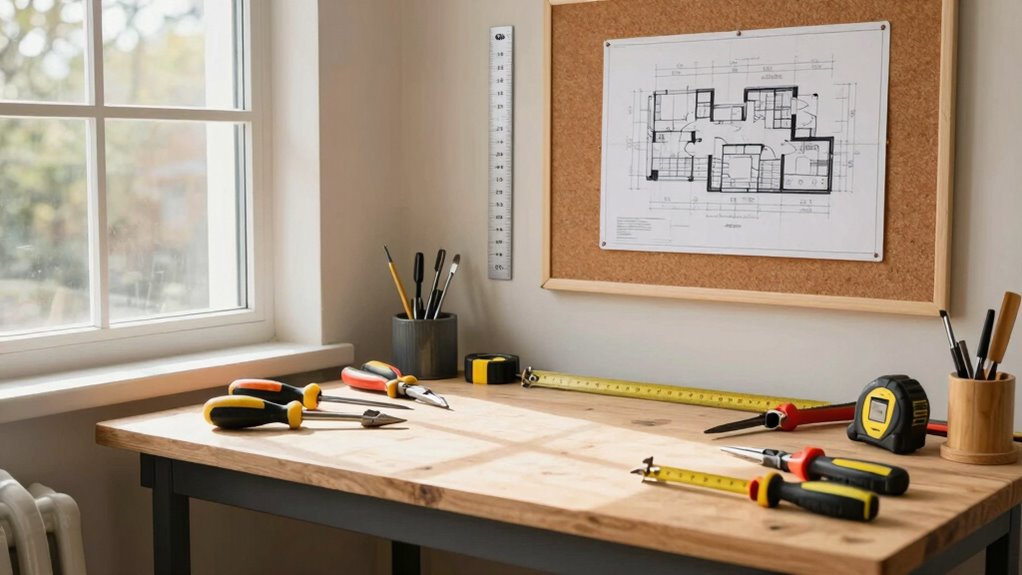

The key home improvement rule that prevents costly redos is thorough and detailed planning. You need to clearly define your measurements, set realistic timelines, and create a detailed budget before starting. Breaking the project into manageable steps with milestones helps keep things on track. Rushing or skipping this phase can lead to mistakes and extra costs. If you want to avoid setbacks and guarantee a smooth renovation, there’s more you should consider to get it just right.
Key Takeaways
- Proper planning with detailed measurements, budgets, and timelines reduces errors and rework.
- Breaking projects into manageable steps ensures accuracy and prevents rushed mistakes.
- Conduct thorough research and consult experts before choosing materials or designs.
- Incorporate a contingency fund to manage unexpected costs and avoid budget overruns.
- Understand building codes and regulations to ensure compliance and prevent future legal or cost issues.
Have you ever wondered how to guarantee your home improvements stay on track and actually add value? The secret lies in following a simple but powerful rule that can save you from costly redos and endless frustration. It’s all about proper planning and avoiding common mistakes, especially when it comes to DIY pitfalls and budget planning. When you jump into a project without a clear plan, you risk making errors that could double or even triple your costs, delay completion, or leave you with a finished space that doesn’t meet your expectations.
First, recognize that DIY pitfalls are real and often tempting. While tackling projects yourself can save money upfront, it can also lead to mistakes if you’re not experienced. These mistakes might include improper measurements, using incorrect materials, or rushing through tasks without proper preparation. Such errors often result in rework, which eats into your budget and time. To prevent this, you should honestly assess your skill level before starting. If a task is beyond your expertise, it’s smarter to hire a professional. This initial investment can save you from costly errors later on. Additionally, understanding sustainable living practices can help you select eco-friendly materials that contribute to a greener home. Moreover, staying informed about current home renovation trends can help you make better design choices that increase your home’s value. Being aware of building codes and regulations can also prevent legal issues or costly modifications down the line.
Assess your skills honestly to avoid costly mistakes and know when to hire a professional.
Budget planning is another critical component of the home improvement rule. Before you pick up your tools or buy supplies, create a detailed budget. Include costs for materials, tools, permits, and labor if needed. Always add a contingency fund—about 10-15% of your total budget—to cover unexpected expenses. This way, you’re less likely to overspend or abandon the project midway because of unforeseen costs. Proper budget planning involves researching prices, comparing quotes, and sticking to your limits. It also means prioritizing essential items over unnecessary upgrades, ensuring you get the most value out of every dollar spent. Incorporating effective project management techniques can also improve your chances of completing projects on time and within budget. Being aware of time management strategies can further help you stay organized and avoid rushing through tasks at the last minute.
The key to preventing costly redos is to approach each project methodically. Start with a clear plan that includes detailed measurements, a timeline, and a realistic budget. Break down the project into manageable steps and set achievable milestones. This discipline helps you stay focused and prevents you from rushing into the work without proper preparation. It’s also wise to consult expert advice or do thorough research before making big decisions, especially when choosing materials or design elements.
In essence, the home improvement rule that keeps your projects on track is simple: plan thoroughly, avoid DIY pitfalls, and stick to your budget. Doing so not only saves you money but also ensures your improvements genuinely enhance your home’s value. When you follow this rule, you create a smoother renovation experience and enjoy a finished space that you’re proud of—without the stress and costly redos that often come from neglecting proper planning.
laser distance measurer for home renovation
As an affiliate, we earn on qualifying purchases.
As an affiliate, we earn on qualifying purchases.
Frequently Asked Questions
How Do I Determine Which Home Improvement Projects Require Permits?
To determine which home improvement projects need permits, check local permit requirements and building codes. Generally, major changes like electrical work, plumbing, adding rooms, or structural modifications require permits. Visit your city or county’s building department website or contact them directly for specific guidelines. Ignoring permit requirements can lead to fines, delays, or costly redos, so always verify before starting your project to guarantee compliance and safety.
What Is the Best Way to Budget for Unexpected Renovation Costs?
Think of your renovation budget like a ship steering unpredictable waters. To handle unexpected expenses, set aside a contingency fund of about 10-20% of your project costs. This acts as your safety net, preventing costly redos if surprises pop up. By planning for these unforeseen expenses, you stay afloat without stress, ensuring your project stays on course and within budget, no matter what surprises come your way.
How Can I Ensure Contractor Reliability and Quality?
To guarantee contractor reliability and quality, you should prioritize thorough contractor vetting by checking references, reviewing portfolios, and verifying licenses. Ask about their experience with similar projects and confirm they follow quality assurance standards. Trust your instincts during interviews and choose someone transparent and communicative. Regularly monitor work progress, and don’t hesitate to address issues early; this proactive approach helps maintain high standards and avoids costly mistakes.
What Are Common Mistakes That Lead to Redos?
Like a house of cards, DIY pitfalls and poor material selection can cause costly redos. You often make mistakes by rushing, skipping proper planning, or choosing incompatible materials. These errors lead to delays, added expenses, and subpar results. To prevent this, research thoroughly, follow manufacturer guidelines, and consult professionals when unsure. Taking time upfront ensures your project stays on track and saves you from frustrating, expensive redo efforts later.
How Do I Prioritize Renovation Projects Effectively?
You should prioritize renovation projects by considering current design trends and your home’s needs. Start with essential updates that improve functionality, then incorporate trending styles to boost appeal. Focus on material selection that balances durability and aesthetics, ensuring long-term satisfaction. By aligning projects with design trends and choosing quality materials, you prevent costly redos, making your renovations both stylish and sustainable. Always plan ahead and set clear priorities for a smooth process.
As an affiliate, we earn on qualifying purchases.
Conclusion
By following this home improvement rule, you build a sturdy foundation that keeps costly redos at bay. Think of it as planting seeds in rich soil—you set yourself up for a flourishing, worry-free project. When you prioritize planning and quality, your home becomes a fortress, resilient against future mistakes. Remember, skipping this step is like trying to sail without a compass—you might reach your destination, but it’ll be a rough, costly journey. Stay diligent, and your home will stand strong.
As an affiliate, we earn on qualifying purchases.
As an affiliate, we earn on qualifying purchases.