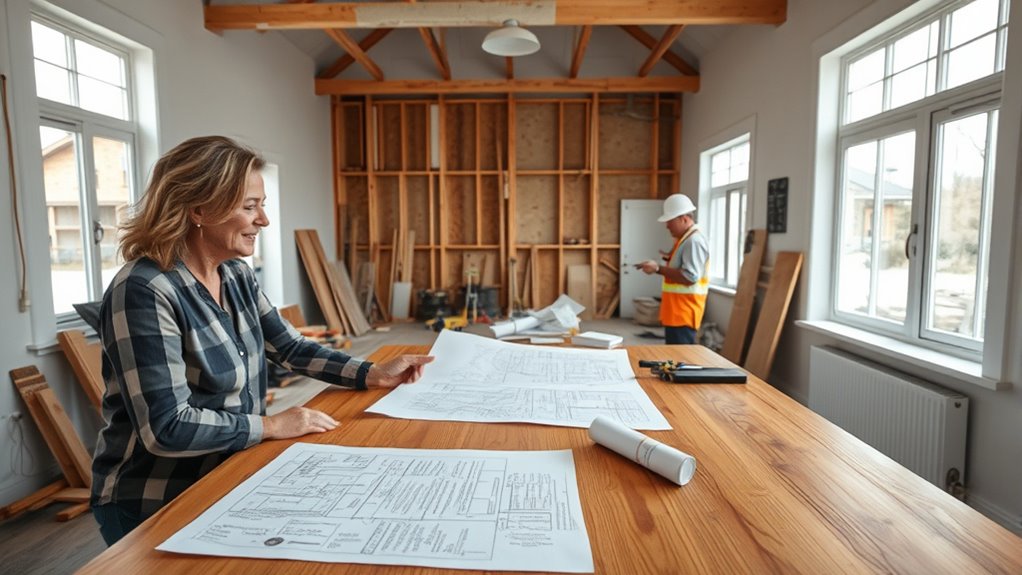

Understanding permits for major home renovations is key to keeping your project legal, safe, and on track. Permits ensure your work meets building codes and safety standards, helping you avoid fines, delays, or undoing your efforts. Before starting, research what permits are needed and gather the necessary documents. Staying compliant can save you money and headaches later on. Keep exploring to learn how to navigate the permit process smoothly and confidently.
Key Takeaways
- Permits ensure renovations meet safety standards and local building codes, preventing fines and project delays.
- Research and obtain necessary permits before starting major renovations to avoid legal issues.
- Proper documentation and online application processes streamline permit approval and help avoid unnecessary delays.
- Incorporate permit costs into your renovation budget to prevent financial surprises and project halts.
- Compliance with permits promotes safe, durable, and legally compliant home improvements.

Planning a home renovation can be exciting, but it’s essential to understand that many projects require permits before you start. Navigating the permit process might seem daunting at first, but knowing what’s involved can save you headaches down the line. Whether you’re tackling a major remodel or a simple upgrade, permits ensure your project meets safety standards and local building codes. Before jumping into your renovation, take the time to research the specific permits needed for your project. Ignoring this step can lead to fines, delays, or even having to undo work that wasn’t approved, so it’s better to be proactive.
Planning a home renovation? Research permits early to avoid fines and delays.
When it comes to DIY tips, one of the best strategies is to stay organized and maintain clear communication with your local building department. Many jurisdictions offer online permit applications, making the process more accessible. Make sure you understand exactly what documentation is needed—blueprints, detailed plans, and proof of property ownership are common requirements. Having everything prepared will streamline the process and help you avoid unnecessary trips to the office. Remember, trying to cut corners or skip permits to save money can backfire, resulting in costly fines or having to redo work to meet code compliance.
Renovation budgeting is another essential aspect that ties directly into permits. Unplanned expenses often pop up when you’re forced to halt work due to permit issues or inspections. Incorporate potential permit costs into your overall budget from the start. These costs vary depending on the scope of your project and local regulations, so it’s wise to check with your city or county before finalizing your budget. Planning for permits as part of your renovation budget not only keeps your finances on track but also prevents surprises that could delay your project. Keep in mind that some permits might require periodic inspections, which could add to your expenses if issues are found and need correction. Additionally, understanding local building codes can help you anticipate requirements that might impact your project timeline and costs.
Understanding permit requirements isn’t just about avoiding penalties; it’s about ensuring your renovation is safe, legal, and durable. This knowledge empowers you to plan effectively, stick to your timeline, and keep costs in check. Whether you’re remodeling a bathroom, adding a deck, or knocking down walls, permits are a key step that shouldn’t be overlooked. Approach the process methodically, leverage DIY tips to stay informed, and integrate permit costs into your renovation budgeting. Doing so guarantees a smoother renovation journey, giving you peace of mind and a finished project that complies with all necessary standards.
Frequently Asked Questions
How Long Does the Permit Approval Process Typically Take?
The permit approval timeline usually takes between 4 to 8 weeks, but permit delays can extend this process. Factors like project complexity and local regulations influence how quickly you get approval. You can help avoid permit delays by submitting complete, accurate applications. Stay in touch with your permitting office and respond promptly to any requests for additional info to guarantee your project proceeds smoothly without unnecessary holdups.
Are Permits Required for Cosmetic Interior Updates?
No, cosmetic interior updates usually don’t require permits, but it’s like sailing close to the shore—knowing the building codes and inspection requirements keeps you safe. If you’re just repainting, replacing fixtures, or changing cabinets, you’re generally clear. However, if your updates involve electrical or plumbing work, it’s wise to verify with local authorities. Staying informed ensures your project flows smoothly, avoiding unexpected waves of compliance issues.
Can I Start Construction Before Permit Approval?
You shouldn’t start construction before your permit approval because it can delay your project and lead to fines. During the permit process, authorities review your plans to guarantee safety and code compliance. Starting too early can also impact your construction timeline, causing unnecessary setbacks. Always wait for official approval to avoid legal issues and ensure your renovation proceeds smoothly and within the proper framework.
What Are the Consequences of Working Without a Permit?
If you work without a permit, you risk violating building code compliance, which can lead to fines, penalties, and even having to undo the work. Insurance implications are also serious; your policy may become invalid, leaving you unprotected if damages or accidents occur. Additionally, unpermitted work can complicate future resale, as buyers or inspectors will flag the issue, potentially delaying or derailing your plans.
How Much Do Permits Usually Cost?
Permits typically cost between 1% and 4% of your project’s total expenses, but this varies based on your location and project scope. When you apply, you’ll pay fees to guarantee your work aligns with building codes and zoning laws. Costs can increase for larger or more complex renovations, so it’s best to check with your local building department for precise fee details. Skipping permits can end up costing you more down the line.
Conclusion
Getting the right permits isn’t just about following rules; it’s about ensuring your renovation is safe and legal. Some might think skipping permits saves time or money, but studies show that unpermitted work can lead to costly fines, delays, or even safety hazards down the line. So, don’t believe the myth that permits are unnecessary. Investing in the proper approvals now protects your home and peace of mind in the future.