If your espresso tastes sour, it’s likely because your grind is too coarse, causing under-extraction. To fix this, make tiny adjustments—about a quarter turn on your grinder—finer. Small changes can significantly improve flow and flavor, balancing extraction time between 25-30 seconds. Keep experimenting with these slight tweaks, and you’ll reveal better shots. Continue exploring these adjustments to master the precise calibration that yields consistently perfect espresso.
Key Takeaways
- Slightly fine-tune your grind size to increase resistance and slow water flow, reducing sourness caused by under-extraction.
- Make small, incremental adjustments to avoid over-correcting and introducing bitterness or other imbalances.
- Monitor shot timing and flavor; a faster shot with sour notes likely needs a finer grind adjustment.
- Ensure consistent tamping pressure and machine temperature, as these affect extraction alongside grind size.
- Regularly calibrate your grinder and keep detailed logs to maintain precise, effective adjustments for optimal espresso.
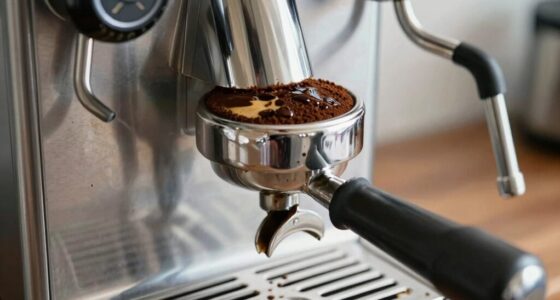
espresso grinder fineness adjustment
As an affiliate, we earn on qualifying purchases.
As an affiliate, we earn on qualifying purchases.
Why Your Espresso Tastes Sour and How to Fix It

If your espresso tastes sour, it usually means the brew is under-extracted, often due to grind size being too coarse. When the grind calibration isn’t right, water flows too quickly through the coffee, extracting fewer desirable flavors. This results in a sour, sharp espresso flavor that lacks depth. To fix this, try making your grind finer, which slows water flow and allows for better extraction. Proper grind calibration is key to balancing the flavors and achieving a richer, more complex shot. Remember, small adjustments can make a significant difference. Consistently monitoring your grind size helps you dial in the perfect extraction, reducing sourness and enhancing the overall taste of your espresso. Additionally, paying attention to grind calibration ensures your machine is set up correctly for optimal extraction.
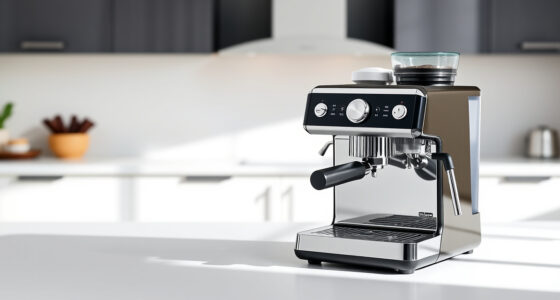
coffee grinder calibration tools
As an affiliate, we earn on qualifying purchases.
As an affiliate, we earn on qualifying purchases.
How to Tell If Your Grind Is Too Coarse for Proper Extraction

A quick way to tell if your grind is too coarse is by examining the flow rate of your espresso shot. If the water drips through slowly or unevenly, your espresso grind may be too coarse, leading to under-extraction. This results in a weak, sour, or watery flavor because the water isn’t interacting with the coffee grounds long enough. Proper extraction consistency relies on a fine enough grind to create resistance, allowing the water to extract maximum flavor in the right time frame. When your espresso shot flows too quickly, it indicates your grind isn’t fine enough. Adjusting to a slightly finer grind improves extraction, balancing the flavor and ensuring you get a rich, well-rounded shot. Monitoring the flow rate can help you fine-tune your grind setting for optimal espresso quality. Additionally, paying attention to contrast ratios in your brewing process can aid in achieving a more balanced extraction and flavor profile.
espresso shot timer
As an affiliate, we earn on qualifying purchases.
As an affiliate, we earn on qualifying purchases.
The Importance of Grind Size in Espresso Quality

The grind size you choose directly influences the flavor, aroma, and overall quality of your espresso. A finer grind increases resistance, leading to a slower extraction that enhances sweetness and body. Conversely, a coarser grind results in faster extraction, risking sourness or underdeveloped flavors. Adjusting grind size affects your brew ratios, impacting shot balance and strength. Using extraction charts helps you fine-tune settings for superior results. Remember, small changes matter; a tiny adjustment can transform a sour shot into a balanced one. Consistent grind size ensures predictable extraction and flavor profiles. To improve your espresso, focus on precision with your grind setting, monitor brew ratios, and consult extraction charts regularly. This approach guarantees better control over your shot quality and taste. Free Floating techniques can also be employed to optimize water flow and extraction consistency, leading to more balanced shots. Additionally, maintaining a consistent grind size helps achieve reliable and repeatable results, making your espresso brewing more predictable and enjoyable. Regularly calibrating your grinder ensures your grind settings remain accurate as your equipment wears over time. Incorporating proper tamping pressure can further enhance extraction consistency and shot quality. Using extraction timing as a guide can also help you dial in the perfect shot.
coffee tamping mat
As an affiliate, we earn on qualifying purchases.
As an affiliate, we earn on qualifying purchases.
How Grind Size Affects Extraction Time and Flavor

Grind size directly influences extraction time, shaping the flavor profile of your espresso. When your grind is too fine, extraction time increases, often leading to over-extracted, bitter flavors. Conversely, a coarser grind reduces extraction time, resulting in under-extracted, sour notes. Adjusting grind size fine-tunes how quickly water interacts with the coffee grounds, controlling the extraction process. A consistent, appropriately sized grind ensures water flows evenly, extracting the right balance of flavors. Small changes in grind size can profoundly impact extraction time, so it’s essential to find the sweet spot. Proper grind size allows you to dial in your brew, enhancing flavor clarity and body while avoiding undesirable sourness or bitterness. Mastering this adjustment helps you craft a well-balanced espresso every time.
Signs That Your Espresso Is Under-Extracted and Sour

If your espresso tastes overly sour and lacks depth, it’s likely under-extracted. This often indicates your shot was pulled too quickly, revealing incomplete flavor extraction. Poor grinder maintenance can cause inconsistent grind size, leading to under-extraction. Pay attention to shot timing—a very short extraction usually results in sourness. Signs include a thin, pale crema, sharp acidity, and a watery or weak body. To fix this, check your grinder for clogs or burr wear, ensuring it produces a uniform grind. Adjust your grind size to slow down the shot, allowing more extraction. Regular maintenance helps keep the grind consistent, which is vital for balanced flavor. Monitoring shot timing closely will help you identify under-extraction early and achieve richer, more complex espresso.
Step-by-Step: Adjusting Your Grinder to Improve Espresso

To improve your espresso, start by measuring your grind consistently each time you brew. Make small adjustments and test the results before fine-tuning further. This systematic approach helps you find the perfect grind setting for a balanced shot. Remember that understanding the grind size and its impact on extraction is essential for achieving the desired flavor profile. Additionally, being aware of indoor air quality can influence your equipment’s performance and longevity, indirectly affecting your brewing results. Incorporating connected home fitness concepts can also help you monitor and optimize your environment for better coffee-making conditions. Paying attention to environmental factors such as humidity and temperature can further refine your process and ensure consistent results. Regularly calibrating your grinder with measurement tools ensures precision and helps maintain optimal settings over time.
Measure Your Grind Consistently
Maintaining consistency in your grind size is essential for achieving a balanced espresso shot. To do this, you need to measure your grind consistently each time you prepare coffee. This guarantees your grind consistency and dosing accuracy, making it easier to replicate perfect shots. Use a digital scale to weigh your grounds before tamping, so you know exactly how much coffee you’re using. Keep your grinder settings stable and avoid changing them frequently. Consistent dosing accuracy helps you compare results accurately and make precise adjustments. Understanding the importance of ethics in genetic testing] can help inform your decisions about coffee sourcing and sustainability practices.
Adjust in Small Increments
When adjusting your grinder, small changes can make a big difference in your espresso quality. Tiny tweaks help maintain grind consistency and improve flavor balancing. Move the grind setting in small increments—about a quarter turn—then pull a shot. If it’s too sour, make a slight adjustment to coarser; if it’s flat, go a little finer. Keep tracking how each change affects taste. Remember, patience is key: small adjustments prevent over-correction. To visualize, consider this emotional impact:
| Adjustment Type | Effect on Espresso | Your Experience |
|---|---|---|
| Slight Coarser | Reduces sourness | Confidence in control |
| Slight Finer | Enhances sweetness | Satisfaction in progress |
| Big Jump | Disrupts balance | Frustration |
| Consistent Tweak | Maintains harmony | Mastery in motion |
Fine-tuning in small steps ensures each shot gets closer to perfect.
Test and Fine-Tune
How do you know if your grinder settings are just right? You’ll want to evaluate your shot’s grind consistency and flavor balance. Start by brewing a shot and tasting it; if it’s too sour or bitter, adjust your grinder slightly and test again. Keep notes of your changes for future reference. Remember, small tweaks make a big difference. Additionally, monitoring the piercing healing process can help prevent complications that might distract from your espresso adjustments.
- Check the shot timing: a shot that runs too fast or slow indicates a need to fine-tune your grind.
- Observe the espresso’s crema: a thick, rich crema suggests proper grind consistency.
- Taste for balance: adjust until the shot isn’t overly sour or bitter, achieving harmony in flavor.
Testing and fine-tuning help dial in your grinder, ensuring each shot hits the mark.
Fine-Tuning Your Grind: Small Changes That Make a Big Difference

Small adjustments to your grind size can dramatically improve your espresso shot. Even tiny tweaks can enhance grind consistency, guaranteeing each shot is uniform and predictable. When your grind is more consistent, your extraction becomes more reliable, helping you avoid sour or under-extracted espresso. Pay attention to dosing accuracy as well; precise dosing ensures you’re using the right amount of coffee, which influences extraction time and flavor. If your shots are too sour, try making your grind slightly finer, but only in small increments. Conversely, if they’re too bitter, coarsen the grind just a bit. Remember, small changes have a big impact—so adjust gradually and observe how each tweak improves your espresso’s balance and clarity. Additionally, understanding how extraction consistency impacts flavor can help you fine-tune your process for optimal results. Monitoring your brew time can also assist in achieving a more consistent extraction, further enhancing your espresso quality.
Tools and Tips for Consistent Grinder Calibration

Achieving consistent grind size starts with using the right tools and employing effective calibration techniques. Precise grinder calibration ensures each shot maintains dosing consistency and ideal flavor. To help, consider using a digital scale for accurate dose measurement, a timer to monitor extraction times, and a calibration tool specific to your grinder model. These tools allow you to make small, repeatable adjustments, reducing trial and error. Regularly calibrate your grinder to account for wear and keep settings consistent. Keep a log of your adjustments to track what works best. Understanding grinder mechanics can further refine your grinder settings and improve shot consistency. Additionally, proper maintenance of your grinder can prevent inconsistencies caused by buildup or worn parts. Remember, consistent grinder calibration directly impacts shot quality, especially when aiming to eliminate sourness caused by uneven extraction. Staying diligent with these tools and tips helps you achieve reliable, perfect espresso shots every time.
Troubleshooting Persistent Sour Shots: When to Reconsider Your Settings

Persistent sour shots often indicate that your grinder settings might need adjustment, especially if your brewing variables like dose and temperature are consistent. If your espresso still tastes sour, consider tweaking your grind finer to increase extraction or check your brew temperature—lower temps can cause sourness. Additionally, confirm your tamp pressure is firm and even, as inconsistent tamping can lead to under-extraction. Use this quick reference:
| Adjustment | Effect |
|---|---|
| Grind finer | Increases extraction |
| Raise brew temperature | Reduces sourness |
| Tamp pressure firm | Ensures even extraction |
Reconsider your settings if these factors don’t improve the shot. Small changes can make a big difference in eliminating sourness.
Maintaining Your Grinder for Perfect Espresso Every Time

To keep your espresso tasting great, you need to regularly calibrate your burrs and keep your grinder clean. Proper storage also safeguards against damage and guarantees consistent performance. Taking these simple steps helps you achieve perfect espresso shot every time.
Regular Burr Calibration
Ever wondered why your espresso shots sometimes taste off? It’s often due to inconsistent grind size caused by irregular burr calibration. Regular burr calibration ensures your grinder maintains ideal grind consistency, which is critical for balanced extraction. When you calibrate your burrs, you fine-tune their position for uniform particle size. This helps prevent over-extraction or under-extraction, reducing sour or bitter flavors. To keep your grinder in top shape, focus on these key points:
- Check burr alignment periodically
- Adjust calibration settings as needed
- Use a consistent technique for dosing and tamping
Keep Grinder Clean
Keeping your grinder clean is essential for consistently great espresso. Regular grinder maintenance prevents old coffee residue from affecting flavor and ensures your machine performs at its best. A clean grinder maintains dosing consistency, so your espresso shots come out with the right balance. Coffee oils and particles build up over time, which can clog burrs and cause uneven grinding. To keep your grinder in top shape, regularly remove and brush out the burrs, and use grinder cleaning tablets or compressed air to clear out stubborn residues. Consistent cleaning routines help you dial in your grind settings more accurately and produce better-tasting espresso. Don’t overlook grinder maintenance—it’s a simple step that makes a big difference in achieving balanced, sour-free shots every time.
Store Properly
Proper storage of your grinder is essential for maintaining its performance and ensuring consistent espresso quality. When you store your grinder properly, you prevent moisture, dust, and coffee residues from affecting grinder maintenance and performance. Keep it in a cool, dry place away from direct sunlight to avoid affecting the internal components. Using airtight containers for coffee storage helps prevent stale beans from impacting grind consistency. Regularly check and clean your grinder to prevent buildup and guarantee optimal operation. Proper storage also minimizes the need for frequent maintenance, extending your grinder’s lifespan.
- Store coffee beans in airtight containers away from sunlight
- Keep your grinder in a dry, cool spot
- Regularly wipe and inspect for debris
Frequently Asked Questions
How Often Should I Calibrate My Espresso Grinder?
You should calibrate your espresso grinder whenever you notice inconsistencies in grind size consistency or if your shots start to taste off, such as becoming sour or bitter. Generally, aiming for a grinder calibration frequency of every 1-2 weeks works well, but it depends on how often you brew. Regular calibration ensures your grind size remains precise, helping you achieve ideal extraction and consistently delicious espresso shots.
Can Temperature Affect Grind Size and Shot Taste?
Temperature influence can definitely affect your grind size and shot taste. When the water’s too hot, it can cause over-extraction, making your espresso bitter, while colder water may lead to under-extraction and sour flavors. This, in turn, can lead you to adjust your grind size unintentionally. To get consistent shots, keep your machine’s temperature stable, as fluctuations can impact both grind size and overall flavor profile.
What Are Signs of a Burr Grinder Needing Cleaning?
You might notice uneven grind size, which causes inconsistent espresso shots, or bitter, stale flavors indicating your burr grinder needs cleaning. Other signs include clumpy grounds, strange noises, or a persistent build-up of coffee residue. Regular burr grinder maintenance and sticking to a cleaning schedule help prevent these issues. Don’t wait for problems to worsen—clean your grinder at least once a month to keep your coffee tasting fresh and your machine running smoothly.
How Does Ambient Humidity Impact Grind Consistency?
Ambient humidity markedly impacts grind consistency because higher humidity can cause coffee grounds to clump and stick together, making your grind uneven. Conversely, low humidity helps maintain consistent grind size. You might notice fluctuations in extraction or taste if humidity effects aren’t managed. To counter this, store your beans and grinder in a dry, controlled environment, and consider adjusting your grind size slightly based on the humidity to keep your shots balanced.
Is It Better to Adjust Grind Size Before or After Tamping?
Ever wonder if timing matters more? You should adjust the grind size before tamping because it directly affects tamping pressure and grind distribution. When you set the grind first, you ensure consistent coffee particle size, helping you achieve even extraction. If you tweak after tamping, you risk disrupting tamping pressure and uneven grind distribution, which can lead to sour or bitter shots. So, always fine-tune your grind first for the best espresso.
Conclusion
If you don’t master your grind settings, your espresso could taste worse than a burnt rubber tire at a gas station, every single time. A tiny tweak could turn your sour nightmare into a smooth, velvety masterpiece. Don’t settle for mediocre shots—your grinder holds the power to release perfect espresso. Keep fine-tuning, stay vigilant, and soon you’ll be brewing coffees so good, even baristas will bow down in awe.