
TL;DR

Get home appliances delivered free with Prime
- Fast, free delivery on millions of items
- Prime Video, Amazon Music and more included
- Member-only deals all year
Professional organizer Mary Cornetta says sorting old photos can feel emotionally difficult and overwhelming, and recommends gathering them in one place before making decisions. Her guidance includes letting go of blurry or duplicate prints, asking relatives about unidentified family photos, and organizing the keepers in albums or a labeled system.
Professional organizer Mary Cornetta has outlined a practical way to sort old photographs without treating every print as a keepsake: gather them in one place, decide what is worth keeping, and set up a system for the photos that remain. In advice published by Apartment Therapy, Cornetta says the process can be difficult because photographs carry emotional weight and households may have a large number to review.
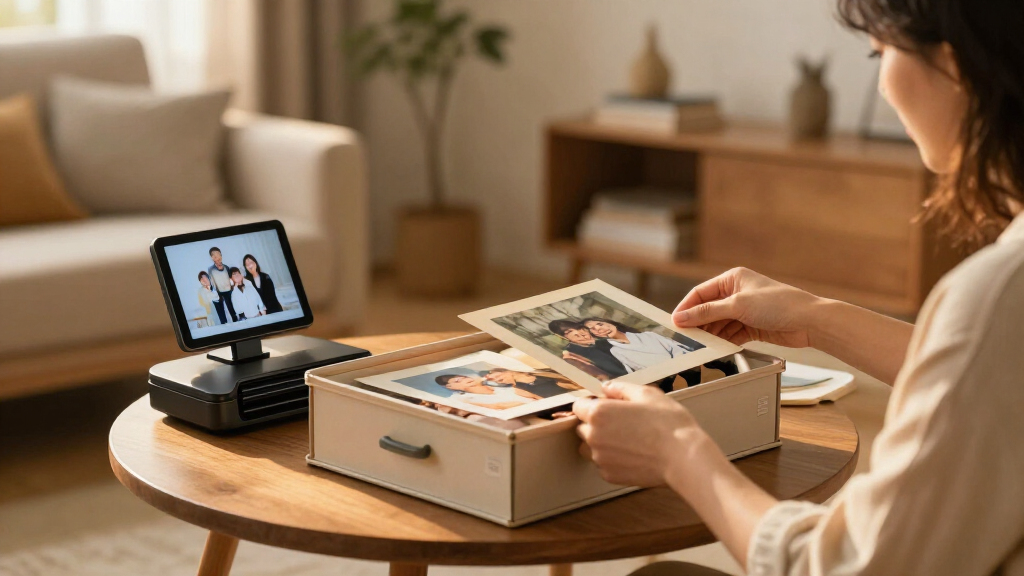
Before sorting, Cornetta recommends collecting photographs found around the home in a single box, then waiting until other whole-home organizing work is finished before taking on the photo collection. Once ready, spread the pictures out on a clear surface so they can be viewed together. She also advises asking for help when the photographs matter to other family members and using labels or index cards to track groups sorted by year, person, place, event or theme.
Cornetta identifies several kinds of prints that may be easier to release: blurry or poorly cropped pictures, duplicates and near-identical shots, and images whose subjects or setting no one can identify. For family photos with unknown faces, she suggests checking with relatives before deciding. Images connected to former relationships or friendships can be handled selectively: someone may choose to keep one or two in a personal memory box, rather than mixing them with current family photographs.
Some pictures may be more meaningful to someone else. Cornetta recommends asking relatives whether they want photos featuring them or their family before passing anything along; the aim is not to hand another person an unsorted pile. The report also says unwanted photographs with possible historical significance could be offered for donation or sale, while other unwanted prints can be shredded or discarded.
Making Family Photos Easier to Keep
The guidance addresses a common organizing problem: photographs can be both bulky and emotionally charged, making it hard to start or to decide what to keep. Gathering them together and sorting by clear categories gives households a manageable process, while asking family members about unidentified pictures can help prevent the loss of information or images someone else values.
Keeping a smaller, organized collection can also make photographs easier to revisit instead of leaving them packed away in boxes. Cornetta’s advice frames decluttering as a choice about which images people want to preserve and how they want to store them—not as a requirement to discard meaningful memories.
Products Worth Considering

Dyson V8 Cyclone Cordless Vacuum

Ring Alarm 8-Piece Kit (2nd Gen) Home Security System

Shark Navigator Lift-Away Upright Vacuum, NV360
As an affiliate, we earn on qualifying purchases.
Why Sorting Can Feel Difficult
Cornetta, who founded the professional organizing company Sort and Sweet Inc. on Long Island in 2017, says she has worked with clients who own large collections of physical photographs. She describes two obstacles: the feelings that images can bring up, including joy, nostalgia and sadness, and the sheer volume of prints some people have accumulated.
In the report, Cornetta also shares a family example: her father keeps hundreds, if not thousands, of photographs in shoe boxes in his basement. That example illustrates the kind of collection her advice is intended to address; it is not a survey of how many photos households typically own.
Storage Options Need More Detail
The supplied report excerpt begins a section on organizing physical photographs and recommends photo albums for people who want prints to be easy to browse, but it ends before listing the full set of storage methods. It does not specify archival materials, storage conditions, digitization practices or how to handle photographs that may be historically significant. Those details should not be inferred from the excerpt.
The report also offers personal organizing advice, not a formal preservation standard. Whether a particular image has historical or family value may depend on information the owner does not have; Cornetta’s suggestion to check with relatives can help, but the source does not describe a process for confirming the provenance of a photograph.
Sort, Label and Store the Keepers
Cornetta’s proposed next step is to bring the photographs together, set aside a clear sorting area and choose labels before working through the collection. People can then separate obvious discards, duplicates, images to ask relatives about and photographs they want to keep. For prints that remain, the article excerpt recommends photo albums when easy browsing is the priority.
The source does not give a deadline or announce a follow-up development. Readers looking for specific long-term preservation instructions or all the storage options in Cornetta’s article would need to consult the full Apartment Therapy report.
Key Questions
What should I do before sorting old photographs?
Collect the photos in one place and set aside a clear surface for sorting. Cornetta also suggests finishing a broader home-organizing project first, then using labels or index cards to keep categories separate.
Which old photos does the organizer suggest discarding?
Cornetta says people can consider removing blurry, badly cropped, duplicate or near-identical photos. If nobody can identify the people or scene in a family picture, she suggests checking with a relative before letting it go.
Should I give unwanted family photos to relatives?
Ask first, Cornetta advises. A relative may value a picture, but handing over an unsorted collection without checking can transfer the work rather than solve it.
How does the report suggest storing photos I keep?
The provided excerpt recommends photo albums for people who want prints to be accessible and easy to browse. It does not include the complete storage guide or detailed preservation instructions.
Source: apartmenttherapy.com