
TL;DR
Lund Point, a tower block in east London, now has only four occupied flats out of 168, with 164 boarded up. Residents and advocates see it as a symbol of failed estate regeneration and neglect, though the future remains uncertain.
Lund Point, a tower block in Stratford, east London, is now almost entirely vacant, with only four flats occupied out of 168, and the building in a state of neglect and disrepair.
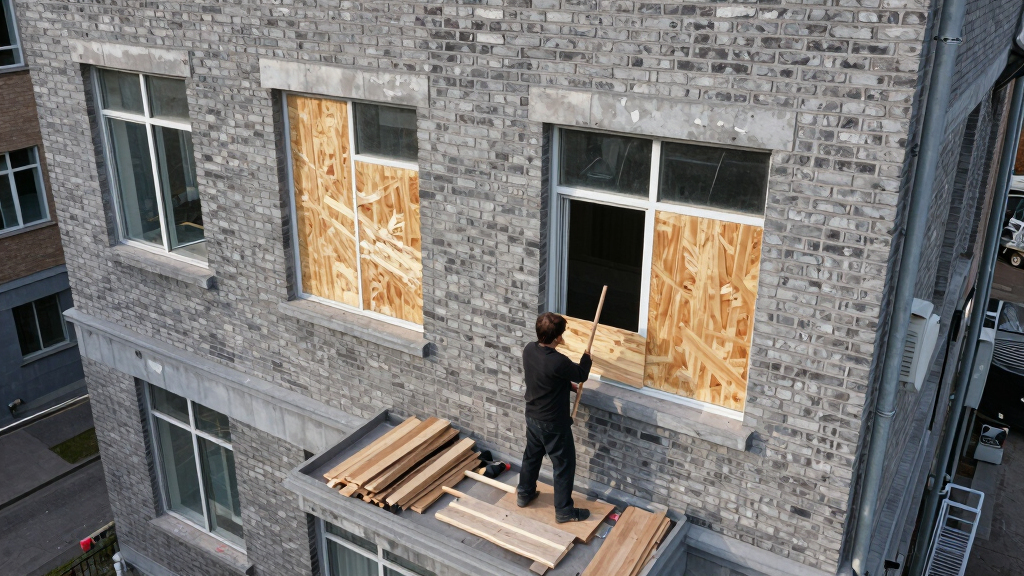
Built in the late 1960s as part of council housing expansion, Lund Point once housed a vibrant community. Today, only four residents remain, and the building is largely boarded up, with security doors replacing entrances to most flats. The tower’s condition is poor, with missing cladding, broken windows, and rubbish at the entrance, reflecting years of neglect.
Residents such as Tee Fabikun, who has lived there since 1997, describe a stark contrast to the lively community she once knew. She remains in her flat, surrounded by personal belongings, but the rest of the building is abandoned, with only one lift operational. Nearby resident Warren Lubin, who moved in the same year, describes the building as dirty and shabby, with pigeons nesting on balconies due to council restrictions on netting.
Local authorities and housing advocates characterize Lund Point as a symbol of failed estate regeneration efforts. Campaign group Action on Empty Homes describes the situation as a scandal, highlighting broader issues of neglect and mismanagement in public housing. The building’s decline reflects decades of underinvestment, poor maintenance, and controversial redevelopment plans that have yet to materialize.
Why It Matters
This situation illustrates the ongoing crisis in London’s social housing sector, where many estates face abandonment, and residents are displaced or choose to stay despite poor conditions. It raises questions about the effectiveness of estate regeneration policies and the social impact of neglect on communities.
For residents like Fabikun, the almost complete abandonment of Lund Point symbolizes a loss of community and security. For policymakers, it underscores the urgent need for sustainable solutions to address housing decay and prevent similar scenarios elsewhere in London.
As an affiliate, we earn on qualifying purchases.
Background
Lund Point was part of the Carpenters estate, built in 1967-68, comprising three tower blocks and low-rise housing. Over the years, maintenance was neglected, and the estate suffered from poor conditions, leading to calls for regeneration. Since 2004, the council has attempted various redevelopment plans, but many have stalled or failed, leaving buildings like Lund Point in disrepair. The decline accelerated after the partial collapse of Ronan Point in 1968, which initially cast doubt on tower block safety but was followed by continued construction and eventual neglect.
“I knew everyone. If you got into the lift with someone you didn’t know, by the time you got out you knew each other.”
— Tee Fabikun
“It’s one of the reasons I’ve liked living here, the afternoon sun, the view facing westwards of London.”
— Warren Lubin
“This is a scandal, an example of everything that’s wrong with estate regeneration.”
— Chris Bailey, Action on Empty Homes
As an affiliate, we earn on qualifying purchases.
What Remains Unclear
It remains unclear what specific plans, if any, the local council or developers have for Lund Point’s future. The stalled regeneration efforts have not resulted in concrete redevelopment timelines or commitments, and the building’s future is uncertain.
As an affiliate, we earn on qualifying purchases.
What’s Next
Next steps likely involve further discussions between residents, advocacy groups, and local authorities. There may be renewed efforts to develop a plan for redevelopment or repurposing, but no definitive timeline has been announced. Monitoring local council decisions and community engagement will be key.
As an affiliate, we earn on qualifying purchases.
Key Questions
Why are so many flats in Lund Point boarded up?
The flats are boarded up due to neglect, disrepair, and failed regeneration plans, leading to abandonment and security measures to prevent vandalism and squatting.
Are residents being moved out or displaced?
Most residents, including Tee Fabikun, have chosen to remain despite the conditions. It is unclear if there are active plans to relocate remaining residents or to demolish and redevelop the building.
What caused the decline of Lund Point?
The decline stems from decades of underinvestment, poor maintenance, and stalled regeneration efforts since the early 2000s, compounded by broader issues in estate management and policy failures.
Is there any plan to redevelop Lund Point?
There are no confirmed or publicly announced plans for redevelopment at this time. Discussions and proposals have stalled or been delayed, leaving the building in limbo.
Source: Guardian Life