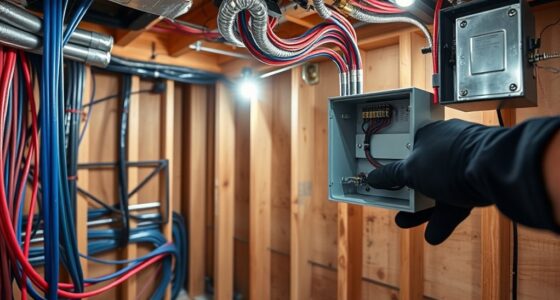
Understanding load-bearing walls is essential when remodeling your home because they support the weight of floors, roofs, and other structures above. Identifying these walls isn’t always obvious, so it’s best to consult blueprints or a professional. Removing one without proper support can cause sagging, cracks, or even collapse. Use temporary supports and install headers if necessary, but remember, expert guidance guarantees safe and successful renovations—learn more about how to do it right.
Key Takeaways
- Load-bearing walls support the weight of floors, roofs, and the entire structure above, making their removal risky without proper support.
- Identifying load-bearing walls requires consulting blueprints or a structural engineer, as visual inspection alone is often insufficient.
- Removing a load-bearing wall without installing temporary supports or a header beam can cause sagging, cracking, or structural failure.
- Proper techniques involve using shoring and support systems, and often require professional oversight to ensure safety.
- Always seek advice from structural experts before removing or modifying load-bearing walls to prevent compromising your home’s foundation.

When remodeling your home, understanding which walls are load-bearing is vital to guaranteeing safety and structural integrity. These walls support the weight of the structure above them, including floors, roofs, and other essential components. If you remove or alter a load-bearing wall without proper precautions, you risk compromising your home’s foundation support, which can lead to serious damage or collapse. Recognizing the significance of this allows you to plan your remodel carefully, especially when considering wall removal techniques.
Determining whether a wall is load-bearing involves more than just a visual inspection; it requires understanding the building’s structure. Typically, load-bearing walls are aligned with the foundation or run perpendicular to floor joists. You should examine your home’s blueprints or consult with a structural engineer or experienced contractor to accurately identify these walls. This step is vital because improper removal can destabilize your home, causing sagging, cracks, or even structural failure. Once you’ve identified a load-bearing wall, you’ll need to decide how to proceed, which often involves installing a beam or other support system to transfer weight safely.
When it comes to wall removal techniques, the process must be approached with precision. For load-bearing walls, you can’t simply demolish them like non-structural partitions. Instead, you’ll need to temporarily support the structure above with adjustable steel columns or shoring to prevent any shifts or collapse during removal. After providing adequate temporary foundation support, you can carefully remove the wall in sections, ensuring that the load is redistributed gradually. Installing a header beam—often made of steel or engineered wood—above the opening will help carry the weight once the wall is gone. This process requires careful planning and, usually, professional oversight to prevent any mishaps.
Throughout this process, safety should always be your top priority. You shouldn’t attempt to remove a load-bearing wall on your own unless you have the proper experience and tools. Structural modifications involve complex calculations and precise execution. Consulting with a structural engineer ensures that your foundation support remains intact and your home stays safe. Proper wall removal techniques, combined with an understanding of load paths, preserve the integrity of your structure while allowing you to open up space or reconfigure your interior effectively. By respecting the importance of load-bearing walls and enlisting professional guidance, you can confidently remodel your home without risking its stability.
Frequently Asked Questions
How Do I Identify a Load-Bearing Wall Without a Blueprint?
You can identify a load-bearing wall by inspecting framing techniques and wall materials. Look for walls that run perpendicular to floor joists or beneath beams, as they often carry weight. Check for thicker walls or those with more substantial framing, like doubled studs. Also, examine the wall’s connection to the ceiling or basement. If unsure, consult a structural engineer to verify safety before making any removals.
Can I Remove a Load-Bearing Wall Myself?
You shouldn’t remove a load-bearing wall yourself—DIY risks are high, and structural reinforcement is essential. If you proceed without expertise, you could cause significant damage or even collapse. Instead, consult a structural engineer or professional contractor to assess the wall’s role and plan proper reinforcement. Safeguarding your home and loved ones isn’t worth the gamble; let the pros handle it safely.
What Permits Are Needed to Modify Load-Bearing Walls?
You need to obtain a building permit before modifying load-bearing walls. Check your local building codes, as they specify the requirements for such changes. The permit process usually involves submitting detailed plans and possibly an inspection. Failing to acquire the necessary permits can lead to fines or issues when selling your home. Always consult your local building department to ensure you follow all regulations and secure the proper approvals.
How Does Removing a Load-Bearing Wall Affect Home Structural Integrity?
Removing a load-bearing wall can impact your home’s structural integrity if not properly managed. It might weaken foundation stability and alter your interior layout unexpectedly. To prevent issues, you should consult a structural engineer who can recommend support like beams or columns. Proper reinforcement ensures your home stays safe, maintains its foundation, and preserves the desired interior flow after removal. Always prioritize professional guidance for these significant changes.
What Are the Costs Associated With Removing or Modifying Load-Bearing Walls?
Removing or modifying load-bearing walls is like rewriting the skeleton of your home, so costs can vary. You’ll need to include cost estimation for structural reinforcements, permits, and potential repairs. Safety considerations are paramount; hiring a structural engineer is essential to prevent hazards. Expect expenses to range from a few thousand dollars for minor adjustments to considerably more for extensive removals, ensuring your home remains safe and sound.
Conclusion
Understanding load-bearing walls helps you make smarter decisions, guarantees safety, and preserves your home’s integrity. Recognize what supports your structure, plan carefully, and consult professionals when needed. Know what to keep, what to remove, and how to modify safely. Protect your investment, respect your home’s foundation, and embrace the remodeling process confidently. By understanding load-bearing walls, you empower yourself to create a beautiful, strong, and lasting space—one that stands firm today and tomorrow.