
TL;DR

Get home appliances delivered free with Prime
- Fast, free delivery on millions of items
- Prime Video, Amazon Music and more included
- Member-only deals all year
A Hunker home-improvement report describes using a razor scraper to remove stray paint from French-door glass after painting, rather than applying painter’s tape around every pane. The method depends on letting the paint dry but scraping it within about 24 hours, and using a sharp blade carefully to reduce the risk of scratching or cracking the glass.
Hunker has reported a faster alternative to taping French-door panes before painting: let stray paint dry on the glass, then carefully remove it with a sharp razor scraper. The method may save time spent masking muntin bars, but it requires careful handling to avoid scratching or cracking the glass.
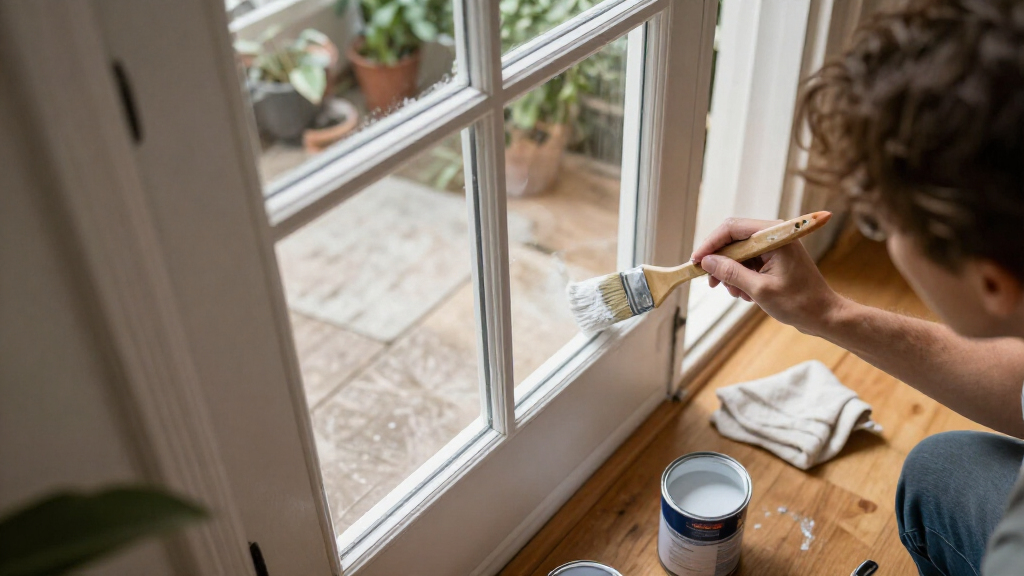
French doors have narrow bars, often called muntins, that divide the glass into panes. Painting those bars without getting paint on the glass can be difficult. Hunker says painter’s tape is a common option, but putting it around each pane takes time, and paint can seep beneath it. The report proposes scraping unwanted paint from the glass after painting instead of relying on tape to keep every edge clean.
The suggested timing is important: allow the paint to dry, but remove it within about 24 hours. Hunker says many house paints and primers do not adhere strongly to smooth glass, making dried paint relatively easy to scrape. As paint dries longer, however, it can become harder to remove. The source does not specify a particular paint brand or say that every coating will behave the same way.
For the cleanup, the report recommends a sharp razor blade held at a 45-degree angle or shallower. Press the blade against the paint rather than down into the glass, then gently push to lift the paint. Once an edge is free, it can be pulled away by hand or removed with the scraper. Work carefully along the point where the glass meets the muntin, and clean the pane afterward to remove any remaining haze.
Less Masking, Careful Cleanup
The approach shifts effort from preparation to cleanup. Instead of applying and removing tape around numerous small panes, a painter can focus on painting the door and scrape paint from the glass afterward. For doors with many muntins, that could reduce the time spent masking, though the source provides no timed comparison showing how much time the method saves.
It also avoids depending on tape as a perfect barrier, since paint can seep beneath its edges. But scraping is not risk-free: Hunker warns that a dull blade makes the work harder and can increase the chance of injury or glass damage. The practical benefit depends on using a sharp tool with light pressure and removing the paint before it becomes more difficult to lift.
Products Worth Considering

Dyson W1 PencilWash Cordless Wet and Dry Floor Cleaner with Dock

Levoit EverestAir-P Smart Air Purifier for Large Rooms

Shark Pet Cordless Stick Vacuum, 40-Minute Runtime, Grey, IX141
As an affiliate, we earn on qualifying purchases.
Why French-Door Panes Need Cleanup
The painting challenge comes from the doors’ multiple glass panes and narrow muntins. A brush can slip onto the glass while following the edges, even when someone tries to cut in carefully. Painter’s tape is one way to protect the panes, but applying it to all the small edges can be labor-intensive.
Hunker also compares the razor method with liquid masking products. The report says some liquid masking products still need to be cut or scraped away, and that a product could potentially damage a wood frame. It does not identify a specific product or document damage in a particular case. Its main advice is to skip that additional masking step and use a scraper to clean the glass after painting.
““The drier it gets, the harder the paint will be to remove.””
— Hunker report
Paint and Glass Conditions Vary
The report does not provide tests comparing the scraping method with painter’s tape, so its claims that the approach is faster or more effective are practical guidance, not measured results. It also does not establish that all paints, primers, glass surfaces, or door finishes will respond alike. Readers should not assume paint will lift cleanly in every situation.
The source gives no detailed precautions for different glass types or existing damage, and it does not specify whether a scraper is appropriate for every pane or coating. Its advice is limited to careful use on the glass: keep the blade at a shallow angle, avoid pushing into the surface, and use a sharp blade. The report also does not state how long a specific paint must dry in different temperatures or humidity levels; its “usually no more than 24 hours” guidance is general.
Check the Finish Before Scraping
For anyone following the method, the next step is to assess the door and paint once the coating has dried, then remove stray paint before it has been left for too long. Use a sharp scraper at a shallow angle and apply gentle pressure, stopping if the blade catches or the glass appears at risk. Afterward, clean the glass to remove any haze.
Hunker mentions that a longer blade may cover more area on large panes, but the report offers no further testing or follow-up results. It remains unclear whether the technique works equally well on every finish. The source’s guidance is a suggested home-improvement method, not a guarantee of a damage-free result.
Key Questions
What is the alternative to painter’s tape?
Hunker recommends painting the door, letting stray paint dry, and then removing it from the glass with a razor scraper, rather than taping around each pane.
When should the paint be scraped off?
The report says to let the paint dry but remove it usually within 24 hours. It warns that paint left to dry longer can be harder to scrape away.
How should the scraper be held?
Hold the blade at a 45-degree angle or shallower, and gently push against the paint. Avoid pressing down into the glass, which could scratch or crack it.
Does the razor method work with every kind of paint?
The source does not establish that it works with every paint or primer. Hunker says many house paints and primers do not adhere well to smooth glass, but results may vary.
What is the main risk?
A dull blade can make scraping harder and increase the risk of injury or glass damage. Hunker advises using a sharp blade and handling it carefully.
Source: hunker.com