
TL;DR

Get home appliances delivered free with Prime
- Fast, free delivery on millions of items
- Prime Video, Amazon Music and more included
- Member-only deals all year
DIY creator Delancey painted her honey oak kitchen cabinets bright white to match the walls, a makeover featured by Hunker. The report describes her preparation and painting method, but does not provide a verified project budget or independent assessment of the finished cabinets.
DIY creator Delancey painted her honey oak kitchen cabinets bright white to match the walls, a makeover featured in a Hunker report. The project shows one approach to changing the look of dated cabinets without replacing them, though the report does not independently verify the cost, durability or long-term results.
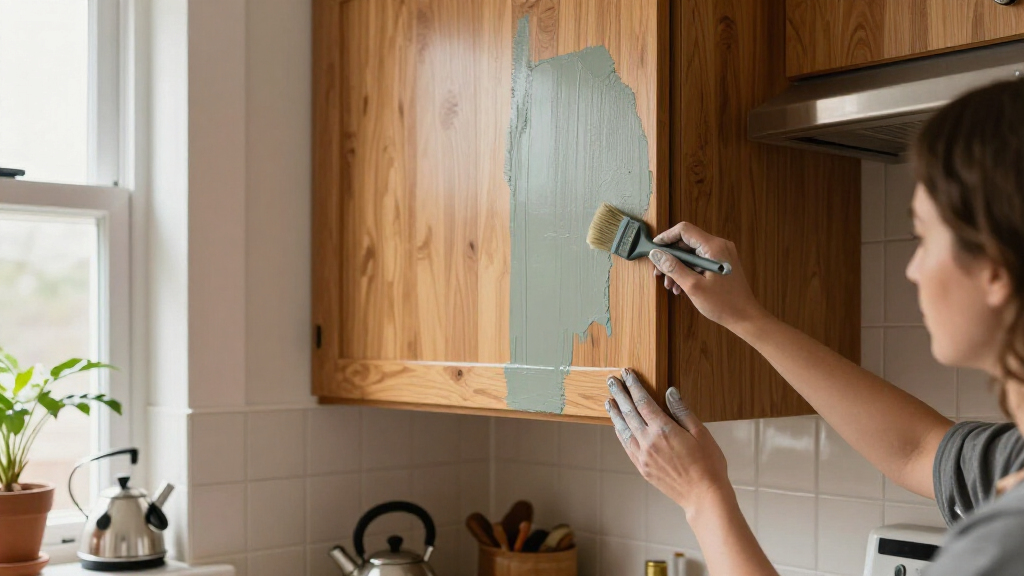
According to Hunker, Delancey shared the renovation in a video on Instagram under the account @delancey.diy. She removed the cabinet doors and drawers, cleaned them with a degreaser and sanded the surfaces before applying primer. To hide the wood grain, she used watered-down wood filler, then let it dry and sanded it. She repeated the filler step, tinting the material slightly the second time so she could see where it had been applied.
For the finish, Delancey recommended using a paint sprayer on doors and drawers to achieve a more even coat, and choosing a high-quality cabinet paint. Hunker says she applied two coats. The article describes the completed kitchen as brighter and more contemporary, with a modern farmhouse look, but those descriptions reflect the report’s characterization of the visual result.
The article gave example supply prices rather than a confirmed total for Delancey’s project: about $13 for primer, around $10 for wood filler, roughly $50 to $60 for a gallon of cabinet paint, and about $60 for the sprayer Delancey said she bought. The report does not itemize her full spending or say whether she already owned any tools or supplies.
A Lower-Cost Alternative to Replacement
Painting can change the appearance of cabinets while leaving their existing layout and frames in place. For homeowners who want a visual update but are not planning a full kitchen renovation, Delancey’s project illustrates a route that may require less spending than buying and installing replacement cabinets. The price examples in Hunker make the project’s potential entry costs easier to understand, but they are not a quote for every kitchen or a verified final budget.
The makeover also highlights that preparation takes a substantial share of the work. Cleaning, sanding, filling grain and priming are part of the described method, rather than optional shortcuts. A paint job that covers the wood grain may take multiple rounds of filling and sanding before the finish coats begin. The result therefore depends not only on color but also on surface preparation, product selection and application.
Matching the cabinets to the walls is one design choice, not a guaranteed way to make every kitchen look larger or more expensive. Hunker says Delancey’s bright white cabinets made her room feel more spacious and contemporary. Readers should treat that as the report’s description of this particular makeover, since no measurements, cost comparison or independent design assessment were provided.
cabinet paint sprayer for DIY kitchen makeover
As an affiliate, we earn on qualifying purchases.
As an affiliate, we earn on qualifying purchases.
How the Cabinet Makeover Was Done
The Hunker article frames the project as a DIY update to honey oak cabinetry, a wood finish that Delancey wanted to change. Rather than replacing the units, she painted them to coordinate with the walls. The report says the cabinet color was a clean, bright white; it does not specify a paint brand, exact shade or finish.
Her process follows a sequence intended to help paint adhere and cover the wood grain: take off the doors and drawers, degrease, sand, apply wood filler if a smoother surface is wanted, sand again, prime and paint. Hunker notes that the filler was applied twice, with a slight tint added on the second pass to show where it had gone. Delancey’s sprayer recommendation concerned the doors and drawers; the article says a sprayer could also be used on the cabinet frames.
For color, the report presents matching the walls as a way to create a more continuous look. It also says homeowners could choose a cabinet color a shade or two lighter or darker than the walls for some contrast. Those are options described in the article, not evidence that one palette will suit every room.
“If you’ve been wanting to change up your kitchen, painting your cabinets has a HUGE impact.”
— Delancey, in the Instagram video caption, as quoted by Hunker
high-quality cabinet primer and paint set
As an affiliate, we earn on qualifying purchases.
As an affiliate, we earn on qualifying purchases.
Costs and Finish Durability Unverified
The source does not provide the project date, a complete receipt or a final total for Delancey’s renovation. Its prices are approximate examples for selected products and equipment, and costs may differ by location, brand, cabinet size and what tools a homeowner already has. It also does not report how long the work took or whether the cabinets have held up over time.
Hunker does not identify the precise paint color or finish, the primer and paint brands Delancey used, or whether she applied any protective topcoat. The report offers a method but does not establish that the same steps will work equally well on every cabinet material or existing finish. No independent review or follow-up from Delancey is included to confirm performance after daily kitchen use.
As an affiliate, we earn on qualifying purchases.
Check Materials Before Starting
The source does not announce a follow-up test, new project or scheduled next step. Its practical guidance is for readers considering the same kind of makeover: identify the cabinet material and existing finish, choose products designed for cabinets, and follow each product’s preparation and drying instructions. The article’s process indicates that homeowners should allow time for cleaning, sanding, filler, primer and multiple paint coats rather than treating the job as a quick coat of color.
Anyone planning the project will need to work out their own materials list and budget; the figures cited by Hunker are examples, not a current or all-inclusive estimate. The report also does not address local requirements or specific safety precautions for sanding and spraying, so readers should consult product labels and appropriate professional guidance for their setup.
sanding sponge for cabinet refinishing
As an affiliate, we earn on qualifying purchases.
As an affiliate, we earn on qualifying purchases.
Key Questions
What did Delancey change in her kitchen?
According to Hunker, she painted her honey oak cabinets bright white to match the walls rather than replacing them.
How did she prepare the cabinets?
The reported steps were to remove the doors and drawers, clean them with degreaser, sand, apply wood filler to help conceal the grain, sand again and prime before painting.
What did the project cost?
Hunker listed approximate prices for selected supplies, including about $13 for primer, around $10 for wood filler, $50 to $60 for cabinet paint and about $60 for a sprayer. It did not report Delancey’s verified total project cost.
Did the paint make the kitchen look larger?
Hunker described the finished room as feeling more spacious and contemporary. That is the article’s assessment of this kitchen; it does not establish that matching cabinet and wall colors will have the same effect in every space.
Is the makeover’s durability known?
No. The source describes the renovation process and the immediate visual result but provides no long-term follow-up on wear, peeling or maintenance.
Source: rss
NFL season / tailgating Picks
team gear
As an affiliate, we earn on qualifying purchases.