
TL;DR

Get home appliances delivered free with Prime
- Fast, free delivery on millions of items
- Prime Video, Amazon Music and more included
- Member-only deals all year
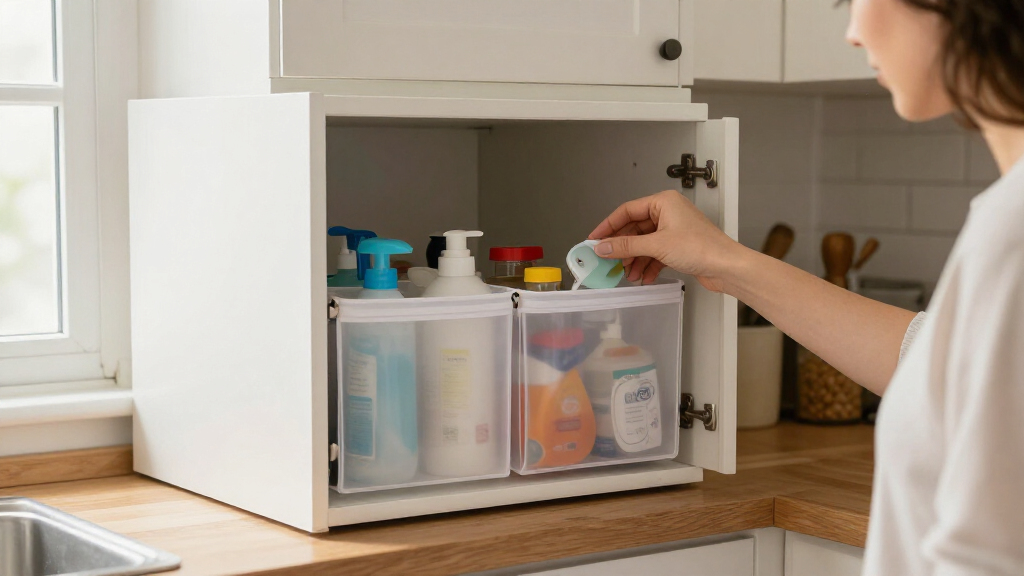
DIYer Bargain Bethany shared a low-cost way to hang a plastic bin on the inside of a cabinet door using a towel bar and cable ties. The setup can hold grocery bags and other small household supplies, though the bin takes up some room inside the cabinet when the door closes.
A DIYer known as Bargain Bethany has shared a way to turn the inside of a cabinet door into storage, using a towel bar, cable ties and a plastic bin. The setup was intended to keep grocery bags from piling up beneath her kitchen sink, and it can also hold items such as sponges, dish gloves or bathroom supplies, according to a report by Hunker.
The project uses a Dollar Tree Essentials Adjustable Over-the-Counter Towel Bar, Tool Bench Nylon Cable Ties and a plastic garbage bin. Hunker says a rectangular Dollar Tree trash can measuring about 15 inches tall is one possible container; an existing bin can also be reused if it is thoroughly cleaned first.
To assemble it, the DIYer holds the towel bar against the bin beneath its top lip and cuts a horizontal slit in the plastic just below the bar. Cable ties are threaded through the slit, looped around the bar and tightened, with the bar’s hooks facing up. The completed unit can then hang on the inside of a cabinet door, such as the door under a kitchen sink.
The original use was for plastic grocery bags, which Bargain Bethany had been putting loose in the cabinet. Hunker says the container could also store cleaning cloths, extra sponges, dish gloves, measuring cups, kitchen utensils, food wrap or liners. In a bathroom cabinet, it could hold washcloths, toiletries or spare toilet paper. A label on the front is an optional finishing touch.
A New Use for Cabinet Doors
The idea makes use of a surface that may otherwise sit empty, offering another way to keep small supplies contained and easy to reach. For households with limited cabinet space, a hanging bin could separate grocery bags or cleaning items from other supplies and reduce loose clutter.
The approach also relies on a few inexpensive materials and does not require a purpose-built organizer, according to the Hunker report. Its usefulness depends on the cabinet, however: the source notes that the bin takes up some interior space when the door is shut. Readers should check that the door closes freely and that the mounted bin does not press against plumbing, stored items or the cabinet frame.
Products Worth Considering

Dyson Big Ball Multi Floor Canister Vacuum, Yellow

Philips Hue Smart Light Starter Kit with Bridge and 4 White and Color A19 Bulbs

Arlo Pro Wireless Security Camera, 2K HDR, 6th Gen, 4-Camera Kit
As an affiliate, we earn on qualifying purchases.
How the Under-Sink Hack Works
Bargain Bethany’s project addresses a common organizational problem described in the Hunker report: grocery bags placed loose beneath a sink can become difficult to manage. Instead of using another shelf or a freestanding basket, the DIY positions a container on the back of the door, keeping its contents together while leaving the cabinet floor available for other items.
The same basic arrangement could serve different purposes depending on the cabinet. A kitchen cabinet might hold dishwashing supplies or wraps; a bathroom cabinet could hold guest toiletries or spare linens. Hunker also suggests adding a label to identify what belongs in the container. These are proposed uses, not a report that the DIYer tested every application.
“The bin does gobble up some of the cabinet space when the door is closed.”
— Hunker
Fit and Durability Depend on the Cabinet
The report does not provide measurements for the cabinet door, bin width or clearance needed to close the door, and it does not describe how much weight the cable ties or towel bar can safely support. It also does not report long-term testing of the setup. The suggested uses should therefore be treated as ideas rather than verified performance claims.
Before making the cut, users should check the bin’s shape, the cabinet’s available clearance and whether the bar hooks can sit securely over the door. The source gives no information about how the arrangement performs on doors with unusual thicknesses or finishes.
Check Clearance Before Installing
The next step for anyone trying the project is to choose a bin and confirm that it fits the cabinet door without blocking shelves or preventing the door from closing. The Hunker report describes cutting a slit in the container, so measuring and positioning the bar before making that cut can help avoid placing the opening incorrectly.
After assembly, users can decide what supplies to store and add a label if helpful. Hunker does not report a product launch, formal test or further update; the story presents the setup as a household DIY that readers can adapt to their own cabinets.
Key Questions
What materials does the cabinet-door storage DIY use?
The project uses an adjustable over-the-counter towel bar, nylon cable ties and a plastic garbage bin. Hunker names Dollar Tree products as examples and says a clean, reused bin could also work.
What was the bin originally used to store?
Bargain Bethany used it to gather plastic grocery bags that had been left loose beneath the kitchen sink.
What else could go in the container?
Hunker suggests sponges, cloths, dish gloves, kitchen wraps and utensils, as well as bathroom items such as toiletries, washcloths or spare toilet paper. Those are suggested uses, not all reported as tested.
Will the bin fit inside every cabinet?
That is not established. The report says the bin takes up some cabinet space when the door is closed, so users should check the available clearance and confirm the door shuts without hitting the bin or its contents.
Source: hunker.com