Home zoning helps you divide your space into areas that boost comfort and efficiency. By creating dedicated zones for work, relaxation, and entertainment, you improve organization and reduce noise disturbances. Smart lighting and soundproofing enhance each zone’s functionality, while tailored furniture and decor help you switch seamlessly between activities. Incorporating these strategies makes your home more inviting and energy-efficient. Keep exploring ways to optimize your space for a better living environment.
Key Takeaways
- Implement home zoning to enhance organization, comfort, and tailored functionality for different activities.
- Use smart lighting to customize ambiance and improve energy efficiency in each zone.
- Design dedicated entertainment areas with projector setups for immersive viewing experiences.
- Apply soundproofing techniques to create quiet workspaces and reduce noise transfer.
- Allocate specific furniture and technology to each zone to promote efficient, intentional living spaces.
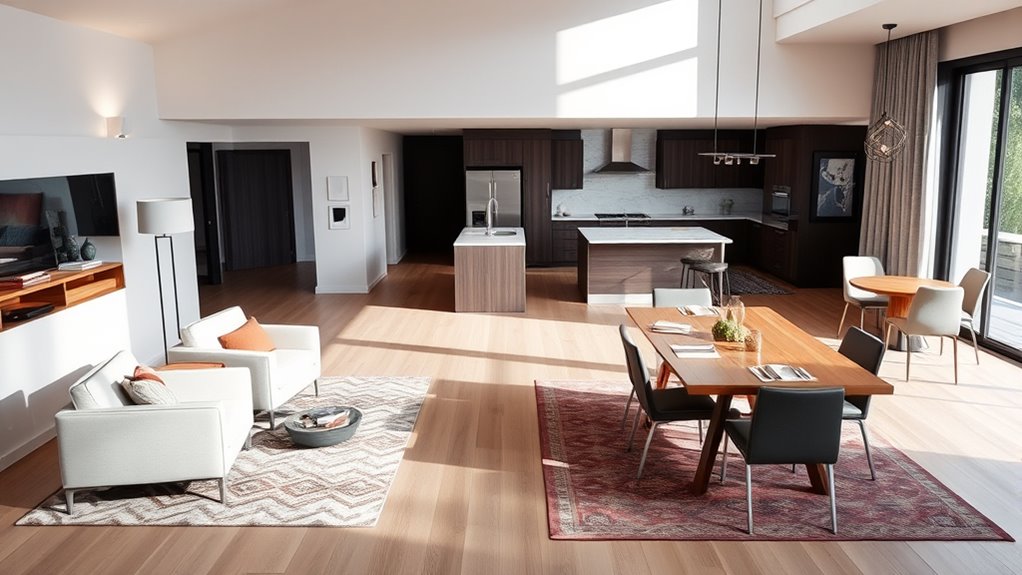
Have you ever considered how dividing your home into distinct zones can improve your daily life? Creating specific areas for work, relaxation, and entertainment helps you stay organized and enhances your comfort. When you design these zones thoughtfully, it’s easier to focus on tasks, unwind, and even save energy. One way to make each zone more functional is by integrating smart lighting. With smart lighting, you can customize the ambiance for each area—bright, energizing lights for your home office and softer, warmer tones for your relaxation space. This not only boosts your mood but also conserves energy since you only light the areas you’re using. Installing smart lighting systems is straightforward and allows you to control lights remotely, set schedules, or sync them with your routines, making each zone more adaptable to your needs. Additionally, understanding the importance of projector technology can help in designing dedicated entertainment zones with optimal visual quality. Soundproofing is another essential element when zoning your home. It’s especially beneficial if you want to create a quiet workspace away from noisy family areas or a cozy nook for reading without disturbances. Soundproofing can involve adding insulation, sealing gaps around doors and windows, or installing acoustic panels. These measures help reduce unwanted noise transfer, allowing you to enjoy your designated zones without interruptions. When you combine soundproofing with smart lighting, you create a more immersive experience—your workspace becomes a calm, well-lit environment, free from distractions. Similarly, your entertainment zone can be designed for maximum sound and light, enhancing your movie nights or gaming sessions. Dividing your home into zones also encourages better spatial organization. You can allocate specific furniture, decor, and technology to each area, making them feel more intentional and inviting. For example, in your office zone, you might include a sleek desk with adjustable lighting and noise-canceling headphones, while your relaxation zone might feature comfortable seating, dimmable lights, and sound-absorbing rugs. This clear separation helps your brain switch between different modes—working, relaxing, or socializing—without confusion. Plus, zoning can improve your home’s energy efficiency. When you only turn on the lights and appliances in the zone you’re actively using, you conserve electricity and reduce costs.
Frequently Asked Questions
How Does Zoning Impact Home Resale Value?
Zoning can boost your home’s resale value by enhancing interior aesthetics and energy efficiency. When potential buyers see well-designed zones that improve comfort and functionality, they’re more likely to be interested. Plus, zoning reduces energy costs by optimizing heating and cooling, making your home more appealing. You’ll stand out in the market with a thoughtfully zoned space, showing that you care about both style and savings, increasing your chances of a quick sale.
What Budget Should I Allocate for Home Zoning?
You should allocate around $1,000 to $5,000 for home zoning, depending on your space and needs. Coincidentally, good budget planning helps you manage zoning costs without surprises. Start by evaluating your project scope and prioritize areas for zoning. Keep in mind, investing wisely in zoning can boost your home’s comfort and value, making those costs well worth it. Be prepared to adjust your budget as you review quotes and options.
Are There Specific Zoning Patterns Suited for Small Homes?
For small homes, consider open-plan zoning with strategic interior partitioning to maximize space and enhance spatial flow. Use movable screens or partial walls to define areas without cluttering. Opt for multi-functional furniture to save space and maintain flexibility. This approach keeps your home feeling spacious, promotes good movement, and creates distinct zones for different activities, all while maintaining a cozy, efficient layout.
How Can I Modify Zoning Plans Over Time?
Imagine your home as a chameleon, adaptable and ever-changing. To modify zoning plans over time, focus on zoning flexibility by using movable partitions, modular furniture, or adjustable room dividers. Incorporate interior redesign to refresh layouts without major construction. Regularly reassess your needs, and make small tweaks that improve flow and function. This approach keeps your space dynamic, comfortable, and perfectly suited to your evolving lifestyle.
What Are Common Zoning Mistakes to Avoid?
To avoid zoning pitfalls, you should plan carefully and consider your lifestyle needs. Common design missteps include overcrowding zones, neglecting natural flow, and ignoring future expansion. Don’t overlook adequate lighting, privacy, or noise control. Confirm your zones are flexible for changes over time. By paying attention to these details, you’ll create a functional, comfortable home that adapts seamlessly to your evolving needs.
Conclusion
By zoning your home thoughtfully, you create a space that’s both comfortable and efficient. It’s like they say, “A place for everything, and everything in its place.” When you set clear zones, you enhance your daily life, reduce stress, and make your home truly work for you. So, take the time to plan your spaces carefully — it pays off in comfort and harmony, turning your house into a haven you love coming home to.