Choosing the right roofing material depends on your budget, style, climate, and durability needs. Asphalt shingles are affordable and easy to install but last only 15-30 years. Metal roofs offer long-term durability and energy efficiency but come with higher upfront costs. Tile adds classic beauty and is fire-resistant but is heavy and expensive. Wood provides rustic charm but requires maintenance. Exploring these options further helps you pick the best fit for your home and environment.
Key Takeaways
- Asphalt shingles are affordable and easy to install but have a shorter lifespan compared to other materials.
- Metal roofing is highly durable and energy-efficient but comes with higher upfront costs and complex installation.
- Tile roofs offer durability and aesthetic appeal but are heavy, expensive, and require strong structural support.
- Wood shingles provide a rustic look but need regular maintenance and are less fire-resistant.
- Material choice depends on climate, budget, and desired aesthetics, balancing advantages and potential drawbacks.
Choosing the right roofing material can substantially impact your home’s durability, energy efficiency, and overall appearance. When selecting a roof, you want something that not only protects your house but also enhances its curb appeal and helps you save on energy costs. Different materials have distinct advantages and drawbacks, so it is crucial to weigh these factors carefully.
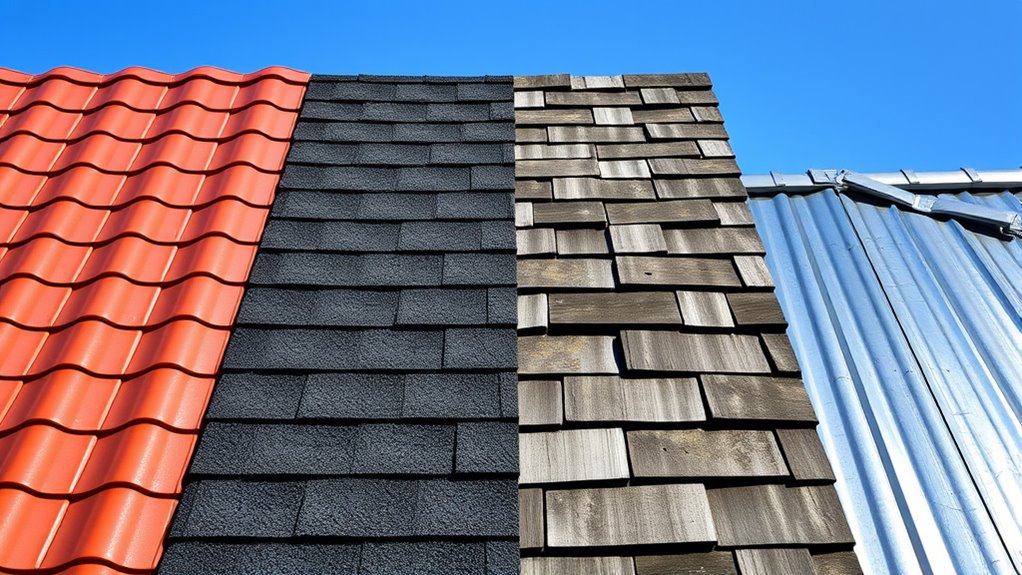
For instance, asphalt shingles are among the most popular options because they’re affordable, easy to install, and come in a wide range of colors and styles. They provide decent durability but may need replacement after 15-30 years. While they’re not the most energy-efficient choice, some asphalt shingles are designed with reflective coatings that help reduce heat absorption, contributing slightly to energy savings. Their aesthetic appeal varies depending on the style, but generally, they blend well with many home designs, making them a versatile option.
Metal roofing is known for its excellent durability and longevity, often lasting 50 years or more. It’s a smart choice if you want a roof that withstands harsh weather conditions. Metal roofs also excel in energy efficiency because they reflect sunlight rather than absorb it, helping to keep your home cooler in summer. This reflective property can translate into lower cooling bills. Aesthetically, metal roofs offer a sleek, modern look, and they can be customized with different finishes and colors to match your home’s style. However, they tend to be more expensive upfront and may require professional installation, which can increase initial costs.
Tile roofing, typically made from clay or concrete, provides a distinctive, classic appearance that many homeowners find attractive. It’s highly durable and resistant to fire and insects, lasting up to 50 years or more. Tiles are also good insulators, adding to your home’s energy efficiency by helping maintain interior temperatures. The aesthetic appeal of tile roofs is undeniable, especially for Mediterranean or Spanish-style homes. On the downside, tile roofs are heavy, so your existing structure must be strong enough to support the weight, and installation can be costly. They’re also more fragile under impact, which can be a concern in areas prone to hail. Additionally, some roofing materials are more compatible with certain climate conditions, influencing their effectiveness and longevity.
Finally, wood shingles or shakes lend a natural, rustic charm that appeals to many homeowners. They’re lightweight and relatively easy to install, but they require regular maintenance to prevent rot, mold, and insect damage. Wood roofs can be energy efficient if properly treated, but they tend to be less so than metal or tile, especially if untreated. Their aesthetic appeal is unmatched for traditional or country-style homes, offering warmth and character. However, they’re more susceptible to fire, and in some regions, they may not meet local building codes, limiting their use.
Ultimately, choosing the right roofing material involves balancing your priorities for energy efficiency, aesthetic appeal, budget, and climate considerations. Considering roofing material properties can help you select the best option for your specific needs.
Frequently Asked Questions
How Long Does Each Roofing Material Typically Last?
You can expect asphalt shingles to last about 20-30 years, while metal roofing often lasts 40-70 years thanks to its UV resistance and durability. Tile and slate roofs usually last over 50 years, offering excellent fire safety. Wood shingles last around 20-40 years but need regular maintenance. Your choice depends on climate, budget, and desired lifespan, ensuring you get the best balance of UV resistance and fire safety.
Which Roofing Options Are Most Environmentally Friendly?
Imagine your roof as a garden canopy, protecting your home like eco friendly materials. Sustainable options like metal, clay tiles, and green roofs are most environmentally friendly, reducing landfill waste and conserving resources. I once installed a green roof that attracted bees and butterflies, showcasing its eco benefits. These eco friendly materials help lower energy costs, reduce carbon footprints, and support healthy ecosystems, making your home greener and more sustainable.
What Are the Maintenance Requirements for Different Roofing Types?
You need to regularly inspect your roof for debris and perform roof cleaning to prevent moss buildup, which can damage shingles or tiles. Asphalt shingles require minimal maintenance, mostly occasional debris removal, while metal roofs need little more than cleaning to prevent dirt accumulation. Tile and wood shake roofs might need more frequent moss prevention treatments. Always guarantee proper drainage and check seals to extend your roof’s lifespan.
How Do Roofing Materials Perform in Extreme Weather Conditions?
You’ll be glad to know that 80% of homeowners report high satisfaction with roofing materials in extreme weather. When it comes to hail resistance, metal roofs excel, often withstanding hail up to 2 inches in diameter. For wind durability, slate and concrete tiles perform well, resisting strong gusts. Choosing the right material guarantees your roof can handle severe storms, minimizing damage and protecting your home effectively during unpredictable weather conditions.
What Is the Average Cost Difference Between Roofing Materials?
You’ll find that the cost comparison between roofing materials varies widely, with asphalt shingles typically costing $100-$150 per square, while metal roofing ranges from $120-$900 per square. Material pricing influences your total expense, and factors like durability and installation costs also play a role. If you choose higher-end materials like tile or slate, expect to pay more upfront, but they could save you money long-term through their longevity.
Conclusion
So, as you weigh your roofing options, remember that every material has its perks—and its pitfalls. You might think choosing the most stylish or cheapest option is the way to go, but in the end, you’ll likely pay the price—literally or figuratively. Ironically, the perfect roof isn’t just about looks or cost; it’s about balancing both, knowing that even the best choice comes with trade-offs. Sometimes, the smartest decision is accepting that no roof is truly perfect.