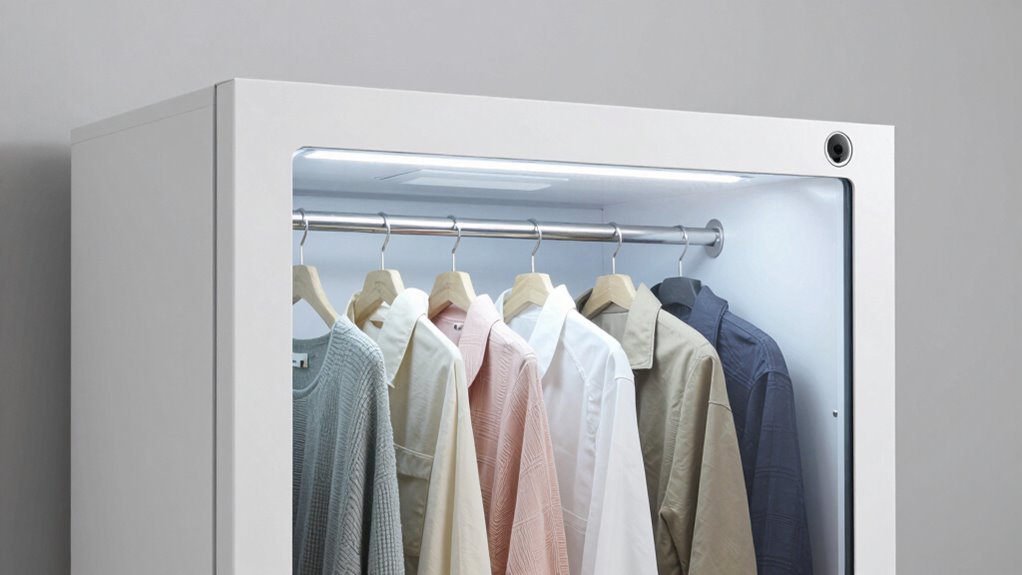

Clothing sanitizer cabinets can keep your clothes germ-free using UV light, heat, or disinfectants, but safety is essential. Risks include UV exposure, chemical spills, electrical hazards, and improper placement. Always follow safety guidelines like shielding UV lights, avoiding overstuffing, and keeping kids away. Proper maintenance and understanding malfunction signs help prevent accidents. Continue exploring these safety basics to ensure you use your cabinet confidently and safely every time.
Key Takeaways
- Always ensure the cabinet’s safety features, like automatic shutoff and UV shielding, are functioning properly before use.
- Handle disinfectants with protective gear and avoid leaks to prevent skin and respiratory hazards.
- Place cabinets in secure, childproof locations away from high traffic and potential hazards.
- Regularly inspect, maintain filters, and check for damage to prevent malfunctions and safety risks.
- Follow manufacturer instructions carefully and avoid overloading or improper handling to ensure safe operation.
What Are the Safety Risks of Using Clothing Sanitizer Cabinets?
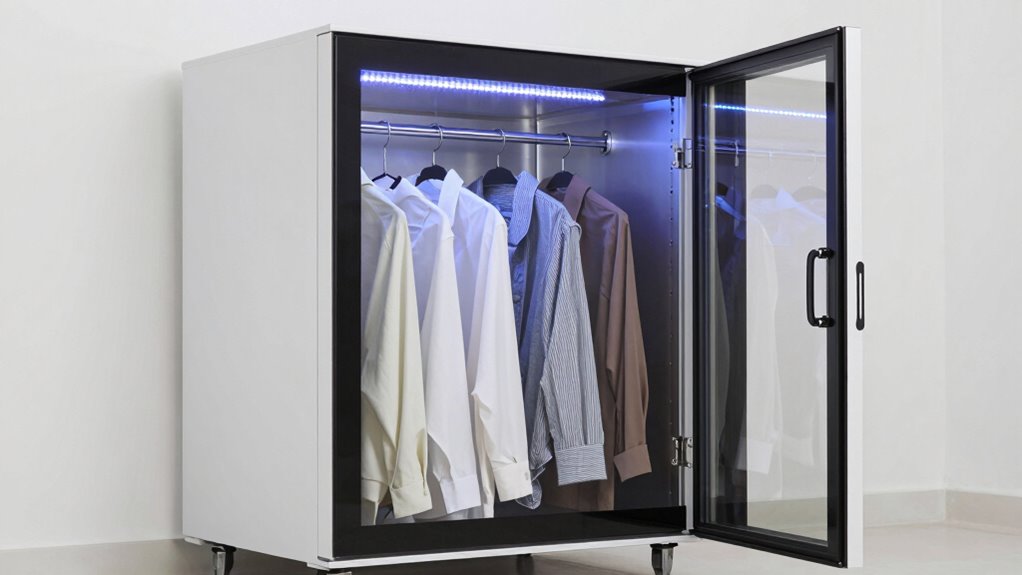
Using clothing sanitizer cabinets can pose safety risks if not operated properly. One major concern is UV exposure, which can harm your skin and eyes if the cabinet’s UV lights are accessed during operation. Always make certain the door is securely closed before activating the sanitizer to prevent accidental exposure. Proper UV light safety protocols are essential to minimize this risk. Chemical hazards also pose a risk, especially if the cabinet uses disinfectant sprays or cleaning agents. Improper handling or leaks can lead to skin irritation or respiratory issues. It’s essential to follow manufacturer instructions carefully and avoid tampering with the internal components. Regular maintenance and safety checks help minimize these risks. Additionally, understanding cycling gear safety tips can help you better protect yourself and your equipment during daily rides. Being aware of proper chemical storage can further reduce the risk of leaks and accidental exposure. Proper training on operating the cabinet safely is crucial to avoid common user errors that could lead to hazards. Incorporating safety signage and clear instructions can also enhance user awareness and prevent accidents. By staying vigilant and respecting the safety features, you can safely enjoy the benefits of clothing sanitizer cabinets without exposing yourself to unnecessary hazards.
How Do Clothing Sanitizer Cabinets Work: And What Safety Features Do They Have?

Clothing sanitizer cabinets operate by utilizing technologies like ultraviolet (UV) light, heat, or disinfectant sprays to eliminate germs, bacteria, and odors from garments. UV sterilization uses ultraviolet light to destroy pathogens, while heat kills bacteria through high temperatures. Chemical disinfectants are often sprayed inside to guarantee thorough sanitization. These cabinets typically feature safety measures such as:
Clothing sanitizer cabinets use UV, heat, and disinfectants for safe, effective garment sterilization.
- Automatic shutoff when the door opens
- UV light shielding to prevent exposure
- Temperature controls to prevent overheating
These safety features protect you from harmful UV exposure and ensure the device operates only when safely sealed. Incorporating precious metals in electronics considerations can enhance the visibility of indicators and safety signals on the device’s control panel, improving user awareness. Additionally, understanding filter sizing and flow helps optimize the sanitization process and maintain safety standards. Proper ventilation systems can also improve overall safety by preventing the buildup of harmful fumes or heat during operation. Furthermore, integrating safety sensors can detect malfunctions early and prevent accidents during operation. By combining multiple sterilization methods with built-in safeguards, clothing sanitizer cabinets provide effective sanitization without risking your safety.
Where Should You Place Your Clothing Sanitizer Cabinet for Maximum Safety?
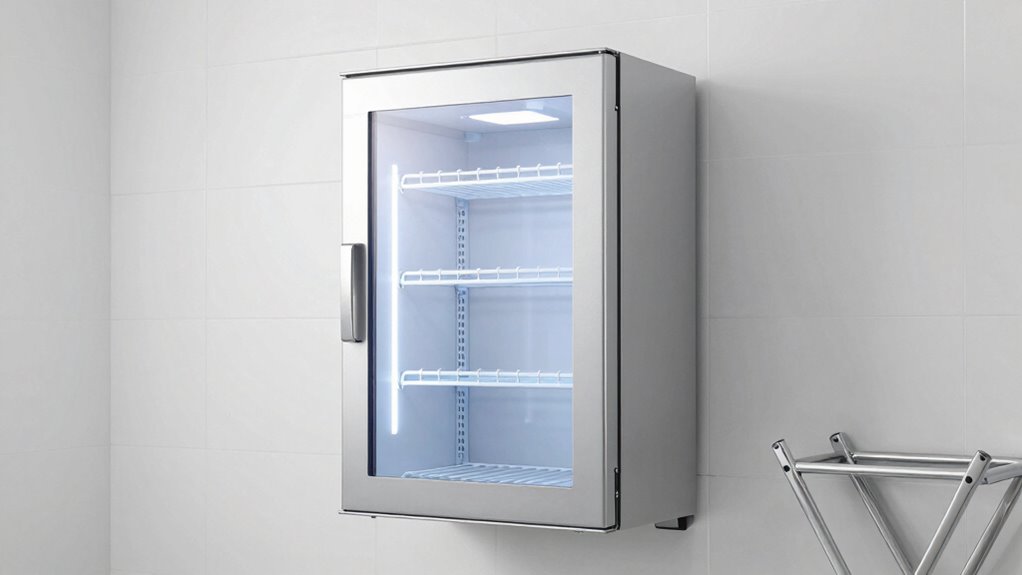
To guarantee safety, place your clothing sanitizer cabinet away from high traffic areas where it could be knocked over or bumped. Keep it out of reach of children to prevent accidental exposure or misuse. Choosing the right spot helps protect everyone while keeping your space organized.
Avoid High Traffic Areas
Placing your clothing sanitizer cabinet in a low-traffic area is essential for maintaining safety and ensuring it functions effectively. High traffic and crowded spaces increase the risk of accidental bumps, spills, or interference with the device. To maximize safety, avoid placing it in busy hallways, near entrances, or crowded laundry rooms. Instead, choose a quiet corner away from frequent foot traffic. Consider these locations:
- A dedicated laundry room corner
- A secluded closet or storage area
- An unused part of the utility room
This ensures the cabinet remains stable, reduces the chance of accidents, and allows proper ventilation. Keeping it out of high traffic zones helps prevent mishaps and maintains a safe environment for everyone around. Additionally, understanding safe placement principles can help you select the safest and most effective placement for your device. Being aware of cultural decor influences, such as Indonesian masks, can also inspire a more thoughtful and aesthetically pleasing setup for your space. Moreover, paying attention to environmental factors like ventilation and humidity can further enhance safety and device longevity. Incorporating local design elements can help create a harmonious environment that promotes safety and comfort.
Keep Away From Children
Since children are naturally curious and may accidentally tamper with the sanitizer cabinet, it’s essential to place it out of their reach. Use childproof locks to secure the door and ensure safety labels are clearly visible, warning of the risks. Choose a high or locked cabinet, avoiding areas accessible to kids. Consider installing the cabinet in a laundry room or utility closet with limited access. Here’s a visual guide for placement ideas:
| Location | Safety Measures |
|---|---|
| High kitchen cabinet | Childproof locks, safety labels |
| Utility room closet | Out of children’s reach, lockable |
| Basement storage | Secure with childproof locks |
| Garage cabinets | Keep away from kids, labeled |
| Laundry area | Childproof locks, safety labels |
Prioritize safety to prevent accidental exposure. Being aware of hazardous substances can help you make safer choices for placement, especially considering the importance of energetic alignment in maintaining a positive environment. Regularly inspecting your sanitizer cabinet for potential chemical leaks and understanding symbolic shapes associated with safety signs ensures ongoing safety and peace of mind. Additionally, familiarizing yourself with proper storage practices can further enhance safety measures.
How to Use Your Clothing Sanitizer Cabinet Safely: A Step-by-Step Guide

Using your clothing sanitizer cabinet safely is essential to guarantee effective sanitization and prevent accidents. First, read the manufacturer’s instructions thoroughly before use. Always ensure the door is securely closed during operation to avoid UV safety issues and prevent exposure to UV light. When loading clothes, avoid overstuffing, which can hinder proper sanitization and increase chemical exposure risks. Additionally, understanding the types of sanitizing technology used in your cabinet can help ensure you’re using it correctly and safely. To operate safely:
Always follow manufacturer instructions and ensure the door is securely closed to prevent UV exposure and ensure proper sanitization.
- Wear protective gloves if handling cleaning chemicals.
- Keep the cabinet in a well-ventilated area.
- Regularly inspect for damage or leaks.
- Be aware of astrological influences that some believe can affect personal well-being during appliance use.
- Familiarize yourself with somatic therapy principles to enhance overall well-being and reduce stress associated with appliance maintenance.
Common Mistakes That Can Compromise Safety and How to Avoid Them
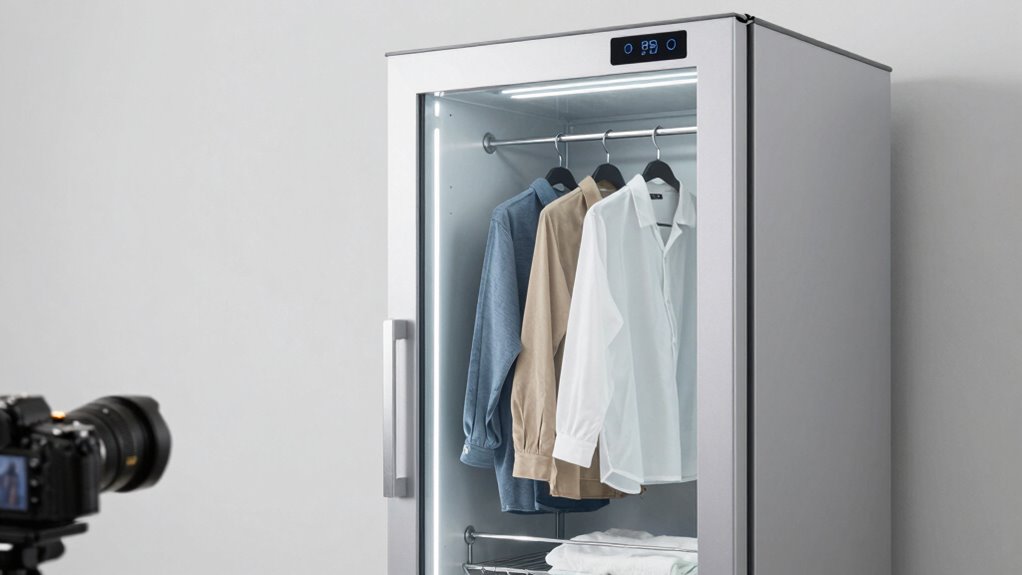
Even when following proper safety steps, certain common mistakes can still compromise your safety while using a clothing sanitizer cabinet. One mistake is neglecting to remove chemical residues from clothing, which can cause skin irritation or chemical exposure. Another hazard is ignoring electrical safety; plugging the unit into damaged outlets or overloading circuits increases electrical hazards. To avoid these issues, always inspect your equipment and ensure residues are thoroughly cleaned before sanitizing. Use outlets with proper grounding and avoid extension cords. Here’s a quick guide:
| Mistake | How to Avoid |
|---|---|
| Ignoring chemical residues | Clean clothes thoroughly before sanitizing |
| Overloading or damaged outlets | Use proper outlets, avoid overloading |
| Neglecting electrical hazards | Regularly inspect cords and connections |
Why Regular Maintenance and Filter Changes Are Key to Safe Operation

Regular maintenance and timely filter changes are essential to keep your clothing sanitizer cabinet operating safely and effectively. Proper filter maintenance prevents buildup that could hinder performance or cause safety issues. Conducting regular safety inspections helps identify potential problems early, such as worn parts or inadequate filtration. To stay on top of this, you should:
Regular maintenance and inspections ensure your clothing sanitizer cabinet remains safe and effective.
- Schedule routine filter replacements as recommended by the manufacturer
- Perform safety inspections to check for leaks, damage, or malfunctions
- Clean internal components to prevent mold and bacteria growth
These steps ensure your unit functions correctly and minimizes health risks. Neglecting filter maintenance or safety inspections can compromise the cabinet’s safety, reduce its lifespan, and risk exposing users to contaminated clothing. Staying vigilant keeps your equipment safe and efficient.
How to Recognize and Respond to Safety Warnings or Malfunctions

Maintaining your clothing sanitizer cabinet’s filters and safety checks helps prevent issues, but it’s equally important to recognize warning signs early. Pay attention to safety warnings like unusual noises, strange smells, or error messages on the control panel. These signs often indicate a malfunction or safety concern. If you notice any of these warnings, stop using the cabinet immediately and unplug it to prevent further damage or risk. Respond to malfunctions by consulting the user manual or contacting a professional technician. Never ignore safety warnings or try to fix complex issues yourself. Prompt malfunction response can prevent accidents, prolong your cabinet’s lifespan, and ensure safe operation every time. Staying alert helps keep you and your environment safe from potential hazards.
Who Should Avoid Using Clothing Sanitizer Cabinets and Why?
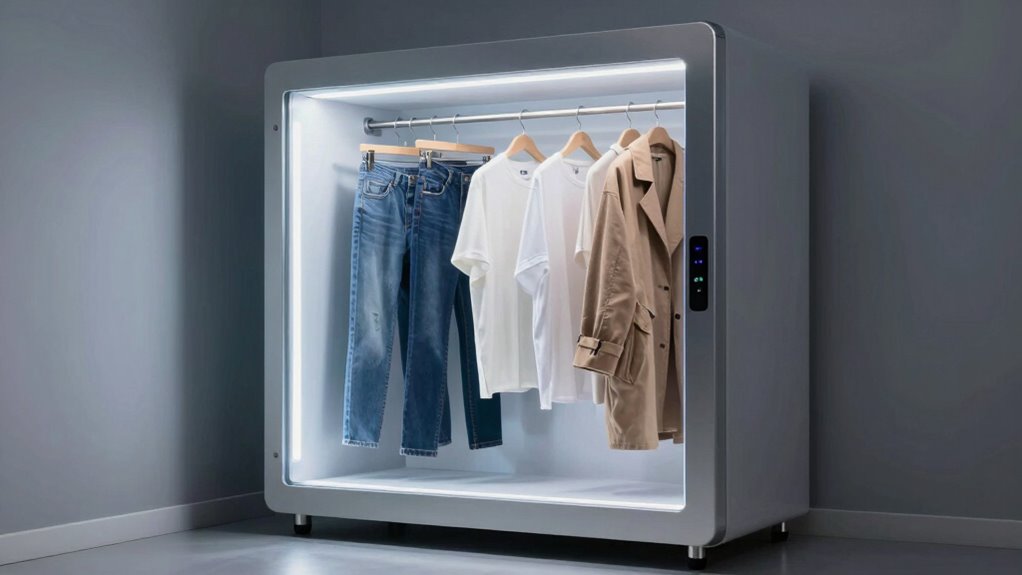
Certain individuals should avoid using clothing sanitizer cabinets because their health conditions or sensitivities could make exposure unsafe. People with medical conditions, such as asthma or skin sensitivities, may react negatively to disinfectant fumes or chemicals released during the process. Additionally, those who handle hazardous materials without proper training risk exposure to harmful substances.
You should also be cautious if you have:
- Respiratory issues that could be aggravated by disinfectant vapors
- Allergies to chemicals used in the sanitizing process
- Skin conditions that increase sensitivity to disinfectants
Avoiding use guarantees you won’t inadvertently expose yourself to hazardous materials or worsen existing health issues. Always read manufacturer warnings and consult a healthcare professional if you’re unsure about your safety.
Extra Safety Measures You Can Take When Using a Clothing Sanitizer Cabinet
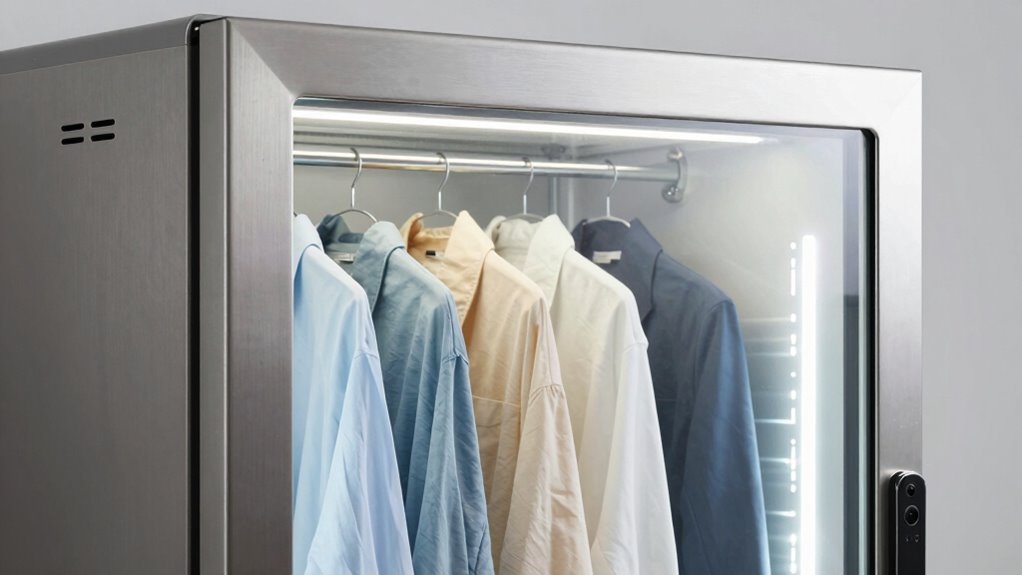
To maximize safety when using a clothing sanitizer cabinet, you should take proactive measures to minimize exposure to chemicals and fumes. Prioritize UV safety by ensuring the UV lights are properly shielded and never directly exposed to skin or eyes. Always follow the manufacturer’s instructions regarding safe operation and maintenance. Use gloves if handling chemicals or cleaning the interior to reduce chemical exposure. Ventilate the area well during and after use to disperse any fumes. Regularly inspect the cabinet for damage or leaks that could compromise safety. Avoid standing directly in front of the UV lights when in use, and ensure the cabinet’s safety interlocks are functioning correctly. These precautions help protect you from unnecessary chemical exposure and UV radiation risks.
Final Safety Checklist Before Operating Your Clothing Sanitizer Cabinet
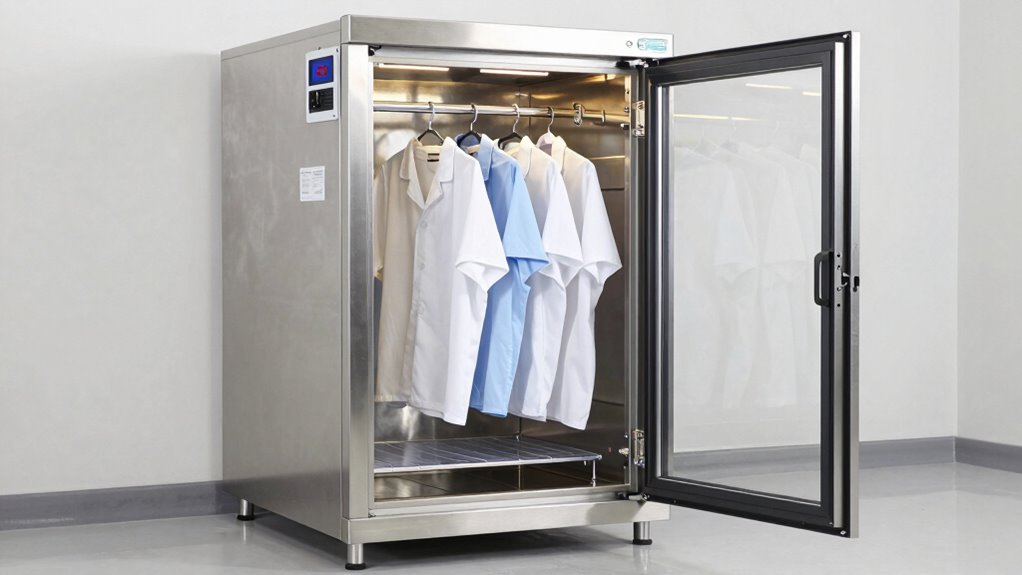
Before operating your clothing sanitizer cabinet, it’s essential to perform a final safety check to guarantee everything is in proper order. Start by reviewing your risk assessment to identify potential hazards. Confirm that all safety features are functional and that the cabinet is properly maintained. Make sure you’ve completed user training to understand the correct operation procedures. Additionally, verify that no flammable materials are nearby and that the ventilation system is working effectively. Before hitting the switch, double-check the door seals and internal components for any damage. This quick but thorough safety checklist minimizes risks, promotes safe usage, and guarantees you’re fully prepared to operate the sanitizer cabinet confidently. Taking these steps helps prevent accidents and maintains a safe environment for everyone involved.
Frequently Asked Questions
Are Clothing Sanitizer Cabinets Safe for All Fabric Types?
Clothing sanitizer cabinets are generally safe for most fabric types, but you should check fabric compatibility before use. Some delicate or sensitive fabrics might not withstand the sanitizer’s effects, so it’s wise to read manufacturer instructions. To guarantee sanitizer effectiveness without damaging your clothes, always follow recommended settings and avoid overexposure. This helps protect your fabrics and keeps them clean and sanitized properly.
Can Children Operate or Access Clothing Sanitizer Cabinets Safely?
Children should not operate clothing sanitizer cabinets unsupervised. While many units feature child-proof locks, these aren’t foolproof, and kids might still access harmful chemicals or misuse the device. Always make certain parental supervision is in place and that cabinets are securely locked when not in use. Investigate safety features thoroughly before allowing children nearby, and never assume that child-proof locks guarantee complete safety.
What Are the Long-Term Health Effects of Repeated Sanitizer Use?
Repeated sanitizer use can cause skin irritation over time, especially if you have sensitive skin. It may also contribute to microbial resistance, making germs harder to kill. You might notice that your skin becomes dry, cracked, or itchy. To minimize risks, limit use and follow safety instructions. Regularly moisturize your skin, and avoid overusing sanitizers to protect your health and prevent germs from becoming resistant.
Are There Specific Safety Certifications to Look for in These Cabinets?
Imagine you’re choosing a sanitizer cabinet for your workplace; you want it safe and reliable. Look for certification standards like UL or NSF, which guarantee regulatory compliance and safety. These certifications verify the cabinet meets industry safety and effectiveness benchmarks. Prioritizing certified units helps protect your staff from potential hazards and ensures the device functions as intended, giving you peace of mind that you’re making a responsible choice.
How Do I Safely Dispose of or Recycle an Old Clothing Sanitizer Cabinet?
To safely dispose of or recycle an old clothing sanitizer cabinet, first check local recycling guidelines and contact your waste management authority. Since it may contain hazardous waste like chemicals or electronic components, avoid throwing it in regular trash. You might need to arrange for hazardous waste pickup or take it to a certified recycling center. Always follow safety protocols to prevent environmental contamination or personal harm.
Conclusion
So, despite all the safety tips and precautions, it’s ironic how many overlook the risks of clothing sanitizer cabinets. You might think you’re just sanitizing, but neglecting proper use can lead to surprises you’d rather avoid. Always follow safety steps carefully—after all, it’s easy to forget that technology isn’t foolproof. In the end, a little caution goes a long way, especially when safety should never be an afterthought.