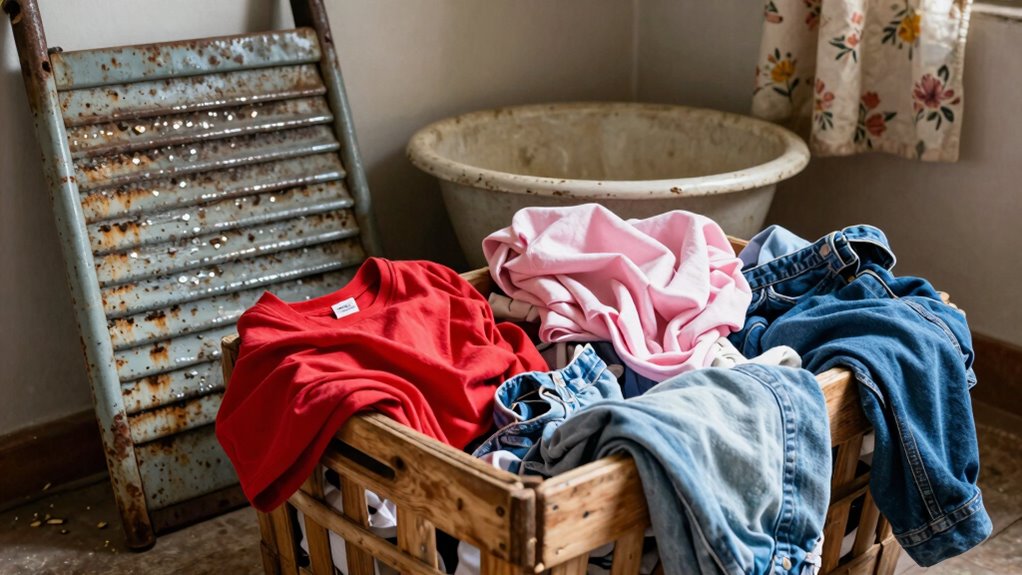

Sorting laundry the old-school way is helpful but not enough to prevent damage or extend your clothes’ life. Just separating whites from colors and delicate from sturdy fabrics doesn’t address issues like improper washing, drying, or fabric-specific needs. Water temperature, cycle choices, and folding techniques also matter. Combining proper sorting with eco-friendly detergents and smart laundry routines can protect your clothes and save resources. Want to learn more about maximizing your laundry care?

Get home appliances delivered free — and shop member deals
- Fast, free delivery on millions of items
- Access to Prime Big Deal Days deals on October 6–7
- Prime Video, Amazon Music and more included
Key Takeaways
- Basic sorting doesn’t prevent damage caused by improper washing or drying techniques.
- It doesn’t address fabric-specific needs, risking fiber damage or color bleeding.
- Proper handling, water temperature, and cycle settings are essential for optimal results.
- Folding techniques impact clothing longevity, which sorting alone can’t ensure.
- Combining sorting with suitable detergents and drying methods enhances overall laundry care.

Sorting laundry the old-school way might seem like a simple task, but it’s actually a vital step to keep your clothes looking their best. You probably separate whites from colors and delicate fabrics from sturdier ones, but even this basic method isn’t always enough to prevent damage or maintain your clothes’ longevity. While sorting helps, it doesn’t address all the factors that influence how well your laundry turns out, especially if you’re aiming for an eco-friendly approach.
Using eco friendly detergents is a smart move, but they need to be paired with proper sorting and handling. These detergents are gentle on the environment and your clothes, but they can’t undo damage caused by improper washing or drying. For example, washing delicate fabrics with heavy-duty detergents or mixing whites with heavily soiled items might reduce their lifespan or cause color bleeding, even if you’re using eco-friendly options. So, sorting isn’t just about separating colors; it’s about understanding fabric types and their specific needs. That’s where laundry folding techniques come into play, too. When you fold clothes properly, you reduce wrinkles and stress on fibers, which extends their life. Proper folding also prevents stretching or misshaping, especially with delicate items like sweaters or blouses.
Eco-friendly detergents help, but proper sorting and folding protect your clothes’ lifespan and quality.
But why isn’t sorting alone enough? Because laundry routines often overlook other crucial factors like water temperature, wash cycle, and drying methods. For eco-conscious washing, you should consider cold water cycles and shorter wash times, which save energy and preserve fabrics better. If you’re not adjusting these settings based on fabric type or color, you risk damaging clothes or causing colors to bleed, even if you’re using the best eco friendly detergents. Additionally, your laundry folding techniques matter after washing, as they help prevent unnecessary wear and tear. For example, tightly folding or stuffing clothes into drawers can cause creases or stretching over time, especially if your laundry isn’t dried properly.
Furthermore, understanding fabric care is essential to ensure your clothes last longer and stay in good condition. Incorporating proper sorting based on fabric sensitivity can significantly reduce the need for re-washing and minimize environmental impact. It’s also beneficial to be aware of laundry machine settings, which are tailored to different loads to optimize cleaning and conserve resources. In the end, sorting laundry the old-school way is a good start, but it’s just part of the bigger picture. To truly care for your clothes and stay eco-friendly, you need to understand fabric care, choose the right detergents, and adopt effective folding techniques. Combining these elements ensures your laundry routine is not only efficient but also gentle on the environment and your wardrobe. Remember, laundry isn’t just about getting clothes clean; it’s about caring for them in a way that lasts.
eco-friendly laundry detergent for delicate fabrics
As an affiliate, we earn on qualifying purchases.
As an affiliate, we earn on qualifying purchases.
Frequently Asked Questions
What Are the Environmental Impacts of Traditional Laundry Sorting?
Traditional laundry sorting can waste water and energy, increasing environmental impact. When you sort clothes improperly, you might run multiple cycles, consuming more resources. Using eco-friendly detergents helps reduce chemical runoff, while practicing water conservation minimizes waste. By sorting smarter and choosing sustainable products, you lessen pollution and conserve essential resources. This simple shift benefits the environment, making your laundry routine more eco-conscious and sustainable.
How Can I Prevent Color Bleeding During Washing?
To prevent color bleeding during washing, always separate your laundry by color and fabric type to minimize color transfer. Use cold water, as it helps lock in fabric dye and reduce bleeding. Adding a color-catching sheet can also trap loose dye, preventing it from transferring. While some believe pre-soaking clothes helps, proper sorting and using cold water are the most effective ways to protect your garments from unwanted color transfer.
Are There Specific Detergents Better for Delicate Fabrics?
Yes, you should look for gentle detergents designed for delicate fabrics. These detergents typically have fabric-specific formulations that clean effectively without damaging fibers. They help preserve the softness, color, and integrity of delicate materials like wool, silk, or lace. Always check the label for gentle or delicate cycle recommendations, and use the appropriate amount to prevent harsh chemicals from harming your fabrics, keeping them looking their best wash after wash.
How Often Should I Wash Different Types of Laundry?
You should wash towels and bedding weekly, while jeans and shirts can go every two to three wears. Nearly 80% of people neglect proper laundry frequency, risking bacteria buildup. Focus on laundry folding and stain removal techniques to keep clothes fresh longer. For delicate fabrics, wash less often and use gentle detergents. Regularly adjusting your laundry schedule guarantees your wardrobe stays clean, odor-free, and well-maintained.
What Are the Signs My Laundry Needs Special Treatment?
You’ll want to pay attention if your laundry shows signs like persistent stains or fabric softening that doesn’t work anymore. For stubborn stains, try specific stain removal techniques before washing. If your clothes feel rough or lose softness, it’s time for special treatment—perhaps using fabric softening products or adjusting your wash cycle. These signs indicate your laundry needs extra care to maintain its quality and freshness.
fabric-specific laundry wash cycle settings
As an affiliate, we earn on qualifying purchases.
As an affiliate, we earn on qualifying purchases.
Conclusion
So, while your grandmother’s old-fashioned method of sorting laundry might seem like enough, it’s time to embrace some modern tricks—think of it as upgrading from a rotary phone to a smartphone. Mixing in newer techniques guarantees your clothes stay fresher and last longer. Don’t get stuck in the past like a dial-up internet connection; adapt and evolve your laundry routine for cleaner, happier clothes every time. After all, progress is the only way forward.
clothes folding and storage techniques
As an affiliate, we earn on qualifying purchases.
As an affiliate, we earn on qualifying purchases.
water temperature control washing machine
As an affiliate, we earn on qualifying purchases.
As an affiliate, we earn on qualifying purchases.
NFL season / tailgating Picks
team gear
As an affiliate, we earn on qualifying purchases.