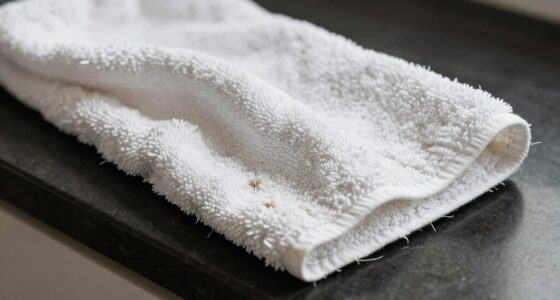
Overdrying your clothes costs more than just extra energy on your utility bill. It damages fabric fibers, making clothes look faded, feel rough, and wear out faster. High heat and extended cycles weaken elastic fibers, shortening your clothes’ lifespan. Plus, overdried clothes are stiff and uncomfortable, leading you to replace items sooner. By understanding how proper drying habits save money and preserve quality, you’ll discover simple ways to protect your wardrobe and wallet in the long run.
Key Takeaways
- Overdrying consumes excess energy, leading to higher utility bills over time.
- Prolonged heat exposure damages fabric fibers, shortening clothing lifespan and increasing replacement costs.
- Overdrying causes clothes to feel stiff and uncomfortable, reducing wearability and necessitating more frequent replacements.
- Using moisture sensors and proper settings prevents overdrying, saving energy and extending garment longevity.
- Regular maintenance like lint filter cleaning improves dryer efficiency, reducing energy waste and long-term expenses.
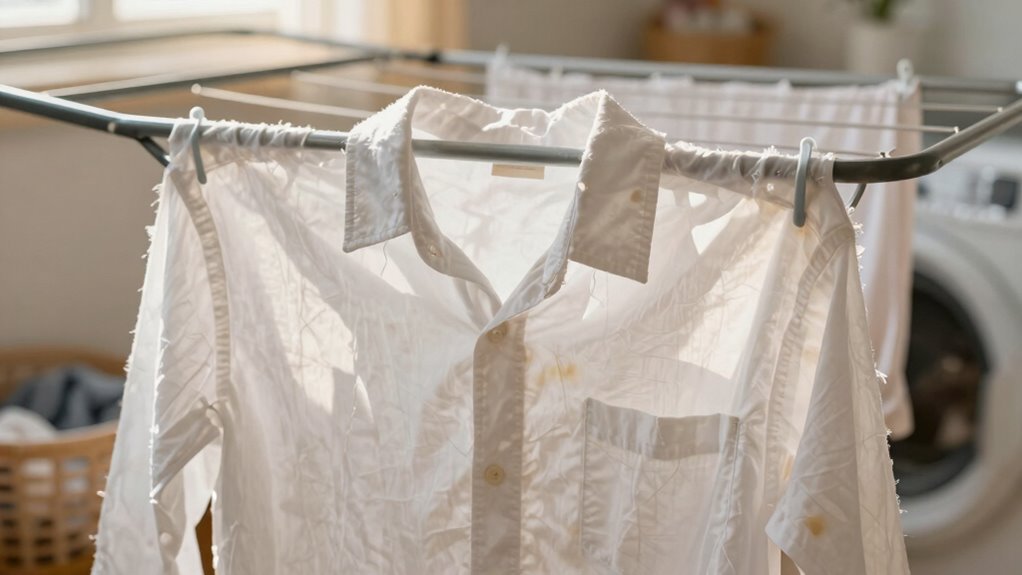
Overdrying your clothes might seem harmless, but it can actually lead to higher costs in the long run. When you leave your laundry in the dryer too long, you’re consuming more energy than necessary. An over-dried load uses extra power because the dryer continues to run even after the clothes are dry. This unnecessary energy consumption can add up over time, increasing your utility bills without you realizing it. The more often you overdry, the more you waste electricity, which strains your household budget and contributes to environmental waste. Additionally, many modern dryers include moisture sensors that can help prevent overdrying by automatically shutting off when clothes are dry enough.
Beyond the increased energy costs, overdrying also damages your clothes’ fabrics. High heat and extended drying times weaken fibers, making garments prone to wear and tear faster than they should. Over time, this damage causes your clothes to look faded, feel rough, or develop holes. The constant exposure to excessive heat breaks down the elastic fibers in your clothes, especially in items like activewear or stretch fabrics, reducing their elasticity and lifespan. As a result, you find yourself replacing your wardrobe more frequently, which costs more money and contributes to unnecessary waste. Proper drying techniques, such as using appropriate settings and avoiding excessive heat, can help preserve fabric integrity. Using appropriate drying settings can also help minimize fabric stress and extend clothing lifespan.
You might think that drying clothes longer ensures they’re completely dry and ready to wear, but the reality is that overdrying does more harm than good. It not only wastes energy but also shortens the lifespan of your clothes, forcing you to buy replacements sooner. Additionally, overdried clothes tend to become stiff and uncomfortable, which can affect how they feel on your skin and how long they last in good condition. Proper drying—removing just enough moisture—preserves your clothes’ quality and minimizes energy use. Remember, clothes drying best practices can help you achieve optimal results while protecting your wardrobe. Incorporating energy-efficient drying techniques can further optimize your laundry routine and reduce your environmental impact.
To avoid these pitfalls, you should consider using moisture sensors or setting specific drying times based on the load size and fabric type. Many modern dryers have sensors that automatically shut off when clothes reach the right level of dryness, preventing unnecessary energy consumption and fabric damage. It’s also helpful to clean the lint filter regularly; a clogged filter makes the dryer work harder and consumes more energy. If you hang clothes to air dry, you save even more energy and avoid heat-related fabric damage altogether. Incorporating these habits—such as monitoring drying times and maintaining your equipment—can lead to significant savings over time.
In the end, overdrying your clothes might seem like a small habit, but it has a significant impact on your utility bills and the longevity of your wardrobe. Being mindful of drying times and methods helps you save money and extend the life of your clothes, all while reducing your environmental footprint. It’s a simple change that yields long-term benefits, saving you money and keeping your clothes looking and feeling their best.
As an affiliate, we earn on qualifying purchases.
Frequently Asked Questions
How Does Overdrying Affect Different Fabric Types Differently?
Overdrying affects fabric types differently; delicate fabrics like silk or wool are more prone to fabric damage and color fading, losing their softness and vibrancy. Sturdy materials like cotton or denim handle overdrying better but can still become stiff or shrink over time. You should always check care labels and avoid over-drying to preserve your clothes’ quality, preventing unnecessary damage and color loss.
Can Overdrying Clothes Lead to Increased Energy Bills?
Yes, overdrying your clothes can definitely boost your energy bills. Your laundry habits directly impact energy conservation, and leaving the dryer running longer than needed wastes electricity and money. It’s like paying extra for a luxury you don’t need—except here, the luxury is wasting energy. So next time, cut short your drying cycle; your wallet and the environment will thank you for it.
What Are Some Signs My Clothes Are Overdried?
You’ll notice your clothes are overdried when they feel stiff and rough, and if you see clothing shrinkage, especially in cotton or wool items. Fabric stiffness occurs because overdrying removes too much moisture, damaging fibers. Overdried clothes may also seem less flexible and more prone to wrinkling. To avoid these signs, use a lower heat setting or remove clothes promptly to maintain their softness and size.
Are There Eco-Friendly Ways to Prevent Overdrying?
Ironically, avoiding overdrying is eco-friendly and saves money. You can do this by setting your dryer to a lower heat or using moisture sensors. For natural fibers and synthetic fabrics, air drying or using eco-friendly drying racks reduces energy use. It’s a simple step that protects your clothes and the environment, all while preventing unnecessary wear and tear caused by overdrying. Small changes make a big difference.
How Often Should I Check My Clothes During Drying?
You should check your clothes every 15 to 20 minutes during drying. Doing so helps you prevent overdrying, which can affect fabric softness and increase energy use. By monitoring drying time closely, you guarantee your clothes don’t become stiff or damaged. This habit also saves you money and preserves the quality of your fabrics, making your laundry routine more efficient and eco-friendly.
As an affiliate, we earn on qualifying purchases.
Conclusion
So, next time you crank that dryer to maximum, remember—you’re not just wasting electricity; you’re throwing money into the void. Overdrying your clothes isn’t just a fashion faux pas; it’s a financial folly. Think of all the dollars you could save by drying smarter, not harder. Save your coins, your clothes, and your sanity—because in the end, overdrying isn’t just a chore, it’s a costly comedy played on your utility bill.
As an affiliate, we earn on qualifying purchases.
As an affiliate, we earn on qualifying purchases.