BTU ratings show how much heat a grill can produce, but they don’t tell you how well it cooks. A higher BTU doesn’t guarantee even heat or good temperature control, which are key for great grilling. Grill size, heat distribution, build quality, and burner design matter more. If you’re curious about choosing a grill that cooks better, keeping these factors in mind can help you make a smarter choice. Learn more about what really influences grill performance.
Key Takeaways
- BTU ratings measure heat output but do not guarantee even heat distribution or temperature stability.
- Higher BTUs can lead to hot spots and uneven cooking, making them an unreliable sole performance indicator.
- Factors like material quality, burner design, and heat management are more important for overall grilling performance.
- Focusing solely on BTU numbers may result in poor purchase choices; evaluate overall construction and features instead.
- Proper grill maintenance and control features significantly impact cooking results more than BTU ratings alone.
What Do BTUs Tell Us About Gas Grills?

Ever wonder what BTUs really reveal about a gas grill? Fundamentally, BTUs measure the heat output, giving you an idea of its cooking capacity. Higher BTUs mean the grill can generate more heat, which is useful for searing and cooking large quantities quickly. However, it doesn’t tell you everything about performance. For example, a grill with high BTUs might struggle with temperature stability if the heat isn’t distributed evenly. That means you could end up with hot spots or inconsistent cooking, even if the total BTU number looks impressive. Additionally, heat distribution can influence how you maintain your grill, since proper cleaning and care help ensure even heat distribution and longevity. Material quality also plays a key role in how well a grill maintains consistent temperatures over time. So, while BTUs help gauge potential cooking power, they don’t guarantee better results. To find a grill that cooks evenly and maintains consistent temperatures, look beyond just the BTU rating.
How Are BTU Ratings Calculated?

BTU ratings are calculated based on the amount of heat produced by a gas grill’s burners, giving a standardized way to compare their heat output. To determine this, manufacturers measure how much gas is burned per hour and how much heat it generates. This calculation considers the BTU output of each burner and the total for the entire grill, offering a rough sense of heating capacity. However, keep in mind that factors like grill maintenance can affect actual performance during outdoor cooking. Regular cleaning ensures burners operate efficiently, maximizing heat output and heat distribution. While BTUs help gauge potential heat, they don’t tell the whole story about grilling performance. Instead, focus on proper maintenance and understanding how heat is distributed across your grill for better outdoor cooking results. heat distribution plays a crucial role in achieving evenly cooked food, regardless of the BTU rating. Additionally, cooking efficiency depends heavily on how well heat is managed across the grilling surface, which is why understanding heat flow can greatly improve your grilling outcomes. Proper heat management techniques can optimize the use of BTU ratings for better results, and considering performance factors can lead to more consistent cooking experiences.
Why BTUs Alone Don’t Predict Grill Performance

While high BTU ratings suggest strong heat output, they don’t tell the whole story. How evenly your grill distributes heat and how well you can control the flames really matter. These factors can make a big difference in your cooking results. Additionally, choosing comfortable and safe grilling equipment can enhance your overall experience and safety. Remember, a well-designed grill also considers body jewelry measurements and materials, which can influence your choice of accessories for maintenance and adjustments. Furthermore, selecting grills made with ethical manufacturing practices can contribute to more sustainable and responsible consumption. Understanding contrast ratio can also help you select a grill with better image quality, as it impacts how well the grill performs in different lighting conditions. Considering heat distribution technology can further improve your grilling consistency and performance.
Heat Distribution Efficiency
Although high BTU ratings suggest powerful grills, they don’t guarantee even heat distribution across the cooking surface. You might notice hot spots or uneven temperatures, regardless of the grill’s power. Good heat distribution depends on how the burners are arranged and how the heat is spread beneath the grates. A grill’s aesthetics can influence your confidence in its build quality, but it doesn’t assure consistent cooking. Reputable brands often invest in better engineering and more precise heat control systems, which improve heat distribution. When evaluating a grill, look beyond BTUs and consider how evenly it can cook your food. A well-designed grill with a solid reputation ensures that heat reaches all areas, giving you more reliable results and better cooking experiences. Additionally, cabling solutions used in the assembly of the grill can impact its overall functionality and safety. Proper heat management systems are essential to ensure even cooking and avoid flare-ups that can ruin your meal. Investing in a grill with advanced heat distribution technology can make a noticeable difference in cooking performance, especially when paired with effective temperature controls. Incorporating insulation techniques can also help maintain consistent heat levels throughout the cooking process.
Ignition and Control
A grill’s ability to perform well depends not just on its power output but also on how easily you can ignite and control the heat. A reliable ignition system ensures you can start grilling quickly without frustration, while good control features let you adjust the temperature precisely. Poor ignition can waste time and fuel, and limited control hampers cooking consistency. Look for:
- Easy-to-use ignition systems that spark reliably every time
- Precise control valves for temperature adjustments
- Even heat distribution controls
- Clear temperature gauges for monitoring
These features help you manage heat effectively, making your grilling experience more enjoyable and predictable. Remember, even a high BTU grill needs quality ignition and control to deliver the best results. Without them, power alone won’t guarantee better cooking. Additionally, safety features can help prevent accidents and ensure safe grilling sessions. Proper maintenance and understanding of your grill’s controls also play a crucial role in achieving optimal performance. Ensuring your grill has adequate ventilation can also improve performance and safety during grilling, especially since ventilation directly impacts combustion efficiency.
Why Grill Size and Heat Distribution Matter More

Grill size and heat distribution directly impact how evenly your food cooks and how much you can prepare at once. A larger grill provides ample space for multiple dishes, perfect for entertaining. Good heat distribution ensures consistent cooking across the surface, preventing hot spots. When considering grill aesthetics, a well-designed size complements your outdoor space and reflects the brand reputation. Here’s a visualization:
| Grill Size | Heat Distribution |
|---|---|
| Small | Uneven heat, limited space |
| Medium | Balanced heat, moderate space |
| Large | Even heat, maximum capacity |
| Compact | Space-efficient, focused heat |
| Extra Large | Extensive space, uniform heat |
How Build Quality and Materials Impact Cooking Results

The build quality and materials of your gas grill directly influence its durability and cooking performance. High-quality construction ensures your grill withstands weather and frequent use, maintaining consistent results. Material durability affects heat retention, corrosion resistance, and overall longevity. Poor construction quality can lead to uneven heat distribution and quicker wear. Look for grills with:
- Thick, corrosion-resistant steel or cast iron components
- Quality stainless steel for longevity
- Tight, secure welds for durability
- Well-designed vents and panels for even heat flow
Choosing a grill with superior materials and construction quality means better heat retention, fewer repairs, and more reliable cooking. Investing in quality guarantees your grill functions at its best, helping you achieve perfect results every time.
What Role Do Burners Play in Heat and Performance?

Burners are the core components that generate the heat necessary for cooking on a gas grill. Your burner size directly affects how much heat is produced, influencing cooking speed and evenness. Larger burners typically provide more heat, but that doesn’t always mean better performance—you need the right size for your grilling style. Flame control is equally important, allowing you to adjust the heat output precisely. Good flame control helps prevent flare-ups and ensures consistent temperatures across the cooking surface. Without proper control, even a high BTU rating can lead to uneven cooking. Focus on how well the burners distribute heat and how easily you can manage the flame, rather than just the number of BTUs, for ideal grilling results.
Key Factors That Affect How Your Grill Cooks
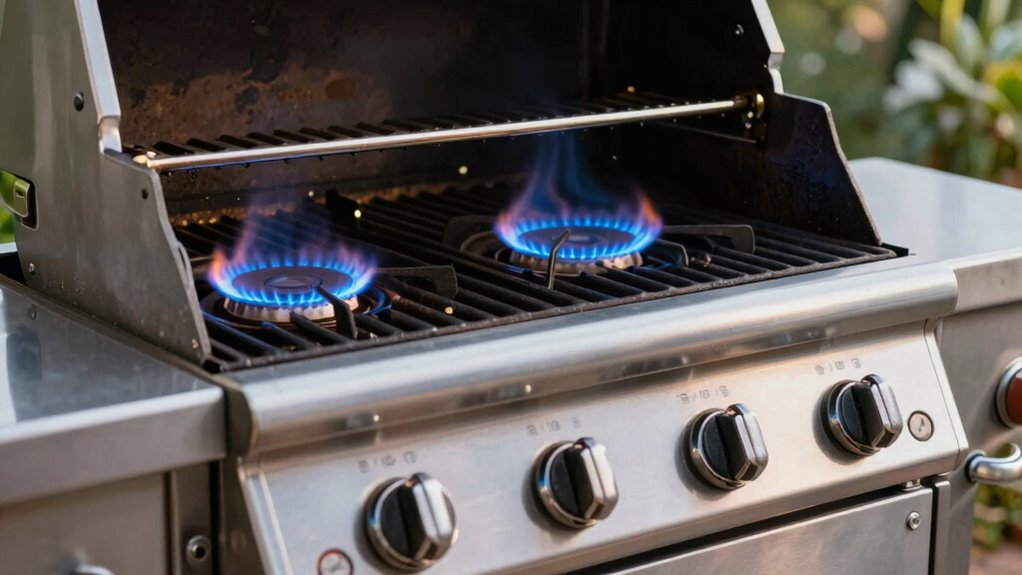
Your grill’s ability to cook evenly depends on heat distribution efficiency, which can vary based on design. The grill’s shape and placement of burners influence how heat spreads across the cooking surface. Additionally, your fuel consumption rate affects how consistently your grill maintains the desired temperature.
Heat Distribution Efficiency
Heat distribution efficiency plays a essential role in how evenly your grill cooks, ensuring each piece of food gets the right amount of heat. A grill with poor heat distribution can lead to hot spots and uneven cooking, no matter its BTU rating. When shopping, consider customer reviews focused on heat performance, not just looks. Also, keep in mind that grill aesthetics don’t guarantee even heat spread. To improve heat distribution, look for features like multiple burners, diffusers, or enhanced airflow. Good heat distribution helps you achieve consistent results and makes your grilling experience more enjoyable. Remember, a well-designed grill can outperform higher BTU models if it spreads heat evenly across its surface. This efficiency is essential for perfect grilling every time.
Grill Design Impact
The design of a grill substantially influences how evenly it cooks food, as key features determine heat flow and distribution. Grill aesthetics play a role in your overall experience, but functionality matters more for consistent results. Features like burner placement, grate design, and lid shape directly impact heat retention and circulation. A well-designed grill ensures heat is evenly spread across the cooking surface, preventing hot spots or cold areas. Customer reviews often highlight how specific design elements influence cooking performance, helping you identify models that deliver reliable results. A thoughtfully crafted grill combines practical design with appealing aesthetics, making it easier to cook evenly and achieve better tasting meals. Remember, a good design isn’t just about looks—it’s about how well it helps you cook.
Fuel Consumption Rate
A grill’s design features directly influence how efficiently it uses fuel, affecting both cooking performance and cost. Your grill’s fuel consumption rate determines how much gas you use per hour, impacting overall fuel efficiency. Several factors play a role, including burner size, airflow, and insulation. To optimize gas consumption, consider these points:
- Proper lid management controls heat loss
- Regular cleaning prevents airflow blockages
- Using the right temperature settings avoids waste
- Choosing a grill with efficient burners reduces fuel use
How to Choose a Gas Grill That Cooks Great (Not Just Hot)

When choosing a gas grill, focusing solely on BTU ratings can be misleading, since high heat doesn’t always mean even cooking or great flavor. Instead, pay attention to grill aesthetics, which influence how you’ll enjoy your outdoor space, and brand reputation, ensuring quality and durability. A well-designed grill with a sturdy construction often offers better heat distribution, resulting in more consistent results. Look for brands known for reliable performance and positive reviews. Features like multiple burners, good heat zones, and quality materials contribute to cooking that’s both even and flavorful. Remember, a grill that looks great and comes from a reputable brand usually delivers better overall cooking performance, giving you great results without obsessing over BTU numbers.
Common Mistakes When Relying on BTU Ratings
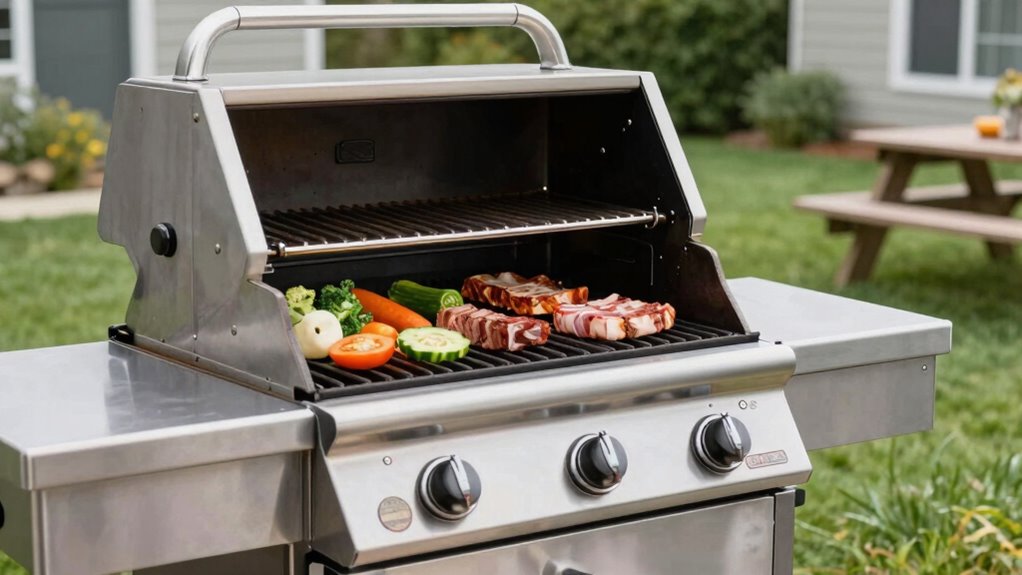
Many people assume higher BTU ratings mean better grilling, but that’s not always true. Relying solely on BTU numbers can lead you to overlook other vital factors like heat distribution and grill construction. Remember, a high BTU doesn’t guarantee superior cooking performance.
Mistaking BTU Numbers for Power
It’s common to assume that a higher BTU rating directly means more power and better grilling performance, but this isn’t always the case. BTUs measure heat output, not actual cooking effectiveness. Relying solely on BTU numbers can mislead you, especially when considering grill aesthetics and customer reviews. A grill with high BTUs might look impressive but could have poor heat distribution or uneven cooking. Factors like flame distribution, material quality, and design influence how well a grill performs.
Remember:
- High BTUs don’t guarantee even heat
- Grill construction impacts actual performance
- Customer reviews reveal real-world results
- Grill aesthetics shouldn’t overshadow functionality
Focus on overall quality rather than just the BTU number for better grilling results.
Ignoring Other Cooking Factors
Relying solely on BTU ratings ignores other essential factors that determine a grill’s performance. Heat retention plays a key role in maintaining consistent temperatures, allowing your food to cook evenly without constant adjustments. A grill with high heat retention can better withstand frequent opening and closing, saving you fuel and time. Flame size also matters; larger flames don’t always mean better heat, and inconsistent flame distribution can cause hot spots. Overlooking these factors leads to poor grilling results, regardless of BTU numbers. Instead, consider how well the grill retains heat and how its flame is distributed across the cooking surface. A well-designed grill with prime heat retention and controlled flame size will outperform a higher BTU model with poor heat management.
Tips for Evaluating Gas Grills Beyond the Numbers

While BTU ratings provide a useful starting point, they don’t tell the whole story about a gas grill’s performance. To evaluate grills effectively, look beyond the numbers. Consider grill aesthetics—how well it fits your outdoor space and personal style. Check the brand reputation, which reflects product quality and customer support. Inspect the construction: sturdy materials and even heat distribution matter more than raw BTU power. Additionally, examine features like burner layout and control knobs.
Assess grill aesthetics, brand reputation, build quality, and features beyond BTU ratings for better performance.
Here are some tips:
- Read reviews for real-world insights
- Test grill temperature consistency
- Assess ease of cleaning and maintenance
- See if the grill has reputable warranties
Focusing on these factors helps you find a reliable grill that performs well regardless of BTU ratings.
Frequently Asked Questions
Can a Lower BTU Grill Outperform a Higher BTU Model?
Yes, a lower BTU grill can outperform a higher BTU model if it has better grill design and allows for even heat distribution. Your cooking techniques matter more than raw power, so focus on features like accurate temperature control and quality materials. A well-designed grill helps you achieve consistent results, making lower BTU models just as effective for grilling, especially when you master your cooking methods.
How Does Ambient Temperature Affect Grill Performance?
Ambient temperature can be a game-changer for your grill performance, much like a tailwind pushing your boat faster. When it’s cold outside, your grill works harder to reach and maintain proper heat, which can lead to uneven cooking. Conversely, warmer temperatures help your grill perform more efficiently. So, always consider ambient temperature, as it directly impacts how well your grill heats and cooks your food.
Do Different Fuel Types Influence BTU Ratings?
Different fuel types do influence BTU ratings, impacting fuel efficiency and cooking versatility. For example, propane burns hotter and more efficiently than natural gas, giving you quicker heat and better control. Charcoal provides a different flavor profile and can reach high temperatures, but it’s less fuel-efficient. Choosing the right fuel depends on your cooking style and desired flavor, rather than just BTU numbers, which don’t tell the whole story about performance.
What Safety Considerations Are Linked to High BTU Outputs?
Imagine your high-BTU grill as a fiery dragon ready to breathe. You should be cautious of gas leaks and flare-ups, which can turn your cookout into a fireworks show. High BTU outputs can produce intense heat, increasing risks of uncontrolled flames and burns. Always check for leaks, keep a fire extinguisher nearby, and don’t ignore flare-ups—they’re warning signs that safety should come first when grilling at high power.
How Often Should I Clean My Grill to Ensure Optimal Heat Distribution?
You should clean your grill after every 5-6 uses or at least once a month if you use it frequently. Proper grill maintenance, including regular cleaning, guarantees ideal heat distribution and prevents flare-ups. Focus on removing grease, food debris, and ash from grates and burners. This cleaning frequency keeps your grill performing well, extends its lifespan, and guarantees delicious, evenly cooked meals every time.
Conclusion
Remember, a grill’s true power isn’t just in its BTUs, but how evenly it heats and how well it’s built. Imagine turning on your grill and feeling a gentle, consistent warmth that sears your steaks perfectly—no hot spots or cold surprises. Focus on quality, design, and performance, not just the number on the label. With the right grill, every cookout becomes a sizzling masterpiece, not just a number game.