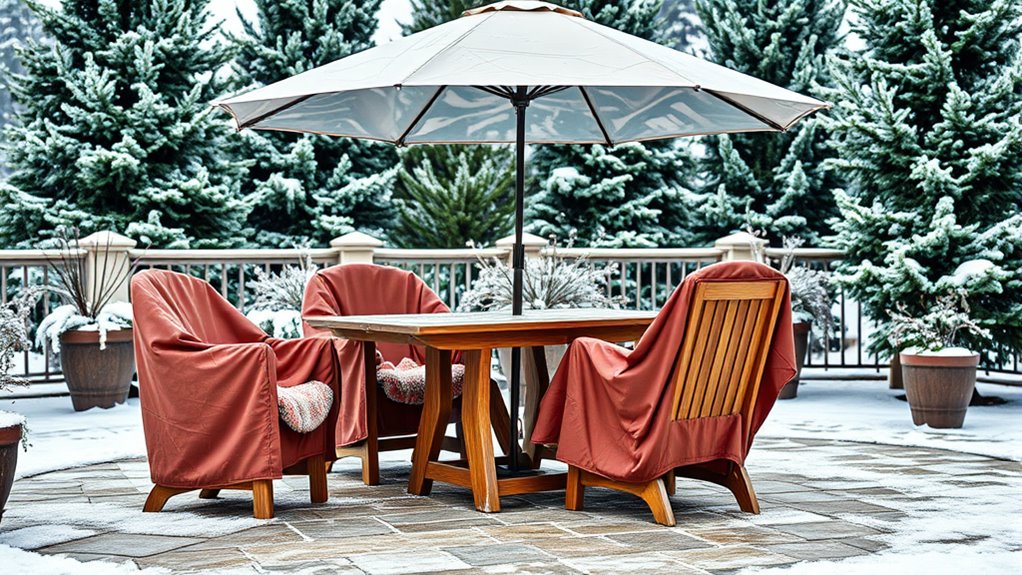

To protect your outdoor furniture during winter and bad weather, store it indoors in your garage, basement, or shed if possible, or use high-quality weatherproof covers to shield it from rain, snow, and UV rays. Clean and dry all surfaces thoroughly before covering or storing, and apply protective sealants to wood and rust-proof paint to metal pieces. Regular maintenance and securing covers help prevent damage and extend the furniture’s lifespan. Continue to learn more about effective protection strategies.

Get home appliances delivered free with Prime
- Fast, free delivery on millions of items
- Prime Video, Amazon Music and more included
- Member-only deals all year
Key Takeaways
- Store furniture indoors in a garage, basement, or shed to shield it from snow, ice, and freezing temperatures.
- Use high-quality weatherproof covers secured tightly to protect against rain, snow, and UV damage.
- Clean and dry furniture thoroughly before covering or storing to prevent mold, mildew, and rust formation.
- Apply protective sealants or waterproof sprays on wooden and metal furniture for added weather resistance.
- Regularly inspect and maintain furniture by tightening loose parts and ensuring covers are secure to prolong lifespan.

Outdoor furniture adds charm to your yard, but it also faces constant exposure to weather elements that can cause damage over time. When winter approaches or bad weather hits, it’s vital to take proactive steps to protect your investment. One of the most effective ways to do this is through winter storage. If you have the space, storing your furniture indoors, such as in a garage, basement, or shed, keeps it safe from snow, ice, and freezing temperatures that can warp wood, rust metal, or fade fabric. If indoor storage isn’t an option, investing in quality weatherproof covers is a practical alternative. These covers shield your furniture from rain, snow, and UV rays, extending its lifespan and maintaining its appearance.
Weatherproofing techniques play an essential role in safeguarding your outdoor furniture. Start by cleaning your pieces thoroughly before covering or storing them. Remove dirt, debris, and any existing moisture to prevent mold, mildew, and rust from developing during the winter months. For wooden furniture, applying a high-quality sealant or protective oil enhances its resistance to moisture and prevents cracking or warping caused by fluctuating temperatures. Metal furniture benefits from rust-proof paint or sealants that create a barrier against corrosion. For fabric cushions and upholstery, consider stripping off removable covers and washing them according to manufacturer instructions. Once clean and dry, store the cushions indoors or in sealed containers to prevent mold growth.
Thoroughly clean and dry furniture and cushions before storing to prevent mold and rust.
Weatherproofing also involves taking care of loose or fragile parts. Tighten loose screws, bolts, and joints to prevent further damage during harsh weather conditions. For wicker or rattan furniture, applying a protective spray designed for natural fibers can help resist water damage and extend its life. If you’re using covers, ensure they fit snugly to prevent wind from causing them to flap or blow away, which could expose your furniture to the elements. Properly securing covers with ties or weights is a simple yet effective step. Additionally, elevating furniture off the ground if you’re leaving it outside during winter or storms can greatly reduce moisture exposure.
Regularly inspecting your furniture during winter months allows you to spot any issues early, making maintenance easier and more effective. Using weatherproofing techniques not only prolongs the life of your outdoor furniture but also helps maintain its aesthetic appeal and structural integrity over the years. By combining winter storage with weatherproofing techniques, you’re giving your outdoor furniture the best chance to withstand harsh weather conditions and look great for many seasons to come.
outdoor furniture weatherproof covers
As an affiliate, we earn on qualifying purchases.
As an affiliate, we earn on qualifying purchases.
Frequently Asked Questions
Can I Leave My Outdoor Furniture Outside During a Snowstorm?
You shouldn’t leave your outdoor furniture outside during a snowstorm. Snow removal can be tough on unprotected furniture, causing damage or wear. It’s best to store your furniture indoors or in a sheltered area to prevent this. If storage isn’t an option, cover everything with waterproof covers and remove snow promptly. This way, you protect your furniture and extend its lifespan, even through harsh winter weather.
How Do I Prevent Mold and Mildew on Furniture Covers?
Don’t let mold and mildew take hold; nip it in the bud! You can prevent this by using proper ventilation techniques, ensuring your furniture covers stay dry and breathable. Regularly cleaning your covers with gentle cleaning solutions helps keep mold at bay. Make sure to remove any trapped moisture and air out the covers periodically. This way, your furniture stays fresh and ready for use, no matter the weather.
What Materials Are Best for Winter-Proof Outdoor Furniture?
For winter-proof outdoor furniture, choose weather-resistant fabrics like acrylic or polyester that withstand moisture and cold. Opt for rust-proof metals such as aluminum or stainless steel to prevent corrosion. These materials keep your furniture durable and looking good through harsh winter conditions. By selecting the right fabrics and metals, you guarantee your furniture stays protected, maintains its appearance, and lasts longer despite winter weather challenges.
How Often Should I Inspect Furniture for Damage After Bad Weather?
After bad weather, you should inspect your outdoor furniture at least once a week. This routine helps catch damage signs early, preventing small issues from becoming costly repairs. Think of it as safeguarding your outdoor oasis; neglect can turn a minor scratch into rot or rust. Stay vigilant, and you’ll extend your furniture’s life, ensuring your outdoor space remains inviting and beautiful despite harsh weather.
Are There Eco-Friendly Options for Outdoor Furniture Protection?
Yes, you can choose eco-friendly options like biodegradable covers and furniture made from recycled materials. Biodegradable covers break down naturally over time, reducing environmental impact, while furniture crafted from recycled materials helps lower waste. By opting for these sustainable solutions, you protect your outdoor furniture effectively and contribute to environmental conservation. These eco-friendly choices are durable, cost-effective, and a responsible way to enjoy outdoor spaces while minimizing your carbon footprint.
garage storage for outdoor furniture
As an affiliate, we earn on qualifying purchases.
As an affiliate, we earn on qualifying purchases.
Conclusion
By taking simple steps to protect your outdoor furniture, you’re not just safeguarding your investment—you’re preserving countless memories yet to be made. Think of your furniture as a trusted friend, deserving of care and protection through every storm. If you neglect it, it’s like letting a treasure slip through your fingers—a loss you’ll regret. So, don’t wait; shield your outdoor oasis today, and let it stand resilient through winter’s worst, a demonstration to your care.
wood furniture sealant for winter
As an affiliate, we earn on qualifying purchases.
As an affiliate, we earn on qualifying purchases.
rust-proof paint for metal outdoor furniture
As an affiliate, we earn on qualifying purchases.
As an affiliate, we earn on qualifying purchases.
Fall yard work Picks
leaf blowers
As an affiliate, we earn on qualifying purchases.