Understanding the differences between manual, semi-automatic, automatic, and super-automatic espresso machines helps you choose the right one for your brewing style, skill level, and budget. Manual machines give you complete control but require effort and skill, while semi-automatic and automatic models offer convenience with some involvement. Super-automatic machines automate almost everything for easy brewing. If you want to find the perfect fit, knowing these distinctions will guide your decision—more details await as you continue your search.
Key Takeaways
- Manual machines offer full control but require skill and regular cleaning, ideal for espresso enthusiasts.
- Semi-automatic machines automate water flow, balancing user involvement with convenience.
- Automatic machines handle dosing and extraction with minimal user effort, suitable for quick, consistent results.
- Super-automatic machines fully automate grinding, tamping, and brewing, prioritizing ease of use and convenience.
- Higher automation increases complexity and maintenance, so choose based on your skill level, lifestyle, and desired control.
What Are the Main Types of Espresso Machines?

There are four main types of espresso machines: manual, semi-automatic, automatic, and super-automatic. Each offers different levels of control and convenience, affecting how you create espresso art and handle machine maintenance. Manual machines give you full control over every step, making them ideal if you enjoy barista techniques, but they require regular cleaning and upkeep to keep the machine functioning properly. They are also the most technically demanding of the options, requiring skill and practice to master. Semi-automatic machines strike a balance, allowing you to control extraction while automating water pressure, which helps with consistent espresso shots and easier maintenance. Automatic and super-automatic machines handle most tasks at the push of a button, reducing your workload but still requiring routine cleaning. Choosing the right type depends on your skill level, desired involvement, and how much effort you’re willing to invest in machine maintenance and crafting latte art. Understanding different machine types can help you make a more informed decision based on your preferences and experience level. Additionally, considering the maintenance requirements for each type ensures you select a machine that fits your lifestyle and keeps your espresso consistently excellent. Knowing the machine complexity can also guide you toward a model that matches your comfort level with technology and upkeep.
How Do Manual, Semi-Automatic, Fully Automatic, and Super-Automatic Espresso Machines Differ?
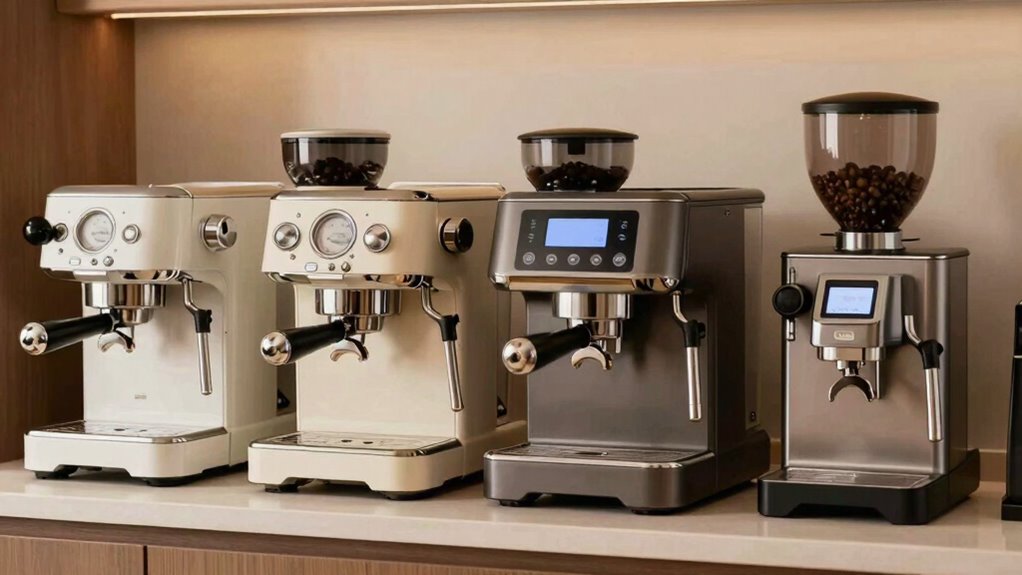
Different espresso machines vary in how much they automate your brewing process and how involved you need to be. Some require you to control nearly every step, while others handle most functions at the push of a button. Understanding these differences helps you choose the right machine for your skill level and convenience preferences. Proper use of safety features is essential to ensure safe operation and prevent accidents during brewing. Additionally, being aware of user safety protocols can help you operate your machine confidently and securely. Moreover, selecting a machine with an appropriate contrast ratio can enhance the visual clarity of machine displays and indicators, improving your overall user experience.
Degree of Automation
Understanding the degree of automation in espresso machines helps you choose the right model for your skill level and preferences. Automation features determine how much you control during the brewing process. Manual machines require you to handle every step, giving you full control but needing more effort and skill. Semi-automatic machines automate some functions, like water flow, while still allowing you to control extraction time. Fully automatic machines handle everything at the push of a button, simplifying operation but offering less customization. Super-automatic machines go a step further, grinding beans, tamping, and brewing automatically. Keep in mind that higher automation often means increased maintenance requirements, as more complex systems can need more frequent cleaning and repairs. Your choice depends on how much involvement and convenience you desire. Automation features can also influence the consistency of your espresso shot, making them an important factor in your decision.
User Involvement Level
Manual espresso machines demand your full involvement, requiring you to control every step, from grinding beans to tamping and pulling the shot. This level of user engagement means you’re responsible for the quality of each cup, giving you hands-on control but also increasing the time and effort needed. Maintenance requirements tend to be higher because you’re handling more components, like cleaning the portafilter and boiler regularly. Additionally, manual machines often require a level of precision, which can enhance the overall quality of your espresso if you have the skill. The user skill level plays a significant role in determining the final result and overall satisfaction with your brewing experience. Choosing the right machine depends heavily on your desired control over brewing, with manual options offering the highest level of customization and involvement. Fully automatic and super-automatic machines minimize your involvement, mostly automating grinding, tamping, and brewing. These require less maintenance effort but also mean you have less control over the process, making them ideal if you prefer convenience.
Ease of Use
Ease of use varies considerably across espresso machine types, impacting how much effort and skill you need to make your perfect cup. Manual machines demand the highest barista skills, requiring you to control every step, from grinding to tamping and pulling shots. Semi-automatic machines are easier but still need you to manage grind size, dosage, and timing, with moderate maintenance requirements. Fully automatic models simplify operation with buttons for dosing and timing but may still need occasional cleaning. Super-automatic machines are the most user-friendly, often just needing a press of a button, with minimal maintenance. Understanding the different types of espresso machines is essential to choosing one that fits your lifestyle and skill level. Your choice depends on how much effort you’re willing to invest and how involved you want to be in the brewing process. Additionally, machine complexity can influence your overall satisfaction, especially if you prefer a more hands-on or automated experience.
Which Espresso Machine Type Is Right for Your Brewing Style?

Choosing the right espresso machine depends on your brewing style and how involved you want to be in the process. If you prefer a quick, consistent shot, a semi-automatic or super-automatic machine might suit you best, as they require less hands-on espresso maintenance. For those who enjoy experimenting and customizing each shot, a manual machine offers more control but demands knowledge of coffee bean selection and technique. Consider how much effort you’re willing to put into grinding, tamping, and cleaning. If you love the art of espresso, a manual machine could be rewarding. Conversely, if convenience is key, choose an automatic model. Your choice should align with your desire for control and your interest in perfecting every aspect of the brewing process.
What Factors Should You Consider When Choosing an Espresso Machine?

When selecting an espresso machine, you need to take into account several key factors to ensure it fits your needs and preferences. Consider the machine’s ease of use, maintenance requirements, and the brand’s reputation for quality. A reliable brand guarantees better customer support and durability, reducing long-term issues. Additionally, think about how much effort you’ll put into machine maintenance, as some models need regular cleaning and descaling. The table below highlights important factors:
| Factor | Why It Matters | What to Look For |
|---|---|---|
| Brand Reputation | Ensures quality and support | Well-reviewed, trusted brands |
| Maintenance Needs | Affects daily use and longevity | Easy-to-clean, durable parts |
| Features & Settings | Matches your brewing style | Customizable options |
| Price & Budget | Balances features and affordability | Within your budget |
How Do Your Coffee Preferences and Budget Match Different Espresso Machines?

Your coffee preferences and budget play a big role in choosing the right espresso machine. With a variety of options available, you can find one that matches your taste and price range. Considering cost-effective brews helps you enjoy quality coffee without overspending.
Variety of Machine Options
With so many espresso machine options available, finding the right one depends on your coffee preferences and budget. Manual machines offer control over every shot, but require more skill and regular machine maintenance to guarantee consistent espresso shot quality. Semi-automatic and automatic machines provide a balance, simplifying operation while still allowing some customization. If convenience is key, fully automatic or super-automatic machines deliver quick results with minimal effort, though they tend to cost more. Budget considerations influence whether you choose a basic model or invest in higher-end features. Keep in mind that more complex machines may require ongoing maintenance to keep performance at its best. Machine complexity can impact both your learning curve and maintenance needs. Matching your skill level and desired espresso shot quality with the machine’s features ensures you enjoy satisfying results without unnecessary hassle or expense. Additionally, understanding the maintenance requirements of each machine type can help prolong its lifespan and maintain optimal performance.
Cost-Effective Brew Choices
Choosing the right espresso machine depends heavily on your coffee preferences and budget. To find the most cost-effective brew choices, consider these factors:
- Initial Cost and Cost Comparison: Some machines, like manual espresso makers, are cheaper upfront, but may require more skill. Additionally, the regional flavors can influence the type of machine that best suits your taste, impacting long-term satisfaction. It’s also important to evaluate the machine durability to ensure your investment lasts over time.
- Maintenance Requirements: Machines with simpler designs often cost less to maintain, saving you money over time.
- Long-Term Expenses: Budget for accessories, filters, and replacement parts, which vary by machine type.
- Consideration of Free Floating features can also influence your overall costs, as machines with advanced capabilities may come with higher price tags but offer greater convenience.
Final Tips for Picking the Perfect Espresso Machine for Home Brewing

Finding the perfect espresso machine for home use can feel overwhelming, but focusing on your specific needs and preferences makes the process easier. Start by considering how much maintenance you’re willing to handle—some machines require regular descaling and cleaning, so look for models with straightforward maintenance tips. Additionally, research brand reputation; choosing a trusted brand ensures better durability, consistent performance, and reliable customer support. Think about your brewing habits: do you prefer quick, one-touch espresso or more control over extraction? Budget also plays a role, so balance features with affordability. By prioritizing your lifestyle, maintenance ease, and brand reliability, you’ll select an espresso machine that suits your home brewing goals, making every cup enjoyable and hassle-free. Supporting Caregivers’ Emotional Well-Being can help you stay centered during decision-making.
Frequently Asked Questions
How Long Does Each Type of Espresso Machine Typically Last?
You can expect your espresso machine to last anywhere from 5 to 15 years, depending on the type and quality. Durability considerations like build materials and maintenance play a big role, so investing in a sturdy model can save you money. While higher-quality machines might have higher initial replacement costs, they often last longer and require fewer repairs, ultimately saving you money over their lifespan.
Are There Specific Maintenance Needs for Different Espresso Machine Types?
You’ll want to tailor your cleaning routines and descaling frequency to your espresso machine type. For semi-automatic models, clean the brew group regularly and descale every 2-3 months. Fully automatic machines need consistent cleaning of the milk frother and water reservoir, with descaling every 1-2 months. Espresso machines with built-in grinders require more frequent cleaning of burrs and grinders. Following these specific maintenance needs guarantees peak performance and longevity.
Which Espresso Machine Types Are Most Energy-Efficient?
You’ll find that manual and semi-automatic espresso machines are generally more energy-efficient because they use less power during operation. Look for models with eco-friendly features like energy-saving modes or automatic shut-off. These features reduce energy consumption, helping you save on electricity and lessen your environmental impact. Choosing one with a good energy profile guarantees you enjoy quality espresso while staying eco-conscious.
Can I Upgrade Features on Manual or Semi-Automatic Machines Later?
You can upgrade features on manual or semi-automatic machines later, especially if they’re designed for customization. For example, Sarah upgraded her semi-automatic espresso machine by adding a PID controller to improve temperature stability. This shows you can enhance your machine’s capabilities over time. Focus on models that support feature customization, making it easier to upgrade capabilities and enjoy tailored brewing experiences without replacing your entire machine.
How Do Warranty Options Vary Across Different Espresso Machine Categories?
You’ll find warranty coverage and service plan options vary across espresso machine categories. Manual machines often come with basic warranties, while semi-automatic and automatic models tend to offer more extensive coverage. Some brands provide optional service plans for repairs and maintenance. Always check the warranty details before buying; it guarantees you understand what’s covered, how long, and if you can upgrade or extend service plans for added peace of mind.
Conclusion
Choosing the right espresso machine is like finding the perfect pair of shoes — it should fit your style, needs, and budget. By understanding the differences and considering your preferences, you can make an informed decision. Remember, the right machine isn’t just about features but about how well it suits your brewing habits. As they say, “The best tool is the one that works best for you.” Happy brewing!