To prevent overcooking with sous vide, you need to use the right temperatures for each food type and don’t leave items in the bath too long. Precise controls guarantee tender, perfect results, whether cooking steak, chicken, seafood, or vegetables. Keep equipment calibrated, avoid high temps, and follow a cheat sheet to stay on track. If you want to master these tips and achieve consistent, delicious dishes, there’s more to discover to perfect your technique.

Get home appliances delivered free with Prime
- Fast, free delivery on millions of items
- Prime Video, Amazon Music and more included
- Member-only deals all year
Key Takeaways
- Precise temperature control is crucial; slight deviations can lead to overcooking or undercooking.
- Use a cheat sheet to reference optimal temperatures for different foods and desired doneness levels.
- Regularly calibrate your sous vide equipment to maintain accurate temperature readings.
- Avoid overextending cooking times and setting temperatures too high to prevent mushy or dull results.
- Proper storage, environment, and equipment maintenance help ensure consistent, perfectly cooked, and visually appealing dishes.
best sous vide immersion circulator
As an affiliate, we earn on qualifying purchases.
As an affiliate, we earn on qualifying purchases.
Why Precise Temperatures Are Crucial in Sous Vide Cooking
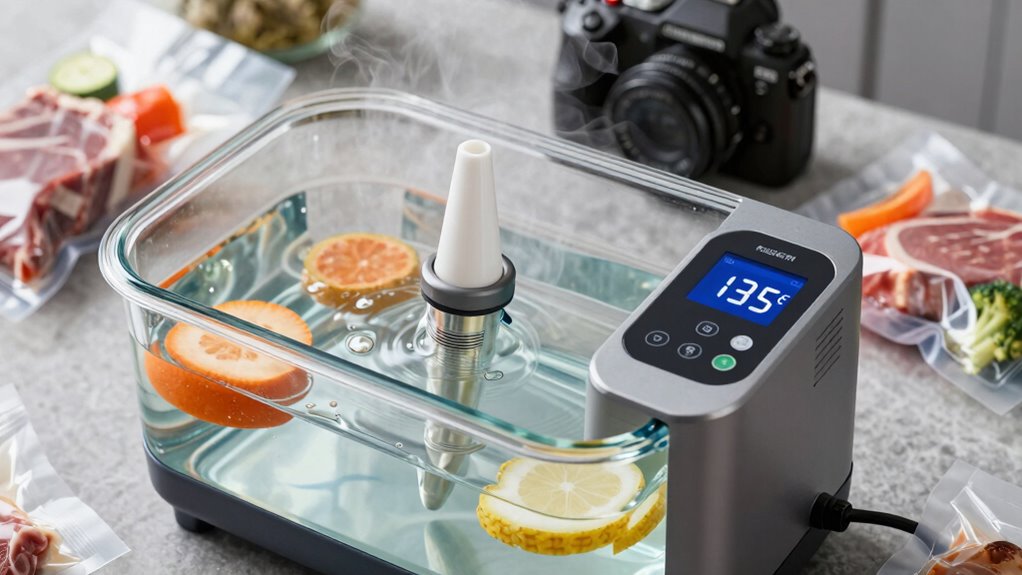
Because sous vide cooking relies on precise temperature control, even slight deviations can substantially affect the final result. Achieving temperature consistency is essential for perfectly cooked food, as small fluctuations can lead to over- or undercooked dishes. Regular equipment calibration ensures your immersion circulator maintains accurate temperatures throughout the process. Proper calibration ensures your equipment functions as intended, preventing errors caused by inaccurate readings. Additionally, understanding the contrast ratio of your equipment can help you optimize the display to better visualize the results of your cooking process. If your device isn’t properly calibrated, you risk inconsistent results and compromised food safety. It’s worth investing time in verifying your equipment’s accuracy before each use, especially since air quality considerations can influence overall cooking conditions. Maintaining a clean and stable environment can help reduce temperature fluctuations during cooking. Being aware of ambient temperature factors can further improve your control over cooking consistency. Consistent temperatures help you hit your desired doneness every time, giving you reliable results with minimal effort. Remember, precision in temperature control isn’t just about convenience; it’s the key to revealing the full potential of sous vide cooking.
precision temperature control sous vide
As an affiliate, we earn on qualifying purchases.
As an affiliate, we earn on qualifying purchases.
The Best Sous Vide Temperatures for Beef and Lamb

Choosing the right sous vide temperature is key to controlling tenderness and texture in beef and lamb. When you set the correct temperature, you can achieve your preferred doneness levels with ease. Proper temperature control also helps preserve the meat’s natural moisture, ensuring a juicy and flavorful result. Let’s explore how different temperatures influence the final quality of your meat. Understanding optimal cooking temperatures is essential for consistent results and avoiding overcooking.
Tenderness and Texture Control
To achieve the perfect tenderness and texture in beef and lamb, selecting the right sous vide temperature is essential. The precise temperature influences marbling enhancement, ensuring fat melts smoothly for juiciness, and promotes flavor infusion, making every bite more intense. At lower temps (125°F/52°C), you get tender, rare meat with a slight firmness. Slightly higher (135°F/57°C) yields more traditional tenderness, with a soft yet structured bite. For melt-in-your-mouth results, go up to 145°F/63°C, where connective tissues break down for a tender, juicy experience. Visualize:
- Juicy, melt-in-your-mouth textures
- Well-distributed marbling for flavor enhancement
- Firm yet tender bites for satisfying chew
Choosing the right temperature allows you to control tenderness and texture, delivering consistent, delicious results.
Perfect Doneness Levels
Getting the perfect doneness in beef and lamb with sous vide depends on selecting the right temperature. Maintaining temperature consistency ensures your meat cooks evenly, preventing overcooking or undercooking. For a tender, juicy result, choose 129°F (54°C) for medium-rare beef or lamb; 135°F (57°C) for medium; and 145°F (63°C) for medium-well. Lower temperatures preserve a softer texture and enhance flavor, while higher temps produce firmer meat. Knowing these ideal ranges helps you achieve your desired doneness precisely. Plus, sous vide’s gentle heat promotes flavor enhancement by allowing marinades and seasonings to penetrate deeply. By controlling the temperature carefully, you avoid surprises and get consistent results every time, making your beef and lamb perfectly cooked with ideal flavor and texture.
sous vide temperature cheat sheet
As an affiliate, we earn on qualifying purchases.
As an affiliate, we earn on qualifying purchases.
Perfect Temps for Poultry and Seafood in Sous Vide
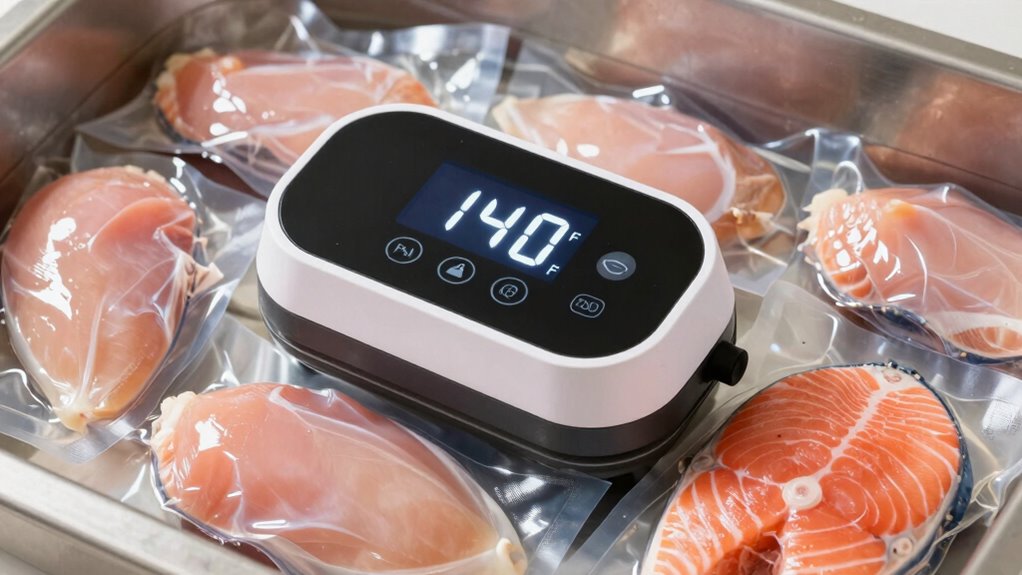
When cooking poultry in sous vide, hitting the right temperature guarantees both safety and juicy results. For seafood, precise temperatures help maintain tenderness and flavor without overcooking. Proper temperature control deters foodborne illnesses and ensures optimal texture. Using the correct temperature ranges is essential for achieving consistent and delicious outcomes. Let’s explore the ideal temps to achieve perfect, safe dishes with poultry and seafood.
Poultry Safe Temps
Maintaining the right temperature is essential for guaranteeing poultry and seafood are both safe and tender when cooked sous vide. For poultry safety and meat pasteurization, cook chicken breasts at 140°F (60°C) for 1.5 hours for tender, juicy results, or at 150°F (65.5°C) for 1 hour for a firmer texture. Ensure the internal temperature reaches at least 135°F (57°C) to achieve safe pasteurization. Visualize:
- Juicy, perfectly cooked chicken with clear juices
- A tender, firm texture that slices easily
- Safe, pathogen-free meat that’s cooked thoroughly
Proper gear care and temperature control are vital to achieving these results effectively. Additionally, understanding the impact of temperature on food safety can help optimize your sous vide process for consistent, reliable results, which is crucial for both safety and quality. Recognizing how temperature influences food safety can further ensure your cooking process consistently yields safe and high-quality dishes. Implementing proper food handling practices also plays a significant role in maintaining overall safety during sous vide cooking.
Seafood Perfect Temperatures
Cooking seafood sous vide requires precise temperature control to guarantee it’s safe, flaky, and full of flavor. For fish, set your water bath between 122°F and 130°F (50°C to 54°C) to ensure fish safety while maintaining a tender texture. Lower temperatures, like 122°F, produce ultra-soft, sashimi-like results, while slightly higher temps yield more traditional flaky fish. Shellfish, such as shrimp or scallops, should be cooked at 134°F to 140°F (57°C to 60°C) to enhance their shellfish flavors without overcooking. Staying within these temperature ranges prevents the risk of foodborne illness and preserves delicate textures. Remember, precise control is key to revealing the best flavor and guaranteeing your seafood remains safe to eat and perfectly cooked every time. Temperature regulation is essential for achieving optimal results in sous vide cooking. Additionally, understanding food safety guidelines ensures your seafood is both delicious and safe to consume. Proper temperature control not only preserves quality but also reduces the risk of pathogens in seafood. It is also important to be aware of piercing care and hygiene to prevent cross-contamination when handling raw seafood or equipment. Using proper sanitation practices further minimizes the chances of contamination and keeps your kitchen safe.
digital sous vide cooker for beef
As an affiliate, we earn on qualifying purchases.
As an affiliate, we earn on qualifying purchases.
How to Cook Vegetables and Fruits Perfectly With the Right Temps

Getting vegetables and fruits just right with sous vide depends on choosing the correct temperature. When you set the right temp, you preserve vibrant colors, textures, and flavors. For fruits, aim for 85-90°C to maintain firmness and enhance fruit pairing options. Vegetables like carrots or green beans cook perfectly at 85°C, becoming tender without losing crunch. To avoid over-softening, store vegetables properly—cool, dry, and airtight—to keep their texture and freshness. Visualize steaming vibrant, crisp vegetables or plump, juicy fruits that retain their natural sweetness. Think of:
- Bright green beans with a slight snap
- Firm peach slices with an intense aroma
- Carrots that are tender yet still firm to the bite
Mastering temps ensures your produce stays delicious and visually appealing. Understanding temperature control helps you choose the right equipment to maintain consistent temperatures and achieve perfect results every time. Additionally, selecting a reliable Dri Dri Gelato fridge can help maintain optimal storage conditions for your ingredients, ensuring freshness before cooking. Proper storage techniques are essential for preserving the quality of your produce prior to sous vide cooking.
Common Mistakes That Overcook Your Food and How to Avoid Them
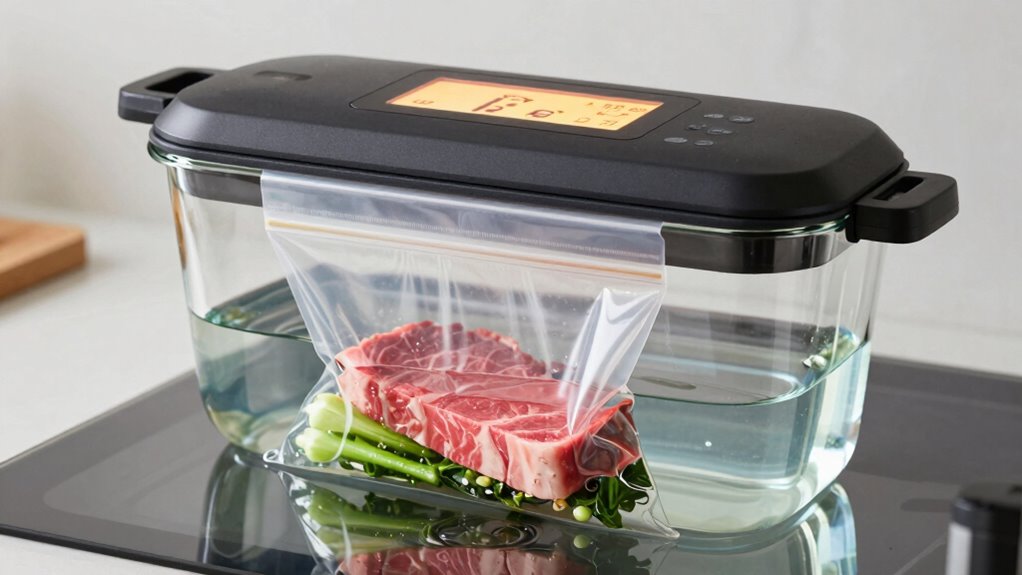
One common mistake that leads to overcooking your food is setting the temperature too high or leaving it in the water bath for too long. This often happens when you overlook the importance of maintaining temperature consistency. If your equipment isn’t properly calibrated, you might think you’re cooking at the right temp, but inaccuracies can cause overcooking. Regularly check and calibrate your sous vide device to ensure precise temperature control. Also, avoid the temptation to extend cooking times unnecessarily, as even small deviations can lead to overdone results. Remember, consistent temperature and proper calibration are key to achieving perfect doneness without risking overcooking. Staying attentive to these details helps you enjoy tender, perfectly cooked dishes every time.
Adjusting Your Sous Vide Temperatures for Different Levels of Doneness
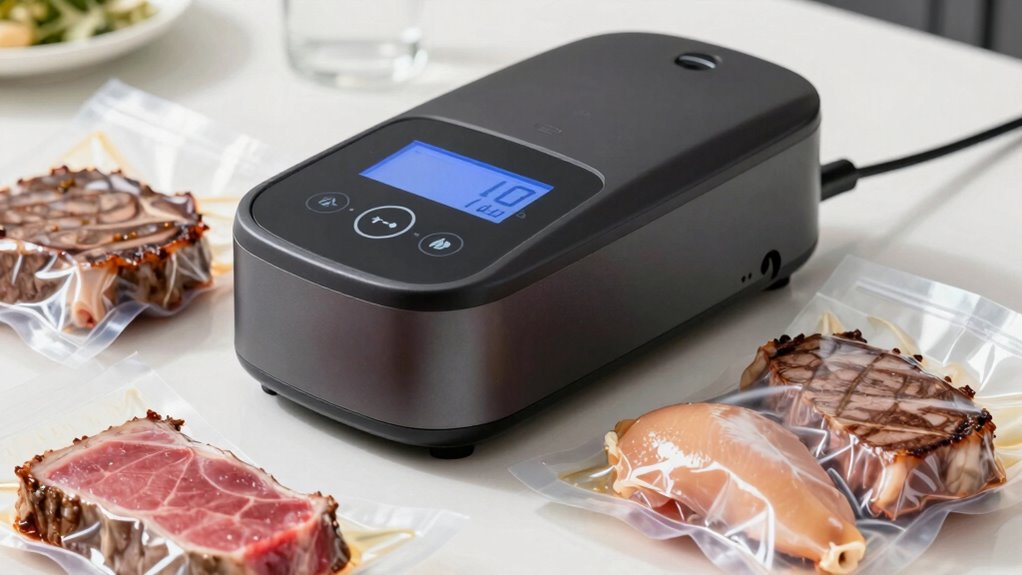
Adjusting your sous vide temperatures is essential for achieving the desired level of doneness, whether you’re aiming for rare, medium, or well-done results. By fine-tuning the temperature, you control not just safety but also the flavor infusion and texture refinement of your dish. For a rare steak, you’ll set the water bath around 129°F, preserving a juicy, tender interior. For medium, aim for 135°F, balancing softness with a firmer bite. Well-done requires around 150°F, yielding a more substantial texture. Visualize a perfectly cooked piece with:
- Juicy, pink center for medium-rare
- Firm but tender texture for medium
- Dense, thoroughly cooked meat for well-done
This precision helps you customize doneness while enhancing flavor and achieving the ideal mouthfeel.
How to Use a Cheat Sheet to Keep Your Sous Vide Temperatures on Point
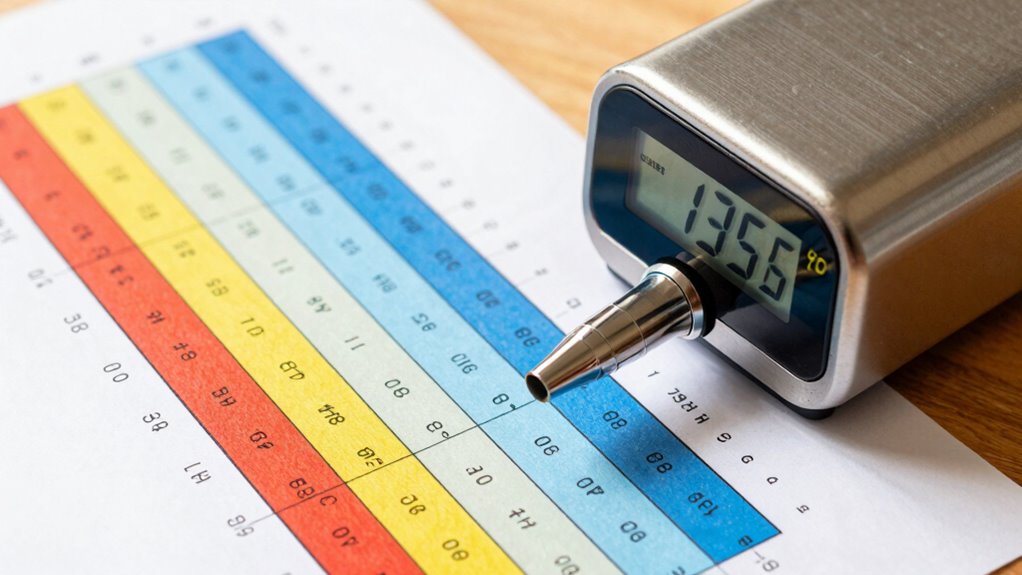
To guarantee your sous vide results stay consistent, using a cheat sheet can be an invaluable tool. It helps you quickly reference ideal temperatures, especially when considering temperature calibration and water circulation. Keep it handy in your kitchen or digital device for easy access. Use the cheat sheet to verify your water bath’s temperature, ensuring accurate results. Regular calibration prevents overcooking or undercooking, and proper water circulation ensures even heat distribution. Here’s a simple example:
| Food Item | Temperature |
|---|---|
| Steak | 130°F |
| Chicken Breast | 140°F |
| Salmon | 125°F |
Use this as a quick guide to keep your sous vide on point, avoiding guesswork and ensuring perfect results every time.
Frequently Asked Questions
Can I Reuse My Sous Vide Water Without Changing the Temperature?
You can reuse your sous vide water without changing the temperature, but be cautious about water contamination. Over time, bacteria and debris can accumulate, making the water less safe. To maintain temperature stability and food safety, it’s best to change the water regularly, especially after multiple uses. This prevents contamination and ensures your sous vide cooker performs at its best, giving you perfectly cooked meals every time.
How Do Ambient Room Temperatures Affect Sous Vide Cooking?
Imagine your sous vide setup as a delicate dance with room temperature acting as the rhythm. If your room is warmer, it can cause water evaporation and slightly raise the water temperature, making your cooking less predictable. Conversely, cooler rooms help maintain steady temperatures. To keep control, monitor your water level and adjust your bath if room temperature fluctuates, ensuring your food cooks perfectly every time.
Is It Safe to Cook Multiple Types of Food Together at Different Temps?
Yes, you can cook multiple types of food together at different temperatures, but you need to prioritize food safety. Guarantee each item reaches its safe minimum temperature and cook times. Be mindful of flavor transfer, especially with strongly scented foods, to avoid cross-contamination. Use separate bags or compartments if possible, and avoid overlapping ingredients. Proper temperature control and seal integrity help ensure safe, flavorful results.
How Does Altitude Influence Sous Vide Temperature Settings?
Think of altitude as a sneaky chef adjusting the recipe; it affects your sous vide by lowering the boiling point. You need to make an altitude adjustment because water boils at a lower temperature at higher elevations. To keep your food perfectly cooked, increase your water bath temperature slightly to offset boiling point variation. This way, you prevent undercooking and ensure your dishes turn out just right, no matter the altitude.
What Are the Signs of Overcooked Food Despite Correct Temperature?
If your food is overcooked despite correct temperature, you’ll notice texture changes like dryness or toughness. Color shifts, such as browning or dullness, also indicate overcooking. You might find the meat overly firm or the vegetables mushy. These signs happen because the heat breaks down cellular structures too much. Always check for these visual cues and texture changes to make certain your sous vide results stay tender and perfectly cooked.
Conclusion
Think of your sous vide setup as a delicate symphony—you’re the conductor guiding each instrument to harmony. A cheat sheet is your baton, ensuring every note hits perfectly. When you master the right temperatures, your food becomes a masterpiece, never overcooked or underdone. Trust this guide as your compass, and soon, cooking with precision will feel natural—like conducting a flawless orchestra every time.
NFL season / tailgating Picks
team gear
As an affiliate, we earn on qualifying purchases.