Steam ovens’ key feature is their ability to retain moisture during reheating, which helps leftovers taste just as fresh as when cooked. By using gentle, precise steam, they prevent drying out, sogginess, and flavor loss. This keeps your food tender, juicy, and full of nutrients. If you want to know how this simple feature can transform your leftovers, keep exploring—you’ll discover how to maximize flavor and texture with ease.

Get home appliances delivered free with Prime
- Fast, free delivery on millions of items
- Prime Video, Amazon Music and more included
- Member-only deals all year
Key Takeaways
- Precise moisture control in steam ovens prevents leftovers from drying out, restoring their original texture and juiciness.
- Adjustable steam levels allow customization for different foods, ensuring they reheat evenly and retain fresh flavors.
- Gentle, uniform heat from steam prevents overcooking and sogginess, making leftovers taste as if freshly prepared.
- Even heat distribution preserves nutrients and presentation, enhancing the overall flavor and quality of reheated foods.
- The moisture-locking feature maintains food freshness, making leftovers taste just as flavorful as when first cooked.
steam oven for reheating leftovers
As an affiliate, we earn on qualifying purchases.
As an affiliate, we earn on qualifying purchases.
Why Leftovers Often Turn Out Soggy and How Steam Ovens Fix It
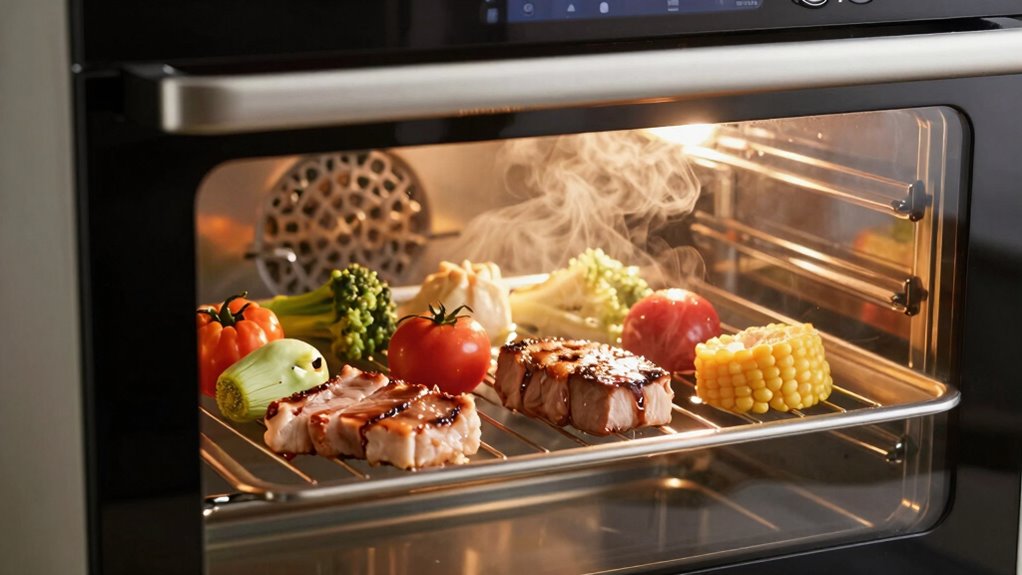
Leftovers often turn out soggy because traditional reheating methods, like microwaving or oven baking, tend to trap moisture, causing foods to lose their crispness. This reduces reheating efficiency and makes your dishes less appealing. When you microwave leftovers, steam builds up inside, softening textures and dulling flavors. Oven reheating can dry out some parts while making others soggy if not carefully monitored. Steam ovens fix this problem by using gentle, consistent heat with moisture, preserving the original texture and flavor. They reheat food evenly without trapping excess moisture, maintaining crispness where needed. Additionally, their precise temperature control helps prevent overcooking or drying out the food. This targeted moisture management is especially helpful for dishes that benefit from a crispy exterior and tender interior. The result is a more efficient reheating process that keeps your leftovers tasting fresh, with flavors intact and textures just as satisfying as when first cooked. By maintaining the right balance of moisture and heat, steam ovens also help reduce food waste by making leftovers more appealing. Furthermore, many models incorporate smart technology to optimize reheating settings and improve results. Incorporating moisture regulation further enhances their ability to deliver consistently excellent leftovers.
As an affiliate, we earn on qualifying purchases.
How Steam Reheating Preserves Food Quality Better Than Microwaves

When you reheat food with steam, it retains more moisture, preventing it from drying out like in a microwave. The even heat distribution guarantees your food warms uniformly, maintaining its original texture and flavor. As a result, steam reheating helps preserve food quality much better than microwaves do.
Moisture Retention Benefits
Steam ovens excel at retaining moisture in food during reheating, which helps preserve its original texture and flavor. Unlike microwaves, which can dry out leftovers, steam gently reintroduces moisture, preventing food from becoming rubbery or tough. This gentle reheating process ensures that foods stay juicy and tender, maintaining their appealing qualities. The moisture retention leads to better flavor preservation and texture enhancement, making leftovers taste just as fresh as when first cooked. To illustrate, consider the following:
| Reheating Method | Moisture Retention | Resulting Texture |
|---|---|---|
| Microwave | Low | Dry, rubbery |
| Conventional Oven | Moderate | Slightly dry |
| Steam Oven | High | Juicy, tender |
Using a steam oven ensures your food stays moist and flavorful, elevating your leftovers to restaurant-quality standards. Proper moisture control is essential for optimal reheating results.
Even Heat Distribution
Unlike microwaves that heat unevenly, steam ovens distribute heat more consistently throughout the food. This even heat helps preserve the food’s original texture and flavor, preventing the sogginess often caused by microwave reheating. When leftovers are heated uniformly, they maintain their appealing food presentation, making your dishes look just as appetizing as when initially served. Plus, even heating minimizes hot spots that can burn or dry out certain areas, keeping the food moist and fresh. This consistency also contributes to a sleek kitchen aesthetic, as your leftovers look professionally prepared. With steam ovens, you’re not just reheating; you’re ensuring every bite looks and tastes as good as the first, elevating both your culinary experience and your kitchen’s overall appearance.
Reduced Food Drying
Because steam reheat methods operate at lower temperatures and add moisture during the process, they help prevent food from drying out. This reduces food drying, keeping leftovers moist and flavorful without overcooking. By maintaining ideal moisture levels, steam ovens support food safety, preventing bacterial growth that can occur when food becomes too dry or unevenly heated. They also promote energy efficiency, as less heat is wasted reheating food gently and evenly. Unlike microwaves, which often cause dehydration and uneven heating, steam reheating preserves the original texture and juiciness of your dishes. This means your leftovers stay fresh longer and taste just as good as when they were first cooked, making steam ovens a smarter, safer, and more efficient choice for reheating. Additionally, moisture retention during steaming helps preserve the food’s nutritional value better than other reheating methods. Incorporating precise temperature control further ensures that food is reheated safely without sacrificing quality. Using steam reheat techniques can also reduce the risk of foodborne illnesses caused by uneven heating.
best steam oven for preserving food flavor
As an affiliate, we earn on qualifying purchases.
As an affiliate, we earn on qualifying purchases.
Why Moisture Retention Is Key to Tasting Like Freshly Cooked Food

Have you ever noticed how food can lose its vibrant flavor and juiciness after reheating or prolonged cooking? Moisture retention is essential because it preserves freshness and enhances texture, making leftovers taste as good as fresh. When steam ovens lock in moisture, they prevent dryness and help maintain the food’s original qualities. This way, you’re not just reheating; you’re restoring the dish’s original appeal. Without proper moisture, even the tastiest leftovers can become tough or rubbery.
| Benefit | Effect |
|---|---|
| Freshness preservation | Keeps food tasting just cooked |
| Texture enhancement | Makes food tender and juicy |
| Moisture retention | Prevents dryness |
| Flavor retention | Maintains original flavor |
| Overall quality | Reheats like new |
countertop steam oven with adjustable steam levels
As an affiliate, we earn on qualifying purchases.
As an affiliate, we earn on qualifying purchases.
Top Features to Look for in a Steam Oven for Reheating Leftovers

When choosing a steam oven to reheat leftovers, look for precise temperature control to prevent overcooking. Adjustable steam levels let you fine-tune moisture without drying out your food, ensuring it stays tender. Additionally, even heating distribution guarantees consistent results, so every bite tastes just right. For optimal performance, consider models with user-friendly controls that make it easier to set and monitor cooking parameters.
Precise Temperature Control
Precise temperature control is vital when reheating leftovers in a steam oven, as it guarantees your food warms evenly without drying out or overcooking. With excellent temperature precision, you can set the exact heat needed for different dishes, ensuring consistent results. Moisture control is also essential, helping to keep your leftovers moist and tender. Look for features like digital thermostats and sensors that monitor temperature constantly. Imagine:
- Maintaining the perfect 140°F for rice
- Avoiding overheating fragile fish
- Reheating stews without boiling away flavors
- Keeping vegetables crisp yet tender
- Ensuring bread stays soft and fresh
These features give you confidence that every dish will come out just right, preserving texture and flavor while preventing dry or uneven reheating. Additionally, opting for a steam oven with vetted best features ensures reliable performance and consistent results every time. Incorporating precise temperature control technology can also help minimize energy consumption while achieving optimal reheating conditions.
Adjustable Steam Levels
Adjustable steam levels are a key feature to contemplate in a steam oven, especially when reheating leftovers. This feature allows you to control the steam quality, ensuring your food heats evenly without drying out. With multiple steam settings, you can select the ideal moisture level for different dishes, preserving texture and flavor. Additionally, adjustable steam levels help optimize oven capacity by preventing over- or under-steaming, making the process more efficient. If you’re reheating delicate items like fish or bread, lower steam levels provide gentle heat, while higher settings are better for dense or frozen leftovers. This flexibility ensures your leftovers taste fresh and maintain their original quality, making your steam oven a versatile tool for everyday use. Incorporating smart controls can further enhance your ability to fine-tune the steaming process for perfect results. Moreover, precise steam regulation contributes to consistent outcomes, reducing the risk of over- or undercooking. Proper steam level adjustment also helps in maintaining the nutritional value of your leftovers, ensuring they remain healthy and flavorful.
Even Heating Distribution
Even heating distribution is essential for reheating leftovers thoroughly and evenly in a steam oven. It guarantees that every bite retains its original texture, flavor, and freshness. With even heat, frozen desserts like ice cream stay smooth, and spice blends don’t burn or become unevenly heated. Imagine your leftovers, from roasted vegetables to pasta, warming uniformly without hot spots or cold patches. A well-designed steam oven spreads heat evenly across the entire chamber, preventing overcooked edges and underheated centers. Proper passive voice detection helps identify areas where language can be improved for clarity and engagement. Additionally, heat circulation technology ensures consistent temperature distribution throughout the oven, enhancing reheating performance. Proper heat distribution ensures that every part of your food is warmed to the same temperature, preventing uneven reheating. Modern ovens often incorporate thermal sensors that monitor and adjust the heat in real-time, further improving accuracy. Picture your meal coming out perfectly warm and moist, just as if freshly made. Look for features like multi-zone heating, convection fans, and uniform steam circulation to achieve this. The result is a seamless reheating experience that keeps your leftovers tasting as good as new.
Can Steam Ovens Reheat Different Types of Food Effectively?
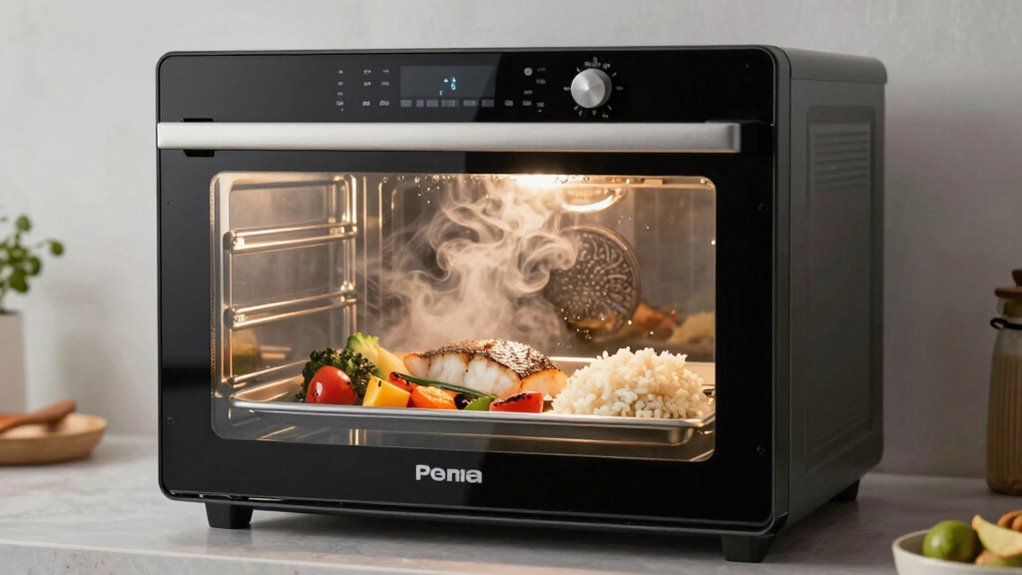
Steam ovens are highly effective at reheating a variety of foods because they gently revive moisture and preserve texture. Whether you’re reheating leftovers from food storage or preparing pre-cooked meals, steam guarantees your dishes stay flavorful and fresh. Different types of foods—meats, vegetables, rice, or bread—respond well to steaming, as it prevents drying out and maintains original qualities. Your reheating techniques with a steam oven involve setting the right temperature and time, tailored to each food type. This versatility means you don’t need separate appliances or complicated methods. Additionally, steam ovens can help reduce nutrient loss, ensuring your meals retain their nutritional value when reheated. Overall, steam ovens handle various foods efficiently, ensuring your reheated meals taste just as good as when first cooked.
How Easy Is It to Reheat Leftovers With a Steam Oven?
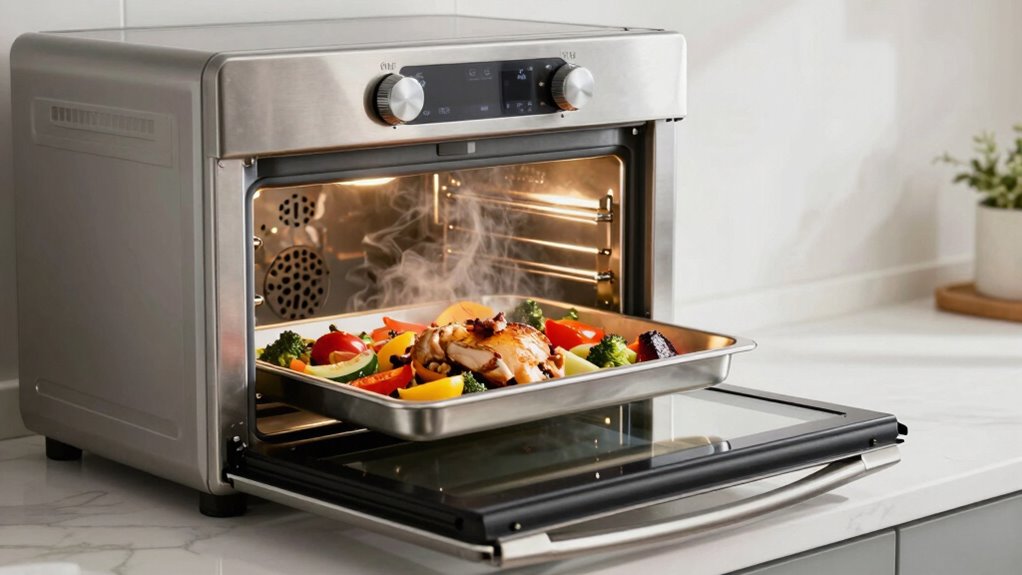
Reheating leftovers with a steam oven is straightforward and hassle-free. You don’t need complex cooking techniques or multiple kitchen appliances. Just place your leftovers in the oven, set the right temperature, and let the steam do the work. The process is gentle, preserving moisture and flavor effortlessly. To give you a clearer picture:
Reheating leftovers is easy—just place, set, and let the steam preserve moisture and flavor effortlessly.
- Simply load your dish into the oven
- Select the appropriate steam setting
- Adjust time based on portion size
- Let the steam circulate evenly
- Enjoy food that tastes fresh and moist
This method is quick and reliable, making reheating leftovers more convenient than ever. With a steam oven, you’ll find reheating not only simple but also effective at restoring the original texture and taste of your meals.
Benefits of Using a Steam Oven to Reheat Your Leftovers

Using a steam oven to reheat leftovers offers several clear advantages that enhance your cooking experience. It preserves moisture, preventing drying out and maintaining original flavors. Unlike microwave alternatives, which often produce uneven heating, a steam oven provides gentle, uniform warmth, ensuring your leftovers taste fresh. This cooking innovation helps retain nutrients and texture, making leftovers more appealing. Plus, it’s energy-efficient and easy to operate, saving you time and effort. Whether reheating rice, meats, or vegetables, a steam oven restores the dish’s quality without sacrificing taste or consistency. This method elevates your leftovers from boring to delicious, giving you restaurant-quality results at home.
| Benefit | Description |
|---|---|
| Moisture Retention | Keeps food moist and flavorful |
| Even Heating | Prevents hot spots and uneven warming |
| Nutrient Preservation | Maintains more vitamins and minerals |
| Easy to Use | Simple process, no guesswork |
Expert Tips for Perfect Leftover Reheating With Steam
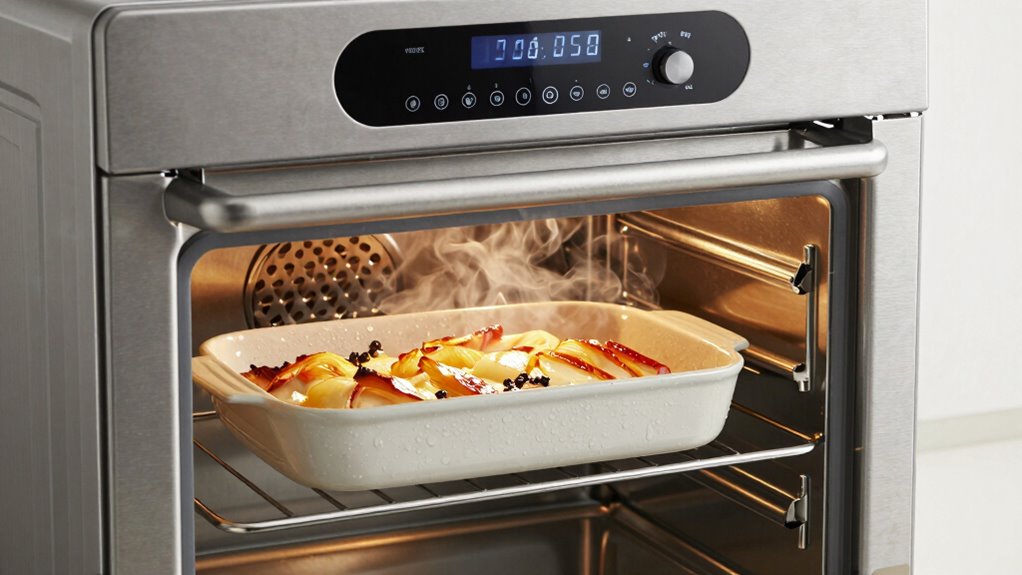
To achieve perfectly reheated leftovers with a steam oven, it is vital to start with proper preparation. Make certain your leftovers are stored in airtight containers to maintain their moisture and flavor. When reheating, consider the following tips:
Proper storage and gentle reheating ensure leftovers stay moist, tender, and full of flavor.
- Use a moderate steam setting to prevent over-softening.
- Cover leftovers lightly to retain moisture without trapping excess water.
- Stir or rotate food halfway through for even heating.
- Add a splash of broth or water to boost leftover textures and flavor preservation.
- Keep reheating time short to avoid drying out or overcooking.
These steps help maintain the original textures and flavors, making leftovers taste freshly cooked. Proper preparation ensures your reheated meal stays moist, tender, and flavorful—just like when it was first prepared.
Choosing the Best Steam Oven for Reheating Leftovers
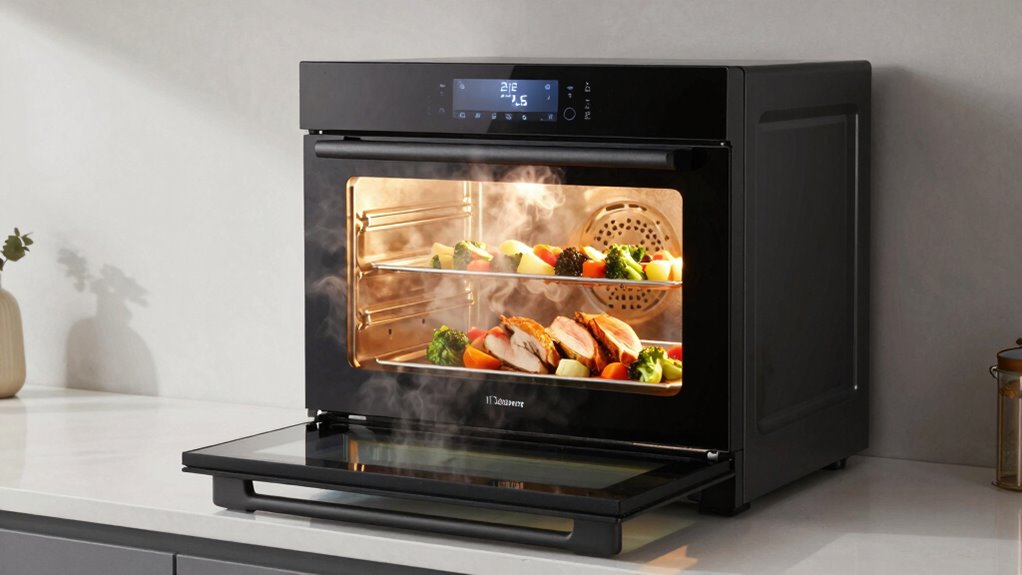
Choosing the right steam oven is essential for consistently reheating leftovers to perfection. Focus on models that prioritize food safety, ensuring even heat distribution to eliminate bacteria without overcooking. Look for features like precise temperature control and clear settings to prevent reheating food to unsafe levels. Energy efficiency is also vital; choose an oven that heats quickly and retains heat well, reducing power consumption. Consider size and capacity to match your typical leftovers volume, avoiding waste and ensuring convenience. Read reviews and compare brands to find reliable options that combine safety and efficiency. A well-chosen steam oven not only preserves the freshness and texture of leftovers but also helps you save energy and maintain food safety standards effortlessly.
What Do Food Experts Say About Using Steam Ovens for Reheating?
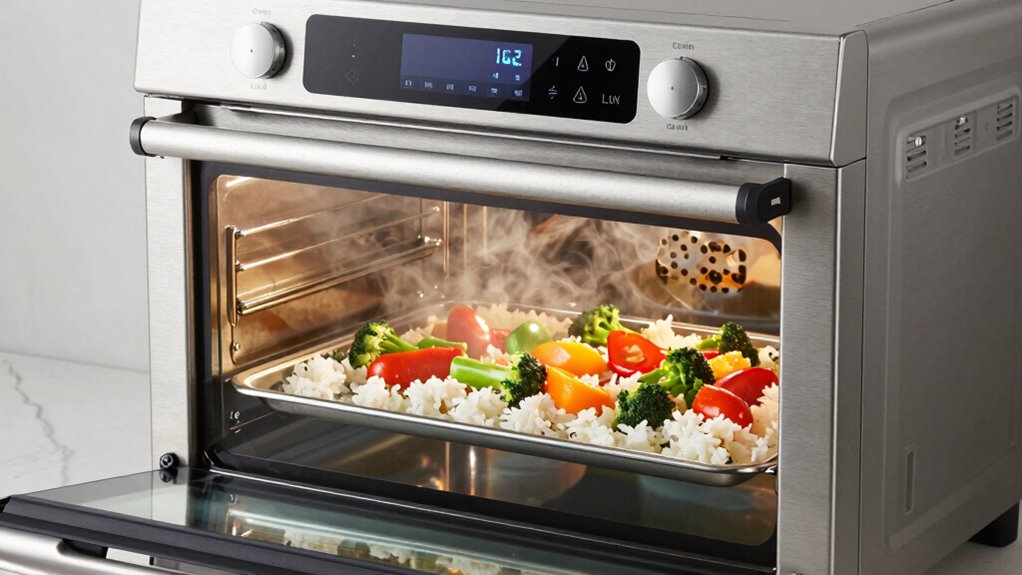
What do food experts say about employing steam ovens for reheating leftovers? They agree that steam ovens improve food safety by reducing bacterial growth and help maintain moisture, preventing dryness. Many highlight their energy efficiency, as steam ovens heat quickly and use less energy than conventional ovens. Experts also note that steaming preserves nutrients better, making leftovers healthier.
Here are some key points:
- Ensures even reheating without drying out food
- Maintains original flavors and textures
- Reduces the risk of foodborne illness
- Uses less energy compared to traditional methods
- Promotes better food safety and freshness
Frequently Asked Questions
Can Steam Ovens Reheat All Types of Food Equally Well?
Steam ovens can reheat most foods effectively, but they may not work equally well for all types. You’ll notice better food texture and flavor preservation with delicate items like fish or vegetables, which stay moist and tender. However, denser or crispy foods, like fried dishes, might lose their crunch or become soggy. To get the best results, adjust settings based on the specific food to guarantee ideal reheating.
Is Reheating With a Steam Oven Faster Than Traditional Methods?
Like a modern-day Icarus, you might wonder if reheating with a steam oven soars faster than traditional methods. In reality, steam ovens usually offer better temperature control, ensuring even heating, but they may not always be quicker. Reheating speed depends on your food’s size and moisture content. While they might take a little longer for certain dishes, they preserve flavor and texture far better, making the wait worthwhile.
Do Steam Ovens Require Special Containers for Leftovers?
No, you don’t need special containers for leftovers in a steam oven. Just make sure your containers are container compatibility, heatproof, and microwave-safe to handle reheating. Using the right leftover storage containers prevents leaks and makes cleanup easier. You can reheat leftovers directly from your usual storage, but avoid metal or non-heatproof plastics. This way, your leftovers stay fresh and safe to eat after reheating.
How Energy-Efficient Are Steam Ovens Compared to Microwaves?
You might be surprised, but steam ovens are actually more energy-efficient than microwaves. They use less energy per cooking cycle, reducing overall energy consumption and environmental impact. Imagine a busy kitchen where your leftovers are revitalized without draining power—steam ovens do this by cooking evenly and quickly. So, if you’re eco-conscious, you’ll appreciate how they help you save energy while preserving food quality, making them a smart choice.
Are Steam Ovens Safe to Use for Reheating Leftovers Daily?
Yes, steam ovens are safe for daily reheating if you follow food safety guidelines. They gently reheat leftovers, reducing the risk of bacteria growth and preserving flavor. Proper maintenance guarantees appliance longevity, so clean it regularly and avoid overloading. Using a steam oven daily can be a healthy, efficient way to enjoy leftovers, making sure your food stays fresh and safe with minimal wear on the appliance.
Conclusion
Imagine reheating yesterday’s lasagna with a steam oven. Instead of ending up with soggy edges, you enjoy tender, moist layers that taste just as fresh as when first cooked. By using a steam oven, you’re preserving the quality and flavor of your leftovers effortlessly. It’s a game-changer for busy weeknights or special gatherings, ensuring every bite feels like a freshly made meal. Reheat smarter, enjoy better—your taste buds will thank you.
Cold & flu season Picks
humidifiers
As an affiliate, we earn on qualifying purchases.