A wine refrigerator is designed to keep your wine at the perfect temperature for aging and enjoyment. It offers precise control, usually around 55°F, and often features dual-zone options for red and white wines. Its vibration dampening and humidity control protect the wine’s quality over time. Proper storage helps preserve flavors, aromas, and cork integrity, ensuring your collection remains in excellent condition. If you want to understand all the benefits and features, keep exploring to make the most of your wine storage.

Get home appliances delivered free — and shop member deals
- Fast, free delivery on millions of items
- Access to Prime Big Deal Days deals on October 6–7
- Prime Video, Amazon Music and more included
Key Takeaways
- Wine refrigerators offer precise temperature control, typically around 55°F, ideal for optimal wine aging and storage.
- Dual-zone models allow separate temperature settings for red and white wines, enhancing storage flexibility.
- Proper humidity levels (60-70%) in wine refrigerators prevent corks from drying out and maintain wine quality.
- Vibration dampening technology protects wine sediments and preserves delicate flavors during storage.
- Organized shelving and adjustable compartments facilitate easy access and proper categorization of wine collections.

Are you looking for the perfect way to store your wine and keep it at its best? A wine refrigerator might be just what you need. Proper wine storage is essential to preserve the flavors, aromas, and overall quality of your bottles. Unlike regular refrigerators, which are too cold and dry, wine refrigerators are specifically designed to provide ideal conditions for wine to age gracefully. The key to successful wine storage is maintaining precise temperature control, and that’s where a good wine fridge shines.
Proper wine storage preserves flavors and aromas with ideal temperature control.
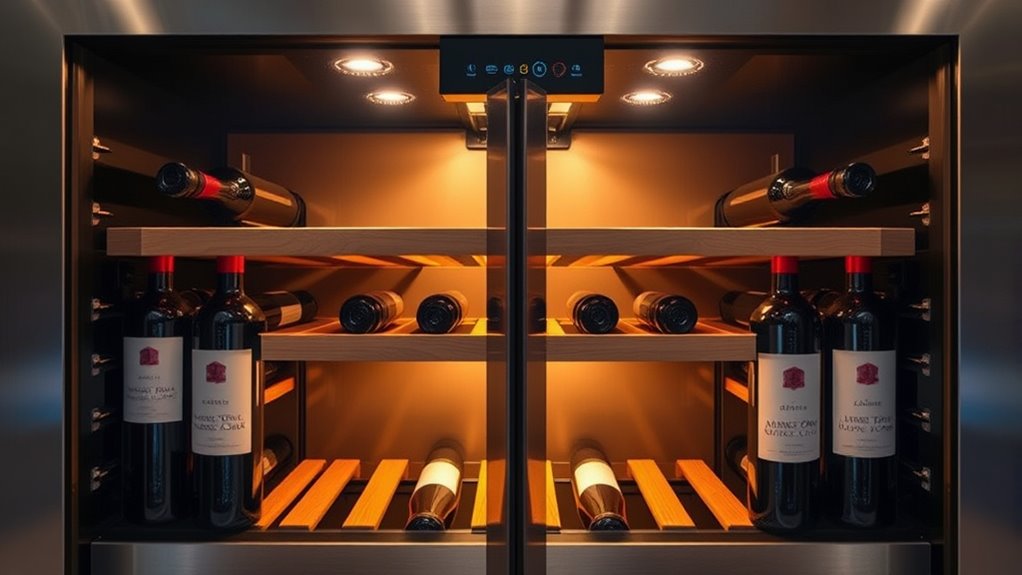
When you choose a wine refrigerator, you’re investing in a controlled environment that keeps your wine at a consistent temperature. Fluctuations in temperature can cause wine to expand and contract, which may lead to corks drying out or allowing air to seep into the bottle. This can spoil your wine or accelerate aging in an undesirable way. With temperature control features, you can set the perfect temperature for your collection—generally around 55°F (13°C)—and rest assured that your wine will stay at that ideal point. Some wine refrigerators offer dual-zone temperature control, allowing you to store red and white wines at their respective perfect temperatures simultaneously.
A dedicated wine fridge also helps prevent vibrations that can disturb the delicate sediments in wine, which is especially important if you’re storing bottles for the long term. Vibrations can disturb the aging process and degrade wine quality over time. Many models feature vibration dampening technology to keep the environment stable and protect your investment. Additionally, a wine refrigerator offers humidity control, which is crucial to maintaining the integrity of the cork. Too dry, and corks can shrink, letting air in; too humid, and mold can develop. The right humidity level—around 60-70%—keeps corks moist and seals the bottle effectively.
Another advantage of investing in a wine refrigerator is the ability to organize your collection efficiently. With adjustable shelves and proper insulation, you can store dozens of bottles without worry. This organized storage makes it easier to select the perfect wine for any occasion and ensures your collection ages uniformly. In short, a wine refrigerator provides consistent temperature control, vibration reduction, humidity management, and convenient organization, all of which are essential for preserving wine quality. If you’re serious about enjoying your wine at its peak, a dedicated wine fridge is a smart investment that guarantees your bottles are always stored under ideal conditions. Proper temperature control is especially crucial for long-term wine aging and safeguarding your investment.
Frequently Asked Questions
How Often Should I Clean My Wine Refrigerator?
You should clean your wine refrigerator every three to six months to maintain ideal performance. Follow a regular cleaning schedule as part of your maintenance tips, wiping down shelves and interior surfaces with a mild solution. This prevents mold, odors, and dust buildup. Also, check door seals periodically to ensure they’re airtight. Regular cleaning helps preserve the quality of your wine and extends your refrigerator’s lifespan.
Can I Convert a Standard Fridge Into a Wine Cooler?
You can definitely turn a standard fridge into a wine cooler through DIY conversions, but it’s like trying to fit a square peg in a round hole. You’ll need to add a dedicated wine rack and guarantee proper temperature regulation, as regular fridges aren’t designed for wine’s delicate needs. Keep in mind, maintaining a consistent temperature is key; without it, your wine’s quality could suffer.
What’s the Ideal Humidity Level for Wine Storage?
You should aim for humidity control around 50-70% to keep your wine in top condition. This level prevents mold growth and cork damage, which can occur if humidity is too high or too low. Maintaining proper humidity helps preserve the wine’s quality and prevents mold from forming on the labels or corks. Regularly monitor and adjust your storage environment to guarantee ideal humidity for long-term wine preservation.
Do Wine Refrigerators Consume a Lot of Energy?
Wine refrigerators don’t guzzle energy like a spaceship, but they do use some power. Their energy consumption varies depending on size and features, so choose an efficient model. To save energy, keep the door closed, set the right temperature, and avoid overloading. These efficiency tips help you enjoy perfectly stored wine without skyrocketing your electricity bill. With proper use, your wine fridge stays efficient and eco-friendly.
How Long Can Wine Be Stored in a Refrigerator?
You can store wine in a refrigerator for several days to a few weeks, but for proper wine aging, it’s best to keep bottles lying on their sides in a wine fridge. This bottle orientation helps keep the cork moist, preventing spoilage. If you plan to store wine longer, consider a wine refrigerator designed for aging, as regular refrigerators may be too cold and dry, affecting the wine’s quality.
Conclusion
A wine refrigerator isn’t just a machine; it’s a sanctuary for your finest moments. Like a trusted guardian, it preserves your wine’s soul, ensuring each bottle ages gracefully, waiting for the perfect moment to share. When you choose the right temperature, you’re nurturing more than wine—you’re cultivating memories and connections. So, let your wine refrigerator be the steady keeper of your most treasured experiences, symbolizing patience, care, and the promise of tomorrow’s celebration.
Fall Picks
fall essentials
As an affiliate, we earn on qualifying purchases.