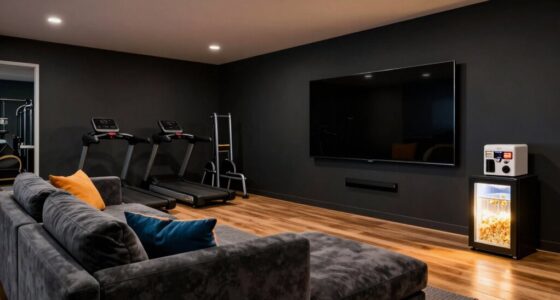
To find the perfect projector screen size, measure your sitting distance and multiply it by 0.84 to get the ideal diagonal in inches, ensuring an immersive experience. Keep in mind that your room size, viewing angle, and projector specs also matter. Adjusting for ambient lighting and aspect ratio helps create a balanced, stunning setup. If you want to master all these factors and create a true home theater wow, continue exploring the details.

Get home appliances delivered free — and shop member deals
- Fast, free delivery on millions of items
- Access to Prime Big Deal Days deals on October 6–7
- Prime Video, Amazon Music and more included
Key Takeaways
- Measure your viewing distance and multiply by 0.84 to find the ideal diagonal screen size in inches.
- Ensure your projector’s resolution supports the desired screen size for sharp, detailed images.
- Consider room size and layout to select a screen that fills your field of view comfortably.
- Adjust screen size based on ambient lighting and contrast requirements for optimal picture quality.
- Mount the screen at the correct height and distance to maximize immersion and minimize eye strain.
projector screen size calculator
As an affiliate, we earn on qualifying purchases.
As an affiliate, we earn on qualifying purchases.
Why Screen Size Matters for an Immersive Home Theater Experience

A larger screen can substantially enhance your home theater experience because it creates a more immersive and engaging environment. When your screen size increases, you’ll notice sharper details if you have a high screen resolution, which helps maintain image clarity even at bigger sizes. Additionally, a bigger screen fills your field of view, making movies and shows more engaging. To maximize impact, control ambient lighting and choose a resolution suitable for your screen size. This combo ensures vivid images and vibrant colors, delivering a cinematic feel right in your living room. Moreover, understanding the appropriate screen size for your space can significantly improve your viewing comfort and overall experience. Considering optimal viewing distance can also help in selecting the right screen size for your room, ensuring a balanced and comfortable viewing experience. Properly assessing your room dimensions is essential to find the ideal fit for your home theater setup, which can enhance your overall enjoyment. Additionally, evaluating the screen-to-room ratio can help you choose the most impactful size for your space. Ultimately, a well-sized screen with ideal resolution and lighting setup makes your home theater truly immersive.
fixed frame projector screen 120 inch
As an affiliate, we earn on qualifying purchases.
As an affiliate, we earn on qualifying purchases.
How to Calculate Your Perfect Projector Screen Size Using a Simple Formula

Your viewing distance plays a key role in choosing the right screen size, ensuring you’re not too close or too far. To get it right, you’ll want to calculate the screen diagonal based on this distance. Using a simple formula, you can easily determine the perfect size for a truly immersive viewing experience.
Viewing Distance Matters
Because choosing the right projector screen size depends heavily on how far you sit from the screen, understanding your viewing distance is essential. Your sitting distance influences the ideal projection angle, ensuring you get a clear, immersive image without straining your eyes or missing details. If you’re too close, the image might feel overwhelming, while sitting too far can make details hard to see. Ambient lighting also plays a role; in brighter rooms, a larger screen with higher contrast helps maintain clarity. To find your ideal size, measure your distance from where you’ll sit, then use that measurement to determine the appropriate screen dimensions. This balance guarantees a comfortable viewing experience, maximizing immersion without sacrificing image quality. Additionally, understanding your projector specifications helps tailor the setup to achieve the best visual performance. Knowing your aspect ratio can also influence how well the image fits your space and preferences.
Calculating Screen Diagonal
Wondering how to determine the perfect projector screen size quickly and accurately? The key is calculating the screen diagonal using a simple formula. First, consider your screen resolution—higher resolutions allow for larger screens without losing clarity. Next, factor in projector brightness; brighter projectors support bigger screens for vivid images. To find your ideal size, measure your viewing distance and apply the formula: multiply the distance by a factor of 0.84. This gives you the diagonal size in inches, creating a balanced viewing experience. Remember, a screen that’s too large can diminish image quality, especially if your projector’s resolution or brightness isn’t enough. By combining these elements with a straightforward calculation, you can easily select a screen size that delivers a stunning home theater experience.
portable projector screen 100 inch
As an affiliate, we earn on qualifying purchases.
As an affiliate, we earn on qualifying purchases.
How Viewing Distance Affects Your Ideal Screen Dimensions

Your viewing distance plays a key role in choosing the right screen size for an immersive experience. When you sit too close or too far, it can disrupt the balance between clarity and comfort. Understanding ideal distance and screen ratios helps you find the perfect size for your space. Additionally, considering battery inverter generator capacity ensures your home theater setup can be powered efficiently during outages or outdoor viewing sessions. Selecting the appropriate projector screen size based on your viewing environment can significantly enhance your overall viewing enjoyment. To achieve this, knowing the correct viewing distance tailored to your screen helps optimize both clarity and comfort. Moreover, researching luxury home theater accessories can elevate your setup to a premium level, blending technology with aesthetics. Furthermore, being aware of emerging AI cybersecurity jobs can be beneficial if you plan to upgrade your home theater with smart tech, ensuring your system’s security.
Optimal Viewing Distance
Have you ever considered how your distance from the screen influences the ideal size for your projector? Your viewing distance plays a key role in determining the best screen size. When setting up, proper projector calibration ensures you get the highest picture quality at your chosen distance. A screen mounted too close can cause eye strain and reduce immersion, while mounting it too far away makes details hard to see. To find the right balance, measure your typical seating distance and adjust your screen size accordingly. This alignment is essential for achieving optimal image quality, ensuring that your viewing experience remains crisp and vibrant without any distortion. Additionally, understanding viewing distance helps you select a screen size that minimizes eye fatigue and maximizes immersion. Remember, the goal is to create a seamless viewing experience, so consider both distance and calibration to determine the perfect projector setup for your space. Incorporating screen size guidelines based on your setup can further enhance your viewing enjoyment.
Screen Size Ratios
The ratio between your viewing distance and screen size directly impacts the ideal dimensions for your projector setup. A proper screen ratio ensures your display fits comfortably within your space and maintains clarity. Typically, a 1.5 to 2.5 viewing distance to screen size ratio is recommended, depending on your preferences. For example, if you sit 12 feet away, a screen around 48 to 80 inches works well. Your choice of aspect proportion also influences this ratio; common options are 16:9 or 2.35:1, which affect how wide and tall your screen appears. Balancing these factors helps prevent eye strain and offers an ideal viewing experience. Understanding screen ratio principles ensures your projector setup delivers the perfect balance between size, clarity, and comfort.
Immersive Experience Balance
When aiming for an immersive viewing experience, understanding how your sitting distance influences ideal screen size is essential. The closer you sit, the larger your screen should be to fill your field of vision without causing eye strain. Proper room acoustics and audio calibration also enhance immersion, making sound as engaging as visuals. Keep in mind that a screen that’s too big can overwhelm your space, while too small diminishes the effect. Use this table to find your best balance: Viewing Environment plays a crucial role in optimizing your home theater setup for maximum enjoyment.
high contrast projector screen for bright rooms
As an affiliate, we earn on qualifying purchases.
As an affiliate, we earn on qualifying purchases.
Choosing the Right Aspect Ratio for Movies, TV, and Gaming

Are you unsure which aspect ratio is best for your movies, TV shows, or gaming sessions? Choosing the right aspect ratio affects your viewing experience and how your content is displayed. A wider aspect ratio, like 16:9, is ideal for modern TV and gaming, providing immersive visuals. Meanwhile, a 2.35:1 ratio offers a cinematic feel for movies, but may require more image scaling. Consider these factors:
Choosing the right aspect ratio enhances your viewing experience and minimizes image distortion.
- Compatibility with your projector’s native aspect ratio
- The type of content you watch or play most
- How image scaling might impact picture quality
- Be aware of Free Floating content and how it may adapt to different aspect ratios, affecting your viewing experience.
Matching your content with the correct aspect ratio ensures minimal distortion and ideal clarity. This choice directly influences how your screen size feels, making your home theater truly “wow.”
Common Mistakes to Avoid When Picking Your Projector Screen Size

Choosing the right aspect ratio is just one part of ensuring a great viewing experience; selecting an inappropriate screen size can lead to distorted images, eye strain, or a loss of immersion. A common mistake is ignoring the screen material, which affects picture clarity and color accuracy. Additionally, you might overlook your ceiling height, leading to a screen that’s either too high or too low for comfortable viewing. Avoid sizing your screen based solely on room dimensions without considering your projector’s throw distance. Too large a screen can cause pixelation, while too small diminishes the cinematic feel. Be mindful of these factors to prevent compromising image quality or comfort, ensuring your home theater delivers the immersive experience you desire. Proper projector placement and considering your room’s lighting conditions can further enhance your viewing experience.
Adjusting Screen Size for Different Room Sizes and Layouts

Adjusting your projector screen size to fit different room sizes and layouts guarantees a comfortable and immersive viewing experience. When tailoring your setup, consider room dimensions, furniture placement, and viewing distance. Larger screens work best in spacious rooms, while smaller screens suit compact spaces. Think about integrating decorative accents that complement your style without cluttering the space. Use soundproofing techniques like acoustic panels or rugs to minimize noise distractions, enhancing clarity and focus. Also, guarantee your seating arrangement aligns with the ideal screen size to avoid strain. Remember, a balanced setup boosts immersion and comfort, making your home theater truly stand out. Properly adjusting for room specifics ensures you enjoy stunning visuals without sacrificing sound quality or aesthetic harmony. Additionally, understanding projector placement and image calibration can further optimize your viewing experience.
Tips for Balancing Screen Size, Brightness, and Resolution

Balancing screen size, brightness, and resolution is key to creating a home theater that looks great and feels comfortable. Proper screen calibration guarantees your projector displays colors accurately and sharpness remains ideal, enhancing your viewing experience. Adjust brightness levels to match your ambient lighting; too much brightness in a dark room can cause eye strain, while too little dulls the image. Consider your ambient lighting when choosing screen size—dimming lights or controlling sunlight can allow for a larger screen without washing out the image. Keep resolution in mind to match your content; higher resolutions like 4K demand good calibration to fully realize their detail. Additionally, integrating biosensors can help monitor your eye comfort and prevent strain during long viewing sessions. Being aware of visual ergonomics principles can further improve your comfort and viewing quality. Incorporating proper ergonomics into your setup can reduce fatigue and enhance overall viewing pleasure. For optimal comfort, consider ambient light control techniques that can greatly improve your immersive experience, especially during extended viewing periods. Utilizing adjustable mounting options can also help tailor the viewing angle for different seating arrangements, improving comfort. By focusing on these elements, you’ll achieve a balanced setup that delivers immersive visuals without compromising comfort.
How Your Projector’s Specs Influence the Best Screen Size

Your projector’s specifications play a crucial role in determining the best screen size because they directly affect image quality and performance. Key factors include the projector lamp brightness, resolution, and contrast ratio. These specs influence how large your screen can be without sacrificing clarity or brightness. For example, a high-lumen projector allows for larger screens even in bright rooms, while the screen material impacts how well the image is projected and perceived. Consider these points:
- A powerful projector lamp ensures bright images on bigger screens
- Higher resolution enables sharper images at larger sizes
- The right screen material enhances contrast and color accuracy
Matching your projector’s specs with an appropriate screen size ensures you get that “wow” factor without compromising clarity or visual impact.
Practical Examples: Calculating Screen Sizes for Different Room Setups

To determine the ideal screen size for your room, start by considering the room’s dimensions and viewing distance. For a small room, a 100-120 inch screen may be suitable, ensuring viewers don’t strain their eyes or compromise color calibration. Medium rooms can comfortably host 120-150 inch screens, providing an immersive experience without overwhelming the space. Larger rooms support screens over 150 inches, but remember to optimize sound design for clear audio and maintain proper viewing angles. Always test your setup with actual content, adjusting the projector’s placement and calibration for the best picture quality. Accurate color calibration and good sound design are essential to enhancing your viewing experience, making your home theater truly ‘wow’ regardless of room size.
Frequently Asked Questions
How Does Ambient Light Impact Screen Size Selection?
Ambient light considerably impacts your screen size choice because too much light can cause glare, reducing picture quality. If your room has bright windows or lights, opt for a larger screen to maintain visibility and avoid glare issues. Conversely, in darker rooms, you can go smaller without losing detail. Always consider ambient light levels to choose a screen size that minimizes glare and maximizes your viewing experience.
What Are the Best Materials for Different Screen Sizes?
You’ll want durable, high-clarity materials like fiberglass or PVC for your screen, as they resist warping and scratches. For larger sizes, choose rigid materials that maintain shape and prevent sagging, ensuring a crisp image. If your setup faces frequent use or ambient light, opt for specialty fabrics with anti-reflective coatings. This keeps your visuals clear and vibrant, making your home theater experience truly immersive and worry-free.
How Does Screen Size Influence Projector Bulb Lifespan?
Your screen size impacts projector bulb longevity because larger screens often require higher brightness settings, which can increase the bulb’s wear. Additionally, projection distance plays a role; if you project from a longer distance for a bigger screen, your projector may work harder, accelerating bulb degradation. To maximize bulb life, optimize your projection distance and brightness levels, ensuring you balance image quality with bulb longevity.
Can Adjustable Screens Optimize Multiple Room Configurations?
You’ll find that adjustable screens, like motorized ones, truly shine in adapting to various room setups, offering flexibility and convenience. While fixed frame screens provide a sleek, dedicated look, motorized screens easily fold into different spaces with a simple press. This means you can optimize your viewing experience for multiple configurations without sacrificing image quality or style, making your home theater more versatile and enjoyable for all occasions.
What Is the Recommended Screen Size for 4K vs. 1080P Projectors?
For 4K projectors, aim for a screen size between 100 to 120 inches, as higher resolution lets you sit closer without pixelation. With 1080p projectors, stick to 80 to 100 inches to maintain sharp image quality at typical viewing distances. Always consider your room size and preferred viewing distance; larger screens enhance immersion, but too big can compromise image clarity if your resolution or distance isn’t ideal.
Conclusion
Choosing the right projector screen size transforms your space into a cinematic oasis. Did you know that nearly 70% of home theater enthusiasts report feeling more immersed with larger screens? By using simple calculations and considering your room’s specifics, you can achieve that ‘wow’ factor. So, measure carefully, avoid common pitfalls, and enjoy every movie night like you’re in a private theater. Your perfect home cinema experience is just a few steps away!
Fall yard work Picks
leaf blowers
As an affiliate, we earn on qualifying purchases.