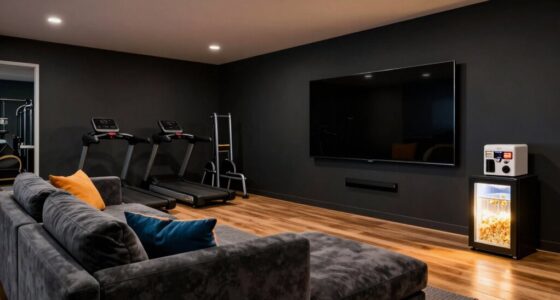
To create a home wellness space, you need better lighting and airflow because they boost your mood, energy, and sleep quality. Natural light helps regulate your circadian rhythm, making you feel more alert and rested. Good airflow clears indoor toxins and reduces allergens, promoting better respiratory health. Incorporating indoor plants and proper ventilation transforms your space into a vibrant, calming environment. Keep exploring to discover simple ways to optimize these elements for your home’s well-being.

Get home appliances delivered free with Prime
- Fast, free delivery on millions of items
- Prime Video, Amazon Music and more included
- Member-only deals all year
Key Takeaways
- Natural light boosts mood, energy, and sleep, essential for overall well-being in wellness spaces.
- Proper airflow reduces indoor toxins, allergens, and mold, supporting respiratory health.
- Well-lit and ventilated environments enhance mental clarity and reduce stress.
- Combining light and airflow creates a balanced, inviting space conducive to relaxation and recovery.
- Adequate lighting and ventilation optimize indoor air quality and promote physical and mental wellness.

Creating a healthy home environment starts with paying attention to lighting and airflow, two key factors that directly impact your well-being. When your space is filled with natural light, it boosts your mood, enhances your energy, and even improves your sleep patterns. You should aim to maximize the amount of sunlight that enters your home by opening curtains during the day and choosing window placements that let in plenty of daylight. Natural light not only makes your space feel more inviting but also helps regulate your circadian rhythm, ensuring you stay alert during the day and rest well at night. In addition to lighting, incorporating indoor plants can considerably enhance your home’s wellness. Plants thrive in well-lit areas, and their presence purifies the air, reducing indoor pollutants and increasing oxygen levels. They also bring a sense of calm and connection to nature, which can reduce stress and improve mental clarity. Positioning your indoor plants where they can soak up natural light encourages healthier growth and creates a vibrant, lively atmosphere. Ensuring proper ventilation is essential for maintaining good indoor air quality and preventing the buildup of indoor toxins. Airflow is equally important, as stagnant air can lead to a buildup of allergens, mold, and indoor toxins, compromising your respiratory health. You should prioritize good ventilation by opening windows regularly, especially when weather permits, to bring in fresh air. If natural ventilation isn’t always possible, consider installing exhaust fans or air purifiers that can help circulate and filter the air inside. Proper airflow keeps the environment fresh and minimizes odors, creating a space where you feel comfortable and energized. You might also think about arranging your furniture to facilitate better air circulation, avoiding clutter that blocks airflow and traps dust or allergens. Incorporating natural elements like indoor plants alongside proper ventilation techniques can significantly improve your home’s wellness environment. Incorporating natural ventilation techniques, such as cross-ventilation, can further enhance the flow of fresh air in your home. When combined with natural light and indoor plants, good airflow transforms your home into a wellness space that supports your physical health and mental well-being. Additionally, understanding the importance of indoor air quality can help you make informed choices about cleaning and maintenance routines to further optimize your environment. Ultimately, the key to designing a home wellness space lies in balancing light and air. By intentionally allowing more natural light and ensuring consistent airflow, you enhance your environment’s overall quality. Your home becomes more than just a shelter; it turns into a sanctuary where you can truly relax, recharge, and thrive. Small adjustments—like opening windows, adding a few indoor plants, or rearranging furniture—can make a big difference. These changes foster a healthier, more inviting atmosphere, helping you feel more energized and focused each day. When lighting and airflow work together harmoniously, they create a space that nurtures your body and mind, making your home a true haven for wellness.
As an affiliate, we earn on qualifying purchases.
Frequently Asked Questions
How Can I Improve Natural Airflow Without Opening Windows Often?
You can improve natural airflow without opening windows often by using ceiling fans to circulate air efficiently. Incorporate indoor plants, which can help filter and freshen the air, enhancing ventilation naturally. Additionally, consider installing vents or exhaust fans to promote continuous airflow. These strategies work together to maintain a fresh, healthy environment in your wellness space, even when you prefer to keep windows closed for privacy or weather reasons.
What Are the Best Lighting Options for Different Wellness Activities?
You might think bright, harsh lights are best, but studies show mood lighting enhances relaxation and focus during wellness activities. Opt for adjustable, warm LED bulbs for calming yoga or meditation, and use task illumination like focused reading lights for journaling or stretching. Dimmer switches allow you to tailor lighting to each activity, creating an inviting environment that supports your well-being. Always match your lighting to the mood and task at hand.
How Does Poor Lighting Affect Mental Health in Wellness Spaces?
Poor lighting in your wellness space can negatively impact your mood stability and stress reduction. Dim or harsh lighting creates a gloomy atmosphere, making it harder to relax and focus. Insufficient or inconsistent lighting can lead to feelings of anxiety or fatigue, disrupting your mental clarity. By improving lighting, you support a calming environment that promotes better mood regulation and helps you unwind more effectively during your wellness routines.
Can Air Purifiers Enhance Airflow Quality Effectively?
Absolutely, air purifiers are like the superheroes of airflow, swooping in to save your wellness space from sneaky pollutants. Their air circulation boosts purifier efficiency, ensuring fresh, clean air flows freely. Sure, they can’t replace a good old breeze, but they do a pretty stellar job at filtering out allergens and toxins. So, yes, investing in an air purifier is a smart move for better airflow and healthier living.
What Are Eco-Friendly Lighting and Ventilation Solutions?
You can choose eco-friendly fixtures like LED lights to reduce energy consumption and minimize environmental impact. For sustainable ventilation, consider options like energy-efficient exhaust fans or natural ventilation methods, such as strategically placed windows and vents that promote airflow without wasting energy. These solutions improve your wellness space’s air quality and lighting while supporting eco-conscious living. Incorporating eco-friendly fixtures and sustainable ventilation creates a healthier, greener environment for your home.
air purifiers for indoor air quality
As an affiliate, we earn on qualifying purchases.
As an affiliate, we earn on qualifying purchases.
Conclusion
In your home wellness space, better lighting and airflow aren’t just nice-to-haves—they’re essentials that can transform your entire well-being. Think of poor lighting and stale air as silent enemies quietly sabotaging your comfort and health. By taking simple steps to improve these elements, you’ll create a sanctuary so revitalizing it feels like stepping into a new domain of vitality. Don’t settle for less—your wellness space deserves to be a powerhouse of positive energy!
indoor plants for air purification
As an affiliate, we earn on qualifying purchases.
As an affiliate, we earn on qualifying purchases.
As an affiliate, we earn on qualifying purchases.
NFL season / tailgating Picks
team gear
As an affiliate, we earn on qualifying purchases.