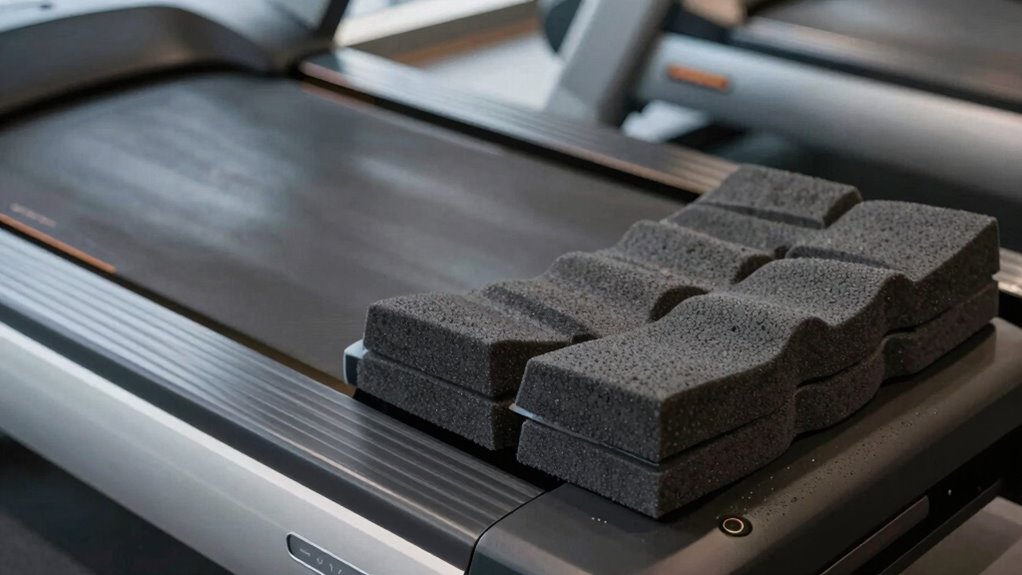

Treadmill cushioning works by absorbing and dispersing shock as your foot strikes the belt, reducing impact on your knees and joints. Some models offer advanced systems with thicker or more responsive materials like elastomers or foam, which provide better shock absorption and a softer feel underfoot. If you notice your knees feel less sore on certain treadmills, it’s likely because of their superior cushioning. Keep exploring to discover how choosing the right system can enhance your comfort and protect your joints.
Key Takeaways
- Enhanced cushioning systems absorb impact more effectively, reducing knee joint stress during treadmill exercise.
- Materials like advanced elastomers and foam adapt to your stride, providing better shock absorption and comfort.
- Adjustable cushioning features allow customization for personalized impact reduction, benefiting knee health.
- Proper maintenance prevents cushioning degradation, ensuring consistent shock absorption and knee protection over time.
- Higher-quality treadmills with superior cushioning technology minimize joint discomfort, making knees feel better during workouts.
As an affiliate, we earn on qualifying purchases.
Why Treadmill Cushioning Matters for Knee Comfort
Since your knees absorb much of the impact during treadmill workouts, proper cushioning plays a crucial role in preventing discomfort and injury. When cushioning is adequate, it reduces the shock transmitted to your joints, helping you maintain a healthy running posture. A good treadmill surface allows your calf muscles to work efficiently without overcompensating for uneven terrain, which can strain your knees. Proper cushioning encourages a natural stride, lowering the risk of overuse injuries. If your treadmill lacks sufficient shock absorption, you might unconsciously alter your running posture, leading to increased stress on your knees. Additionally, treadmill cushioning technology has advanced to better mimic natural terrain and support joint health. Consequently, choosing a treadmill with appropriate cushioning helps protect your knees, supports healthy calf muscle engagement, and promotes better running form. This combination minimizes discomfort and keeps you active longer.
As an affiliate, we earn on qualifying purchases.
What Is Treadmill Cushioning, and How Does It Protect Your Joints
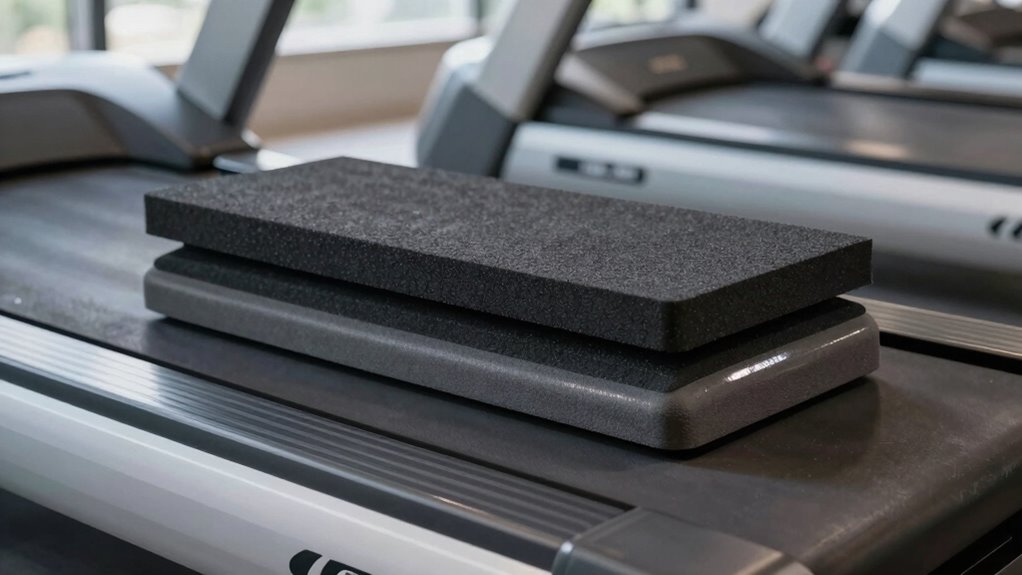
Treadmill cushioning refers to the shock-absorbing materials built into the running surface to reduce the impact forces you experience while exercising. This feature enhances running biomechanics by decreasing stress on your joints, especially your knees and hips. Good treadmill ergonomics ensures that the cushioning aligns with your stride, promoting proper gait and minimizing injury risk. Here are four ways cushioning protects your joints:
- Absorbs shock during foot strike, reducing joint strain
- Distributes impact forces evenly across the running surface
- Supports natural running biomechanics for improved gait efficiency
- Prevents excessive joint stress that can cause pain or injury
adjustable treadmill shock absorption
As an affiliate, we earn on qualifying purchases.
As an affiliate, we earn on qualifying purchases.
Different Types of Treadmill Cushioning Systems and How They Work

Different treadmill cushioning systems employ various technologies to absorb shock and protect your joints effectively. These systems are designed with your running biomechanics in mind, ensuring that each stride feels natural while minimizing impact. Some treadmills feature elastomer cushions that compress underfoot, dispersing force evenly across the surface. Others incorporate adjustable or layered shock absorption, allowing you to customize firmness or softness. Treadmill surface textures also play a role, providing grip without sacrificing cushioning. High-quality systems balance shock absorption with biomechanical stability, reducing joint stress during runs. Understanding how these different cushioning methods work helps you choose a treadmill that aligns with your running style and joint health needs, ultimately making your workout more comfortable and reducing injury risk. Additionally, advancements in smart furniture have led to innovative home solutions that can complement your fitness routine by providing better storage and ergonomic support. Recognizing the importance of shock absorption technology can help you select equipment that minimizes joint strain, especially as innovations continue to improve cushioning systems for enhanced comfort. For example, some systems utilize advanced materials that adapt dynamically to your stride, further enhancing shock mitigation and overall comfort.
high cushioning treadmill for knees
As an affiliate, we earn on qualifying purchases.
As an affiliate, we earn on qualifying purchases.
What Factors Affect Treadmill Cushioning Quality
The quality of treadmill cushioning depends on several key factors, including the materials used for shock absorption, the deck’s flexibility and design, and the thickness of the cushioning layer. These elements work together to influence how well the treadmill absorbs impact and protects your joints. Understanding these factors helps you choose a treadmill that offers the right level of comfort and support. Additionally, some models feature specialized shock absorption systems that further enhance impact reduction and overall running comfort. Selecting the appropriate shock absorption technology can significantly improve your workout experience and reduce injury risk. The material composition of the cushioning layer also plays a crucial role in durability and long-term performance. Moreover, cushioning effectiveness can vary based on the treadmill’s construction and maintenance practices. For example, cushioning materials that are high quality tend to maintain their shock absorption properties longer, ensuring consistent comfort over time.
Shock Absorption Materials
What determines the effectiveness of shock absorption materials in treadmill cushioning? It’s all about how well these materials reduce impact and protect your joints. The key factors include:
- Material composition – rubber, foam, and elastomers each offer different impact reduction levels.
- Density – higher-density materials often provide better shock absorption but may feel firmer.
- Layer thickness – thicker layers generally improve impact reduction, cushioning your knees and joints.
- Compression properties – materials that compress easily absorb shocks more effectively, decreasing stress on your body.
- Material durability – the longevity of shock absorption materials influences their sustained cushioning performance over time.
- Shock absorption efficiency is also affected by the integration of different materials, which can optimize impact reduction and comfort.
- The material composition plays a crucial role in determining how well the cushioning performs under repeated use, affecting both comfort and durability. Additionally, advancements in shock absorbing technology have led to more effective and longer-lasting materials that enhance overall treadmill performance. Properly engineered cushioning systems can significantly improve shock absorption, reducing fatigue and injury risk during workouts.
Choosing the right shock absorption materials ensures your treadmill offers adequate impact reduction, making your workouts more comfortable and safer for your knees. The quality of these materials directly influences how well your treadmill cushions each step.
Deck Flexibility and Design
Deck flexibility and design play an essential role in determining treadmill cushioning quality because they directly influence how impact forces are absorbed and distributed during your workout. A deck with the right flexibility can bend slightly under your stride, reducing stress on your knees and joints. Design variations, such as the material used or the shape of the deck, also affect shock absorption. Some decks are engineered to be more responsive, offering a softer feel, while others prioritize stability, which can feel firmer. When choosing a treadmill, consider how the deck’s flexibility aligns with your running style and comfort preferences. A well-designed deck balances support and shock absorption, helping protect your joints without sacrificing stability or performance. Understanding treadmill features can help you make an informed choice to match your needs. Additionally, material composition of the deck influences its resilience and flexibility, further impacting cushioning effectiveness. Recognizing the importance of shock absorption technology can also guide you toward models that better protect your joints during intense workouts.
Cushioning Layer Thickness
Cushioning layer thickness directly impacts how well your treadmill absorbs shock and supports your joints during exercise. Thicker cushioning layers generally provide better shock absorption, reducing impact on your knees and hips. However, overly thick layers may compromise stability. Factors influencing cushioning quality include:
- The material used in the cushioning layer, affecting durability and shock absorption.
- The consistency of cushioning layer thickness across the deck.
- How well the treadmill deck reinforcement supports the cushioning layer, preventing sagging.
- The integration of cushioning with other deck components to maintain consistent shock absorption.
A properly designed cushioning system can significantly enhance your workout experience by balancing shock absorption with stability.
Understanding these factors helps you choose a treadmill with ideal cushioning layer thickness, ensuring joint protection without sacrificing stability and durability. Proper treadmill deck reinforcement is essential to maintain the effectiveness of the cushioning layer over time.
How to Spot Worn-Out Cushioning and When to Replace It
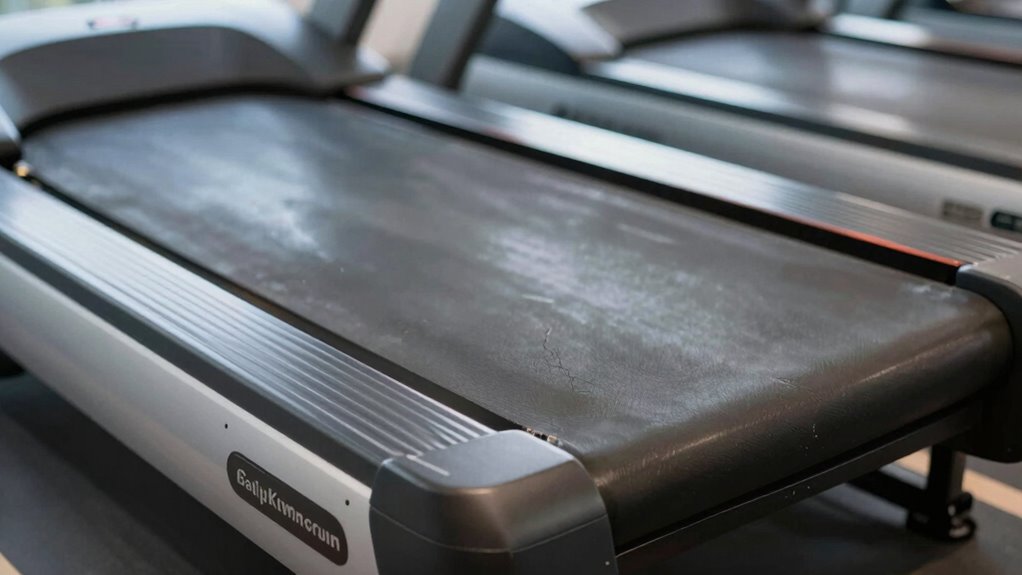
You’ll notice signs of worn-out cushioning through visible damage or uneven wear on the deck. If you feel less shock absorption or notice a harder, less comfortable run, it’s time to check the cushioning. An unusual running sensation can also indicate that your treadmill’s cushioning needs replacing. Traceability in maintenance records can help track when cushioning was last replaced, ensuring ongoing quality and safety. Additionally, monitoring air quality considerations can help maintain a safe exercise environment around your treadmill. Regular inspections can also help identify measurement accuracy issues that might affect your workout experience. Proper system maintenance ensures the cushioning performs effectively and extends its lifespan.
Visible Wear Signs
Over time, signs of wear become increasingly apparent, making it essential to regularly inspect your treadmill’s cushioning. Visible wear signs can affect the running surface and overall performance. Look for:
- Cracks or tears in the cushioning material, indicating breakdown.
- Uneven or sagging areas on the running surface, which can cause unstable footing.
- Excessive fraying or peeling around the edges, showing deterioration.
- A noticeable decrease in shock absorption during treadmill maintenance, leading to a harder feel underfoot.
These signs suggest your cushioning is worn out and might need replacement. Regularly checking for visible wear helps maintain a safe, comfortable running surface and prolongs your treadmill’s lifespan. Prompt attention prevents further damage and ensures exemplary shock absorption.
Decreased Shock Absorption
As visible signs of wear become more apparent, it’s important to pay attention to how your treadmill feels during use. Decreased shock absorption can make your runs less comfortable and put extra stress on your joints. When the cushioning wears down, your steps may feel harder, and your knees might ache afterward. To spot worn-out cushioning, check for uneven surfaces and listen for unusual noises.
| Indicator | What It Means |
|---|---|
| Harder landing feel | Reduced shock absorption, less joint protection |
| Increased joint pain | Cushioning no longer absorbs impact effectively |
| Visible indentations | Cushioning has worn down considerably |
| Uneven treadmill surface | Worn areas compromise shock absorption |
| Less responsiveness | Cushioning no longer cushions properly |
Replace the mat when you notice these signs to protect your joints effectively.
Unusual Running Feel
Unusual running sensations often signal that your treadmill’s cushioning has worn out. If you notice an inconsistent or jarring feel, it’s time to check your deck. Here are signs to watch for:
- Changes in running speed feel unstable or uneven.
- Increased impact or discomfort in your knees or joints.
- The treadmill surface feels excessively hard or overly soft.
- Adjusting the treadmill height doesn’t improve your running feel or reduces shock absorption.
Worn-out cushioning affects how your body interacts with the deck, especially if you run at higher speeds. If these symptoms persist, replacing the cushioning can restore a smoother, safer running experience and protect your joints from unnecessary stress.
How Better Cushioning Can Reduce Knee Impact and Improve Comfort
When your treadmill has better cushioning, it absorbs more of the impact from each step, reducing the stress on your knees. This cushioning works alongside an ergonomic design to promote proper foot placement and stride, further decreasing joint strain. As a result, your knees experience less repetitive shock, which can help prevent injuries and soreness over time. Enhanced cushioning not only improves comfort but also supports your cardio performance, allowing you to run longer or faster without discomfort. When impact forces are minimized, you can focus on your workout rather than pain or fatigue. Overall, better cushioning creates a more natural, supportive running experience that benefits your joints while optimizing your exercise efficiency.
Choosing a Treadmill With the Right Cushioning for Your Needs
When selecting a treadmill, consider the impact absorption levels to match your workout intensity and joint needs. You should also explore surface compatibility options to guarantee the cushioning aligns with your running style. Making the right choice helps you run comfortably and reduces injury risk.
Impact Absorption Levels
Choosing a treadmill with the right impact absorption level is essential for a comfortable and safe workout. Higher impact absorption reduces stress on your knees and joints, but too much can affect stability. When evaluating models, consider these factors:
- Impact absorption consistency – ensure cushioning remains uniform across the deck for balanced support.
- Axle alignment – misaligned axles can cause uneven cushioning, increasing injury risk.
- Motor noise level – quieter motors often indicate well-maintained components that won’t interfere with your workout.
- Cushion firmness – find a balance between soft enough to protect joints and firm enough for responsiveness.
Test the treadmill to see how impact absorption feels, and check if the cushioning affects the overall stability and motor noise. Proper impact absorption levels enhance your workout safety and comfort.
Surface Compatibility Options
Selecting the right treadmill surface involves understanding how different cushioning options interact with your running style and needs. Surface compatibility depends on treadmill surface textures and your running shoe compatibility. Some surfaces offer softer textures that absorb shock better, reducing joint strain, while others provide firmer support for speed work. Consider how your shoes grip different textures to prevent slipping or discomfort. Here’s a quick overview:
| Surface Texture | Shoe Compatibility | Best For |
|---|---|---|
| Soft, cushioned | Running shoes with extra padding | Long-distance comfort |
| Firm, textured | Shoes with good grip | Speed training |
| Rubberized | Wide range | All-around use |
| Smooth | Minimal tread | Walking or recovery |
| Multi-textured | Versatile | Varied workouts |
Matching surface textures to your shoes guarantees comfort and minimizes injury risk.
Comparing Top Treadmill Models Based on Cushioning Features

To find the best treadmill for your needs, it’s essential to compare models based on their cushioning features. Different treadmill technology offers varied shock absorption and impact reduction, which directly affects workout ergonomics and joint comfort. When evaluating options, focus on:
- The type of cushioning system—air-based, foam, or rubber pads.
- Adjustability of cushioning levels for customized comfort.
- The integration of advanced shock absorption technology.
- How cushioning affects overall treadmill stability and noise levels.
Tips to Maintain and Optimize Your Treadmill Cushioning
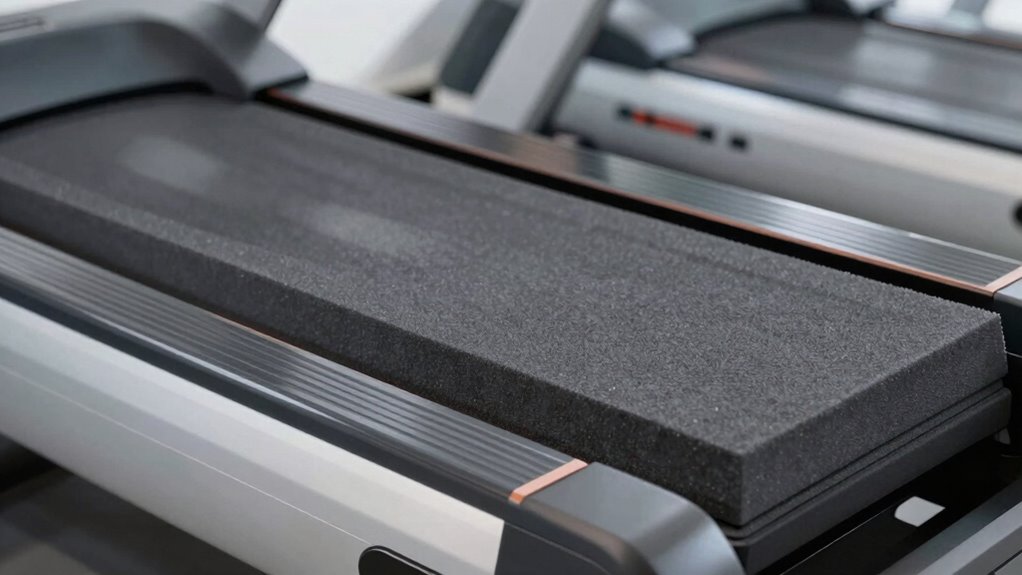
Regularly inspecting and cleaning your treadmill’s cushioning system is essential to keep it functioning properly and prolong its lifespan. Dust, sweat, and debris can accumulate, affecting both performance and treadmill aesthetics. Use a soft cloth and gentle cleaner to wipe down the deck and cushioning areas, ensuring no buildup hampers shock absorption. Check for signs of wear or damage, such as soft spots or unusual noise, and address issues promptly. Maintaining the cushioning system preserves the treadmill’s shock-absorbing qualities, which can positively influence its brand reputation. Proper care keeps your machine operating smoothly, supports better workout experiences, and ensures the cushioning continues to protect your knees effectively over time. Regular maintenance is a small investment for long-term treadmill health and performance.
When to Upgrade Your Treadmill for Better Knee Protection
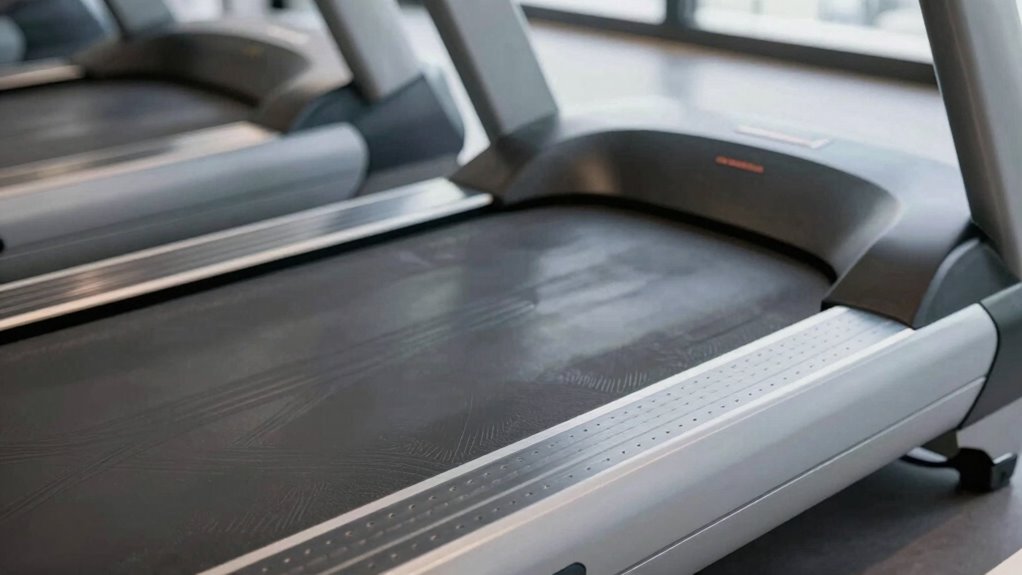
If you notice persistent discomfort or pain in your knees despite proper treadmill maintenance, it may be time to contemplate upgrading your machine. Advances in treadmill cushioning technology can markedly reduce impact and protect your knees better. Consider upgrading if:
Persistent knee pain despite maintenance may indicate it’s time to upgrade your treadmill for better shock absorption.
- Your current treadmill lacks modern cushioning technology designed for shock absorption.
- You’ve gained weight, and your current model isn’t suited for your user weight considerations.
- You experience ongoing knee pain despite using appropriate footwear and maintenance.
- Your treadmill feels less responsive or too stiff, indicating outdated or insufficient cushioning.
Newer models often feature advanced cushioning systems tailored to different weights and running styles, offering better knee protection. Upgrading ensures you get the best impact absorption and injury prevention.
Frequently Asked Questions
Can Treadmill Cushioning Help Prevent Knee Injuries Long-Term?
Yes, treadmill cushioning can help prevent knee injuries long-term by reducing impact on your knee joint. When the cushioning absorbs shock, it minimizes stress on your running biomechanics, decreasing the risk of overuse injuries. Using a treadmill with proper shock absorption supports healthier joint function, especially if you run frequently or have existing knee issues. This proactive approach helps protect your knees and promotes safer, more comfortable workouts over time.
How Does Cushioning Affect Treadmill Stability and Balance?
Think of treadmill cushioning as a gentle dance partner, guiding your steps softly yet securely. It enhances stability and balance by providing shock absorption and biomechanical support, ensuring your movements stay smooth and controlled. This cushioning reduces vibrations that could throw you off balance, letting you focus on your workout with confidence. As a result, you feel steadier and more in control, making every stride safer and more comfortable.
Are Softer Cushions Better for All Runners or Only Specific Users?
Softer cushions aren’t always better for all runners; they depend on your running style and needs. If you prefer a softer feel, they can reduce impact and improve comfort, but you’ll need to take into account cushioning aesthetics and maintenance. Softer options might require more frequent cushioning maintenance to stay effective and look good, and they may affect stability. Choose a treadmill cushion based on your running goals, comfort, and willingness to keep up with cushioning aesthetics.
Do Different Brands Use Comparable Cushioning Technologies?
Different brands do use comparable cushioning technologies, but brand consistency varies. You might find similar shock absorption features across brands, but cushioning durability often differs due to material quality and design. When choosing a treadmill, pay attention to how well the brand maintains its cushioning over time. This ensures your knees stay comfortable and protected, no matter which brand you pick.
Is There an Optimal Cushioning Level for Different Weight Groups?
Yes, the ideal cushioning level depends on your weight, running biomechanics, and treadmill durability. If you’re heavier, you’ll benefit from softer cushioning to reduce joint impact, while lighter runners may prefer firmer support for stability. Adjusting cushioning guarantees your treadmill performs well without compromising durability. Always consider your running style and weight to find the right balance, helping you prevent injuries and enjoy smoother workouts.
Conclusion
Choosing the right treadmill cushioning can considerably reduce knee pain, making your workouts more comfortable. Did you know that studies show proper cushioning can decrease joint impact by up to 30%? Regularly inspecting and maintaining your treadmill ensures it stays in top condition, protecting your knees long-term. By selecting the right model and keeping it well-maintained, you’ll enjoy smoother runs and fewer aches—helping you stay motivated and injury-free for miles to come.