
TL;DR
Listen free for 30 days with Audible
Thousands of audiobooks and originals — cancel anytime.
Start your free trialAs an affiliate, we earn on qualifying purchases.
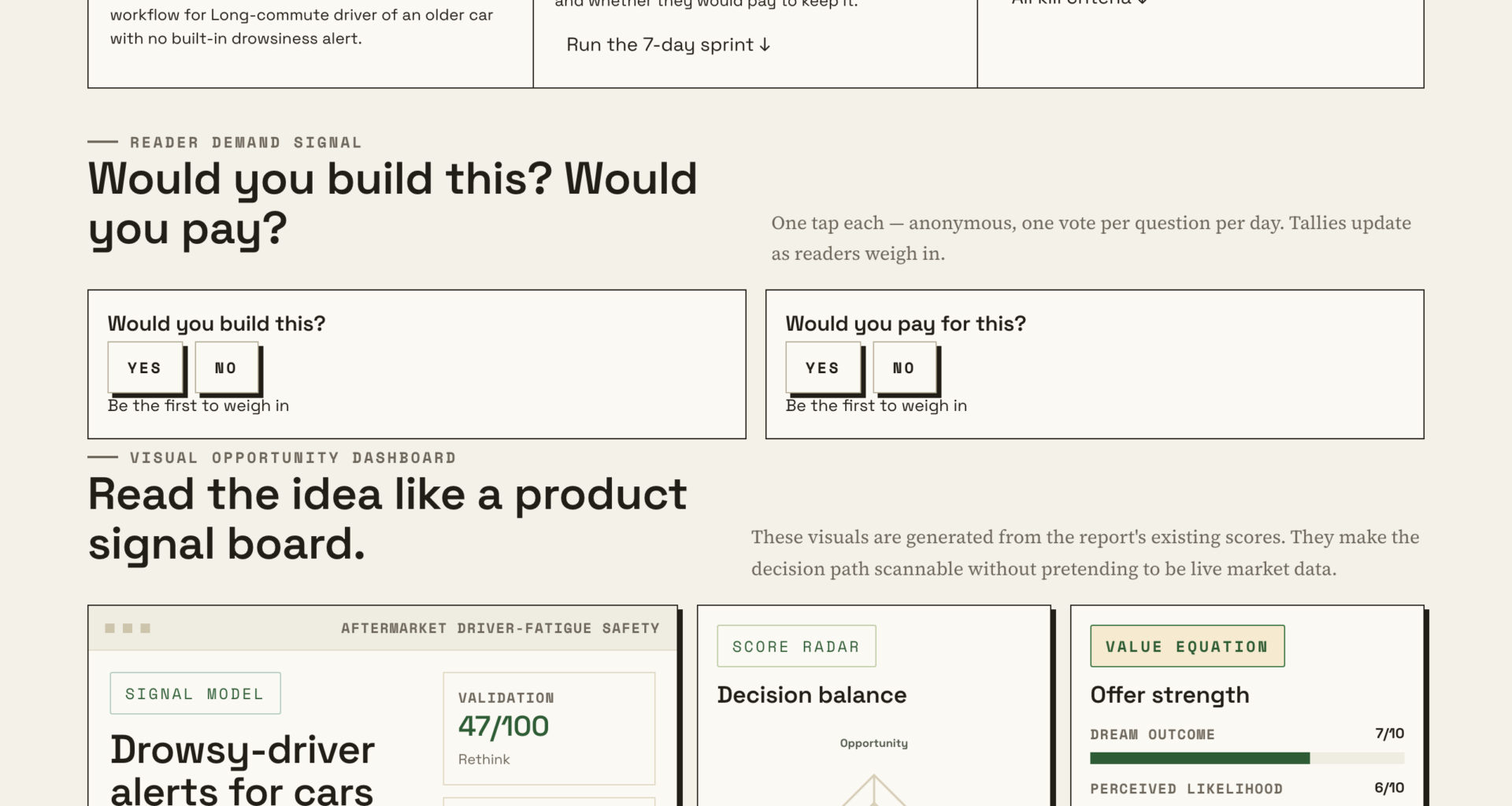
An aftermarket app leveraging computer vision can now monitor driver alertness in older vehicles lacking built-in safety tech. This development aims to reduce fatigue-related crashes among long-distance drivers. Validation is underway with pilot testing among drivers to assess effectiveness and willingness to pay.
An aftermarket dashboard app that uses computer vision to monitor driver drowsiness is being developed to help long-commute drivers of older cars without built-in safety features. This technology aims to address the gap in fatigue detection, which is a known cause of highway crashes, by offering a cost-effective solution that can be easily adopted. The initiative is currently in pilot testing phases, with plans to validate its effectiveness and market potential.
The proposed app utilizes a smartphone mounted on the dashboard, equipped with a camera that tracks facial landmarks to estimate eye closure and head-nod patterns. These indicators are used to detect signs of drowsiness in real-time. When fatigue cues are identified, the app sounds escalating alerts and prompts the driver to take a break. This approach leverages affordable technology—such as phone mounts and on-device face-landmark models—that are now widely accessible.
According to an anonymous researcher involved in the project, initial testing involves twenty long-commute drivers using the app over two weeks of highway trips. The goal is to determine whether the alerts reliably correspond to moments of genuine drowsiness and whether drivers find the system useful enough to pay for ongoing use. The app’s revenue model includes subscriptions with family or fleet plans that provide safety summaries for trips.
While the concept is promising, it remains in the pilot stage, and further validation is needed to confirm its accuracy and user acceptance. The developers emphasize that this solution is designed for aftermarket use, targeting drivers of older vehicles that lack integrated fatigue detection systems.
Potential Impact on Road Safety for Older Vehicle Drivers
This development could significantly reduce fatigue-related crashes among long-distance drivers using older cars, which often lack modern safety features. By providing an accessible, low-cost fatigue detection tool, it offers a practical safety upgrade without requiring vehicle upgrades or expensive technology. If validated, widespread adoption could lead to safer highways and fewer accidents caused by microsleeps and driver inattention.
driver drowsiness detection app for cars
As an affiliate, we earn on qualifying purchases.
As an affiliate, we earn on qualifying purchases.
Growing Need for Aftermarket Safety Solutions in Vehicles
Many older vehicles still on the road lack built-in safety features such as driver drowsiness alerts, which are standard in newer models. As highway safety remains a concern, especially for long-commute drivers, aftermarket solutions have gained interest. Recent advances in face-landmark detection technology and affordable smartphones have made it feasible to develop low-cost, effective fatigue detection tools that can be easily installed in older cars.
This initiative builds on prior research indicating that eye-closure and head-nod patterns are reliable indicators of drowsiness. The current focus is on validating these signals in real-world driving scenarios and assessing user acceptance and willingness to pay for such safety features.
“Using face-landmark models on smartphones, we can detect signs of driver drowsiness with reasonable accuracy, even in older vehicles without built-in sensors.”
— an anonymous researcher
As an affiliate, we earn on qualifying purchases.
Validation and User Acceptance Still Under Evaluation
It is not yet confirmed how accurately the app detects drowsiness in diverse driving conditions or how drivers will respond to alerts over extended use. Further testing is needed to establish reliability, false alarm rates, and overall user willingness to pay for the service. Additionally, regulatory or safety standards for aftermarket fatigue detection systems are still evolving.
face landmark detection app for drivers
As an affiliate, we earn on qualifying purchases.
As an affiliate, we earn on qualifying purchases.
Pilot Testing and Broader Market Validation Planned
The developers plan to conduct extensive pilot testing with a larger group of drivers over several months to gather data on alert accuracy and driver feedback. Success in these trials could lead to commercial launch, with potential integration into fleet management or insurance programs. Ongoing research will also explore refining detection algorithms and expanding features.
As an affiliate, we earn on qualifying purchases.
Key Questions
How does the app detect driver drowsiness?
The app uses a smartphone-mounted camera to track facial landmarks, focusing on eye-closure and head-nod patterns, which are indicators of drowsiness.
Is this app safe to use while driving?
Yes, the app is designed to run passively in the background, providing audio alerts when signs of fatigue are detected, encouraging drivers to take a break without distracting them.
Will this technology work in all types of vehicles?
The system is intended for aftermarket use with smartphones and does not depend on vehicle-specific sensors, making it compatible with most older vehicles.
How much will the service cost?
Pricing details are still under development, but the model includes subscriptions, possibly with family or fleet plans, providing ongoing safety summaries.
When will this app be available to the public?
Pilot testing is planned for the upcoming months, with a potential market launch contingent on validation results and user feedback.
Source: IdeaNavigator AI
Flea & tick season Picks
flea and tick prevention
As an affiliate, we earn on qualifying purchases.