
TL;DR

Get home appliances delivered free with Prime
- Fast, free delivery on millions of items
- Prime Video, Amazon Music and more included
- Member-only deals all year
A comparison by The Ambient says PIR sensors suit hallways, entrances and other pass-through spaces, while mmWave presence sensors are better at keeping automations active when people sit still. mmWave offers finer detection and zoning, but costs more, uses more power and can trigger from movement beyond the intended area.
The Ambient has compared passive infrared (PIR) motion sensors with mmWave presence sensors, concluding that PIR is generally suited to places people pass through, while mmWave better serves rooms where people may remain still. The choice affects whether smart-home lights and other automations respond reliably, and how much users may spend on setup and power.
PIR sensors detect changes in infrared heat across their field of view. When a warm body moves, the sensor registers motion and can trigger an automation. The Ambient describes PIR devices as inexpensive, simple to install and low-power enough for battery life that can last a year or more, depending on the device and use. The report gives the Aqara Motion Sensor P1 as an example.
The limitation is that PIR detects movement rather than continued presence. Someone sitting still may no longer register once the sensor’s timeout expires, which can switch off lights while the room is occupied. The report also says movement directly toward a PIR sensor can be harder to detect than movement across its view. Pets, radiators and direct sunlight can contribute to unwanted triggers.
mmWave sensors use radar, commonly at 24GHz or 60GHz, and measure radio-wave reflections. The Ambient says their sensitivity can detect small movements such as breathing, helping systems recognize a person who is sitting or lying still. Some models also provide distance limits or room zones. That flexibility comes with trade-offs: mmWave devices generally use more power, often need USB or mains power, can cost more, and may need tuning to avoid detections from fans, curtains, pets or movement through thin walls.
Matching Sensors to Each Room
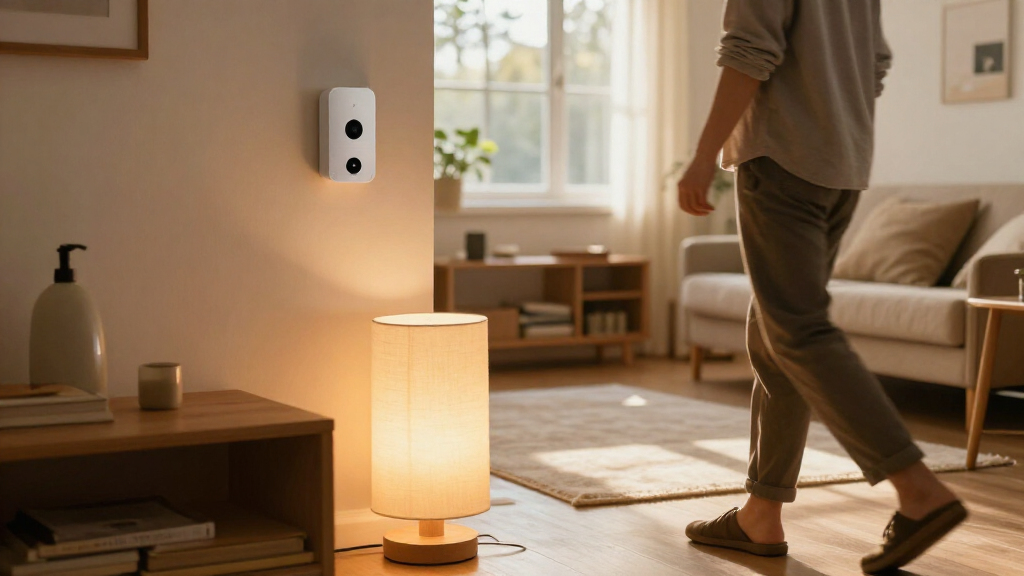
The sensor type determines when an automation considers a room occupied. In a hallway, stairwell or entrance, people usually keep moving, so a low-cost PIR sensor can trigger a light or alert without needing to track a stationary person. Its simple operation and low power draw can also make it practical where battery replacement should be infrequent.
In a living room, office or bathroom, the problem is different: people may spend long periods reading, working or resting without obvious movement. A PIR-based light routine may time out during that stillness. An mmWave presence sensor can reduce that particular failure, but its sensitivity may create false detections and require adjustments to placement, range or zones. Buyers are weighing reliability in their intended space, not just choosing the more advanced-sounding technology.
Products Worth Considering

Bose Smart Soundbar 700 with Alexa, Black

Google Nest Learning Thermostat (3rd Gen), Stainless Steel, with 3 Temperature Sensors and elago Wall Plate

LG 77-Inch OLED evo C6 4K Smart TV
As an affiliate, we earn on qualifying purchases.
How Motion Detection Differs
The comparison concerns two different ways of detecting people, rather than a single sensor category with one standard performance level. PIR reads changes in infrared energy; it does not identify a person or track where they are. A clear field of view and appropriate placement matter, and the report notes that pets can trigger sensors unless placement or pet-aware features address the issue.
mmWave measures reflected radio signals and can detect smaller movements. Some models add zone controls or position tracking, while others combine mmWave with PIR: the PIR sensor responds to larger movement, and radar checks whether presence continues. The Ambient mentions the Aqara FP400 as an example of a model that can assign different actions to zones. These features vary by product; the comparison does not establish that every mmWave sensor offers them.
The report’s practical recommendation is to use PIR for pass-through areas such as landings, stairs, garages and entrances, and consider mmWave where occupants sit or lie still. It lists PIR sensors as often costing under £20 and mmWave devices as commonly costing £25 to £60 or more; actual prices depend on product and market.
“Use PIR where people pass through and mmWave where people stay.”
— The Ambient
Performance Depends on Placement
The comparison gives general guidance, not a controlled test of every sensor model. Real-world results can vary with room layout, sensor position, sensitivity settings, pets and the materials between rooms. The report says mmWave may detect through thin, non-metallic materials, including plasterboard, glass and plastic; it does not mean all walls are transparent to radar, and the supplied material does not specify consistent performance through different wall types.
It is also not clear from the supplied report how much tuning a particular device will need, how frequently its false triggers will occur in a given home, or how long a battery-powered model will last under specific settings. Price ranges and capabilities are broad comparisons, not guarantees for every product. Buyers should check the specifications and supported smart-home platform for the exact model they plan to use.
Choose by Room and Routine
Start by identifying whether people mostly pass through or remain in the space. For a hallway, entrance or stairway, a PIR sensor is a practical starting point. For a desk, living area or bathroom where stillness should not end an automation, consider mmWave and check whether the model supports range limits or zones that fit the room.
Before buying, compare the sensor’s power requirements, price, platform compatibility and placement guidance. If mmWave is prone to detecting activity outside the target area, adjust its range or zones where available and test the routine. The report does not identify a single best product for every household; the next step is selecting and testing a device against the specific room and automation.
Key Questions
Which is better for a hallway: mmWave or PIR?
PIR is usually the practical choice for a hallway, stairway or entrance where people keep moving. The Ambient describes it as inexpensive, simple to set up and low-power. mmWave may be useful where the automation must detect someone who stops and stays in the space, but that is less typical of a pass-through area.
Can mmWave detect someone sitting still?
Yes, that is its main advantage over PIR in the comparison. mmWave radar can detect small movements, including the rise and fall of breathing, while PIR generally needs a change in movement to register activity. Detection depends on the specific device, its placement and settings.
Can mmWave sensors detect through walls?
Some mmWave signals can pass through thin, non-metallic materials, such as plasterboard, glass or plastic, according to The Ambient. This can lead to detections from a neighbouring room. The supplied material does not give a general performance rule for every wall or construction material.
Why might an mmWave sensor trigger when nobody is in the room?
The Ambient lists fans, moving curtains, plants, pets and movement in a neighbouring room as possible sources of false detections. Careful placement and, where supported, sensitivity, range or zone adjustments can help limit them, but results depend on the room and model.
Are PIR sensors cheaper and easier to power?
The report says PIR sensors are commonly under £20 and use little power, with batteries that may last a year or more. It puts many mmWave models at £25 to £60 or above and says they often use USB or mains power. These are broad figures from the comparison, not prices or battery-life guarantees for each model.
Source: the-ambient.com