
To create natural morning and evening automations, sync your smart devices to mimic real-world cues, like gradually brightening lights to simulate sunrise or dimming them for winding down. Use routines that adapt to your habits, such as opening blinds gradually or adjusting the thermostat for comfort. Layer device interactions to make shifts seamless and realistic. Keep fine-tuning your setup to enhance comfort and efficiency—more tips await to help you perfect your automation flow.
Key Takeaways
- Use gradual adjustments in lighting and blinds to mimic natural sunrise and sunset transitions.
- Schedule automations to activate consistently at specific times that align with your routine.
- Incorporate layered device interactions for smooth, seamless environmental changes.
- Personalize routines based on your habits to create a comfortable, natural flow.
- Regularly review and fine-tune automations to maintain their effectiveness and realism.
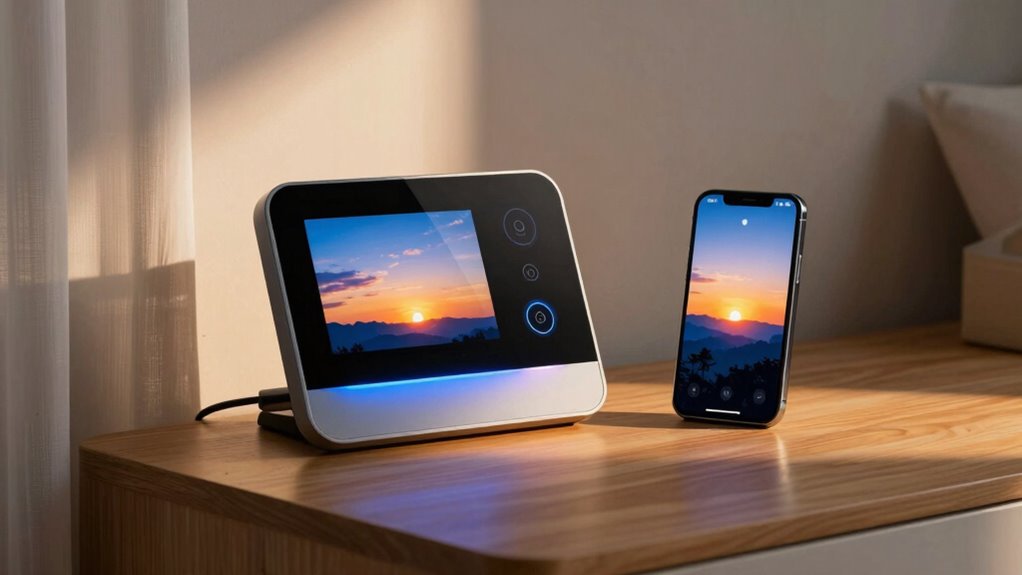
Creating morning and evening automations can considerably streamline your daily routines by guaranteeing your smart home devices activate exactly when you need them. When you set up these automations thoughtfully, they can feel completely natural, almost like your home is anticipating your needs. The key lies in smart lighting and routine scheduling. These tools allow you to craft seamless progressions that make waking up and winding down effortless.
Start by focusing on your morning routine. You might want your lights to gradually brighten to mimic a sunrise, helping you wake up gently instead of being jolted by harsh overhead lighting. Using smart lighting, you can set a schedule that slowly increases brightness over a set period, aligning with your usual wake-up time. Routine scheduling makes this process simple—once you program it, your lights will automatically adapt to your preferred wake-up hour, day after day. To make it feel even more natural, consider integrating other devices like smart blinds that open gradually, letting in natural light as your lights brighten. This layered approach creates a soothing morning environment that feels effortless rather than mechanical. Incorporating routine automation can further enhance these transitions, making them feel more intuitive. Additionally, understanding your home’s smart device ecosystem can help you optimize the coordination of multiple devices for a more seamless experience. Exploring integrated automation options can also improve the overall harmony between devices and routines. Recognizing how smart technology interacts within your home allows for more refined and personalized automation setups.
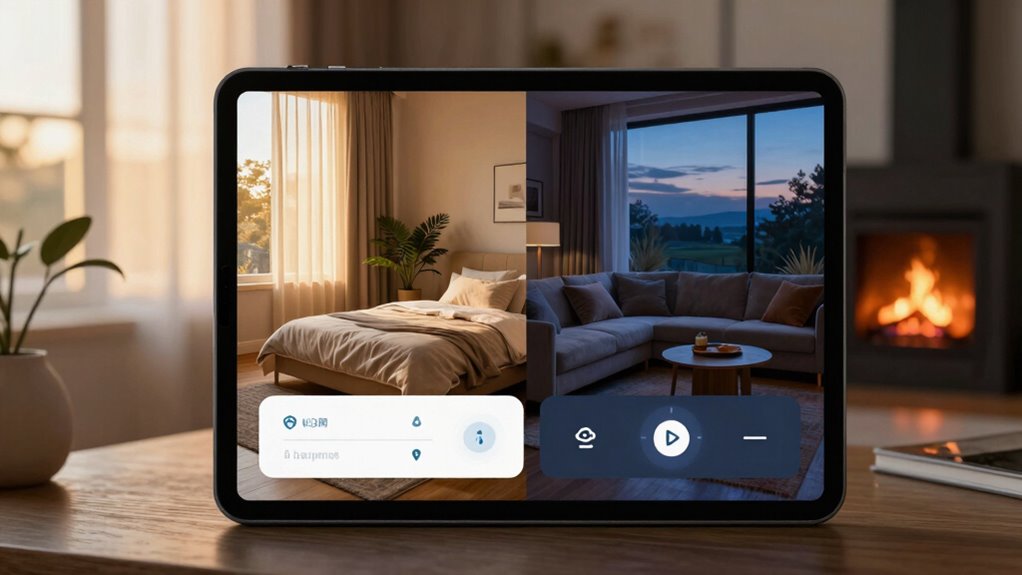
Automate gentle wake-ups with gradual lighting and smart blinds for a natural, effortless morning start
In the evening, you want your home to flow seamlessly into relaxation mode. Set your smart lighting to dim gradually as your bedtime approaches, signaling to your brain that it’s time to wind down. Routine scheduling lets you automate this process, so you don’t have to remember to turn off lights manually. Instead, your lights fade to a soft glow, and your smart thermostat can adjust the temperature for ideal sleep conditions. Think about programming your smart devices to activate in harmony—lights dim, curtains close, and the temperature drops—all at a predetermined time or based on your usual bedtime. This guarantees your home feels calm and cozy without you having to think about it. Additionally, understanding the importance of automations can help you fine-tune your routines for maximum comfort and efficiency. Remember, the more personalized your routines are, the more naturally they will integrate into your daily life. Regularly reviewing your automation settings can ensure they continue to match your evolving habits and preferences.
smart lighting with gradual dimming
As an affiliate, we earn on qualifying purchases.
As an affiliate, we earn on qualifying purchases.
Frequently Asked Questions
How Do I Personalize Automations for Different Days?
You can personalize automations for different days by setting up custom scheduling within your smart home app. This allows you to create personalized routines that vary based on the day of the week or specific dates. For example, you might have a different morning routine on weekends than weekdays. By customizing schedules, you guarantee your automations adapt seamlessly to your weekly routines, making your smart home feel more natural and tailored to your needs.
Can I Override Automations Manually if Needed?
Think of your automations as a gentle river flowing effortlessly, but sometimes, you need to steer the boat manually. Yes, you can override automations whenever needed, giving you full control. This manual override adds a layer of automation flexibility, allowing you to adapt instantly without breaking the flow. Whether for a special moment or unexpected change, you’re the captain, guiding your smart environment precisely when you want.
How Do I Ensure Automations Don’t Conflict?
To prevent automation conflicts, you need to carefully plan automation timing and set clear conditions for each task. Use conflict resolution strategies like prioritizing automations or adding conditions to prevent overlap. Regularly review your automations to identify potential conflicts, especially during overlapping times. This proactive approach guarantees your automations work smoothly without interfering with each other, creating a seamless experience that feels natural.
What Are Some Common Automation Mistakes to Avoid?
Avoid automation pitfalls like overcomplicating routines or ignoring device compatibility. Common errors include setting overly rigid triggers that turn your home into a robotic prison or neglecting to test automations thoroughly. Think of automations as a dance—too many missteps and everyone trips. Keep it simple, test often, and guarantee your automations flow naturally, so your smart home feels more like a helpful partner than a mischievous puppet master.
How Can I Make Automations More Energy-Efficient?
To make your automations more energy-efficient, focus on automation optimization by setting them to activate only when necessary, like during specific times or when you’re home. Use sensors to conserve energy through automatic lighting and climate control adjustments. Avoid unnecessary or overly frequent triggers to prevent energy waste. Regularly review and tweak your automations to guarantee they support energy conservation without sacrificing comfort or convenience.
smart blinds for sunrise and sunset
As an affiliate, we earn on qualifying purchases.
As an affiliate, we earn on qualifying purchases.
Conclusion
By crafting your morning and evening automations with care, you turn your smart home into a gentle welcoming hand and a peaceful goodnight. When these routines flow seamlessly, they feel like the warm sunlight after dawn or the calming embrace of twilight—natural and effortless. With each thoughtful automation, you create a daily rhythm that nurtures your well-being, making your home not just smarter, but a comforting sanctuary where every day begins and ends with intention.
smart thermostat for sleep and wake routines
As an affiliate, we earn on qualifying purchases.
As an affiliate, we earn on qualifying purchases.
As an affiliate, we earn on qualifying purchases.