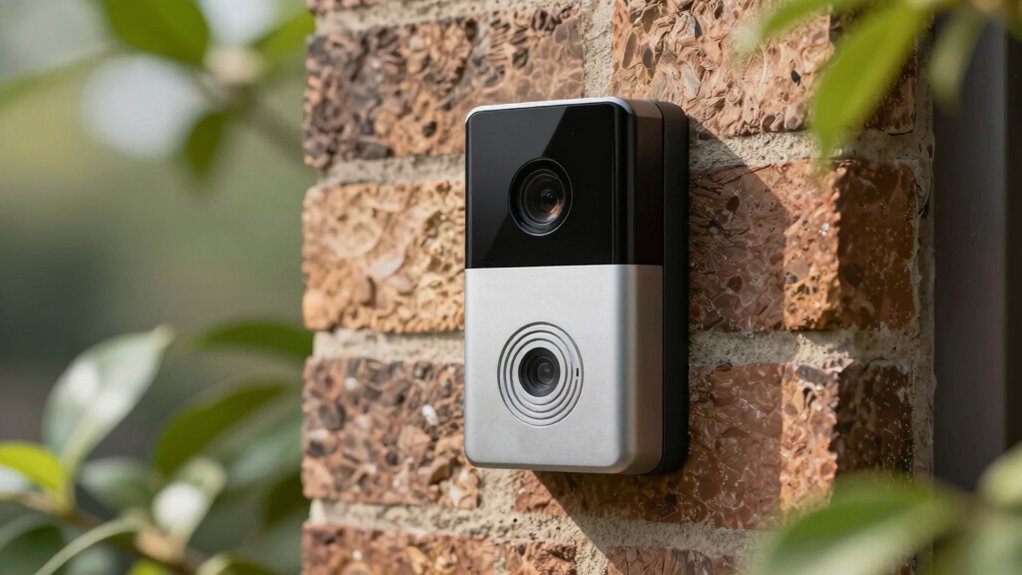
There’s no universal “perfect height” for mounting a video doorbell, as ideal placement varies based on your home’s design, lighting, and where visitors naturally approach. Instead of focusing on an exact measurement, aim for an angle that captures clear facial details and covers the doorway without obstructions. Proper placement considers practicality, aesthetics, and security. Keep in mind environmental factors and wiring ease. For proven tips on optimizing your setup, continue exploring how to find the best spot for your doorbell.
Open a free Amazon Business account
Business pricing, bulk buying and tax-exempt orders.
As an affiliate, we earn on qualifying purchases.
Key Takeaways
- There is no universal “perfect” height; focus on clear visitor capture and unobstructed views instead.
- Mount the doorbell at eye level (~4 ft) for optimal facial recognition and ease of access.
- Consider porch height, door design, and visitor approach angles to determine the best placement.
- Test different heights and angles to minimize blind spots and improve video quality.
- Prioritize weatherproofing, wiring access, and blending with home aesthetics over strict height measurements.
Debunking the ‘Perfect Height’ Myth for Video Doorbells
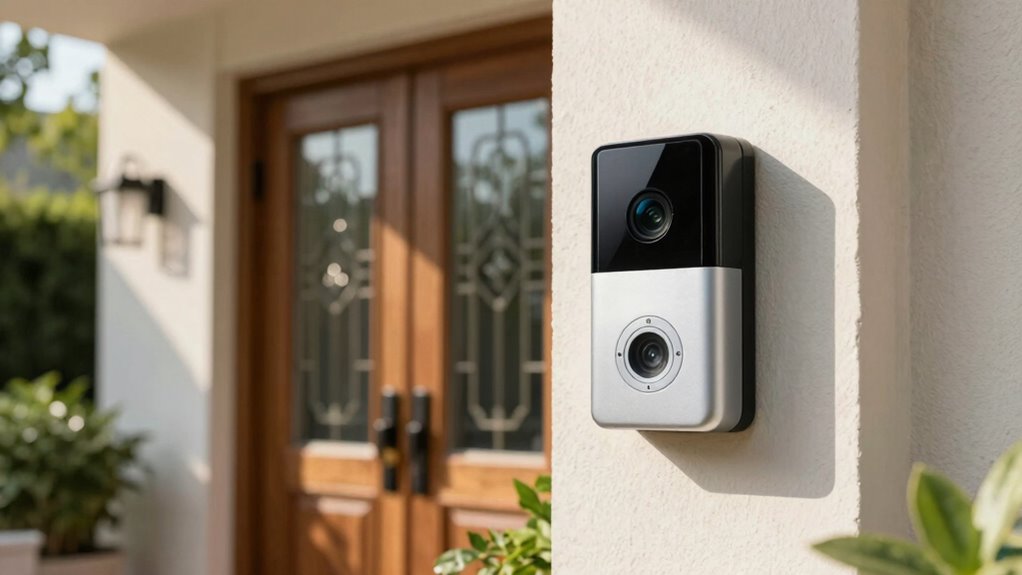
Many people believe there’s a specific height that makes a video doorbell most effective, but in reality, the idea of a “perfect” height is a myth. The truth is, doorbell height isn’t a one-size-fits-all rule. Placement myths often suggest mounting it at a standard height, but this doesn’t account for your home’s unique features or the camera’s purpose. Instead of aiming for an exact number, focus on positioning your doorbell so it captures visitors clearly without obstruction. Consider factors like your porch height, door design, and typical visitor angles. Proper placement is about practicality, not perfection. By understanding that the right height varies, you’ll avoid common myths and ensure your video doorbell functions effectively for your specific needs. Additionally, understanding camera technology and how it interacts with your home environment can help you make better placement choices. Recognizing environmental factors can also influence optimal camera positioning to minimize glare, shadow, or obstructions, thereby improving video quality. For example, being aware of lighting conditions can help you avoid placement that causes glare or poor visibility at certain times of day. It’s also helpful to consider energetic alignment principles to ensure your setup promotes positive energy flow around your home, enhancing overall security and harmony. Incorporating environmental awareness into your placement decisions can lead to more effective surveillance and a harmonious home environment.
How Your Camera’s Angle and Viewpoint Affect Video Quality
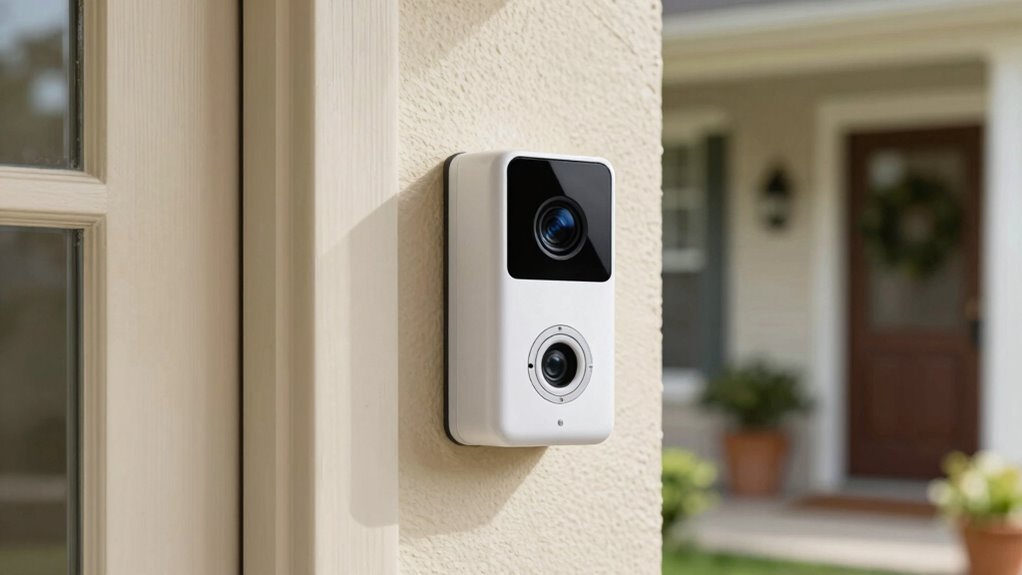
The angle and viewpoint of your video doorbell directly impact the clarity and usefulness of your footage. A poorly chosen camera lens angle can distort faces or miss important details. To optimize your view:
- Guarantee the viewing angle covers the entire doorway without excessive tilt, avoiding distorted images.
- Position the camera so the lens faces directly toward the area of interest, reducing blind spots.
- Adjust the camera’s angle to capture faces clearly, without tilting too high or low, for better identification.
- Consider the viewing angle of your camera to prevent image distortion and ensure comprehensive coverage.
Furthermore, understanding the camera placement principles can help you find the ideal height and position for optimal footage. Your goal is to maintain a balanced perspective that captures essential details without sacrificing image quality. Remember, a wide viewing angle can introduce distortion, so find the right compromise for your specific doorway. Proper angle and viewpoint are key to effective surveillance, and paying attention to camera positioning can significantly enhance your video quality. Additionally, selecting the appropriate camera lens can further improve clarity and reduce unwanted distortion.
What Factors Should You Consider When Mounting Your Doorbell?
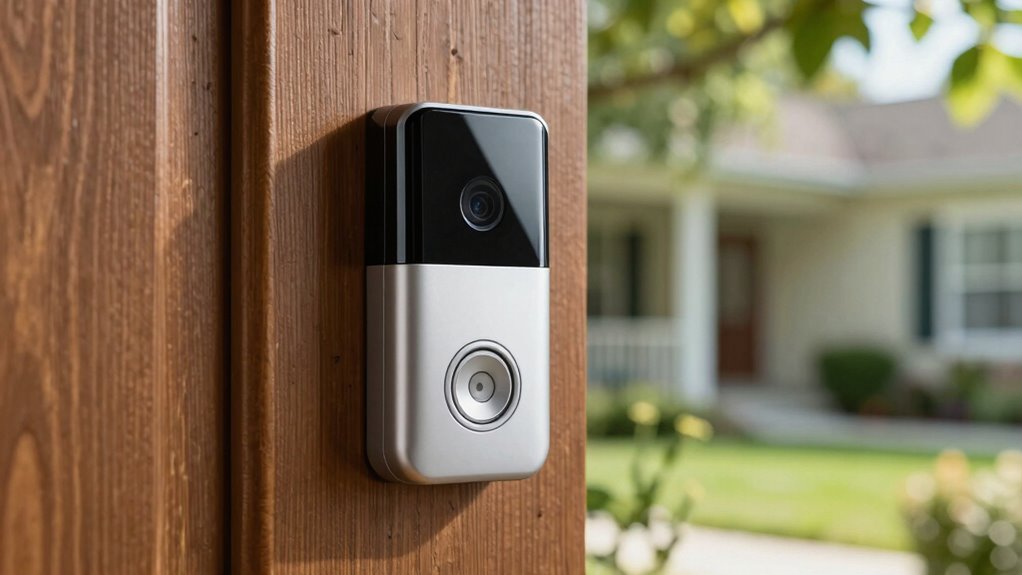
When mounting your doorbell, you need to take into account factors like height, location, and lighting to guarantee reliable performance and clear footage. Consider how doorbell aesthetics blend with your home’s design—placing it where it looks seamless yet accessible. Use sturdy mounting hardware to secure the device firmly, preventing issues from weather or vibrations. The height should be practical for visitors and for capturing clear images, avoiding obstructions like overgrown bushes or porch decorations. Proper lighting is essential; avoid areas prone to glare or shadows that could impair video quality. Additionally, understanding child development principles can help you choose a placement that is both functional and unobtrusive. For example, optimal placement height can impact how well the camera captures activity and how accessible it is for maintenance. Also, considering installation safety ensures that your setup is secure and reduces the risk of accidents during mounting. Moreover, being aware of environmental factors can help you select a location that minimizes exposure to harsh weather conditions, prolonging the lifespan of your doorbell. Incorporating filter maintenance insights can help you keep your equipment functioning at peak performance over time. By balancing these factors, you’ll optimize both the doorbell’s appearance and functionality, ensuring it’s both attractive and effective in protecting your home.
How Your Home’s Design and Door Location Impact Doorbell Placement
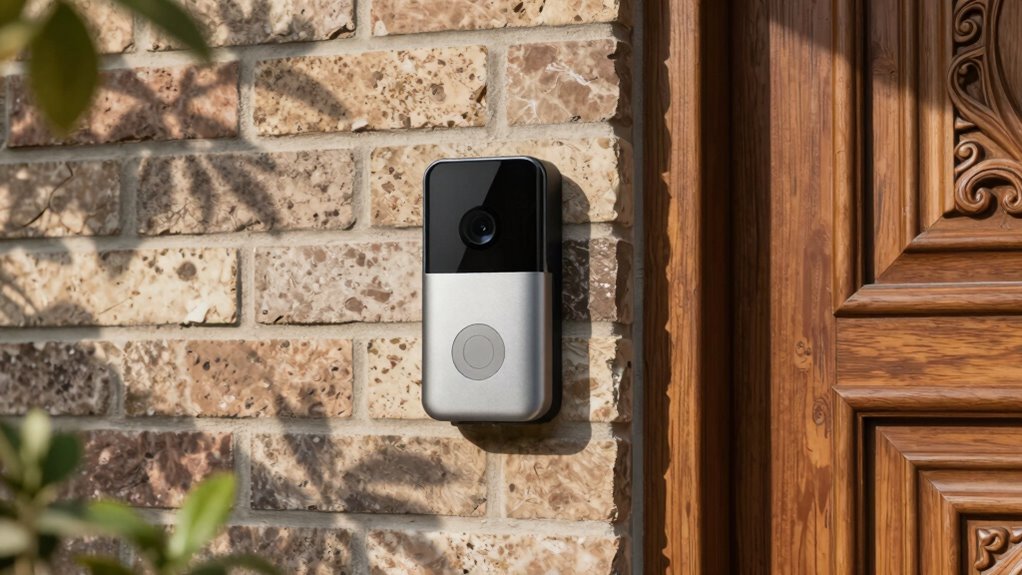
Your home’s overall design and door location play a crucial role in determining the best spot for your doorbell. Consider these factors:
- Doorway symmetry: Symmetrical doorways often call for a central placement that complements the design, enhancing visual harmony. Ensuring the placement aligns with support breakfast options can also tie into the overall aesthetic, especially if you have a cozy porch or welcoming entryway.
- Exterior aesthetics: The doorbell should blend well with your home’s style, avoiding clutter or mismatched hardware that disrupts curb appeal. Incorporating design elements that match your home’s architecture can help achieve a cohesive look. Additionally, visual balance contributes to a more appealing exterior and can guide the placement choice.
- Traffic flow and visibility: Position the doorbell where visitors naturally approach, ensuring it’s easy to see and press without compromising the home’s look. Observing how people approach your door can provide insight into the most functional placement. Additionally, lighting conditions can influence visibility, so consider placing the doorbell where it remains accessible during nighttime.
- Cabling and wiring considerations: Proper placement also depends on accessible cabling solutions and the potential for future upgrades, making installation smoother and more reliable. Planning for these aspects can prevent costly modifications later on.
How to Choose the Best Height for Your Video Doorbell
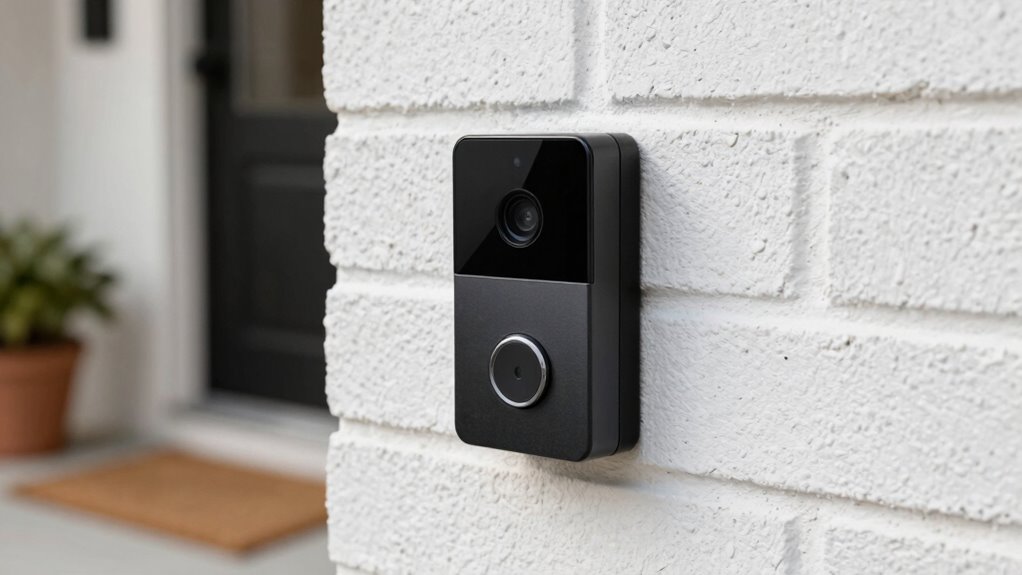
Choosing the right height for your video doorbell guarantees you’ll get a clear view of visitors and capture useful footage. You also want it to be accessible and easy for you to use without strain. Focusing on the ideal viewing angle and convenience helps you make a smart, practical choice. Ensuring proper soundproofing can also prevent outside noise from interfering with your doorbell’s operation and your overall comfort. Additionally, considering nail biology can remind you to install the device at a height that accommodates both your convenience and safety needs. Paying attention to brewing science principles, such as correct placement and orientation, can similarly improve the effectiveness of your doorbell by optimizing its field of view and audio quality. A well-considered installation height can also enhance your overall security setup by making sure the device functions reliably and provides accurate footage. To achieve the best results, take into account how sensor placement influences the doorbell’s performance in various lighting and weather conditions.
Optimal Viewing Angle
Finding the right height for your video doorbell is crucial to guarantee you get a clear view of visitors. The ideal viewing angle depends on positioning that maximizes your visual perspective. To achieve this, consider these key points:
- Place the camera at eye level, roughly 4 feet, to capture faces clearly.
- Ensure the viewing angle covers the doorstep and walkway for full context.
- Avoid mounting too high, which narrows the visual perspective and misses vital details.
A proper height helps you maintain a broad, unobstructed viewing angle, ensuring visitors are visible from multiple angles. This balance guarantees clear footage and reduces blind spots, making your doorbell more effective. Remember, a well-adjusted viewing angle is essential for optimal security and convenience.
Accessibility and Convenience
Ever wondered how to make your video doorbell more accessible and easy to use? The right height plays a key role in balancing doorbell aesthetics with homeowner preferences. If you place it too high, visitors, especially those with limited mobility, might struggle to see or interact with it comfortably. Too low, and it could be vulnerable to damage or theft, and it might disrupt your home’s visual harmony. Aim for a height that offers clear visibility and easy access without compromising your home’s appearance. Consider your typical visitors and your own convenience. Adjusting the height slightly lower or higher can make a big difference in accessibility, ensuring your doorbell remains both functional and visually appealing. Your choice should prioritize ease of use and seamless integration into your home’s aesthetic.
Tips for Adjusting and Fine-Tuning Your Doorbell After Installation
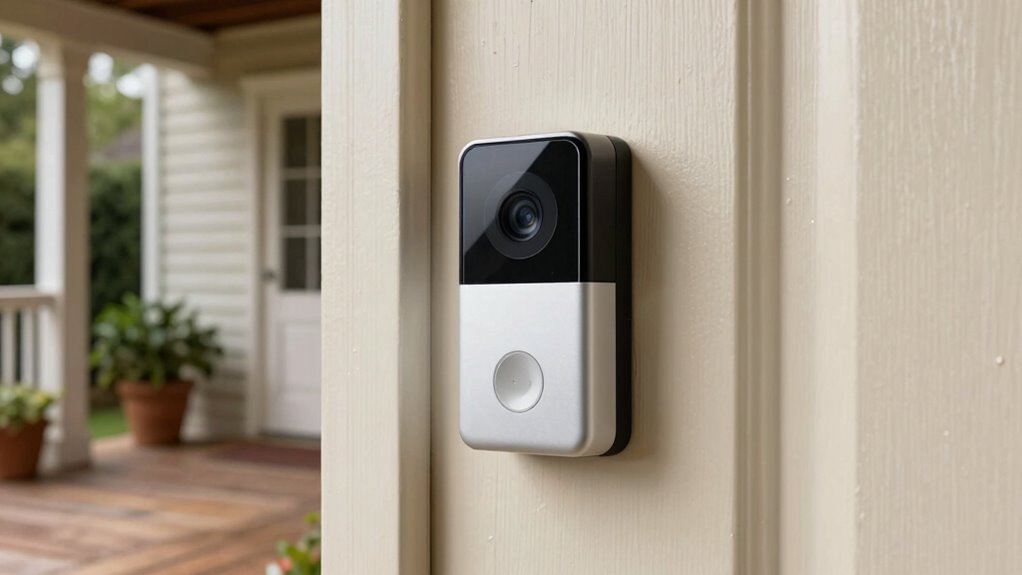
Once your doorbell is installed, it’s important to fine-tune its settings for the best performance. You should adjust the camera angle to get the best view, test the motion zones to reduce false alerts, and enhance the lighting to ensure clear video footage. These steps help you maximize your doorbell’s effectiveness and security.
Adjust Camera Angle
After installing your video doorbell, taking the time to adjust the camera angle guarantees ideal coverage and security. Properly setting the camera tilt and viewing angle guarantees you capture the right details and minimize blind spots. Here are three tips to perfect your adjustments:
- Start by positioning the camera slightly downward to cover visitors’ faces clearly.
- Fine-tune the tilt to include the doorstep and pathway, avoiding unnecessary areas.
- Test the viewing angle from different perspectives to ensure consistent coverage, especially during movement.
Test Motion Zones
Testing and adjusting your motion zones is a key step to guarantee your video doorbell effectively detects activity where it matters most. Properly configured motion detection helps you avoid unnecessary alerts and ensures you don’t miss important visitors or deliveries. Use your app’s live view to walk through the detection zones and verify sensitivity levels. Fine-tune the zones to focus on key areas like your porch or walkway, while excluding spaces like the street or neighbor’s yard to address privacy concerns. Remember, overly broad zones can lead to false alerts, so be precise. Regularly testing and adjusting these zones keeps your doorbell functioning at its best and respects privacy boundaries, giving you peace of mind and better security.
Optimize Video Lighting
Proper lighting is essential for your video doorbell to capture clear images, especially in low-light conditions. To optimize your footage, focus on adjusting your lighting techniques and camera positioning. First, evaluate the natural and artificial light sources around your door. Second, consider adding motion-activated lights or adjusting existing fixtures to reduce shadows and glare. Third, fine-tune your camera positioning to avoid backlighting and ensure the lens faces well-lit areas. Proper lighting setup enhances visibility during night hours and improves motion detection accuracy. Remember, consistent and well-placed lighting helps your doorbell capture sharp images and reduces false alerts. Regularly review your footage and make small adjustments to keep the area illuminated and your camera angles optimized.
Common Mistakes to Avoid When Mounting Your Video Doorbell
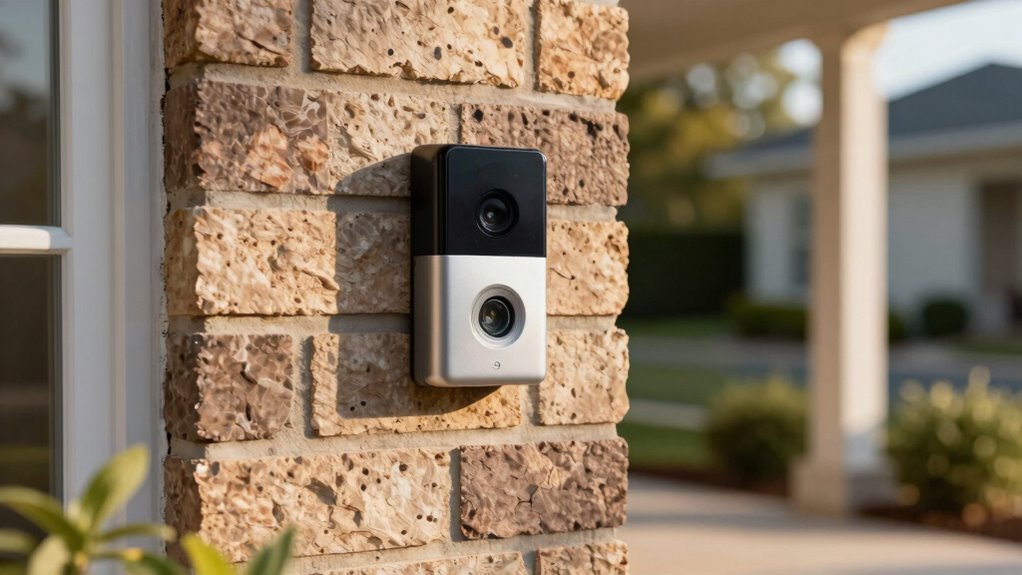
One common mistake to avoid when mounting your video doorbell is placing it too high or too low. Incorrect height can hinder your doorbell’s field of view and compromise image quality. When mounting, make sure it’s at a height that captures visitors’ faces clearly while avoiding obstructions like porch furniture or overhangs. Also, pay attention to doorbell wiring, making certain it’s properly connected and protected from weather elements. Neglecting weatherproofing considerations can lead to damage and malfunction over time. Avoid mounting the doorbell in locations prone to direct rain or snow unless it’s specifically weatherproof. Proper placement not only improves security and video clarity but also preserves the longevity of your device. Carefully consider height, wiring, and weatherproofing to prevent common mistakes.
How to Test and Optimize Your Doorbell’s Position for Security and Clarity
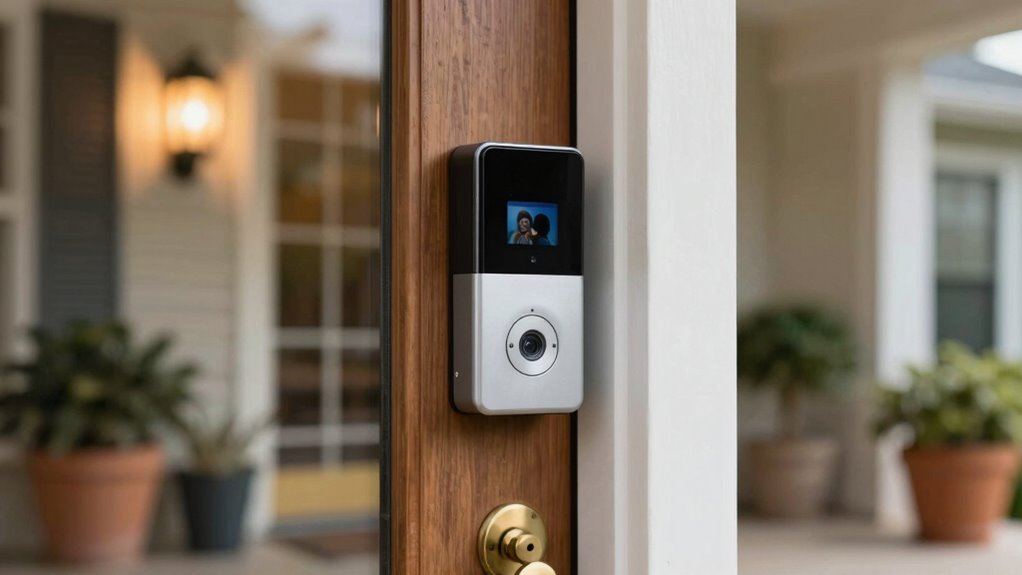
To guarantee your video doorbell provides clear footage and enhanced security, it’s essential to evaluate its current placement and make adjustments as needed. First, test the camera’s view by standing at different angles to identify blind spots or obstructions caused by installation challenges. Second, review footage during various times of day to assess lighting and clarity, adjusting the angle if necessary. Third, balance aesthetic considerations with security needs by ensuring the doorbell isn’t too conspicuous but still visible enough for identification. This process helps you optimize the placement for both effectiveness and visual appeal. Remember, minor tweaks can considerably improve video quality and deterrence, so don’t hesitate to experiment until you find the perfect spot.
Does Doorbell Height Affect Its Effectiveness in Different Use Cases?
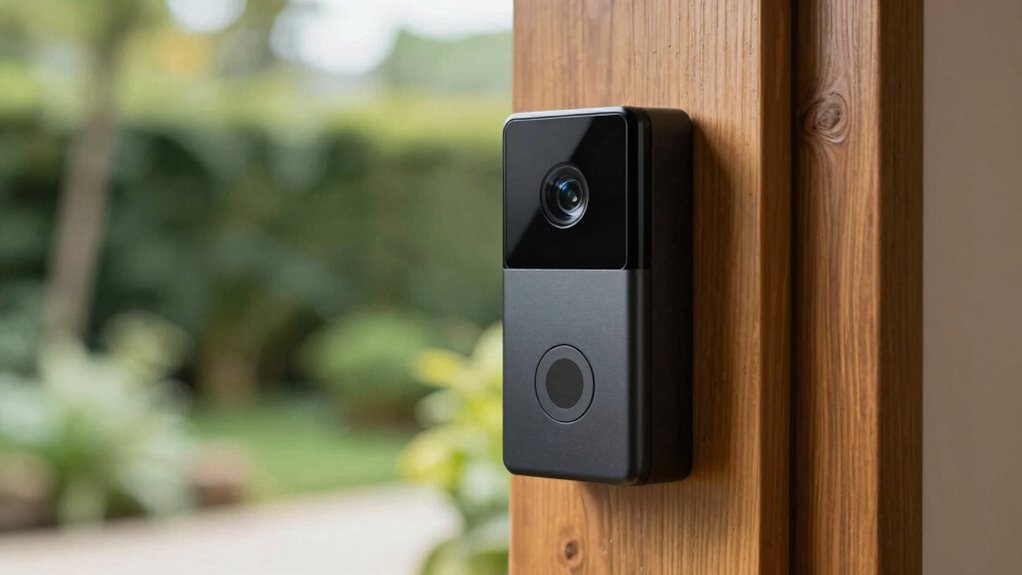
The height at which you install your doorbell can considerably influence its effectiveness across different scenarios. Doorbell height directly impacts how well the device captures visitors and how easily it detects motion. If placed too high, it might miss close-up interactions or fail to identify visitors clearly, reducing effectiveness variability for security purposes. Conversely, placing it too low could lead to false alerts or damage from foot traffic. For different use cases, such as delivery detection or visitor identification, adjusting the doorbell height is vital. Proper placement ensures maximum video quality and motion detection. Keep in mind that the ideal height balances visibility and functionality, minimizing effectiveness variability and enhancing overall performance regardless of the situation.
Frequently Asked Questions
Can Doorbell Placement Affect Motion Detection Accuracy?
Yes, doorbell placement can affect motion detection accuracy. If you position your doorbell too high or low, it can throw off sensor calibration and result in missed detections or false alerts. Adjusting the camera angle to face the desired area and guaranteeing the sensor is calibrated properly helps improve accuracy. Proper placement ensures motion triggers the camera effectively, keeping your home secure without unnecessary alerts.
How Does Weather Exposure Influence Optimal Doorbell Height?
Did you know that over 60% of doorbells face weather effects that reduce outdoor durability? Weather exposure considerably impacts the ideal doorbell height, as placing it too high or low can expose it to rain, snow, or direct sunlight, causing damage. To guarantee longevity and proper function, you should position your doorbell where it’s sheltered from harsh weather, usually around eye level, to balance accessibility and protection.
Is There a Legal or Privacy Consideration for Doorbell Height?
Yes, there are privacy concerns and legal restrictions you should consider when choosing your doorbell height. You need to make certain the camera doesn’t capture private areas like neighbors’ yards or windows, which could lead to privacy violations. Check local laws and homeowners’ association rules to avoid legal issues. Position your doorbell at a height that balances security and privacy, and always be mindful of the footage you’re capturing to respect others’ privacy.
How Does Doorbell Height Impact Visitor Recognition?
Think of your doorbell as a welcoming eye; its height shapes how well visitors are recognized. If it’s too high or low, the camera angle distorts visitor identification, making faces blurry or hard to see. Proper placement ensures a clear, straight-on view, improving recognition. Adjusting height thoughtfully helps you catch every visitor’s expression, creating a more secure and friendly entrance.
Should Doorbell Placement Vary for Different Home Styles?
Yes, doorbell placement should vary for different home styles to enhance architectural harmony and aesthetic balance. You’ll want to position your doorbell where it complements your home’s design, whether that’s at eye level for modern homes or slightly higher for traditional styles. Adjusting the height guarantees the doorbell blends seamlessly with your exterior, making it both functional and visually appealing, while respecting your home’s unique architectural features.
Conclusion
Remember, there’s no one-size-fits-all answer when it comes to installing your video doorbell. Focus on finding a spot that offers a clear view, good lighting, and an angle that captures visitors naturally. By paying attention to these details and avoiding the “perfect height” myth, you’ll create a setup that’s both effective and easy to enjoy. With a little patience, your doorbell will become a friendly, watchful eye right where you need it most.
NFL season / tailgating Picks
team gear
As an affiliate, we earn on qualifying purchases.