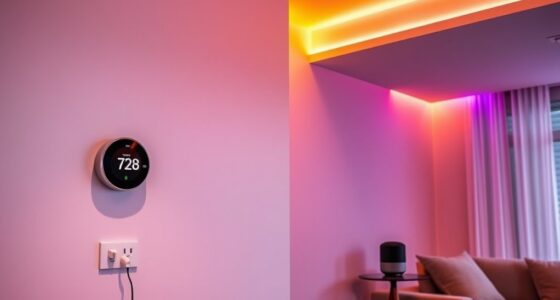
By integrating AI into your smart home, you can automatically optimize energy use based on your habits and preferences. AI learns your routines, adjusts heating, cooling, and lighting in real time, and even works with renewable sources like solar power. This personalization helps cut utility bills and reduces your carbon footprint. If you keep exploring, you’ll discover how AI makes managing your energy consumption easier, smarter, and more environmentally friendly.

Get home appliances delivered free — and shop member deals
- Fast, free delivery on millions of items
- Access to Prime Big Deal Days deals on October 6–7
- Prime Video, Amazon Music and more included
Key Takeaways
- AI systems learn household routines to automatically optimize heating, cooling, lighting, and appliances for energy efficiency.
- Real-time sensor data allows AI to dynamically adjust energy use based on habits and weather conditions.
- Personalization features enable AI to adapt settings to user preferences, enhancing comfort and reducing waste.
- Integration with renewable energy sources maximizes solar and battery efficiency through intelligent management.
- Continuous learning refines energy-saving strategies, lowering utility bills and minimizing environmental impact.

Have you ever wondered how artificial intelligence can transform the way you manage energy at home? AI-powered systems are changing the game, making your living space smarter and more energy-efficient. When you use AI for home energy management, it learns your habits and preferences, allowing for a high level of user personalization. This means your system can automatically adjust heating, cooling, lighting, and appliances based on your daily routines, ensuring you’re comfortable while wasting less energy. With AI, you’re not just setting schedules blindly; instead, the system observes when you’re typically home or away, when you wake up, and when you go to bed, optimizing energy use seamlessly.
One of the biggest benefits of integrating AI into your home is achieving greater energy efficiency. Traditional systems often operate on fixed timers or manual controls, which can lead to unnecessary energy consumption. AI algorithms analyze real-time data from sensors and devices, identifying patterns and making adjustments on the fly. For example, if your AI notices that you usually turn off the lights at a certain hour, it will do that automatically, saving electricity without you having to think about it. Similarly, your smart thermostat can fine-tune temperature settings based on your habits and external weather conditions, maintaining comfort while using less energy. This continuous optimization helps reduce your utility bills and minimizes your carbon footprint, making your home more sustainable. Additionally, portable energy solutions like power banks for camping can be integrated with smart home systems to ensure uninterrupted energy supply during outages or off-grid scenarios.
User personalization is at the core of smart home energy management with AI. Instead of generic settings, your system adapts specifically to your lifestyle. If you like a cooler environment in the evenings, it will learn to lower the temperature accordingly. If you tend to leave appliances on standby, AI can automatically turn them off when not in use. This personalized approach ensures your home feels just right while operating as efficiently as possible. Plus, with voice commands or mobile app controls, you can override or fine-tune settings whenever needed, giving you full control without hassle.
Moreover, AI-driven systems can integrate with renewable energy sources like solar panels or battery storage, optimizing their use based on your consumption patterns and energy prices. This further enhances energy efficiency and empowers you to make smarter energy choices. As you continue to interact with your smart home, the AI learns more about your preferences, continually refining its recommendations and adjustments. This dynamic, user-centric approach not only simplifies managing your energy but also helps you contribute to a greener environment. In short, AI makes your home more intelligent, personalized, and energy-efficient—saving you money and reducing your environmental impact, all while making everyday living more convenient.
As an affiliate, we earn on qualifying purchases.
Frequently Asked Questions
How Secure Is My Data With Ai-Powered Energy Management Systems?
Your data is generally secure with AI-powered energy management systems because they use data encryption to protect your information and user authentication to prevent unauthorized access. However, it’s crucial to choose systems from reputable providers who prioritize security. Stay updated on software patches and use strong, unique passwords. While no system is entirely foolproof, these measures considerably reduce risks and keep your energy data safer.
Can AI Adapt to Unusual or Unexpected Changes in Energy Usage?
Think of AI as a vigilant guardian, always alert to sudden shifts in your energy patterns. Yes, it adapts to unusual or unexpected changes through fault detection and adaptive learning, swiftly recalibrating its strategies. This dynamic response guarantees your home’s energy use stays efficient and safe, even when surprises strike. With AI’s keen eye, you can rest assured your system’s resilient, ready to face whatever unexpected twists come your way.
What Are the Costs Associated With Installing Ai-Based Energy Management?
The costs of installing AI-based energy management include upfront installation costs, which vary depending on your system’s complexity and the number of integrated devices. You should also consider ongoing maintenance expenses for software updates and troubleshooting. While initial costs can be significant, many homeowners save money over time through reduced energy bills. Keep in mind that investing in quality systems may have higher upfront expenses but offers better long-term efficiency.
How Does AI Handle Privacy Concerns Related to Home Monitoring?
AI handles your privacy concerns by implementing strict privacy protocols and data encryption. It guarantees your home monitoring data stays secure and confidential, preventing unauthorized access. You’re in control, and the system only shares information with trusted devices or services. By prioritizing these measures, AI maintains your privacy while optimizing your energy use, giving you peace of mind and seamless home management.
Will AI Systems Replace Human Oversight Entirely in Energy Management?
AI systems won’t replace human oversight entirely in energy management. While automation reliance grows, your role remains essential for overseeing AI decisions, ensuring safety, and handling complex issues. Human oversight provides judgment and ethical considerations that AI can’t replicate. You must stay involved to balance efficiency with safety, guiding AI systems and stepping in when necessary. This collaboration ensures smarter, safer energy management without losing the human touch.
As an affiliate, we earn on qualifying purchases.
Conclusion
As you embrace AI-powered energy management, imagine your home becoming a gentle, intelligent guardian—adjusting thermostats, managing lights, and conserving power effortlessly. Feel the cool comfort of a perfectly balanced temperature while your energy bills shrink quietly in the background. With each smart decision, your home transforms into a harmonious sanctuary, where technology and comfort dance seamlessly. This is your future—an efficient, sustainable haven that responds intuitively to your needs, day and night.
As an affiliate, we earn on qualifying purchases.
battery storage for solar panels
As an affiliate, we earn on qualifying purchases.
As an affiliate, we earn on qualifying purchases.
NFL season / tailgating Picks
team gear
As an affiliate, we earn on qualifying purchases.