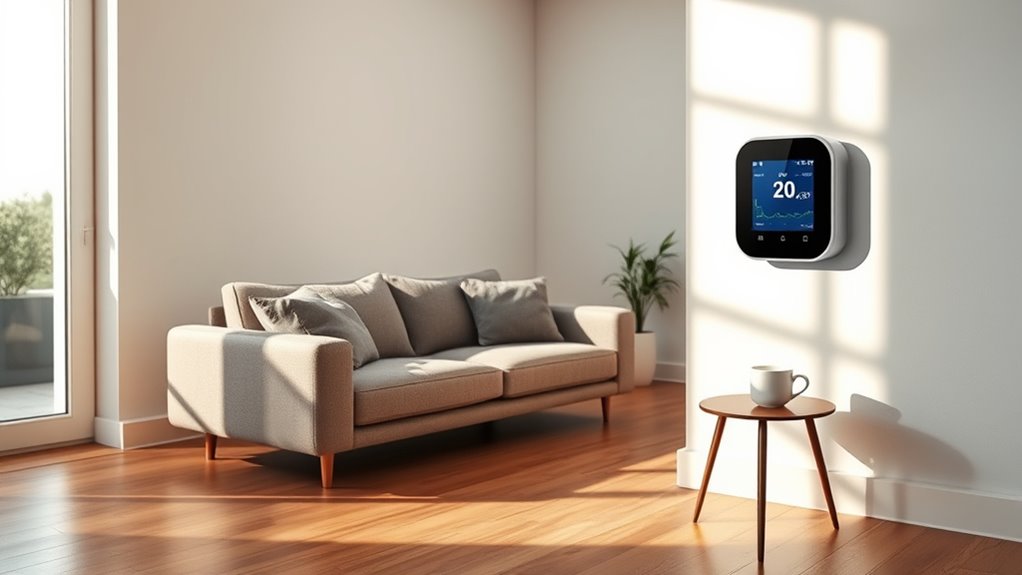

Smart thermostats usually save you around 10-12% on your heating and cooling bills by monitoring usage, learning your schedule, and adjusting settings automatically. They help prevent unnecessary system operation, which can lead to significant savings over time. While the upfront cost might seem high, ongoing energy savings quickly offset this expense, especially with possible rebates. If you’re interested in how to maximize these benefits and get the most from your device, there’s more to discover.

Get home appliances delivered free with Prime
- Fast, free delivery on millions of items
- Prime Video, Amazon Music and more included
- Member-only deals all year
Key Takeaways
- Smart thermostats typically reduce heating and cooling bills by about 10-12%.
- Long-term savings can amount to hundreds of dollars annually, offsetting initial costs.
- Energy savings depend on home size, habits, and local energy rates.
- Proper installation and regular maintenance maximize energy efficiency and savings.
- Additional incentives like rebates can lower upfront costs, increasing overall savings.
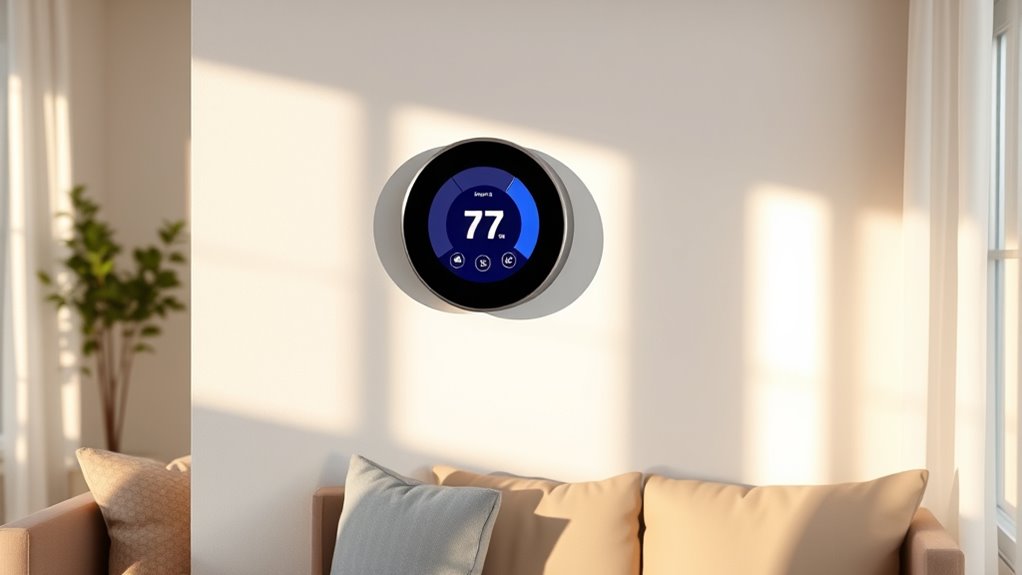
Have you ever wondered how to make your home more energy-efficient and comfortable at the same time? Smart thermostats can help you do just that. They monitor your heating and cooling patterns, adjusting settings automatically to maximize energy use. By learning your schedule and preferences, they reduce unnecessary energy consumption, leading to noticeable energy savings over time. But the big question is, do these devices really save you money? And what about the installation costs? Let’s break it down.
First, it’s important to understand that smart thermostats are designed to enhance efficiency. They can detect when you’re away and lower the temperature, preventing energy waste. Many models also allow you to control your home’s climate remotely via smartphone, so you can tweak settings before arriving home or while on vacation. As a result, you’re less likely to keep your HVAC system running unnecessarily, which translates into lower utility bills. Over months and years, these small adjustments can accumulate into significant savings. While the initial investment in a smart thermostat might seem steep, many users find that the energy savings quickly offset the upfront costs.
Smart thermostats save energy by adjusting settings based on your schedule and remote control capabilities.
Speaking of costs, installation is generally straightforward. Most smart thermostats are designed for DIY installation, fitting into standard wiring setups. If you’re comfortable with basic electrical work, you might only need a few tools and a little patience. However, if your HVAC system has complex wiring or if you’re unsure about the compatibility, hiring a professional can ensure proper installation. While professional installation adds to the upfront costs, it can also guarantee that the device functions at its best, maximizing your energy savings. Keep in mind that some utility companies or local governments offer rebates or discounts for installing energy-efficient devices like smart thermostats, which can help offset both the device and installation costs.
Once installed, the real savings kick in. Many users report a reduction of about 10-12% on heating and cooling bills, which can amount to hundreds of dollars annually depending on your climate and energy rates. The key is consistent use and setting the device to learn your habits. Over time, the thermostat fine-tunes its operation, further improving energy efficiency. Additionally, understanding how bad lemon juice can spoil can serve as a reminder to maintain and check your devices regularly to ensure optimal performance. Although the initial costs may seem high, the long-term savings are often well worth it. Plus, the enhanced comfort and convenience make it easier to maintain a cozy home without wasting energy. So, yes, smart thermostats do save money, but the amount varies based on your habits, home size, and local energy prices.
Products Worth Considering

LEVOIT Vital 200S-P Smart Air Purifier for Large Rooms

Samsung 85-Inch M70H Series Mini LED 4K Smart TV (2026)

Sonos Era 100 Wireless Smart Speaker, Black
As an affiliate, we earn on qualifying purchases.
Frequently Asked Questions
Do Smart Thermostats Increase Home Insurance Premiums?
You might wonder if smart thermostats increase your home insurance premiums. Generally, they don’t directly affect your rates, but their energy efficiency and improved safety features can lead to potential discounts. By reducing energy costs and preventing issues like fires or leaks, smart thermostats can contribute to cost savings. Insurance companies often see these devices as a way to enhance home safety, so they may even help lower your premiums over time.
Can Smart Thermostats Be Hacked or Compromised?
Think of your smart thermostat as a digital gatekeeper—vulnerable if left unguarded. Yes, it can be hacked or compromised through cybersecurity vulnerabilities, especially if device firmware updates aren’t timely. Hackers exploit outdated software, so regularly updating your device’s firmware is essential. Staying vigilant ensures your device remains secure, keeping your home safe and your data protected from cyber threats.
Are There Any Health Risks Associated With Smart Thermostats?
You might wonder if smart thermostats pose health risks or raise privacy concerns. Generally, they’re safe and don’t emit harmful radiation. However, privacy concerns can arise if your data is hacked or misused. To stay protected, use strong passwords and update firmware regularly. While health risks are minimal, make certain your device is from a reputable brand to avoid any potential issues related to data security or device malfunction.
How Do Smart Thermostats Impact Indoor Air Quality?
Think of your home as a breathing organism; smart thermostats can be its lungs. They help improve indoor air quality by optimizing temperature and humidity levels, reducing pollutants, and preventing mold growth. This air quality improvement can lead to healthier living conditions. By maintaining a balanced environment, smart thermostats support pollutant reduction, making your space safer and more comfortable without you lifting a finger.
What Maintenance Is Required for Smart Thermostats?
You’ll want to regularly check your smart thermostat’s settings and clean the device to keep it functioning well. To guarantee accurate temperature control, perform energy calibration as needed, and don’t forget to install firmware updates when they’re available. These updates often include security patches and new features, helping your thermostat run smoothly and efficiently. Keeping up with maintenance ensures peak performance and maximum savings on your energy bills.
Conclusion
So, are smart thermostats worth the investment? They can save you money on energy bills and make your home more comfortable, but the actual savings depend on your habits and the device you choose. Before jumping in, consider whether the convenience and potential savings align with your lifestyle. Isn’t it worth trying a smart thermostat to see if it truly fits your needs and helps cut costs? After all, smart choices lead to smarter savings.