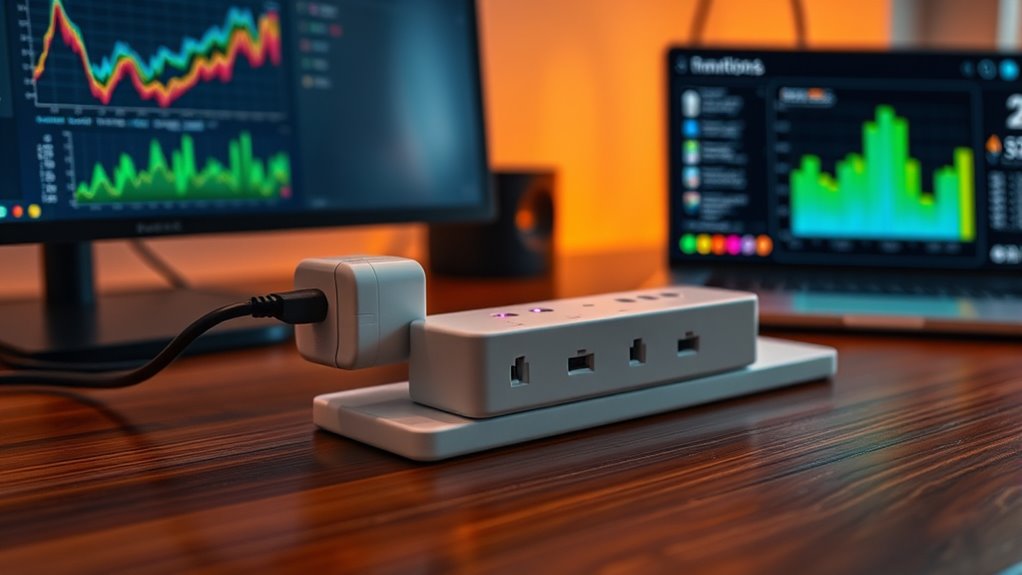

Energy monitoring plugs help you track your device power consumption in real time, giving you clear insights into what’s using the most energy. You can easily spot appliances that waste power when idle or turn off. These plugs often connect to apps or smart home systems, making it simple to set routines or get alerts. Keep exploring to discover how you can use this data to save energy and reduce bills effectively.
Key Takeaways
- Energy monitoring plugs provide real-time data on individual device power usage through dedicated apps.
- They help identify high-energy-consuming appliances and detect hidden sources of power drain.
- These plugs enable users to make informed decisions to unplug or replace inefficient devices.
- Integration with smart home systems automates routines like turning off devices at scheduled times.
- They support building energy-saving habits that reduce bills and environmental impact.
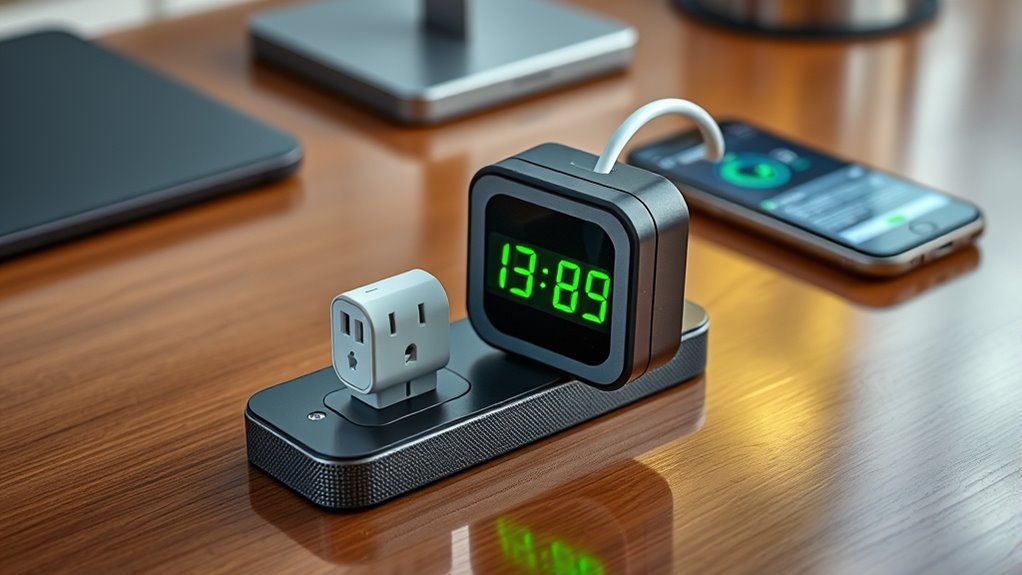
Have you ever wondered how much energy your everyday devices consume? That curiosity can lead you to energy monitoring plugs, simple yet powerful tools that shed light on where your energy goes. These plugs connect directly to your outlets and track the power usage of whatever device you plug into them. With this insight, you can make smarter decisions about your energy habits and identify which devices are wasting energy even when you’re not using them. This is especially useful as part of a broader smart home integration, where technology works together to optimize your home’s efficiency.
Using an energy monitoring plug, you can see real-time data on power consumption, often through a dedicated app or interface. This immediate feedback makes it easier to recognize patterns—like which appliances spike your energy bills or stay on unnecessarily. For example, you might find your gaming console or that old refrigerator is consuming more power than it should. Armed with this knowledge, you can implement targeted energy saving tips, such as unplugging devices when not in use or replacing inefficient appliances. Over time, these small adjustments can lead to noticeable savings on your energy bill and reduce your environmental footprint.
Integrating energy monitoring plugs into your smart home setup amplifies their usefulness. Many of these devices are compatible with smart home systems like Alexa, Google Home, or Apple HomeKit. This means you can automate routines—perhaps scheduling your TV to turn off automatically after a certain hour or receiving alerts when a device’s energy use spikes unexpectedly. Smart home integration turns passive monitoring into active management, giving you control at your fingertips. You’ll find it easier to stay on top of your energy consumption, and it becomes a fun challenge to see how small changes can add up over time.
Beyond just tracking, these plugs can help you develop consistent energy saving tips tailored to your lifestyle. For example, you might learn that your coffee maker uses a significant amount of power every morning, prompting you to switch to a more energy-efficient model or to turn it off manually when not needed. You might also discover that leaving chargers plugged in overnight isn’t necessary, saving a small but cumulative amount of energy. Additionally, understanding energy monitoring data can help you identify hidden sources of consumption and make more informed decisions for a greener home. By leveraging real data, you can create habits that not only save money but also contribute to a greener home.
Frequently Asked Questions
Can Energy Monitoring Plugs Be Used Outdoors?
You can use energy monitoring plugs outdoors if they have outdoor durability and weather resistance. Look for models specifically designed for outdoor use, as they are built to withstand rain, sun, and temperature fluctuations. It’s vital to check the product specifications to verify they are rated for outdoor environments. Using the right outdoor weather-resistant plugs helps you accurately monitor device consumption without worrying about damage from the elements.
Do These Plugs Require a Subscription Service?
No, energy monitoring plugs typically don’t require a subscription plan. Most are designed to work with your Wi-Fi without ongoing fees. However, some brands offer premium features through subscription plans that enhance data privacy and provide detailed insights. You should always review the data privacy policies before subscribing, ensuring your energy data remains secure. Overall, basic monitoring usually doesn’t cost extra, but advanced features might.
Are Energy Monitors Compatible With Smart Home Systems?
Yes, energy monitors are compatible with smart home systems, enabling seamless smart home integration. You can connect these devices through compatible platforms like Alexa, Google Home, or Apple HomeKit, depending on the model. This allows you to monitor and control your device consumption remotely, automate routines, and get real-time updates. Just make certain you select a monitor with device compatibility that matches your existing smart home system for smooth integration.
How Secure Is My Data With Energy Monitoring Devices?
Your data’s security with energy monitoring devices depends on the manufacturer’s measures. Many use data encryption to protect your information from unauthorized access, reducing privacy concerns. However, it’s essential you stay aware of how your data is stored and shared. Always choose devices with strong encryption and clear privacy policies. Regularly update your device’s software and review privacy settings to guarantee your information remains secure and your privacy concerns are minimized.
What Is the Typical Lifespan of an Energy Monitoring Plug?
Think of your energy monitoring plug like a trusty watch—most last around 3 to 5 years. On average, these devices have a lifetime expectancy of about 5 years, but it depends on usage and quality. You might find yourself replacing it more often if you notice inconsistent readings or if it stops responding. Regularly check for updates or signs of wear to extend its replacement frequency and keep tabs on your energy use.
Conclusion
By using energy monitoring plugs, you can cut your energy bills by up to 15% simply by tracking your device consumption. Imagine knowing exactly how much each appliance costs you every month—empowering you to make smarter choices. With these devices, you’re not just saving money; you’re also reducing your carbon footprint. So why wait? Start monitoring your devices today and take control of your energy use for a greener, more cost-effective home.