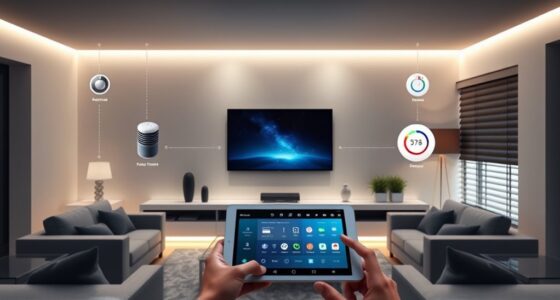
Yes, smart speakers can replace traditional home intercom systems by offering voice-controlled communication across rooms, multi-room audio, and seamless integration with smart home devices. They let you broadcast messages, play music, and control other gadgets using simple voice commands, making communication more natural and flexible. With easy setup and customization options, smart speakers provide a versatile, modern alternative to fixed intercom systems. Keep exploring to discover how they can transform your home’s communication flow.
Key Takeaways
- Smart speakers enable voice-activated communication across multiple rooms, eliminating the need for wired intercom systems.
- They support multi-room audio, allowing synchronized broadcasts and announcements throughout the home.
- Setup is straightforward, linking devices to Wi-Fi and integrating with other smart home functions for seamless control.
- They offer customizable grouping and privacy options, enhancing targeted communication within the household.
- Overall, smart speakers provide a versatile, user-friendly alternative with additional features beyond traditional intercoms.
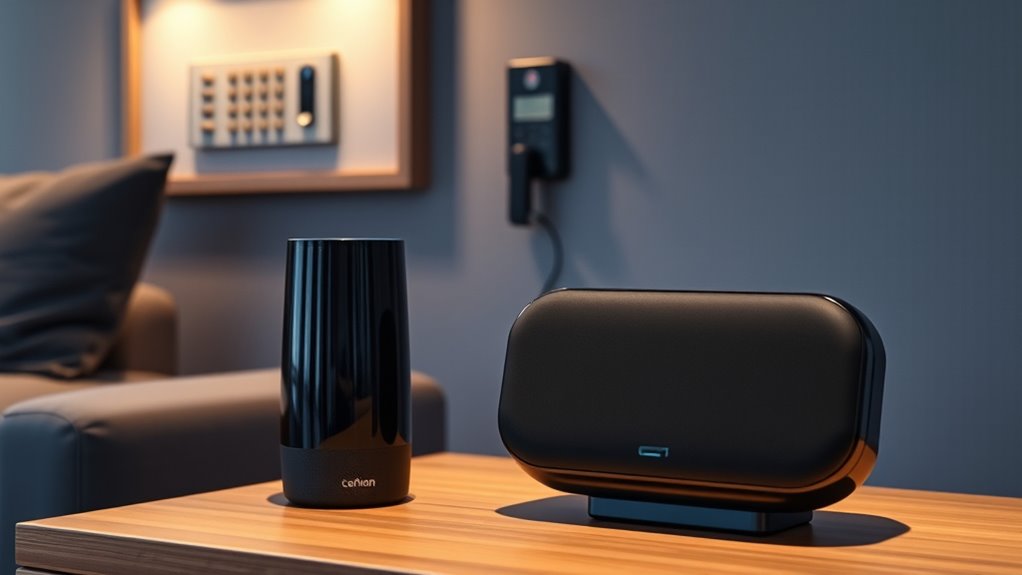
As smart speakers become more affordable and user-friendly, they’re increasingly replacing traditional intercom systems in homes and businesses. You can now communicate across different rooms with a simple voice command, thanks to voice command integration. This seamless communication is a game-changer, allowing you to call out to family members or colleagues without needing to press buttons or walk to a specific device. Whether you want to let someone know dinner’s ready or check if the kids are asleep, smart speakers make it effortless to stay connected.
Smart speakers simplify communication across rooms with voice commands, replacing traditional intercoms effortlessly.
One of the biggest advantages is multi room audio, which means you can broadcast your voice or music throughout your entire home. With just a few words, your smart speaker can synchronize audio across multiple rooms, creating a cohesive sound environment. This feature not only replaces the traditional intercom but also enhances your overall audio experience. You can announce, “Dinner’s ready,” and everyone hears it in every corner of the house, eliminating the need for separate intercom units or shouting from room to room. The integration of voice command technology further simplifies this process, making communication more intuitive.
The setup for voice command integration is straightforward. You link your smart speaker to your Wi-Fi network and connect it to other compatible devices around your home. Once configured, you can use natural language commands like “Hey [device name], broadcast, ‘Let’s gather in the living room’,” and the message plays throughout the house. This level of integration makes communication more natural and less cumbersome, especially compared to traditional wired intercoms that often require manual operation or fixed installations.
Additionally, smart speakers offer flexibility that intercoms often lack. You can customize groups of rooms for multi room audio, so your announcements reach only specific areas or the entire house. You can also control who hears what, making it suitable for families or offices where privacy might matter. The voice command integration allows you to control everything hands-free, whether you’re in the kitchen, working in the office, or relaxing in the bedroom. This convenience also extends to other smart home functions, such as adjusting thermostats or controlling smart lights, further centralizing your home management.
In essence, smart speakers with voice command integration and multi room audio capabilities are transforming the way we communicate within our spaces. They’re more versatile, easier to use, and can do much more than traditional intercoms. Instead of fussing with separate devices or wired systems, you get a smart, integrated solution that keeps your home connected with just your voice.
smart speaker with multi-room audio
As an affiliate, we earn on qualifying purchases.
As an affiliate, we earn on qualifying purchases.
Frequently Asked Questions
Can Smart Speakers Operate Without an Internet Connection?
Smart speakers generally rely on an internet connection to access their full features, but some offer offline functionality for basic tasks. With local voice control, you can operate certain commands without Wi-Fi, like adjusting volume or playing downloaded music. However, for most features, an internet connection is essential. So, while they can work offline to some extent, their full capabilities depend on staying connected online.
Are Smart Speakers Suitable for Outdoor Intercom Use?
Many believe smart speakers can serve as outdoor intercoms, but their outdoor durability and weather resistance are often lacking. You’ll find most aren’t built to withstand rain, snow, or extreme temperatures. If you want reliable outdoor communication, consider devices specifically designed for outdoor use. These offer better weather resistance, ensuring your intercom system stays functional regardless of the weather, making them a smarter choice than standard indoor smart speakers.
How Secure Are Smart Speaker Communication Features?
You should be aware that smart speaker communication features raise privacy concerns, especially since many devices record and process your voice commands. While encryption standards help safeguard your data during transmission, vulnerabilities still exist. To stay secure, regularly update your device software, use strong passwords, and review privacy settings. Staying informed about the latest security practices ensures your conversations remain private and protected from potential breaches.
Can Multiple Users Control the Smart Speaker From Different Locations?
Imagine a web of voices, each thread connected across your home, seamlessly woven together. With multi-user control and remote access, you can direct your smart speaker from anywhere, whether you’re in the kitchen or miles away. Multiple users can effortlessly manage commands, ensuring everyone stays connected. This shared control transforms your device into a truly communal hub, making communication more flexible and accessible for everyone in your household.
What Is the Lifespan of a Smart Speaker Compared to Traditional Intercoms?
Smart speakers generally have a shorter lifespan than traditional intercoms due to device durability concerns. You might find yourself replacing a smart speaker every 3 to 5 years, whereas traditional intercoms can last 10 years or more with minimal maintenance. This higher replacement frequency is because smart devices are more sensitive to technological updates and hardware wear, making them less durable over time compared to sturdy, purpose-built intercom systems.
voice-controlled home intercom system
As an affiliate, we earn on qualifying purchases.
As an affiliate, we earn on qualifying purchases.
Conclusion
With over 70% of households now owning a smart speaker, it’s clear they’re transforming home communication. You can easily broadcast messages, monitor different rooms, and even control your smart devices—all through a single device. As technology advances, smart speakers are becoming more reliable and versatile than traditional intercoms. So, if you’re looking for a seamless, modern way to stay connected at home, investing in a smart speaker might just be the upgrade you need.
Amazon Echo multi-room speaker
As an affiliate, we earn on qualifying purchases.
As an affiliate, we earn on qualifying purchases.
smart home intercom replacement
As an affiliate, we earn on qualifying purchases.
As an affiliate, we earn on qualifying purchases.