
Integrating wearables with smart home systems lets you control your environment effortlessly, enhancing security and personalization. You can manage devices from your wrist, receive real-time notifications, and set routines based on your location or time. Using secure protocols, multi-factor authentication, and encryption keeps your data safe. This seamless integration makes your home smarter, safer, and more intuitive. Stay with us to explore how these features create a more effortless living experience.
Key Takeaways
- Enables remote control and personalization of smart home devices via wearable gadgets.
- Uses encryption and multi-factor authentication to ensure secure device communication.
- Offers customizable user interfaces tailored for limited wearable screen space and interaction methods.
- Provides real-time alerts and automates routines based on location or time for enhanced convenience.
- Enhances overall safety, security, and user experience through seamless, natural control of smart home features.
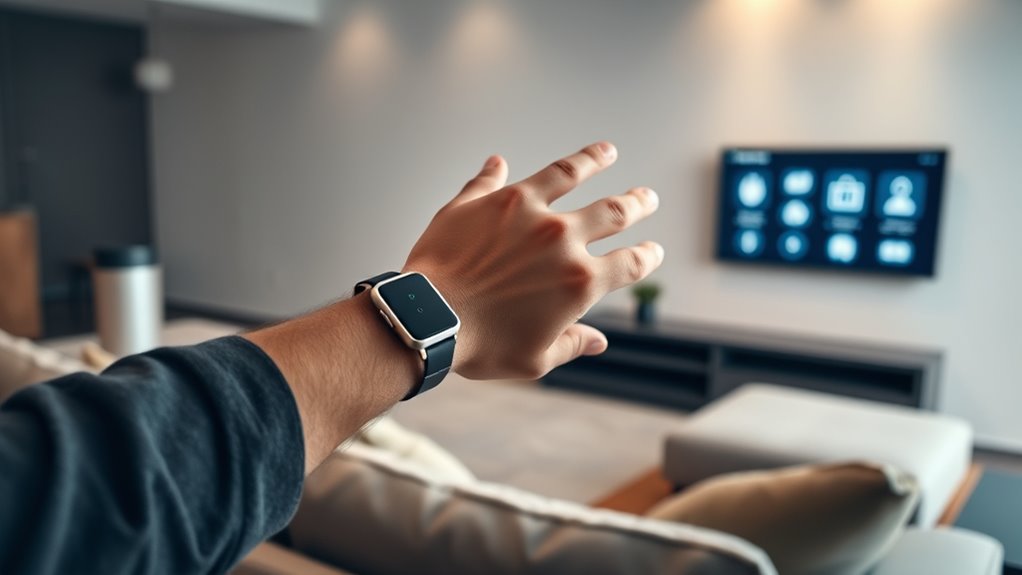
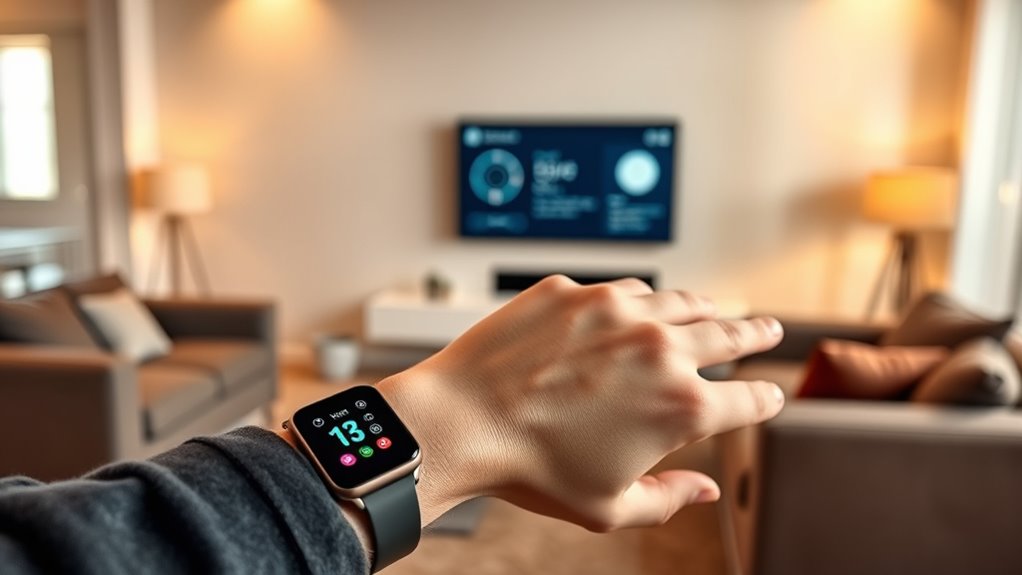
As smart home technology becomes increasingly advanced, integrating wearable devices into these systems offers new levels of convenience and control. You can now manage your home’s functions seamlessly, right from your wrist or other wearable gadgets. The key to making this integration smooth lies in robust security protocols and user interface customization. These elements guarantee that your interactions are not only secure but also tailored to your preferences, providing a personalized experience that feels intuitive and effortless.
Integrating wearables with smart homes enhances control, security, and personalization for a seamless living experience.
When you connect your wearable device to your smart home, security protocols become critically important. These protocols safeguard your personal data and prevent unauthorized access. Modern systems typically employ encryption, multi-factor authentication, and secure pairing methods to assure that your devices communicate safely. You don’t want just anyone controlling your home, so these protocols act as a protective barrier, giving you peace of mind. As you use your wearable to toggle lights, adjust thermostats, or lock doors, you’ll appreciate how these security measures keep your actions private and protected against potential cyber threats.
User interface customization plays a significant role in enhancing your experience. Wearable devices often come with limited screen space, so the ability to customize the user interface makes a big difference. You can prioritize the controls you use most frequently, set up quick access buttons, or choose different layouts that make navigation intuitive. This customization allows you to operate your smart home effortlessly, without scrolling through endless menus or dealing with complicated commands. Whether you prefer voice commands, gesture controls, or simple taps, customizing the user interface ensures your interactions are smooth and aligned with your habits.
Another advantage of wearable integration is the immediate feedback it offers. For example, if you’re walking into your house, your wearable can alert you if a door is unlocked or if the security system detects an anomaly. You can then respond swiftly, thanks to the real-time notifications and controls at your fingertips. Additionally, you can set up personalized routines that activate automatically based on your location or time of day, further simplifying daily tasks. Moreover, secure connection protocols are essential in maintaining the integrity and safety of your data during these interactions. All of this is possible because of thoughtful security protocols that keep your data safe and user interface customization that makes controlling your smart home feel natural and straightforward.
Ultimately, integrating wearables with your smart home system transforms the way you interact with your environment. By prioritizing secure connections and customizing your interface, you’re empowered to enjoy a smarter, safer, and more personalized living space.
Frequently Asked Questions
How Secure Is Data Transmission Between Wearables and Smart Home Devices?
Data transmission between wearables and smart home devices is generally secure thanks to encryption protocols that protect your information. These protocols help prevent data breaches by making it difficult for hackers to access your data during transfer. However, no system is completely foolproof. You should regularly update your devices and use strong, unique passwords to enhance data breach prevention and keep your personal information safe.
Can Wearables Control All Smart Home Functions or Only Specific Ones?
You can control specific smart home functions with your wearable, but not all. Wearables offer device customization options, allowing you to focus on the features most important to your user experience. While some advanced models enable control over multiple devices like lights, thermostats, and security systems, others may be limited to simple tasks. Your wearable’s capabilities depend on its integrations and the smart home ecosystem it connects to.
What Is the Average Battery Life of Wearables Used in Home Integration?
On average, your wearables used in home integration offer a battery longevity of about 1 to 2 days, depending on usage and features. Good power management is essential; turning off unnecessary functions helps extend battery life. Many devices now include power-saving modes to optimize battery longevity, ensuring you get more use between charges. Keep an eye on your wearable’s settings and usage habits to maximize its battery performance in your smart home setup.
Are There Compatibility Issues With Different Brands of Wearables and Smart Systems?
Ever felt like you’re trying to fit a square peg in a round hole? Compatibility issues can arise because different brands may not seamlessly work together, especially if firmware updates aren’t synchronized. Brand compatibility varies, and manufacturers often release updates to improve integration. To avoid frustrations, check device compatibility before purchasing and keep your wearables’ firmware current, ensuring smoother interaction with your smart home system.
How Does Wearable Integration Impact Overall Smart Home System Privacy?
Wearable integration can raise privacy concerns since your data transmits between devices, increasing exposure risk. You might worry about sensitive information being accessed improperly. However, with robust data encryption, your personal data stays protected during transmission and storage. To minimize risks, guarantee your smart home system uses strong encryption and regularly update device security settings. This way, you enjoy the convenience of integration while maintaining your privacy.
Conclusion
By integrating your wearable devices with smart home systems, you create a seamless environment that responds intuitively to your needs. Picture your smartwatch detecting you’re waking up and gradually opening blinds, adjusting the thermostat, and playing your favorite morning playlist. This interconnected setup turns your home into a responsive space, enhancing comfort and convenience. As technology advances, such visualized ideas become more realistic, proving that wearable integration truly transforms daily living into a smarter, more personalized experience.