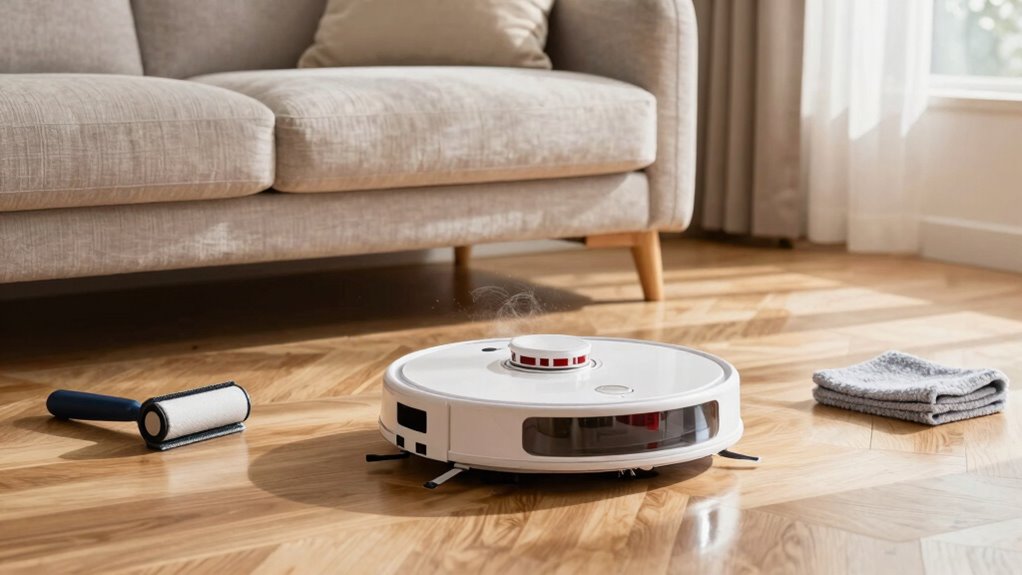

To make automation work better, establish a routine that combines regular grooming, using tools like slicker brushes or deshedding combs to reduce fur, with consistent fur removal using lint rollers or silicone gloves on furniture and clothing. Clean surfaces thoroughly before automated devices operate, and maintain air filters to trap airborne hairs and dander. This combined approach keeps your home fur-free and enhances your cleaning devices‘ efficiency. There’s more you can do to optimize this routine—keep exploring for additional tips.
Key Takeaways
- Regularly groom pets to reduce loose fur and prevent it from spreading throughout the home.
- Use specialized fur removal tools like rubber gloves or silicone brushes before automated vacuuming.
- Clean air filters frequently to trap airborne pet hairs and improve indoor air quality.
- Wash pet bedding regularly to minimize fur and dander buildup in the environment.
- Maintain a consistent cleaning routine combining fur removal, surface cleaning, and grooming for optimal automation efficiency.
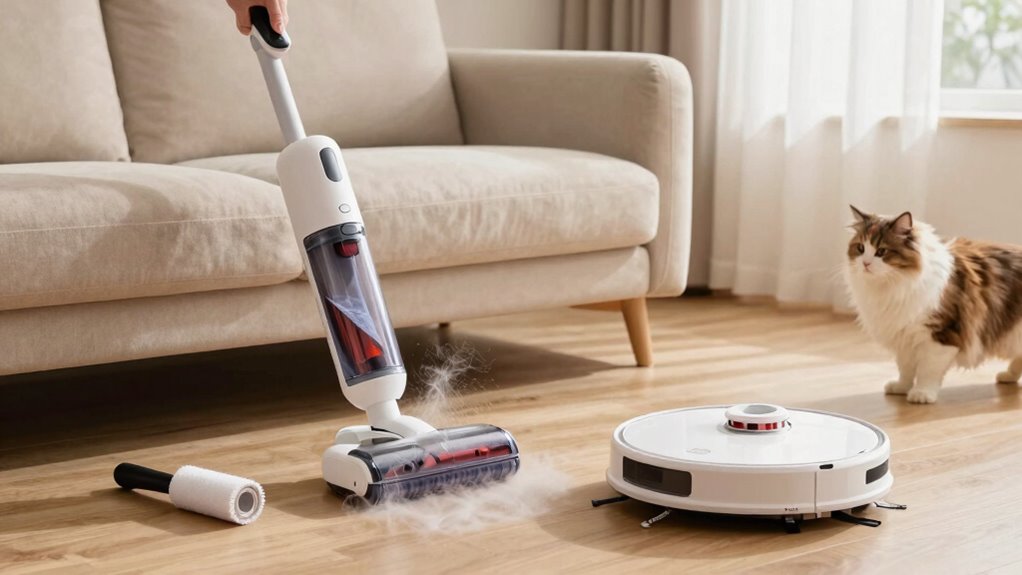
Are pet hairs taking over your home? If so, you’re not alone. Pet hair can quickly turn your living space into a perpetual fur zone, making cleaning feel like an endless battle. The key to managing pet hair effectively lies in establishing a reliable pet-hair cleaning routine that complements automation tools. To do this, you need to start with regular pet grooming. By brushing your pet frequently, you reduce the amount of loose fur that ends up on your furniture and floors. Choosing the right grooming tools, like slicker brushes or deshedding combs, can make a huge difference. Regular grooming not only minimizes shedding but also keeps your pet comfortable and healthy. Once you’re grooming your pet consistently, you’ll notice less fur flying around, which means your automated cleaning devices will have less work to do. Incorporating biodiversity-friendly practices such as choosing eco-friendly grooming products can further enhance your routine’s environmental impact. Additionally, selecting appropriate cleaning tools designed specifically for pet hair can improve the effectiveness of your routine and reduce cleanup time. Fur removal techniques are essential in this routine, especially for those stubborn hairs that cling to upholstery and carpets. Using a lint roller or adhesive tape can be surprisingly effective at snagging hairs from clothing and furniture. For more thorough cleaning, consider investing in specialized pet hair removal tools like rubber gloves or silicone brushes that attract fur with static electricity. These tools work well on fabric surfaces and can be used before or after your automated vacuum runs. Implementing effective fur removal strategies can also help prevent hairs from spreading further across your home. Regularly cleaning your air filters can trap airborne pet hairs, reducing their spread and improving air quality. Incorporating these fur removal techniques into your daily or weekly routine ensures that surfaces are as fur-free as possible before your robot vacuum or automated mop gets to work. In addition, maintaining a clean environment by regularly washing pet bedding can significantly reduce the overall amount of loose fur and dander in your home.
pet hair deshedding brush
As an affiliate, we earn on qualifying purchases.
As an affiliate, we earn on qualifying purchases.
Frequently Asked Questions
How Often Should I Clean Pet Hair From My Home?
You should clean pet hair from your home at least twice a week to reduce pet hair allergies and prevent buildup. Regular grooming schedules help minimize loose hair, making cleaning easier and more effective. Use a vacuum designed for pet hair, and wipe surfaces with a damp cloth. Consistent cleaning guarantees your space stays allergy-friendly, comfortable, and less prone to pet hair accumulation.
What Tools Are Best for Removing Pet Hair?
For powerful pet hair removal, prioritize pet hair tools like rubber brushes, lint rollers, and microfiber cloths. These tools tackle tangles and clingy hair effectively. Combine them with smart home cleaning techniques—vacuuming with a HEPA filter and using damp cloths on furniture. This dynamic duo maximizes cleanliness, making your home a hair-free haven. With the right tools and techniques, pet hair becomes a problem of the past.
Can I Prevent Pet Hair Buildup Altogether?
You can’t prevent pet hair buildup entirely, but you can reduce it with consistent pet hair prevention strategies. Regular grooming and bathing help minimize loose hair, while using air purifiers can improve allergy management. Vacuum often with a HEPA filter-equipped cleaner and consider lint rollers or robotic vacuums to keep surfaces hair-free. These habits will help you manage pet hair better and create a healthier environment for allergy sufferers.
How Do I Clean Pet Hair off Delicate Fabrics?
To clean pet hair off delicate fabrics, start by using fabric protection sprays that help repel hair, making removal easier. Gently vacuum the area with a brush attachment or use a lint roller designed for delicate surfaces. For stubborn hair, dampen a soft cloth or sponge slightly and gently wipe the fabric, ensuring you don’t damage it. Hair repellents can also be applied regularly to prevent future buildup.
Are There Eco-Friendly Pet Hair Removal Options?
You can absolutely find eco-friendly pet hair removal options that are as effective as they are gentle! Try using eco-friendly brushes made from sustainable materials, which gently lift pet hair without harming your fabrics or the environment. Natural de-shedding tools, like silicone gloves or bamboo brushes, work wonders and are safe for your pet and the planet. These options make cleaning easier while helping you reduce your ecological footprint.
silicone pet hair removal gloves
As an affiliate, we earn on qualifying purchases.
As an affiliate, we earn on qualifying purchases.
Conclusion
By sticking to this pet-hair cleaning routine, you’ll keep your home fresher and your automation tools working smoothly. Regular maintenance means fewer surprises and less stress—plus, a cleaner space for you and your furry friend. Remember, a stitch in time saves nine, so don’t wait until pet hair piles up. Stay consistent, and you’ll find that managing pet hair becomes second nature, making your life easier and your home more welcoming.
automatic pet hair lint roller
As an affiliate, we earn on qualifying purchases.
As an affiliate, we earn on qualifying purchases.
air purifier for pet dander
As an affiliate, we earn on qualifying purchases.
As an affiliate, we earn on qualifying purchases.