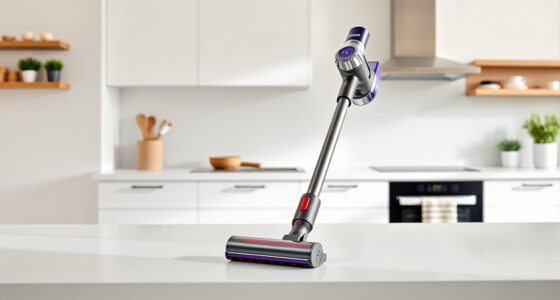
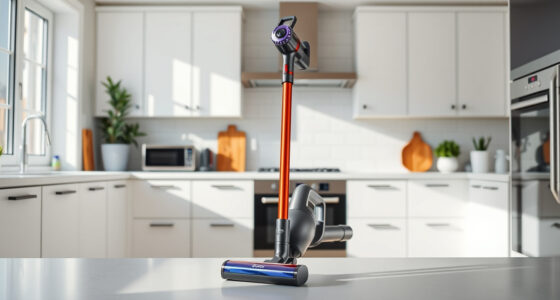
Upgrading to a vacuum with HEPA filters and sealed systems can help allergy homes feel cleaner faster by trapping tiny allergens like pet dander, dust mites, and pollen more effectively. These advanced features prevent allergens from being released back into the air during cleaning, improving indoor air quality instantly. You’ll spend less time cleaning and breathe easier sooner. Want to discover how to maximize these benefits and create a healthier home environment? Keep exploring to find out more.

Get home appliances delivered free with Prime
- Fast, free delivery on millions of items
- Prime Video, Amazon Music and more included
- Member-only deals all year
Key Takeaways
- Upgrading to vacuums with HEPA filters effectively traps tiny allergens, preventing their release back into the air.
- Sealed system vacuums minimize dust escape during disposal, ensuring a more hygienic clean.
- Advanced filtration captures microscopic particles, improving indoor air quality after each cleaning session.
- Higher efficiency vacuums reduce the number of passes needed, saving time and ensuring faster allergen removal.
- Improved filtration and sealing technologies create a healthier indoor environment, alleviating allergy symptoms quickly.

If you or someone in your home suffers from allergies, upgrading your vacuum can make a significant difference. The right vacuum isn’t just about suction power; it’s about how effectively it handles air filtration and allergen removal. When you choose a model with advanced filtration systems, you’re not only cleaning your floors but also improving the air quality in your home. This means fewer airborne irritants that trigger allergy symptoms, and a cleaner environment overall. With better air filtration, allergens like pet dander, dust mites, and pollen are trapped more efficiently, preventing them from being released back into the air during cleaning.
A vacuum designed for allergen removal typically features HEPA filters, which are capable of capturing particles as small as 0.3 microns. These filters are essential because they actively trap allergens rather than just pushing them around or forcing them through less effective filters. When you invest in a vacuum with a good HEPA filtration system, you’ll notice a tangible difference in how fresh and clean your home feels after each use. It’s a proactive step to reduce allergy triggers, especially if you deal with persistent symptoms or have family members with sensitivities.
Another key benefit of upgrading your vacuum is the ability to maintain a healthier indoor environment. Poor air filtration can cause allergens to linger in the air for hours, even after cleaning. But with an upgraded vacuum, allergens are removed at the source, and the air you breathe becomes cleaner. This is especially important in bedrooms, living rooms, or spaces where you spend a lot of time. The faster and more thoroughly you remove these irritants, the less likely they are to settle into carpets, upholstery, or curtains, which can be reservoirs for dust and allergens. Proper air filtration technology in vacuums is crucial for maintaining overall indoor air quality. Additionally, many models now incorporate sealed systems that prevent dust from escaping during disposal, ensuring a more hygienic clean. Incorporating vacuums with advanced filtration can also contribute to a healthier environment by reducing the spread of pollutants and allergens. Using vacuums with sophisticated filtration can further enhance the removal of microscopic particles that traditional filters might miss.
Choosing a vacuum with superior allergen removal also saves you time. You won’t need to vacuum as often or do multiple passes to achieve the same level of cleanliness, because the filtration system captures more debris and allergens in a single pass. Plus, many newer models come with sealed systems that prevent dust and allergens from escaping back into the environment during disposal. This means you get a deeper, more hygienic clean in less time. Overall, upgrading your vacuum to one with enhanced air filtration and allergen removal features helps your home feel cleaner faster, giving you relief from allergy symptoms and peace of mind that your environment is healthier. Additionally, selecting a vacuum with advanced filtration technology can contribute to sustainable living by reducing waste and energy consumption.
As an affiliate, we earn on qualifying purchases.
Frequently Asked Questions
How Often Should I Replace My Vacuum Filters for Allergy Relief?
You should replace your vacuum filters every 3 to 6 months for maximum allergy relief. Regularly check the filter lifespan, as vacuum sealants and filters can become clogged or less effective over time. If you notice decreased suction or increased dust around, it’s time for a change. Replacing filters consistently helps maintain airflow and captures allergens better, ensuring your home feels cleaner and healthier faster.
Can This Vacuum Upgrade Remove All Types of Indoor Allergens?
Think of your vacuum as a superhero catching airborne particles and pet dander before they settle. This upgrade greatly improves your vacuum’s ability to remove many indoor allergens, but it might not eliminate all types. While it reduces dust mites and pollen effectively, some microscopic allergens could still linger. Using it regularly, combined with other allergy-proofing methods, gives you a cleaner, healthier home where you breathe easier.
Is the Upgrade Compatible With All Vacuum Brands?
The upgrade isn’t compatible with all vacuum brands, but it offers broad brand compatibility, especially with popular models. You should check the accessory options available for your specific vacuum to confirm proper fit and function. If your vacuum brand is supported, you’ll find easy-to-install accessories that boost allergen removal. Always verify compatibility before purchasing to guarantee the upgrade works seamlessly with your vacuum, making your allergy-friendly cleaning more effective.
Does the Upgrade Impact Vacuum Noise Levels?
Worried about increased vacuum noise affecting your allergy comfort? The upgrade is designed to minimize noise levels, so you can clean without disturbing your environment. It doesn’t substantially impact vacuum noise, allowing you to maintain a peaceful, allergen-free home. Wouldn’t you prefer a solution that boosts allergy relief without adding loud noise? With this upgrade, you get a quieter cleaning experience that helps your allergy homes feel cleaner faster.
Are There Specific Maintenance Tips to Maximize Allergy Benefits?
To maximize allergy benefits, regularly clean and replace filters, ensuring air purifier compatibility for peak performance. Use allergy-proof materials like HEPA filters and sealed bags to trap allergens effectively. Check your vacuum’s brush rolls and hoses for debris, and avoid using non-compatible attachments that may release allergens. Maintaining a consistent cleaning schedule reduces airborne irritants and enhances the vacuum’s efficiency in allergy-proofing your home.
vacuum with sealed system for allergies
As an affiliate, we earn on qualifying purchases.
As an affiliate, we earn on qualifying purchases.
Conclusion
Upgrading your vacuum can truly make a difference in allergy-prone homes, helping you feel cleaner faster and breathe easier. With advanced filtration and powerful suction, you’re better equipped to remove dust, pet dander, and allergens that lurk around. Don’t you owe it to yourself and your family to invest in a cleaner, healthier space? Make that switch today and enjoy the fresh, allergen-free environment you deserve. Ready to experience the difference?
As an affiliate, we earn on qualifying purchases.
HEPA filtration vacuum for pet dander
As an affiliate, we earn on qualifying purchases.
As an affiliate, we earn on qualifying purchases.
Fall yard work Picks
leaf blowers
As an affiliate, we earn on qualifying purchases.