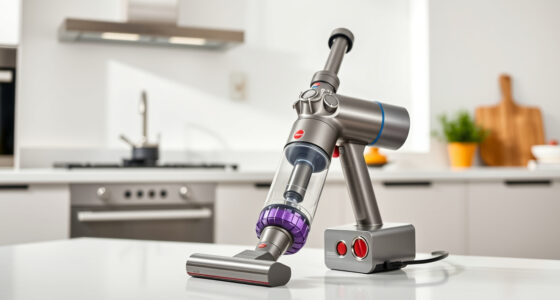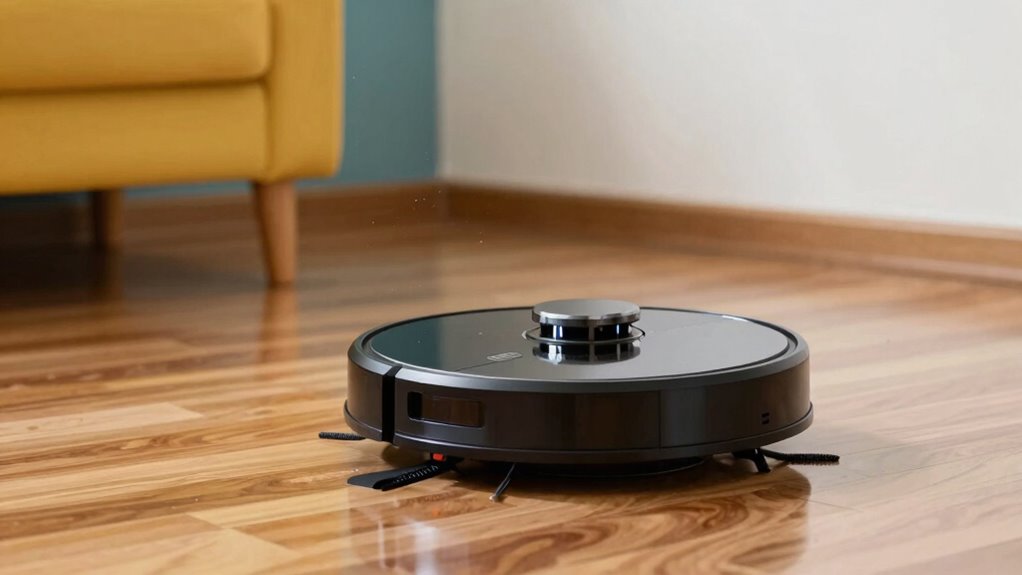

Better navigation in automated floor care machines guarantees thorough cleaning, efficiency, and safety. It allows your device to interpret the environment accurately, avoid obstacles, and develop systematic cleaning patterns. Proper sensor calibration and sensor fusion improve obstacle detection and reduce missed spots. This results in less wear and tear, lower maintenance costs, and longer equipment life. Understanding these features helps your machine perform at its best—keep going to discover how enhances your cleaning experience.

Get home appliances delivered free — and shop member deals
- Fast, free delivery on millions of items
- Access to Prime Big Deal Days deals on October 6–7
- Prime Video, Amazon Music and more included
Key Takeaways
- Accurate navigation ensures thorough cleaning coverage and reduces missed spots or overlaps.
- Improved obstacle avoidance prevents collisions, protecting both the equipment and surroundings.
- Smarter routes save time and energy, increasing overall efficiency and reducing operational costs.
- Proper sensor calibration adapts to changing environments, maintaining optimal performance over time.
- Enhanced navigation safety minimizes accidents in busy or complex spaces, creating a safer cleaning process.
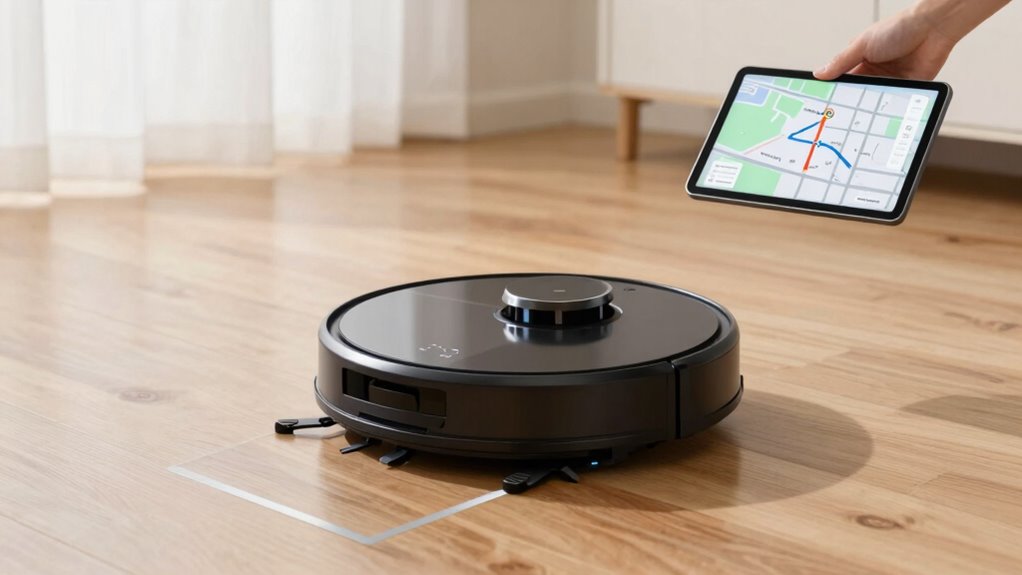
Effective navigation is essential for floor care equipment to operate efficiently and thoroughly. When your automated floor cleaner can navigate accurately, it ensures every inch of the space gets cleaned without unnecessary overlap or missed spots. Achieving this level of precision starts with proper sensor calibration. Sensors are the device’s eyes and ears, helping it interpret the environment and make real-time decisions. If these sensors aren’t calibrated correctly, the equipment might misjudge distances or fail to recognize obstacles, leading to inefficient cleaning cycles or even collisions. Regular sensor calibration is key to maintaining optimal navigation performance, allowing the machine to adapt to changing environments and different floor types. sensor calibration is vital for ensuring the device’s environmental understanding remains accurate over time. Proper calibration also helps the device better interpret environmental data, improving its overall navigation accuracy. Incorporating sensor fusion techniques can further enhance obstacle detection by combining data from multiple sensors for more accurate environmental perception. Additionally, adaptive algorithms can help the machine learn from its environment, improving obstacle avoidance over time.
Better navigation also means your floor care equipment can develop smarter cleaning patterns. When obstacle detection and sensor calibration work seamlessly, the machine can create more efficient routes, covering areas systematically rather than randomly. This ensures consistent cleaning quality, saves time, and reduces energy consumption. Improved navigation also extends the lifespan of the equipment because it minimizes unnecessary maneuvers and collisions, which can cause wear and tear over time. Additionally, a machine that navigates well contributes to a safer environment, especially in busy households or commercial settings, by avoiding accidents caused by misjudged obstacles. Recognizing environmental variables, such as changing floor textures or lighting conditions, is also crucial for maintaining reliable environmental understanding.
In essence, investing in good sensor calibration and robust obstacle detection technology significantly enhances the capabilities of your automated floor care equipment. They work together to give the machine a clear understanding of its surroundings, enabling it to clean more thoroughly, efficiently, and safely. Better navigation isn’t just about convenience; it’s about maximizing the machine’s performance and longevity, so you get the most value out of your investment. When your equipment can navigate intelligently, you’ll enjoy cleaner floors with less effort and fewer worries about damage or missed spots.
Frequently Asked Questions
How Does Navigation Impact Cleaning Efficiency?
Navigation impacts cleaning efficiency by enabling your automated floor cleaner to recognize surfaces accurately and optimize its path. With surface recognition, it adjusts cleaning modes for different floor types, guaranteeing thorough coverage. Path optimization helps it avoid obstacles and reduce redundant passes, saving time and energy. Together, these features ensure your cleaner works smarter, covering more ground effectively and delivering a spotless floor faster and more efficiently.
Can Navigation Systems Adapt to Changing Floor Layouts?
Think of your cleaning robot as a skilled navigator who adapts like a chameleon. It can handle changing floor layouts through floor plan customization and real-time map updates. These features allow the system to evolve with your space, ensuring thorough cleaning even when the environment shifts. So, yes, your robot’s navigation system is designed to adjust seamlessly, maintaining efficiency regardless of layout changes.
What Sensors Are Used for Obstacle Detection?
You’ll find various sensor types used for obstacle detection in automated floor care devices. Infrared sensors help identify objects by detecting reflected light, while ultrasonic sensors use sound waves to measure distance and spot obstacles. Additionally, bump sensors activate when the device physically contacts something. Combining these sensor types guarantees reliable obstacle detection, allowing your device to navigate safely around furniture, walls, and other hazards without collision or damage.
How Does Navigation Affect Robot Maintenance Needs?
Navigation nuances directly influence your robot’s maintenance needs. Precise navigation algorithms reduce repetitive reruns and missteps, preventing unnecessary wear and tear. When your robot navigates neatly, it minimizes damage, prompting less frequent maintenance scheduling. Conversely, poor navigation causes chaos, complicating upkeep and increasing repairs. So, by optimizing navigation algorithms, you keep your robot running reliably, reducing downtime and ensuring smoother, smarter service with less maintenance hassle.
Are Advanced Navigation Features Cost-Effective?
Yes, advanced navigation features are cost-effective because they lead to significant cost savings over time. While the feature complexity might seem high initially, it reduces the need for frequent manual interventions and maintenance, saving you money. These features optimize cleaning routes, minimize missed spots, and prevent damage, which all contribute to lower operational costs. Investing in advanced navigation ultimately enhances efficiency and lowers long-term expenses.
Conclusion
In the world of automated floor care, better navigation isn’t just a fancy feature — it’s the secret sauce for efficiency and thorough cleaning. You’ll find your robot whizzes around obstacles like a modern-day knight, leaving no dirt behind. It’s like having a trusty squire that always knows the terrain. So, embrace smart navigation tech, and watch your floors gleam without breaking a sweat. After all, in this age of innovation, a good navigator makes all the difference.
NFL season / tailgating Picks
team gear
As an affiliate, we earn on qualifying purchases.