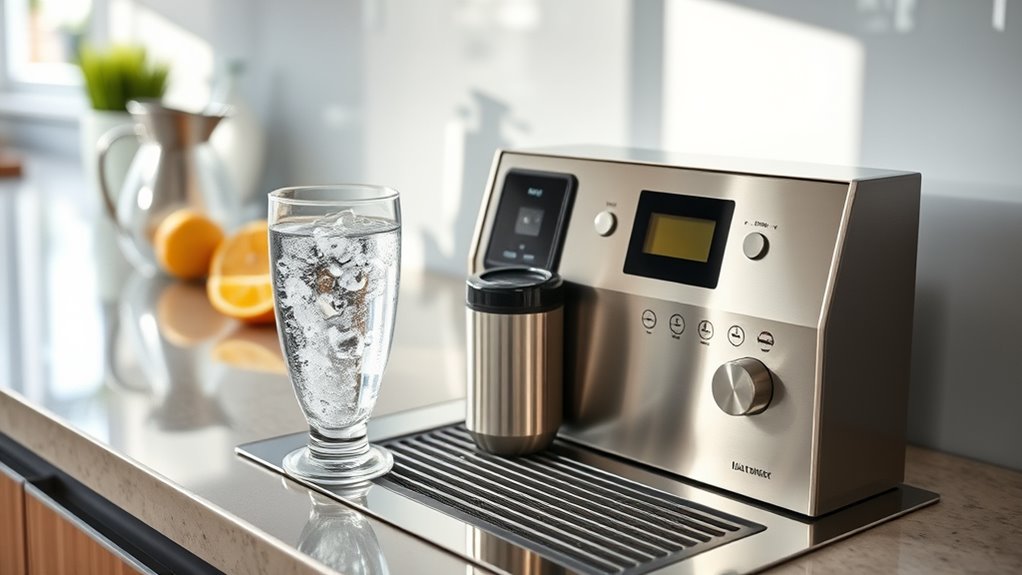

Built-in water carbonation systems help you enjoy healthier, sparkling beverages right at home. They’re installed directly into your kitchen, eliminating trips for bottled water, which reduces plastic waste and your environmental footprint. These systems are energy-efficient and include features like filters and CO2 refills, making it easy to stay hydrated and eco-friendly. Curious about how to install and maintain one? Keep exploring to discover all the benefits and tips for your perfect sparkling water setup.
Key Takeaways
- Provides fresh, fizzy water at home, encouraging healthier beverage choices and reducing sugary drink consumption.
- Eliminates the need for bottled sparkling water, lowering plastic waste and environmental impact.
- Easy integration into your kitchen, offering convenient access to carbonated water anytime.
- Features energy-efficient designs and filters that promote sustainability and improve water quality.
- Requires professional installation and regular CO2 refills, ensuring optimal performance and long-term use.
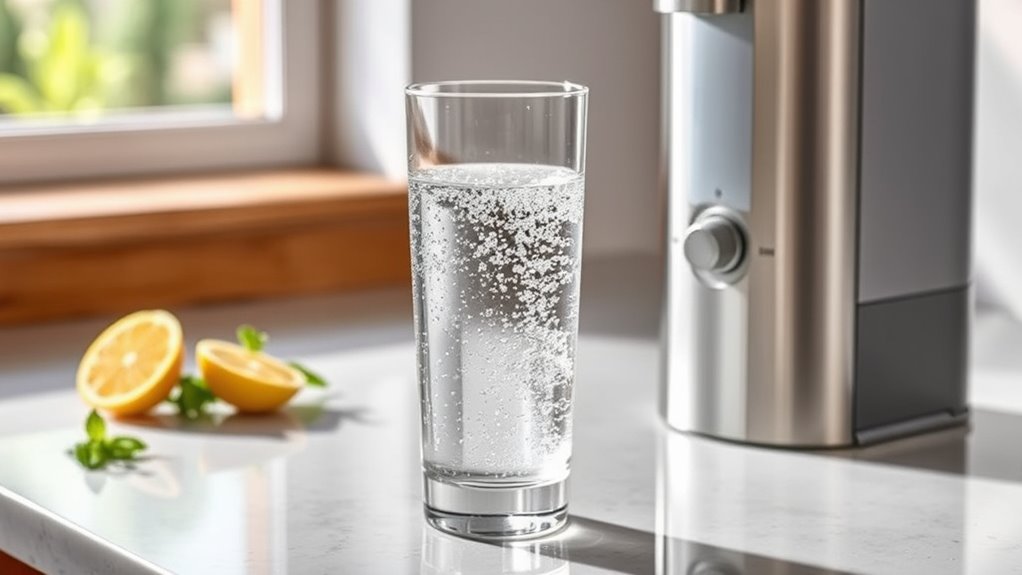
If you enjoy sparkling water but dislike the hassle of buying and storing bottles, built-in water carbonation systems offer a convenient solution. These systems are installed directly into your kitchen, allowing you to carbonate tap water effortlessly whenever you crave a fizzy drink. Not only do they save you trips to the store, but they also promote a more sustainable lifestyle by reducing plastic waste. By using your existing water supply, you eliminate the need for single-use bottles, which often end up in landfills or oceans, contributing to environmental pollution. This shift toward sustainability benefits both the planet and your wallet, as you cut down on the recurring costs of bottled water and minimize your ecological footprint.
Built-in carbonation systems reduce plastic waste and save money by providing fresh sparkling water at home.
When considering a built-in carbonation system, it’s crucial to evaluate installation considerations carefully. These units typically require professional setup, especially if you’re integrating them into existing plumbing or cabinetry. You should plan for sufficient space under your sink or within your kitchen cabinetry to accommodate the system and its components. Additionally, check that your water supply line can support the connection, and ensure there’s proper clearance for the CO2 canisters or tanks, which may need periodic refilling. Some systems are designed to be compatible with standard-sized under-sink spaces, making installation more straightforward, but it’s wise to consult with a professional installer to prevent any surprises.
Installing a built-in system also involves considering the long-term maintenance. You’ll need to replace CO2 cylinders periodically, which can be an easy task if the system is designed for quick swaps. Some models come with indicators that alert you when CO2 levels are low, ensuring you never run out of fizzy water unexpectedly. Also, pay attention to the water filtration features, as integrated filters can enhance taste and purity, making your sparkling water even healthier. Proper installation not only guarantees peak performance but also extends the lifespan of your system. Additionally, choosing a system with energy-efficient features can further reduce your environmental impact over time.
In terms of sustainability benefits, built-in carbonation systems drastically reduce reliance on single-use plastic bottles and cans. They support eco-friendly practices by allowing you to produce fresh, carbonated water at home, which encourages healthier choices without the environmental guilt. Plus, modern units are designed with energy efficiency in mind, further lowering their ecological impact. When you weigh the installation considerations and the long-term benefits, it’s clear that investing in a built-in water carbonation system is a smart move for both your health and the environment.
Frequently Asked Questions
Are Built-In Carbonation Systems Compatible With All Plumbing Types?
Built-in carbonation systems aren’t compatible with all plumbing types. You might face installation challenges if your plumbing isn’t suitable, such as incompatible pipe sizes or materials. To guarantee smooth setup, check your plumbing compatibility beforehand. If you have complex or outdated plumbing, a professional installer can help address installation challenges, making sure your system works efficiently and safely. Always verify compatibility to avoid unexpected issues.
How Often Do Carbonation Cylinders Need Replacing or Refilling?
You might think carbonation cylinders last forever, but their lifespan and refill frequency actually rely on your usage. Typically, a cylinder needs refilling every 1 to 3 months, or after producing about 60-100 liters of sparkling water. While it’s easy to forget, staying on top of these refills ensures your system keeps working smoothly. So, don’t wait until it’s empty—regular checks help avoid surprises and keep your healthier beverages flowing.
Can These Systems Be Customized for Different Carbonation Levels?
Yes, you can customize these systems for different carbonation levels. Most built-in water carbonation systems offer multiple customization options, allowing you to adjust carbonation preferences easily. You simply select the desired level of fizziness, whether you prefer lightly sparkling or highly carbonated drinks. This flexibility guarantees you get beverages tailored to your taste, making your hydration experience more enjoyable and personalized.
What Is the Typical Installation Process for Built-In Systems?
Sure, installing a built-in system is as simple as assembling a spaceship—if you overlook the installation steps and compatibility considerations. First, you’ll turn off the water supply, then follow the manufacturer’s instructions for mounting the unit securely. Check compatibility with your existing plumbing and electrical setup, and connect the water lines carefully. Finally, test the system to ensure your beverages are perfectly fizzy—because who doesn’t want their soda to sparkle?
Do They Require Professional Maintenance or Troubleshooting?
You can often handle DIY troubleshooting for built-in water carbonation systems, like checking for leaks or replacing CO2 canisters. However, for more complex issues or regular upkeep, professional maintenance is recommended to guarantee peak performance and safety. While some minor fixes are manageable on your own, don’t hesitate to call a professional if problems persist or if you’re unsure about handling technical components.
Conclusion
With a built-in water carbonation system, you’re not just adding bubbles—you’re unleashing a fountain of freshness right at your fingertips. It’s like having a personal soda shop in your kitchen, turning plain water into sparkling delight anytime you crave it. Say goodbye to dull drinks and hello to a bubbly revolution that transforms every sip into a celebration. Cheers to healthier, fizz-filled moments—your taste buds and well-being will thank you for making sparkling hydration effortless.