To improve your daily comfort and health, focus on key air quality metrics like PM2.5, CO2, and VOC levels. High PM2.5 indicates pollution that can affect your lungs and overall health, while elevated CO2 shows poor ventilation, causing fatigue and headaches. Monitoring these helps you take quick action, like opening windows or switching products. Keep paying attention, and you’ll discover more ways to maintain a safer, healthier indoor environment.

Get home appliances delivered free with Prime
- Fast, free delivery on millions of items
- Prime Video, Amazon Music and more included
- Member-only deals all year
Key Takeaways
- PM2.5 levels indicate fine particle pollution that affects lung and heart health.
- CO2 measurements reflect ventilation quality and air freshness.
- Formaldehyde and VOC levels reveal chemical emissions from furnishings and products.
- Elevated CO2 can cause fatigue, headaches, and reduced concentration.
- Monitoring these metrics enables timely actions to improve indoor air safety.
Have you ever wondered how we measure the cleanliness of the air we breathe? It’s a good question because, in everyday life, understanding air quality isn’t just about knowing if the air smells fresh or stale. Instead, it involves specific metrics that tell you how safe or hazardous your environment truly is. One of the main concerns today is indoor pollution, which can often be worse than outdoor air. Inside your home or office, pollutants like volatile organic compounds (VOCs), dust, and even mold spores can accumulate quickly, impacting your health. That’s where air quality sensors come into play—they provide real-time data on the levels of various pollutants, giving you a clear picture of what’s happening inside your space.
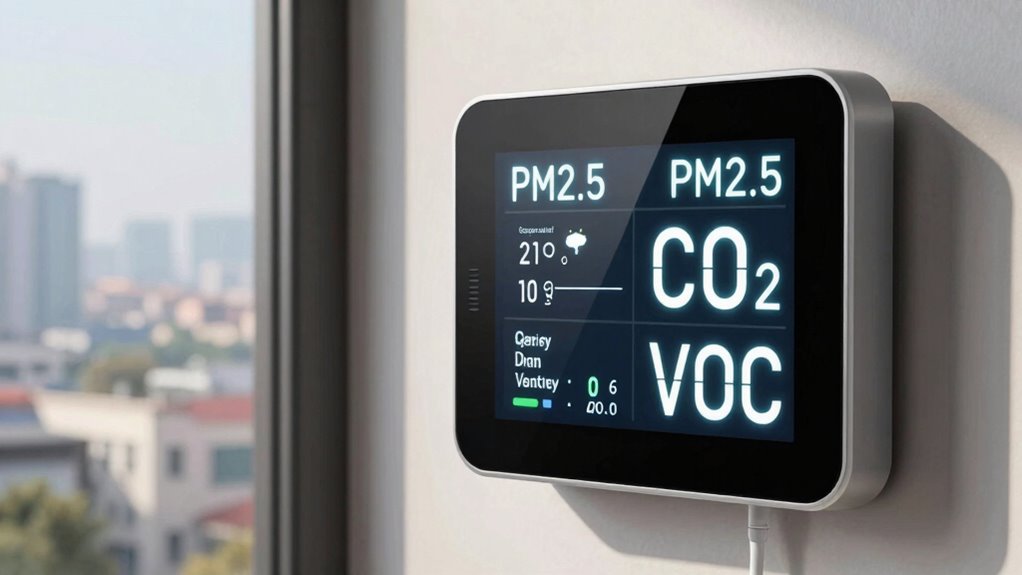
These sensors measure specific air quality metrics, such as particulate matter (PM2.5 and PM10), carbon dioxide (CO2), and sometimes even formaldehyde or other VOCs. PM2.5, tiny particles less than 2.5 micrometers, are especially dangerous because they can penetrate deep into your lungs and bloodstream. An increase in PM levels signals poor indoor pollution control, prompting you to improve ventilation or reduce sources of pollutants. Similarly, high CO2 levels often indicate inadequate ventilation; this metric is a straightforward way to understand if your indoor environment is *invigorating* or stuffy. When CO2 concentrations are elevated, it often means stale air is building up, which can cause fatigue, headaches, and reduced concentration. Understanding the air quality metrics that matter is essential for making informed decisions about your indoor environment. These metrics are also important for aligning with indoor air quality standards, which set safe limits for pollutants and help guide your actions.
High PM2.5 and CO2 levels indicate poor air quality and need for better ventilation.
Air quality sensors help you keep track of these metrics so you can take immediate action. For example, if sensors detect high levels of VOCs from cleaning products or furniture, you might open windows or switch to lower-emission alternatives. Regular monitoring of indoor air quality can also help identify sources of pollution early before they become more hazardous. Additionally, being aware of indoor pollutant sources allows you to implement preventative measures more effectively. Incorporating air quality standards into your home maintenance routine can also guide you toward healthier choices. These measurements aren’t just numbers—they’re your window into your indoor environment’s health. Knowing the air quality metrics that matter helps you make smarter decisions about ventilation, cleaning, and even choosing the right home appliances. It’s about creating a safer space for yourself and your loved ones without constantly guessing or relying on outdated perceptions of air cleanliness.
In the end, understanding and monitoring these key air quality metrics empowers you to take control of your environment. Air quality sensors are accessible tools that turn complex data into actionable insights, making it easier to maintain a healthy indoor space. Whether it’s reducing indoor pollution from everyday activities or ensuring proper ventilation, these metrics are essential for daily life. They don’t just inform you—they protect you, helping you breathe easier and live healthier.
Products Worth Considering

eufy Security E30 4K Indoor Pan and Tilt Camera, 2-Pack

Levoit Core 300S-P Smart Air Purifier

Google Nest Cam Indoor/Outdoor Battery Security Camera
As an affiliate, we earn on qualifying purchases.
Frequently Asked Questions
How Do Indoor Air Quality Levels Compare to Outdoor Metrics?
Indoor air quality levels often differ from outdoor metrics because ventilation systems can either improve or worsen conditions. You might think outdoor air is always worse, but indoor pollutants like dust, mold, and chemicals can accumulate if ventilation isn’t adequate. Proper ventilation helps dilute indoor pollutants, making your indoor environment healthier. So, always consider both outdoor metrics and the effectiveness of your ventilation systems when evaluating indoor air quality.
What Are the Health Impacts of Long-Term Exposure to Poor Air Quality?
Long-term exposure to poor air quality can seriously harm your respiratory health, increasing risks of asthma, bronchitis, and even lung disease. Air pollution particles can inflame your airways, reduce lung function, and make you more vulnerable to infections. Over time, these effects can diminish your quality of life and lead to chronic health issues. Protect yourself by monitoring air quality levels and minimizing exposure during high pollution days.
How Can I Improve Air Quality in My Home Easily?
Think of your home as a breath of fresh air waiting to happen. To improve air quality easily, focus on air purification and ventilation strategies. Use air purifiers with HEPA filters to trap pollutants and dust. Regularly open windows or install exhaust fans to boost ventilation, flushing out indoor pollutants. These simple steps act like a breath of fresh breeze, making your home healthier and more comfortable every day.
Are There Specific Air Quality Standards for Children and the Elderly?
Yes, specific air quality standards prioritize child safety and elderly vulnerability. You should monitor pollutants like PM2.5 and VOCs closely, as children and seniors are more sensitive to these. Keep indoor air clean by using air purifiers, ensuring good ventilation, and avoiding smoking or harsh chemicals, especially around children and elderly family members. Staying aware of these standards helps protect their health and reduces risks associated with poor air quality.
How Reliable Are Personal Air Quality Monitors for Daily Use?
Personal air quality monitors can be fairly reliable for daily use if you pay attention to sensor accuracy and device calibration. Regularly calibrate your device as instructed, since inaccurate sensors can give false readings. While they provide helpful insights into your environment, remember they might not be as precise as professional monitors. Use them as a guide, but consult official data for critical health decisions.
Conclusion
When it comes to air quality, knowing which metrics truly matter helps you breathe easier and make smarter choices. Keep an eye on the pollutants that impact your daily life, and don’t get caught up in numbers that don’t tell the full story. Remember, it’s better to be safe than sorry—so stay informed, stay alert, and don’t let the air you breathe be a gamble. Your health is worth the extra effort.