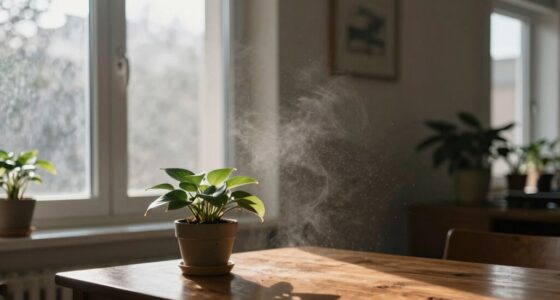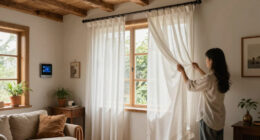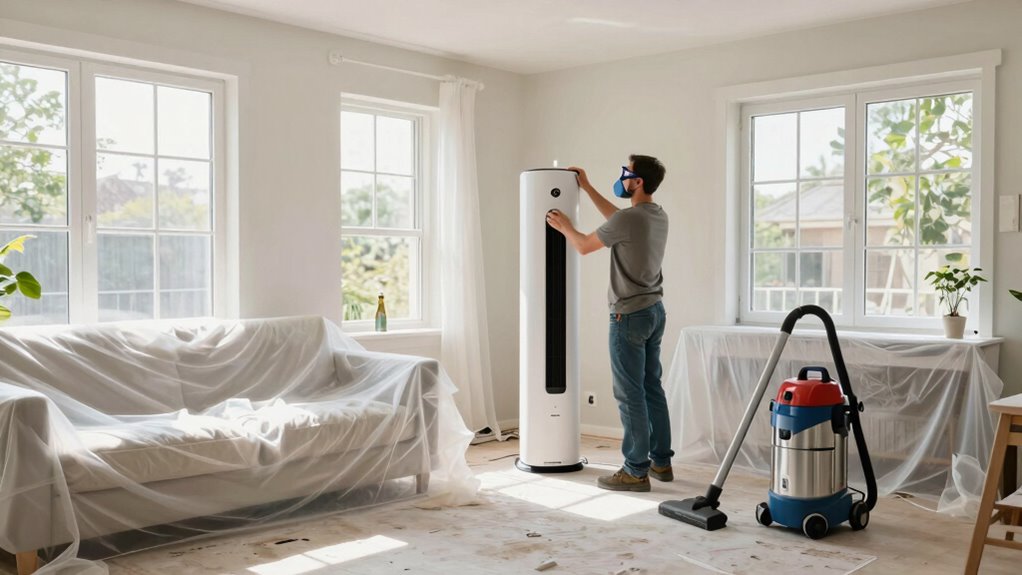

To reduce indoor air problems during renovation projects, you should maximize ventilation by opening windows and using exhaust fans regularly. Use HEPA filters in vacuums and air purifiers to capture airborne dust and fumes effectively. Contain dust with barriers and clean work areas often. Wear protective masks and contain dust at the source to protect your health. Schedule messy work when your home is less occupied, and give the space time to air out afterward. Learn how to keep your indoor air safe throughout your project.
Key Takeaways
- Use HEPA filters in vacuums and air purifiers to capture airborne dust, fumes, and mold spores during renovation.
- Maximize natural ventilation by opening windows and doors to dilute indoor pollutants.
- Contain dust with plastic barriers and clean work areas regularly with HEPA-filter vacuums.
- Wear appropriate masks and personal protective equipment to safeguard against inhaling harmful particles.
- Schedule dust-generating activities when the home is unoccupied and allow ample time for airing out post-renovation.

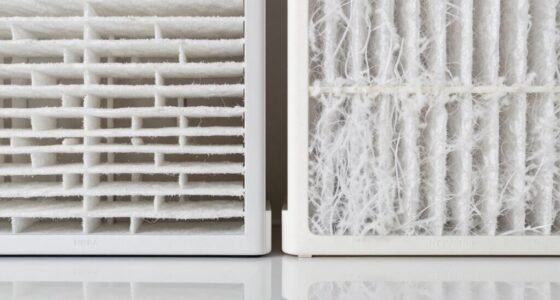
Renovations can markedly improve your home’s appearance and functionality, but they also pose risks to indoor air quality. Dust, fumes, and airborne particles can quickly accumulate, making the environment uncomfortable and potentially hazardous. To protect yourself and your family, you need to pay close attention to air filtration and ventilation strategies. Proper air filtration helps capture tiny particles like dust, mold spores, and chemical fumes, preventing them from circulating throughout your home. Investing in high-efficiency particulate air (HEPA) filters for your vacuum cleaner and air purifiers can considerably reduce airborne contaminants. These filters are capable of trapping particles as small as 0.3 microns, ensuring cleaner air during and after your renovation.
Ventilation strategies are equally essential. You should maximize airflow by opening windows and doors whenever possible, creating a steady exchange of indoor and outdoor air. This process helps dilute airborne pollutants and reduces their concentration inside your home. If natural ventilation isn’t practical, consider installing exhaust fans in areas such as the kitchen and bathroom to pull out contaminated air. Additionally, portable air purifiers equipped with HEPA filters can be strategically placed in rooms where you spend the most time, continuously filtering the air and reducing airborne hazards.
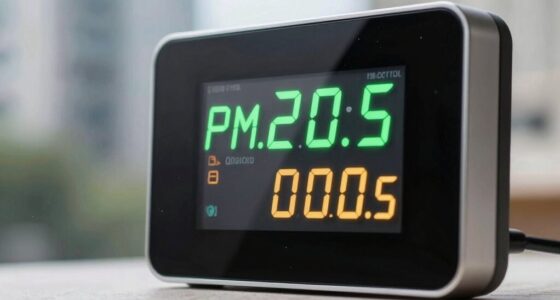
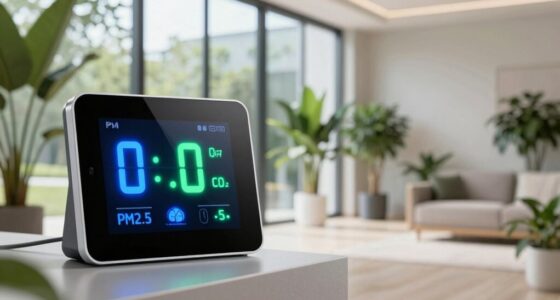
During renovation, it’s also crucial to control dust at the source. Use plastic sheeting or barriers to contain dust within the work area, preventing it from spreading to other parts of your home. Regularly cleaning the work site with a vacuum fitted with a HEPA filter can keep dust levels down. Wearing personal protective equipment, like masks with proper filtration, will safeguard your respiratory health, especially if you’re working directly with materials that release fumes or dust. Recognizing the importance of indoor air quality during renovations can help you implement effective measures to maintain a healthier environment. Incorporating air filtration systems that are designed to target specific pollutants can further enhance your indoor air management efforts. Proper ventilation techniques, such as using exhaust fans or air exchange systems, can also help reduce the buildup of harmful particles, making your home safer during the renovation process. Ensuring that your home’s air quality remains high can also involve monitoring particulate levels with specialized devices, which can alert you to potential issues early on.
Timing your renovations can make a big difference. If possible, complete dusty or fume-generating work when you’re not at home or during times when ventilation can be maximized. After the work is done, give your home adequate time to air out before reoccupying, and continue using air filtration devices for several days to ensure any lingering particles are removed.
HEPA air purifier for dust removal
As an affiliate, we earn on qualifying purchases.
As an affiliate, we earn on qualifying purchases.
Frequently Asked Questions
How Long Do Indoor Air Pollutants Typically Linger After Renovation?
Indoor air pollutants from renovations can linger for days or even weeks, depending on the pollutant type and ventilation. You should consider indoor air testing to determine pollutant levels and monitor pollutant duration. Proper ventilation speeds up pollutant removal, reducing exposure. Keep air moving with fans and open windows, and wait until air quality improves prior to reoccupying the space. This proactive approach ensures healthier indoor air after your renovation.
Are There Specific Ventilation Systems Best Suited for Renovation Projects?
Think of ventilation systems as your home’s lungs during renovations. For best results, opt for high-efficiency, whole-house ventilation systems like ERVs or HRVs, which effectively exchange indoor air with fresh outdoor air. Guarantee system effectiveness by regular maintenance—clean filters and check ducts. Proper ventilation reduces indoor pollutants, making your space healthier and more comfortable throughout your renovation, like a gust of fresh air in a stuffy room.
What Are the Health Risks of Poor Indoor Air Quality During Renovations?
You face health risks from poor indoor air quality during renovations, as airborne toxins and respiratory hazards can cause headaches, dizziness, or worse health issues. Breathing in dust, chemical fumes, or mold spores puts you at risk of allergies, asthma attacks, or lung problems. To protect yourself, guarantee proper ventilation, wear masks, and keep the space well-ventilated, reducing exposure to airborne toxins and respiratory hazards during your renovation.
Can Indoor Air Quality Be Tested During Renovation?
Yes, you can test indoor air quality during renovation. Use air purifiers equipped with HEPA filters to monitor airborne particles, and consider professional testing for formaldehyde, VOCs, and other pollutants. Maintain humidity control to prevent mold growth, which affects air quality. Regular testing helps you identify issues early, allowing you to take corrective actions like increasing ventilation or filtering the air, ensuring a healthier indoor environment during your renovation.
How Often Should Air Filters Be Replaced During Renovation?
Think of your air filters like the steady heartbeat of your home’s air quality. During renovation, you should replace filters more frequently, roughly every 1 to 2 months, depending on usage and dust levels. Keep an eye on the air filter lifespan, as dirty filters hinder air flow and trap pollutants. Regular replacement guarantees cleaner air, maintaining a healthier environment for you and your family amidst the renovation chaos.
portable exhaust fan for renovation
As an affiliate, we earn on qualifying purchases.
As an affiliate, we earn on qualifying purchases.
Conclusion
To keep your indoor air healthy during renovations, prioritize proper ventilation and use low-emission materials. Remember, indoor air can be up to five times more polluted than outdoor air, so taking these steps makes a real difference. By staying proactive, you protect your health and create a safer environment for everyone. Don’t overlook the importance of fresh air—it’s your best tool for a cleaner, safer home during any renovation project.
HEPA vacuum cleaner for construction dust
As an affiliate, we earn on qualifying purchases.
As an affiliate, we earn on qualifying purchases.
dust containment plastic barriers
As an affiliate, we earn on qualifying purchases.
As an affiliate, we earn on qualifying purchases.