
Indoor air quality numbers like PM, VOCs, humidity, and CO2 levels are key in guiding your decisions for a healthier home. High PM suggests you need better filtration, while elevated VOCs mean you should cut back on household chemicals. Rising CO2 indicates poor ventilation, prompting you to improve airflow. Monitoring these numbers helps you target issues before they worsen. Keep exploring to understand how these indicators can empower your efforts for a safer, more comfortable space.
Key Takeaways
- Elevated CO2 levels prompt increased ventilation to improve air freshness and concentration.
- High PM readings lead to enhanced air filtration or source removal strategies.
- Rising VOC levels trigger decisions to reduce chemical use or improve household ventilation.
- Low humidity readings result in humidification or dehumidification adjustments to prevent mold.
- Consistently poor indoor air quality metrics prompt comprehensive system upgrades for better air management.

Have you ever wondered what those indoor air quality numbers really mean? They might seem like just a bunch of digits on a report, but they actually hold the power to influence your decisions about your home’s environment. When you understand what these numbers indicate, you can take concrete steps to improve your indoor air. Your HVAC system plays a vital role here, not just in maintaining temperature but also in controlling air quality. Many modern systems now incorporate air purification features, making them more effective at removing pollutants, allergens, and odors from the air you breathe.
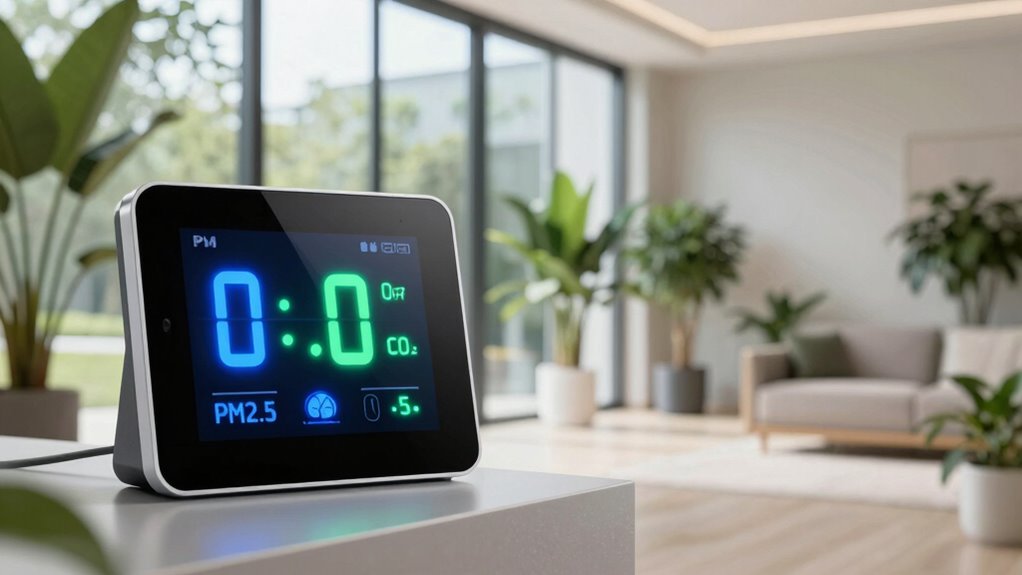
These air quality readings are often based on measurements like particulate matter (PM), volatile organic compounds (VOCs), humidity levels, and carbon dioxide (CO2) concentrations. The numbers associated with these metrics help you gauge how clean or contaminated your indoor air is. For example, a high PM count might flag the need for better filtration or increased ventilation. Low VOC levels suggest that your indoor environment isn’t heavily polluted by household chemicals or off-gassing from furniture. If CO2 levels are rising, it could mean your space isn’t well-ventilated, which can lead to drowsiness or decreased focus. Indoor air quality numbers are essential data points that can guide your decisions for a healthier home environment. Additionally, understanding the significance of these numbers can help you identify the sources of indoor pollution that may be affecting your air quality.
Indoor air quality metrics like PM, VOCs, humidity, and CO2 reveal how clean or polluted your environment is.
Recognizing how these air quality metrics are interconnected can help you prioritize improvements for maximum benefit. Knowing your numbers also encourages you to keep humidity in check, since high moisture levels can promote mold growth and worsen respiratory issues. In fact, monitoring these air quality indicators can help you catch problems early before they become serious health risks. Moreover, being aware of pollution sources allows you to implement targeted solutions to reduce specific contaminants in your home.
Understanding indoor air quality numbers empowers you to take control of your environment. Instead of guessing whether your air is safe, you get clear data that guides your actions. For instance, if a reading shows elevated VOCs after renovating or using certain products, you can ventilate more or switch to less toxic alternatives. If CO2 levels are consistently high, you’ll realize it’s time to improve airflow, perhaps by adjusting your HVAC system or adding exhaust fans. Ultimately, these numbers aren’t just statistics—they’re tools that help you create a healthier, more comfortable living space.
As an affiliate, we earn on qualifying purchases.
Frequently Asked Questions
How Often Should Indoor Air Quality Be Tested?
You should test indoor air quality at least once every three to six months to guarantee your ventilation strategies are effective. Regular testing helps identify pollutant sources like mold, dust, or fumes before they cause health issues. If you notice odors, allergies, or respiratory problems, test more frequently. Monitoring indoor air quality allows you to make informed decisions about ventilation improvements and pollutant source control to maintain a healthier environment.
What Are the Best Devices for Monitoring Air Quality at Home?
You need to choose the best devices for monitoring air quality at home, and smart monitoring with air quality sensors is your top option. These devices provide real-time data on pollutants, humidity, and VOCs, helping you make quick decisions. Look for models that connect to your smartphone, offer detailed insights, and alert you to changes. With smart monitoring, you stay ahead, ensuring your home’s air remains safe and healthy.
How Do Weather Conditions Affect Indoor Air Quality Readings?
Weather conditions, like outdoor pollution and seasonal variations, directly influence your indoor air quality readings. On windy days, outdoor pollutants can enter your home more easily, raising pollutant levels. Conversely, during colder months, increased heating can trap indoor pollutants, worsening air quality. Hot, humid weather can also promote mold growth, affecting readings. So, understanding these weather patterns helps you interpret your air quality data accurately and take timely actions.
Are There Health Risks Associated With Specific Air Quality Levels?
Yes, there are health risks with specific air quality levels. When airborne toxins like volatile organic compounds or pollutants exceed safe limits, you risk respiratory issues, allergies, or even long-term health problems. Adequate ventilation standards help reduce these risks by diluting airborne toxins and maintaining safe indoor air quality. Monitoring your indoor air and ensuring proper ventilation can protect you from potential health hazards associated with poor air quality.
Can Air Purifiers Improve All Indoor Air Quality Metrics?
Think of air purifiers as your trusty knight, but even a knight has limits. They can’t improve all indoor air quality metrics, especially when it comes to humidity, VOCs, or certain gases. Many people hold air quality misconceptions, believing purifiers solve every problem. While they effectively reduce particulates and some odors, understanding their limitations helps you make smarter decisions about maintaining a healthy environment.
As an affiliate, we earn on qualifying purchases.
Conclusion
Understanding indoor air quality numbers is like having a map through a fog—you see clearly what needs fixing and where to focus your efforts. When these numbers change, they can shift your decisions just as a compass points north, guiding you toward healthier choices. Don’t ignore the signs; instead, use this data as your tool to breathe easier and create a safer, more comfortable environment. After all, clarity in numbers leads to clarity in life.
As an affiliate, we earn on qualifying purchases.
humidifier and dehumidifier combo
As an affiliate, we earn on qualifying purchases.
As an affiliate, we earn on qualifying purchases.