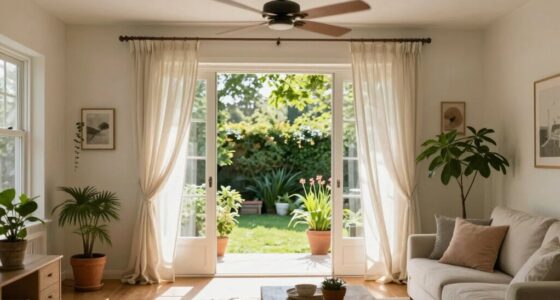
To maximize air movement in sun-exposed rooms, position windows on opposite sides to create cross-ventilation and place some windows at different heights for vertical airflow. Use shading devices like overhangs or awnings on south- or west-facing windows to block heat. Incorporate fans or air circulators to boost air circulation, especially when natural airflow is limited. Implement strategic window placement and shading techniques for cooler, more comfortable spaces—discover more tips to optimize your room’s comfort.
Open a free Amazon Business account
Business pricing, bulk buying and tax-exempt orders.
As an affiliate, we earn on qualifying purchases.
Key Takeaways
- Install operable windows on opposite sides to facilitate cross-ventilation and maximize airflow.
- Use shading devices like overhangs or screens to block high-angle sun rays and reduce indoor heat gain.
- Position windows at different heights to promote vertical air movement and enhance ventilation.
- Orient windows to align with prevailing breezes, directing fresh air into sunlit rooms.
- Incorporate fans or air circulators to boost natural airflow and improve indoor comfort.

When designing a room exposed to direct sunlight, effective air movement becomes vital for maintaining comfort and energy efficiency. Sunlit rooms tend to heat up quickly, making it essential to incorporate cooling techniques that promote airflow and prevent overheating. Your goal should be to create a balance where cool air circulates effectively, reducing reliance on air conditioning and lowering energy costs. One of the most impactful strategies involves careful window placement. Position windows to facilitate cross-ventilation by placing them on opposite sides of the room. This setup allows fresh air to enter from one side and exit from the other, creating a natural breeze that cools the space without mechanical assistance. If possible, install operable windows that open wide enough to maximize airflow, especially during cooler parts of the day or night.
Beyond window placement, consider the orientation of your windows relative to the sun’s path. South- or west-facing windows tend to receive the most direct sunlight, which can lead to excessive heat gain. To mitigate this, use shading devices like overhangs, awnings, or shading screens that block high-angle sun rays during peak hours. These additions help keep the interior cooler and reduce the workload on your cooling systems. Additionally, strategic window placement can help direct prevailing breezes into the room, enhancing natural ventilation and air movement. Placement of windows at different heights can encourage vertical air flow, with warm air rising and cooler air sinking, aiding in continuous circulation. Incorporating proper window placement is key to maximizing airflow and maintaining a comfortable environment. Furthermore, utilizing ventilation strategies such as passive cooling techniques can significantly improve overall comfort in sun-exposed rooms. To optimize airflow, consider using air circulators or fans that work in harmony with natural ventilation methods. Properly integrating indoor airflow management can further boost indoor comfort and air quality.
window fans for cross ventilation
As an affiliate, we earn on qualifying purchases.
As an affiliate, we earn on qualifying purchases.
Frequently Asked Questions
How Does Humidity Affect Air Movement in Sun-Exposed Rooms?
Humidity levels directly influence airflow patterns in sun-exposed rooms. When humidity is high, air feels heavier and less likely to circulate freely, making it harder to create effective airflow. Conversely, low humidity promotes better air movement, helping you keep the room cooler and more comfortable. To optimize airflow, monitor humidity levels and use fans or vents strategically, especially during hot, sunny days when humidity tends to rise.
Are There Specific Window Treatments That Enhance Air Circulation?
Yes, you can improve air circulation with specific window treatments like smart blinds and ventilation screens. Smart blinds automatically adjust to sunlight, reducing heat buildup and promoting airflow when opened. Ventilation screens allow air to pass through while blocking direct sunlight and pests, enhancing natural ventilation. Combining these treatments helps maintain a cooler, more comfortable room, boosting overall air movement and reducing reliance on artificial cooling systems.
What’s the Ideal Fan Placement for Maximum Airflow?
You should place a ceiling fan in the center of the room to maximize airflow, allowing it to circulate air efficiently. To enhance cross ventilation, open windows on opposite sides of the room; this creates a breeze that the ceiling fan can amplify. Positioning the fan to push air downward helps distribute cool air evenly, making your space more comfortable despite the sun exposure.
Can Plants Improve Air Movement in Sunny Rooms?
Yes, plants can improve air movement in sunny rooms when you use smart plant placement and air flow design. Position plants near windows or vents to facilitate better circulation, and choose varieties with air-purifying properties that naturally promote airflow. Strategically placing plants helps create a more dynamic air flow pattern, which, combined with proper fan placement, enhances cooling and reduces stagnant air, making your sunny room more comfortable.
How Does Outdoor Wind Influence Indoor Air Circulation?
Outdoor wind greatly influences indoor airflow by driving natural ventilation and shaping ventilation patterns. When wind blows outside, it creates pressure differences that draw fresh air into your room and push stale air out. This process enhances indoor airflow, especially in sunny rooms, helping to cool and refresh the space. To optimize this, position windows strategically to harness outdoor wind, promoting effective ventilation patterns and maintaining a comfortable, well-ventilated environment.
outdoor shading awnings for sun rooms
As an affiliate, we earn on qualifying purchases.
As an affiliate, we earn on qualifying purchases.
Conclusion
By implementing this air-movement strategy, you’ll transform your sun-drenched room into a cool, inviting sanctuary. Think of it as giving your space a gust of fresh air, revitalizing its ambiance and comfort. With the right technique, you’re not just cooling your room—you’re inviting a breeze of serenity that dances through every corner. Embrace this approach, and watch your space become a revitalizing oasis amid the relentless sun.
As an affiliate, we earn on qualifying purchases.
As an affiliate, we earn on qualifying purchases.
Flea & tick season Picks
flea and tick prevention
As an affiliate, we earn on qualifying purchases.