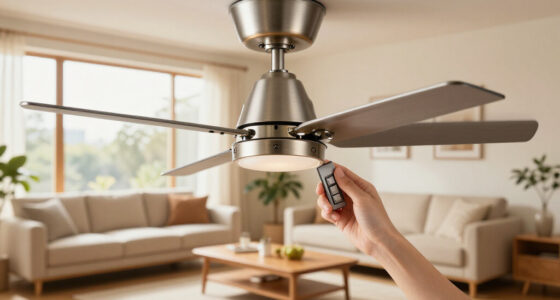
Improving air circulation in your home makes it feel cooler, fresher, and more inviting during spring and summer. When airflow is better, stale, stuffy air gets replaced with fresh outdoor air, reducing humidity and preventing mold. It also disperses indoor odors and airborne pollutants, creating a healthier environment. Strategic use of fans, open windows, and indoor plants helps keep air moving and energizes your space. Want to discover simple ways to boost airflow and enhance your home’s comfort?

Get home appliances delivered free with Prime
- Fast, free delivery on millions of items
- Prime Video, Amazon Music and more included
- Member-only deals all year
Key Takeaways
- Improved airflow creates a cooler, more refreshing environment during warmer spring and summer months.
- Better circulation prevents indoor odors and pollutants from accumulating, maintaining a cleaner atmosphere.
- Enhanced air movement reduces humidity, lowering mold growth and musty smells.
- Natural and mechanical ventilation promote a lively, less stagnant indoor space.
- Increased airflow supports healthier indoor air quality by dispersing allergens and airborne bacteria.

Have you ever noticed how a stuffy, stagnant home can feel uncomfortable during spring and summer? As the weather warms up, the air inside your house can become thick and heavy, making it hard to relax or focus. One way to combat this is by improving air circulation. When air flows freely throughout your space, it creates a fresher, more inviting environment that feels cooler and more comfortable. Better circulation also helps prevent the buildup of indoor pollutants and odors, making your home healthier overall. Incorporating indoor plants is one of the simplest ways to enhance air circulation. Not only do they add a touch of nature’s beauty to your home, but they also naturally promote airflow. As you move through your space, plants can help break up stagnant air pockets, encouraging movement and dispersion of stale air. Some plants, like ferns and pothos, are especially good at improving indoor air quality, further making your environment feel fresh. Plus, they serve as natural humidifiers, which can be particularly helpful during dry summer months. When combined with proper ventilation, indoor plants actively contribute to a more dynamic air environment, reducing stuffiness and making your home feel more lively. Additionally, proper ventilation is crucial for maintaining optimal indoor air quality and ensuring fresh airflow. Alongside plants, air purifiers play a vital role in creating better air circulation. These devices draw in indoor air, filter out dust, allergens, and other airborne pollutants, then release cleaner air back into your space. Modern air purifiers often feature oscillating or multi-directional fans that help distribute purified air more evenly throughout a room. This circulation prevents the air from becoming stale in corners or dead zones. Using an air purifier with a fan setting ensures continuous movement, which keeps the air fresh and reduces the feeling of stuffiness. Incorporating airflow techniques such as strategic furniture placement can further enhance air movement and prevent stagnation. Additionally, ensuring proper air exchange by regularly opening windows or using exhaust fans can significantly improve overall airflow. When you combine air purifiers with natural methods like opening windows or using ceiling fans, you greatly boost airflow and improve overall home comfort. Effective air circulation isn’t just about comfort; it’s about health too. Good airflow reduces humidity levels, preventing mold growth and musty odors that tend to develop during warmer months. It also helps disperse airborne bacteria and viruses, lowering potential health risks. Increasing awareness about indoor air quality can motivate you to adopt better circulation practices, especially by choosing appropriate ventilation methods suited for your living space. You’ll notice that your home feels more vibrant and less oppressive when air circulates properly. It creates an environment where you can breathe easier, relax, and enjoy the season without feeling overwhelmed by stagnant, stale air. Improving air circulation with indoor plants and air purifiers is a simple yet powerful way to transform your home into a fresher, more comfortable space during spring and summer.
Products Worth Considering

Blueair Blue Pure 211i Max Air Purifier

Levoit Vital 200S-P Smart Air Purifier for Large Rooms

Levoit Core 600S-P Smart Air Purifier for Large Rooms
As an affiliate, we earn on qualifying purchases.
Frequently Asked Questions
How Does Air Circulation Impact Indoor Humidity Levels?
Good air circulation helps regulate indoor humidity levels by evenly distributing moisture and temperature throughout your home. When your HVAC system runs efficiently, it prevents excess humidity that fosters mold growth, ensuring a healthier environment. Proper airflow reduces damp spots and condensation, improving overall comfort. By maintaining balanced humidity, you also boost HVAC efficiency, saving energy and preventing mold, which keeps your home safer and more comfortable during spring and summer.
Can Improved Air Flow Reduce Allergy Symptoms?
Yes, improved airflow can reduce allergy symptoms by enhancing air quality and lowering pollen levels indoors. When you increase ventilation, it helps clear out allergens like pollen, dust, and pet dander, making the air cleaner and easier to breathe. Better air circulation also prevents mold growth, which can worsen allergy symptoms. You’ll notice less sneezing, congestion, and itchy eyes, creating a more comfortable and healthier environment during spring and summer.
What Are the Best Methods to Enhance Air Circulation Naturally?
You can boost your home’s airflow naturally by opening windows strategically. Think about natural ventilation—place windows where prevailing breezes come from to maximize invigorating air. Cross-ventilation, achieved by opening windows on opposite sides, creates a revitalizing breeze that cools and clears your space. Keep window screens in place to enjoy this airflow without letting in pests. With thoughtful window placement and open doors, you’ll invite in a constant, soothing flow of crisp, clean air.
How Often Should Ventilation Systems Be Maintained During Spring and Summer?
You should check and maintain your ventilation system at least once every three months during spring and summer. Regular filter maintenance guarantees your system runs efficiently, preventing dust buildup and improving air quality. During peak seasons, consider more frequent checks to keep system efficiency high, especially if you notice reduced airflow or increased energy use. Proper maintenance helps your home stay fresh, comfortable, and well-ventilated all season long.
Does Better Air Circulation Affect Indoor Temperature Regulation?
Think of your home’s airflow like a well-choreographed dance—smooth and effective. Better air circulation directly influences indoor temperature regulation by enhancing airflow efficiency, which helps maintain consistent temperatures. It also improves air quality by reducing humidity and pollutants. When airflow moves freely, your home feels cooler in summer and warmer in spring, reducing reliance on AC and heating, and creating a more comfortable living environment.
Conclusion
As you embrace the warmer months, remember that good air circulation transforms your home into a breezy haven, like a gentle river flowing through a peaceful forest. With invigorating air dancing around you, your space feels more alive, inviting, and comfortable. So, open those windows, turn on the fans, and let the cool, crisp air wash over you. It’s like stepping into a springtime postcard—timeless, revitalizing, and simply better.