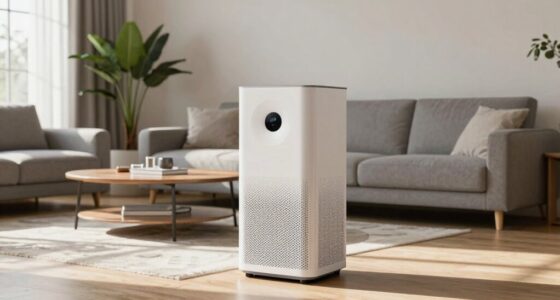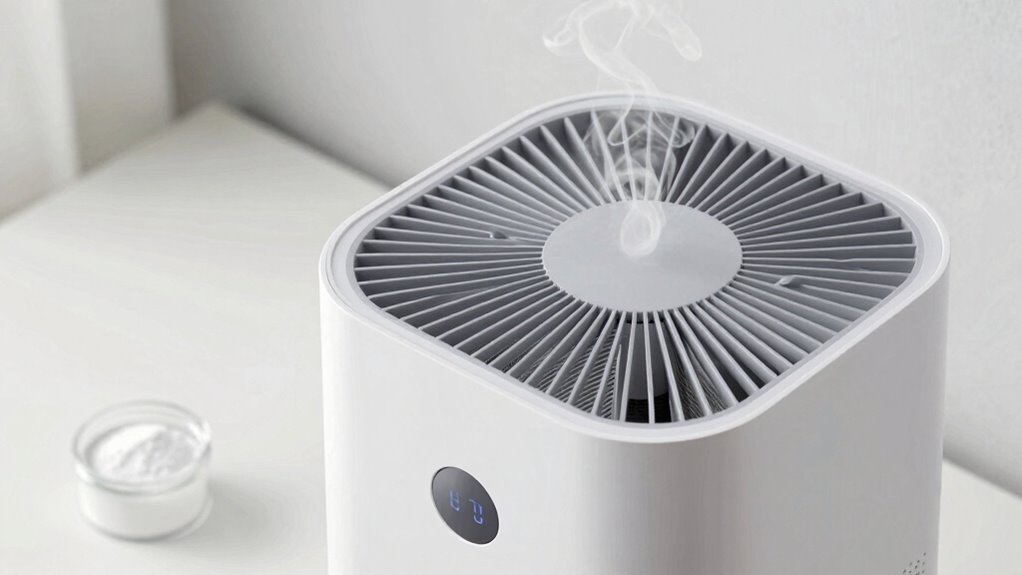
If your air purifier smells weird, start by inspecting and replacing the filters, as dirty or clogged filters often cause odors. Clean internal components and disinfect mold or bacteria growth with mild solutions. Make sure filters are fully dry before reinstalling. Proper placement and using natural odor absorbers like baking soda or charcoal can also help. If odors persist, further maintenance might be needed—stay tuned to learn more about keeping your purifier fresh.

Get home appliances delivered free with Prime
- Fast, free delivery on millions of items
- Prime Video, Amazon Music and more included
- Member-only deals all year
Key Takeaways
- Turn off and unplug the purifier before inspecting or cleaning internal components.
- Check and replace any dirty or clogged filters to eliminate odor sources.
- Clean internal parts, vents, and filters with mild soap and water, ensuring they are fully dry.
- Inspect for mold or bacteria growth and disinfect affected areas with alcohol-based solutions.
- Ensure proper placement in a well-ventilated area to improve airflow and prevent odor buildup.
Products Worth Considering

Levoit Vital 100S-P Air Purifier

LEVOIT Vital 200S-P Smart Air Purifier for Large Rooms

Blueair Blue Pure 511i Max Smart Air Purifier
As an affiliate, we earn on qualifying purchases.
Why Does My Air Purifier Smell Bad? Common Causes Explained
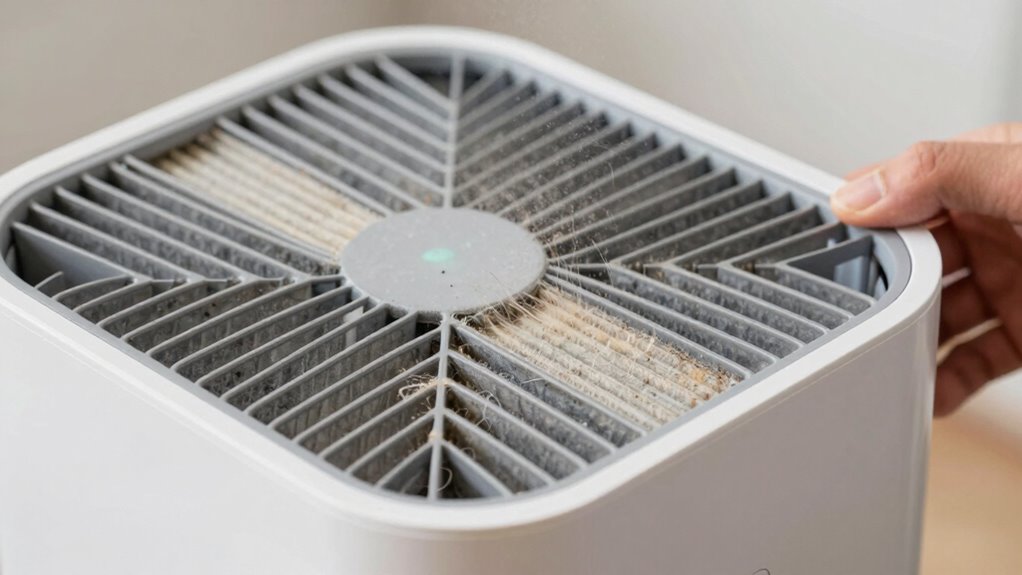
If your air purifier starts to smell bad, it’s often a sign that something inside needs attention. Poor air purifier maintenance can lead to odor buildup, so regular cleaning is essential. Common causes include trapped dust, mold, or bacteria that emit foul smells. Sometimes, residual pet hair or cooking odors settle in the unit, causing unpleasant odors over time. Neglecting odor prevention strategies, like cleaning the filters and interior components, worsens the smell. Additionally, accumulated debris or stagnant water in humidifiers can produce sour or musty odors. Addressing these issues promptly helps keep your air purifier smelling fresh and functioning efficiently. Regularly replacing filters with high-quality replacements can also prevent odor issues and improve air purification. Ensuring proper airflow around the unit enhances its ability to clear out odors and contaminants. Proper cleaning techniques for internal components are crucial to prevent odor buildup, especially in units with humidifiers or water trays. Remember, regular maintenance not only prevents bad smells but also improves your device’s overall air purification performance.
How to Check and Replace Your Filters Quickly

Start by locating your filter compartments so you can access the filters easily. Remove the filters and check if they’re dirty or clogged; if they are, it’s time to replace them. Replacing filters promptly keeps your air purifier working efficiently and helps eliminate weird smells. Additionally, filter maintenance can help extend the lifespan of your device and improve overall air quality. Regularly inspecting and confirming the integrity of storage and backup solutions ensures your data remains safe and protected. Monitoring measurement accuracy can also help identify issues with your appliance’s sensors that may contribute to unusual odors. Ensuring proper airflow management within the device can prevent buildup of contaminants that cause odors.
Locate Filter Compartments
Locating the filter compartments in your air purifier is usually straightforward. Most models have a clearly marked panel or access door, often on the back or bottom. To find it, check your user manual if you’re unsure. Once you open the compartment, you can easily see the filters inside. Performing a filter inspection is simple once you’ve located the compartments—look for dirt buildup, discoloration, or damage. If the filters are dusty or clogged, it’s time to replace them. Be gentle when opening the compartments to avoid damaging any parts. Knowing exactly where the filter compartments are makes the process quick and stress-free, ensuring your air purifier stays effective and smells fresh. Properly locating these compartments is the first step to maintaining clean, healthy air. Additionally, understanding air purifier safety tips can help prevent accidents during maintenance and ensure your device functions properly. Being familiar with filter types can also help you choose the most suitable replacements for your specific model. Recognizing proper maintenance procedures is essential for prolonging your air purifier’s lifespan and maintaining optimal performance. Being aware of filter replacement frequency can also help you stay on top of routine upkeep. Regularly inspecting and replacing filters based on usage conditions can further enhance your device’s efficiency and longevity.
Remove and Inspect Filters
Once you’ve found the filter compartment, it’s time to remove and inspect the filters. Carefully take out the filter material, looking for dust, debris, or mold that could be odor sources. Check for any discoloration or buildup that might be causing the weird smell. As you examine the filter, note if it’s visibly dirty or clogged, which can reduce airflow and trap odor-causing particles. If the filter appears dirty or clogged, it’s a good sign you need to clean or replace it. Regular inspection helps you catch issues early, ensuring your air purifier operates efficiently and keeps your indoor air fresh. Additionally, understanding the types of filters used can help you determine whether cleaning or replacing is necessary. Being familiar with filter lifespan and maintenance can also extend the effectiveness of your device and improve air quality. Regularly checking your filters and understanding their properties can prevent odor buildup and maintain a healthier indoor environment. Moreover, staying aware of filter replacement schedules ensures optimal performance and air purity.
Replace When Necessary
To determine if your filters need replacing, check for visible dirt, discoloration, or a persistent odor despite cleaning. If these signs are present, it’s time for filter maintenance and replacing the filters to improve your air quality. Don’t wait until your air purifier stops working or the smell worsens—delaying replacement can reduce its effectiveness. Regularly inspecting your filters helps guarantee optimal performance and keeps indoor air fresh. Ensuring proper filtration is essential for removing pollutants and allergens from your environment. When replacing, follow the manufacturer’s instructions for your specific model. Remember, filters lose their ability to trap pollutants over time, so timely replacement is essential. Keep an eye on filter condition, especially if your air smells weird or your purifier isn’t performing as well. Proper filter maintenance guarantees cleaner air and a healthier living environment. Additionally, understanding the filter lifespan for your model can help you plan replacements proactively. Monitoring filter efficiency can also help you identify when a replacement is truly needed.
Cleaning Your Air Purifier: Step-by-Step Guide
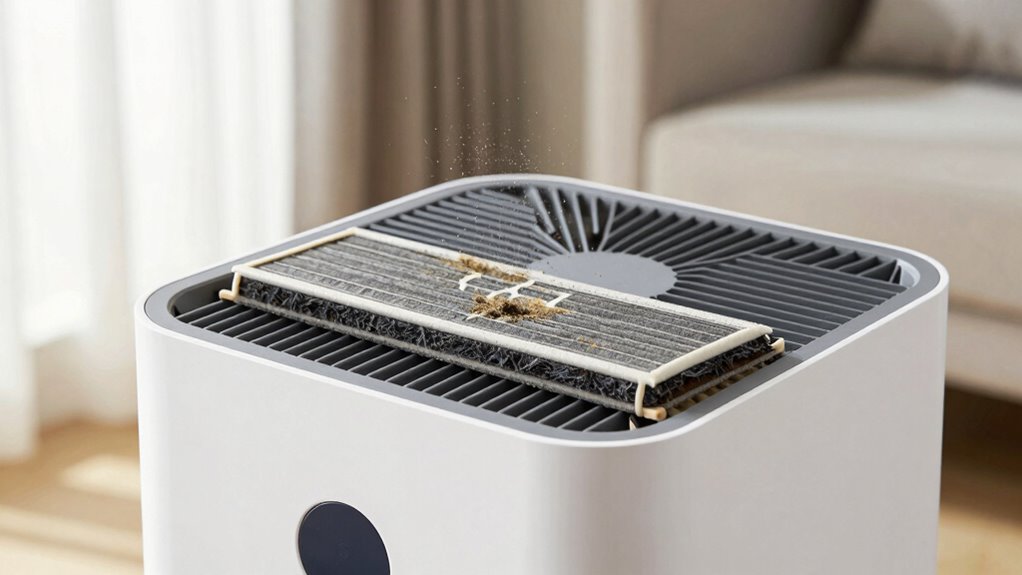
Regularly cleaning your air purifier is essential to keep it functioning efficiently and prevent weird odors. Proper air purifier maintenance not only improves air quality but also extends filter longevity. Start by unplugging the unit and removing the filters. Gently vacuum the exterior and vents to remove dust buildup. Wash washable filters with water and mild soap if applicable, then let them dry completely before reinstalling. For non-washable filters, replace them as recommended. Use a clean, damp cloth to wipe down internal components, avoiding harsh chemicals. To deepen your understanding, consider these tips:
- Check manufacturer instructions for specific cleaning procedures
- Avoid excessive moisture to prevent damage
- Regularly inspect filters for signs of wear or dirt buildup
- Pay attention to indoor air quality and humidity levels to maintain a healthy environment
Look for Mold or Bacteria Inside Your Device

Mold and bacteria can develop inside your air purifier, especially if it hasn’t been cleaned thoroughly or if moisture accumulates. Look closely for signs of mold growth on filters, vents, or internal components. You might notice fuzzy patches, discoloration, or a musty smell that indicates mold. Bacteria buildup can also cause unpleasant odors and may appear as slimy or dark spots inside the device. Use a flashlight to inspect hidden areas, and if you see any mold or bacteria, avoid using the purifier until it’s cleaned properly. Removing and disinfecting the affected parts with a mixture of water and mild detergent, or an alcohol-based solution, can help eliminate the growth. Addressing mold and bacteria promptly keeps your air purifier safe and odor-free.
How to Refresh or Replace Activated Carbon Filters

Start by inspecting your activated carbon filter to see if it’s saturated or damaged. If it looks clean, you might be able to refresh it by gently cleaning or shaking off dust; otherwise, replacing it is the best option. Regularly checking and maintaining your filter guarantees your air stays fresh and odor-free.
Inspect Filter Condition
To determine if your activated carbon filter needs revitalizing or replacing, you should inspect it for signs of saturation or damage. Over time, the filter’s lifespan diminishes as it absorbs odors from various sources. A saturated filter may no longer effectively trap smells, leading to a persistent weird smell. Check for physical signs like discoloration, clogging, or a buildup of debris. Also, listen for reduced airflow, which indicates the filter’s efficiency is compromised. Keep in mind that even if the filter looks fine, odors can still seep through once it’s saturated. Regular inspection helps you decide whether to refresh or replace the filter before it stops working. This simple step ensures your air purifier continues to combat odor sources effectively.
Clean or Refresh Filter
If your air purifier’s filter smells weird despite inspecting it, cleaning or revitalizing the activated carbon filter can often improve its performance. Over time, the filter’s lifespan diminishes as it absorbs odor sources, making odors more noticeable. Rejuvenating the filter by gently vacuuming or rinsing (if recommended) helps remove accumulated particles and restore effectiveness. Keep in mind, activated carbon filters have a limited lifespan and may need replacement if odors persist. Regular maintenance ensures your purifier continues to work efficiently and keeps your air fresh. Here’s a quick guide:
| Step | Action | Notes |
|---|---|---|
| 1 | Vacuum filter surface | Remove surface dust & particles |
| 2 | Rinse with water | Only if specified by manufacturer |
| 3 | Air dry completely | Prevent mold growth |
| 4 | Reinstall | Ensure proper fit |
This process can extend filter life and reduce lingering odors.
Replace if Necessary
When odors persist despite cleaning your filter, it’s a clear sign that the activated carbon filter needs replacing. Over time, the filter becomes saturated and can no longer effectively trap odor molecules, hampering your air purifier maintenance and odor elimination efforts. Replacing the filter guarantees your device continues to work efficiently and keeps your air fresh. Before replacing, check the manufacturer’s recommended lifespan for the filter. Also, consider the severity of odors—strong or persistent smells often indicate the need for a new filter. Properly disposing of used filters prevents odor transfer and contamination. Regularly replacing filters not only enhances air quality but also prolongs your air purifier’s lifespan and maintains optimal performance.
- Ensure you follow the manufacturer’s replacement instructions carefully.
- Choose genuine replacement filters for reliable odor elimination.
- Keep a spare filter on hand to maintain continuous air purifier operation.
Where to Place Your Air Purifier for Better Air Quality
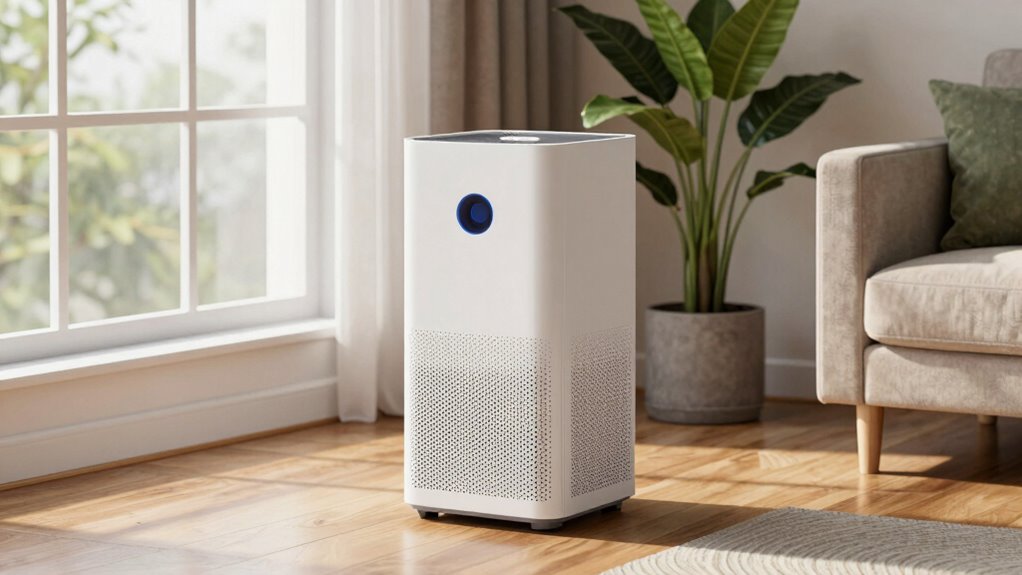
Placing your air purifier in the right spot can considerably improve the air quality in your space. For best results, position it where air circulation is greatest, avoiding corners or cramped areas. Keep it at least a few feet away from walls or furniture to allow free airflow. Place it in central locations, like living rooms or open areas, to maximize coverage. Avoid placing it near sources of odors or dust, which can overwhelm the device. Proper device placement ensures efficient filtration and reduces the chance of weird smells. Remember, strategic positioning enhances performance and air quality.
| Ideal Placement | Avoid Placement |
|---|---|
| Central, open spaces | Corners or tight spots |
| Elevated surfaces | Near odorous sources |
| Away from walls | Behind furniture |
Use Natural Odor Absorbers Like Baking Soda or Charcoal
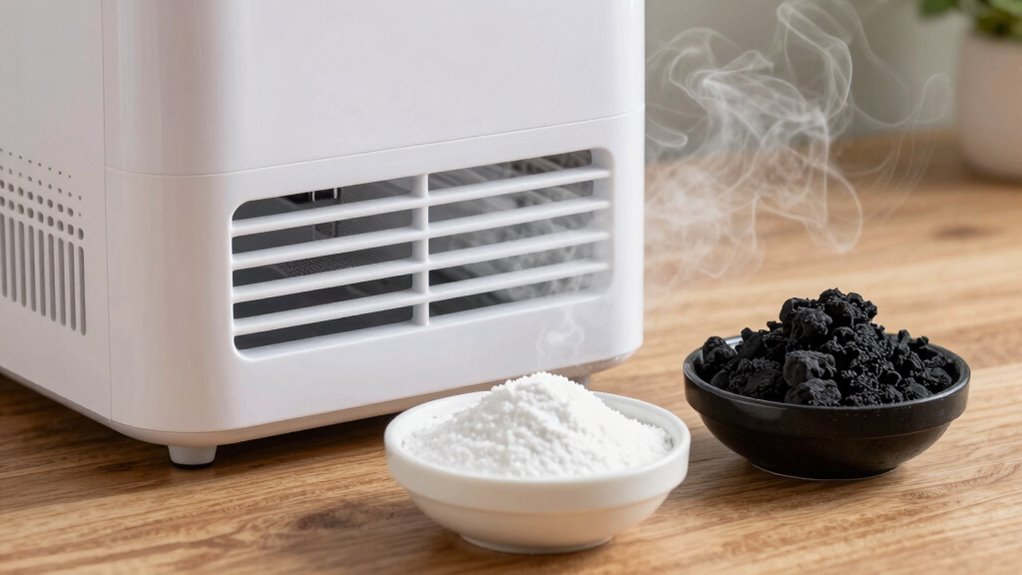
To further combat weird smells from your air purifier, natural odor absorbers like baking soda and charcoal can be highly effective. These natural odor absorbers work by trapping odors rather than masking them, making them a great addition to your air freshening techniques. Simply place a small dish of baking soda or activated charcoal near or inside the air purifier to absorb lingering smells. Remember to replace or refresh these absorbers regularly to maintain their effectiveness. Using natural odor absorbers is a simple, cost-effective way to improve air quality without harsh chemicals. They can also help eliminate pet odors, cooking smells, and mustiness, leaving your space smelling fresher. Incorporate these easy air freshening techniques into your routine for a noticeable difference.
When to Replace Your Air Purifier or Its Filters
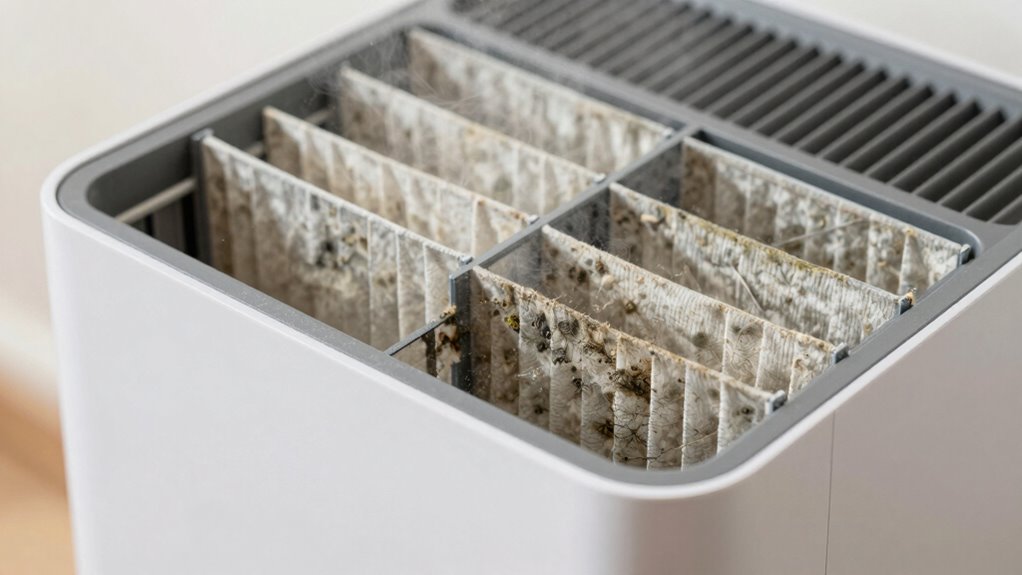
Knowing the right time to replace your air purifier or its filters guarantees ideal performance and clean air. Regular air purifier maintenance helps you identify when filters are reaching the end of their filter lifespan. Typically, filters should be replaced every 3 to 6 months, but this varies based on usage and air quality. Check the manufacturer’s guidelines and look for signs like reduced airflow or persistent odors. If your purifier isn’t working efficiently despite cleaning, it’s a sign the filters are clogged or worn out. Don’t wait until the device smells bad or stops working; replacing filters on schedule ensures maximum air cleaning. Staying on top of filter lifespan and maintenance keeps your air purifier functioning effectively and maintains a healthier indoor environment.
Frequently Asked Questions
Can a Dirty Fan Cause Strange Odors in My Air Purifier?
Yes, a dirty fan can cause strange odors in your air purifier. When you neglect fan maintenance, dust and debris build up, leading to unpleasant smells. These odor causes typically stem from accumulated grime on the fan blades or motor. To fix this, clean the fan regularly and check for dust buildup. Proper maintenance helps eliminate odors and keeps your purifier running efficiently without needing replacement.
Are There Specific Scents That Indicate My Filter Needs Replacing?
Yes, certain scents and filter discoloration can signal you need a replacement. If you detect an unusual scent, like mustiness or chemical odors, it often means your filter is clogged or dirty. Likewise, if the filter shows discoloration—turning yellow, brown, or gray—it’s time for a new one. Regularly checking for these signs helps maintain air quality and keeps your purifier running effectively.
How Often Should I Clean the Internal Components of My Purifier?
Ever wonder how often you should clean your air purifier’s internal components? You should do it every 3 to 6 months, depending on usage and air quality. Regular filter maintenance and a consistent cleaning schedule keep your device running efficiently. Remove and gently wipe internal parts with a damp cloth, avoiding harsh chemicals. Staying on top of this prevents odors and guarantees your purifier works at its best longer.
Can External Environmental Factors Influence Air Purifier Odors?
Yes, outdoor pollution and household chemicals can influence your air purifier’s odors. When outdoor pollution levels rise, pollutants can enter your home and cause smells. Similarly, household chemicals from cleaning products or air fresheners can linger and create odors that your purifier picks up. To minimize this, keep windows closed during high pollution days and use natural or less fragrant cleaning supplies. Proper maintenance helps reduce unpleasant odors caused by external factors.
Is It Safe to Use Essential Oils With My Air Purifier?
Did you know that improper use of essential oils can damage your air purifier? It’s not recommended to add essential oils directly to the device, as most aren’t compatible. Always check essential oil compatibility and follow safety precautions, like diluting oils and using a diffuser instead. This helps prevent clogs or damage, ensuring safe operation and prolonging your purifier’s life.
Conclusion
When your air purifier starts to smell off, think of it as a garden in need of tending. With a quick check, a gentle clean, and fresh filters, you’re clearing away the fog and inviting in a gust of fresh air. Like pruning away dead branches, your efforts rejuvenate your device, turning it from a smelly obstacle into a crisp, clean breeze. Keep up these simple steps, and your air will always be a breath of spring.