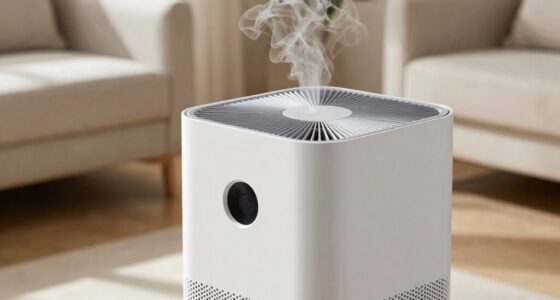
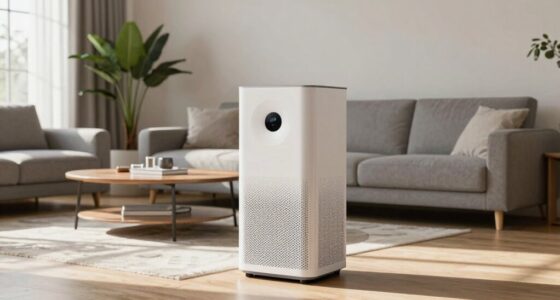
Even with great airflow, your home can still trap airborne pollutants in carpets, furniture, and corners. Stagnant spots may harbor harmful particles, and airflow alone isn’t enough to remove toxins or odors completely. You need an all-encompassing approach that includes natural filters like indoor plants, air purifiers with HEPA and carbon filters, and regular cleaning. By combining these strategies, you’ll create a healthier indoor environment. Keep exploring to discover more ways to improve your air quality effectively.
Key Takeaways
- Good airflow circulates air but doesn’t remove airborne pollutants or toxins lingering indoors.
- Natural ventilation may allow outdoor pollutants to enter, requiring additional filtration.
- Airflow alone cannot eliminate pollutants settled in carpets, furniture, or hidden corners.
- Relying solely on airflow overlooks the need for targeted removal of odors and harmful particles.
- Combining airflow with air purifiers and natural filters creates a more comprehensive indoor air quality strategy.
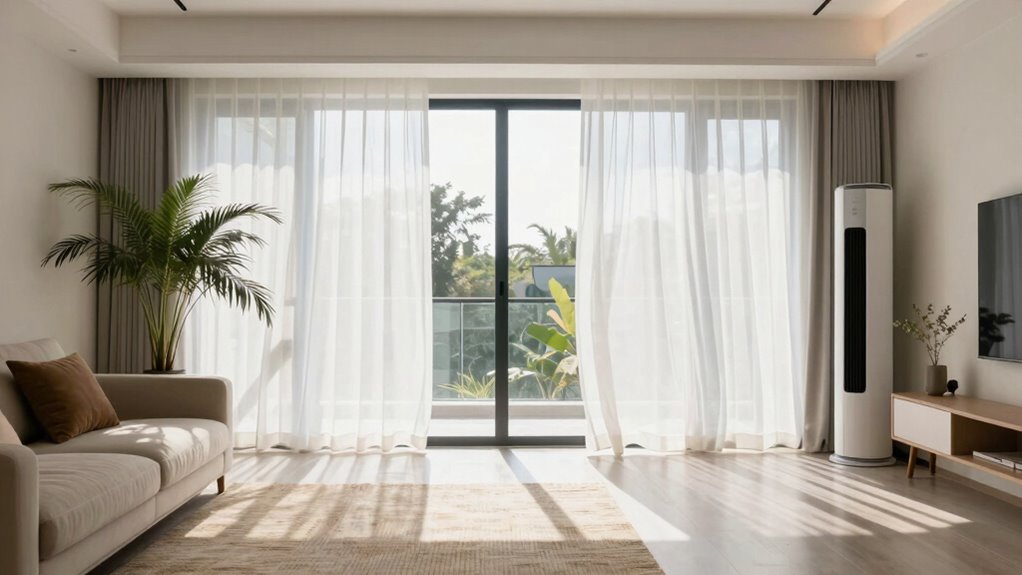
Even if your home has excellent airflow, it doesn’t mean your indoor air quality is fully protected. Good airflow helps circulate fresh air and reduces stagnant spots, but it doesn’t eliminate airborne pollutants or harmful particles that can linger indoors. That’s why implementing a thorough air strategy is essential, even in well-ventilated spaces. One effective way to enhance your indoor air quality is by leveraging indoor plant benefits. Plants naturally filter toxins, absorb carbon dioxide, and release oxygen, creating a healthier environment. They also add a touch of nature, which can boost your mood and reduce stress. However, relying solely on plants isn’t enough, especially when dealing with airborne pollutants from cleaning products, pets, or indoor appliances. This is where air purifier technology steps in as a crucial tool.
Good airflow improves circulation but doesn’t fully eliminate indoor pollutants; combine with plants and air purifiers for healthier air.
Modern air purifiers are designed to target and remove specific contaminants, such as dust, pollen, mold spores, and volatile organic compounds (VOCs). High-efficiency models equipped with HEPA filters can trap particles as small as 0.3 microns, greatly reducing indoor allergens. Some advanced purifiers even include activated carbon filters to adsorb odors and chemicals, making the air cleaner and safer to breathe. Integrating air purifier technology into your home complements natural methods like indoor plant benefits and ensures a more thorough approach to air quality management. Additionally, choosing the right air purifier for your space can optimize performance and ensure you get the most benefit.
Keep in mind, even with great airflow, pollutants can settle into carpets, furniture, and overlooked corners, slowly degrading air quality over time. Regular cleaning, combined with the strategic use of air purifiers, can prevent this buildup. It’s also wise to consider the placement of your air purifiers—position them in rooms where you spend the most time or where pollutants tend to accumulate. Meanwhile, maintaining an ideal level of indoor humidity helps prevent mold growth and dust mites, further improving air quality. Proper air filtration can significantly reduce airborne contaminants and enhance overall health. Incorporating indoor air quality solutions into your home can further improve the environment and provide peace of mind. Using air quality monitors can help you keep track of pollutant levels and adjust your strategies accordingly.
Balancing airflow, natural filtration through plants, and modern air purifier technology creates a thorough indoor air strategy. This approach not only reduces irritants but also ensures that your home remains a healthy, comfortable environment. Even in homes with good airflow, these measures work together to combat unseen pollutants, giving you peace of mind and cleaner air to breathe every day.
HEPA air purifier for home
As an affiliate, we earn on qualifying purchases.
As an affiliate, we earn on qualifying purchases.
Frequently Asked Questions
How Often Should I Replace My HVAC Filters?
You should replace your HVAC filters every 1 to 3 months, depending on the air filter lifespan and your home’s specific needs. Regular ventilation maintenance helps guarantee good air quality, especially in homes with great airflow. If you have pets or allergies, change filters more often. Keeping up with filter replacement improves system efficiency and air quality, preventing dust buildup and maintaining healthy indoor environments.
What Is the Ideal Indoor Humidity Level?
You should aim for an indoor humidity level between 40% and 60%. Maintaining this humidity balance helps prevent mold growth, dust mites, and respiratory issues. Even with good airflow, ventilation efficiency matters, so use dehumidifiers or humidifiers as needed. Regularly monitoring your indoor humidity guarantees a comfortable, healthy environment, reducing the strain on your HVAC system and promoting better air quality throughout your home.
Can Plants Improve Indoor Air Quality Effectively?
Plants can improve indoor air quality through plant purification and natural filtration, but their effects are often limited. While they absorb certain toxins and increase humidity, they can’t replace proper ventilation or air purification systems. To truly enhance your home’s air quality, combine plants with good airflow, regular cleaning, and air filters. Think of plants as a natural supplement rather than a complete solution for cleaner, healthier indoor air.
How Do I Identify Poor Air Quality in My Home?
You can identify poor air quality in your home by monitoring with air quality sensors that detect pollutants, humidity, and VOCs. Pay attention to musty odors, lingering smells, or visible mold, which signal issues. Check your air circulation patterns—if certain areas feel stuffy or stagnant, airflow may be uneven. Improving sensor placement and ensuring consistent ventilation helps you spot and address poor air quality quickly.
Are Air Purifiers Necessary if I Have Good Airflow?
Think of your home’s airflow as a busy highway. Even if traffic moves smoothly, air purifiers act like toll booths that catch pollutants—air purifier effectiveness isn’t just about airflow; it’s about filtration. While good airflow helps circulate air, it doesn’t necessarily remove airborne contaminants. So, yes, adding an air purifier enhances your home’s air quality, tackling pollutants that airflow alone might miss, ensuring cleaner, healthier spaces.
indoor houseplants for air purification
As an affiliate, we earn on qualifying purchases.
As an affiliate, we earn on qualifying purchases.
Conclusion
Even in homes where fresh air seems to flow effortlessly, a thoughtful air strategy can quietly elevate your living experience. It’s like adding a touch of refinement to what already feels comfortable—you might not see the difference at first, but over time, you’ll notice the subtle improvements in air quality and comfort. Embracing a better air strategy isn’t about fixing what’s broken; it’s about gently enhancing your home’s natural harmony and your everyday well-being.
carbon filter air purifier
As an affiliate, we earn on qualifying purchases.
As an affiliate, we earn on qualifying purchases.
air purifier for pet odors
As an affiliate, we earn on qualifying purchases.
As an affiliate, we earn on qualifying purchases.