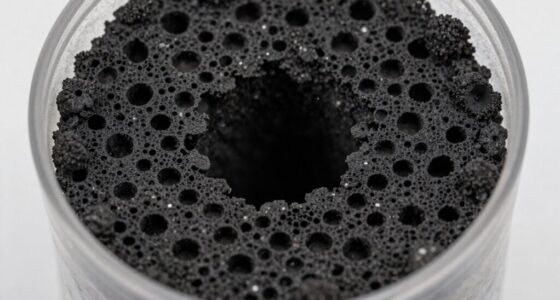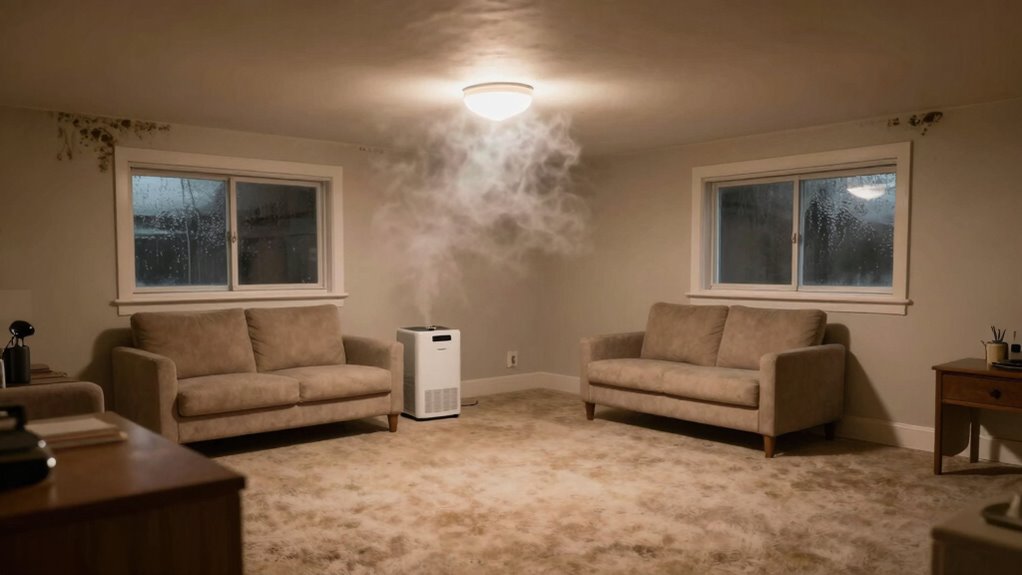

Finished basements can hide serious air quality problems you might not notice. Moisture buildup, poor ventilation, and hidden leaks create mold, musty odors, and airborne pollutants that harm your health. Without proper airflow and moisture control, these issues can worsen over time. Regular ventilation, moisture monitoring, and maintenance are key to keeping your basement safe. Keep going to discover simple strategies that can protect your indoor environment and improve your home’s air quality.
Key Takeaways
- Moisture buildup in finished basements can promote mold growth and airborne pollutants.
- Poor ventilation causes stale air, humidity, and indoor air quality deterioration.
- Hidden leaks and seepage may lead to hidden dampness and mold issues.
- Inadequate moisture control increases allergen and mold spore presence.
- Lack of regular inspection and maintenance allows indoor air problems to persist unnoticed.
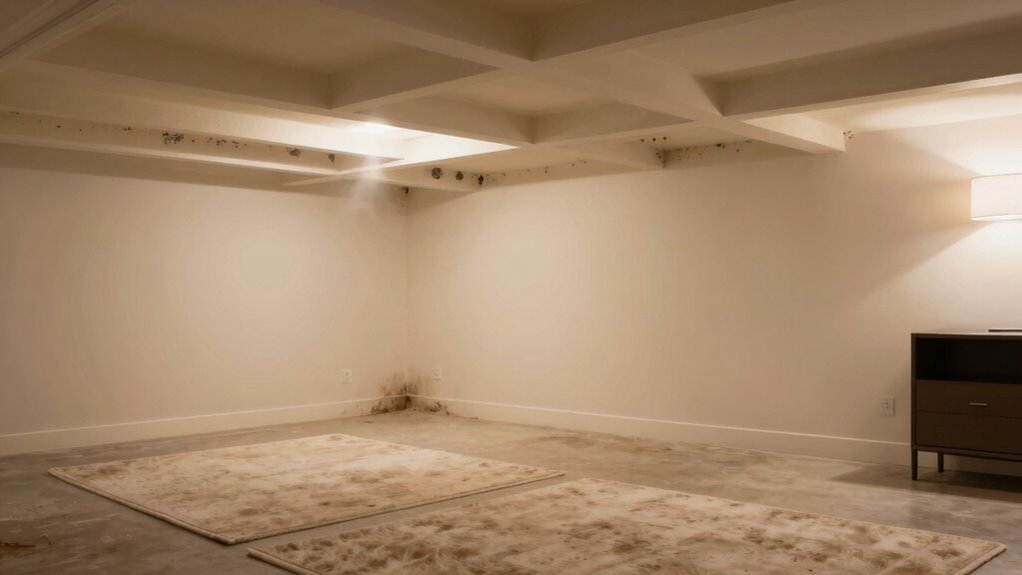
Basements often feel like hidden zones in your home, but they can considerably impact your indoor air quality. Many homeowners overlook this, assuming that finishing a basement means it’s safe and sealed off from air quality issues. However, basements are prone to moisture buildup and poor airflow, which can lead to mold growth, musty odors, and increased airborne pollutants. Recognizing the importance of proper ventilation systems and moisture control is essential to keeping the space healthy and safe.
Basements impact indoor air quality through moisture and poor airflow, risking mold, odors, and pollutants.
A key step in maintaining good air quality is ensuring your basement has adequate ventilation. Without proper airflow, stale air, humidity, and pollutants tend to accumulate, creating an unhealthy environment. Installing a reliable ventilation system helps circulate fresh air and remove indoor contaminants. Options like exhaust fans, air exchangers, or even energy recovery ventilators (ERVs) can notably improve air exchange rates. By actively managing airflow, you prevent the stagnant air that often plagues finished basements and reduces the risk of mold spores and allergens settling in. Incorporating indoor air quality testing can help you identify hidden pollutants and verify the effectiveness of your ventilation efforts.
Moisture control plays an essential role in preventing indoor air problems in your basement. Excess humidity encourages mold growth, which releases spores into the air and worsens allergy symptoms or respiratory issues. You should regularly check for leaks, seepage, or condensation issues and address them promptly. Using dehumidifiers can also help maintain ideal humidity levels—generally between 30% and 50%—to inhibit mold growth and reduce dust mites. Additionally, sealing cracks and waterproofing the foundation prevent water from seeping in, which can elevate moisture levels and compromise indoor air quality over time. Proper moisture management is vital for creating a healthy basement environment. Incorporating moisture sensors can further assist in detecting hidden dampness before it becomes a larger problem.
Beyond installing ventilation systems and moisture control measures, it’s important to keep your basement clean and dry. Regularly inspecting for signs of dampness, such as peeling paint, water stains, or a persistent musty smell, allows you to take swift action. Using exhaust fans during activities that generate moisture, like laundry or cleaning, further minimizes humidity spikes. Ensuring proper drainage around your home’s foundation and maintaining gutters helps prevent water intrusion, which can undermine your efforts at moisture control. Incorporating air quality testing can help you identify hidden pollutants and ensure your strategies are effective. Proper ventilation and moisture management also support the removal of indoor pollutants, further enhancing air quality. This comprehensive approach ensures that your basement remains a safe and healthy environment for everyone.
basement ventilation fan
As an affiliate, we earn on qualifying purchases.
As an affiliate, we earn on qualifying purchases.
Frequently Asked Questions
How Do I Identify Hidden Mold Growth in My Basement?
You can identify hidden mold growth by looking for mold signs like discoloration, musty odors, or water stains on walls, ceilings, and floors. Check for hidden moisture behind drywall, under carpets, or in corners where ventilation is poor. Use a flashlight to spot dark spots or fuzzy patches, and consider a moisture meter to detect hidden dampness. Addressing these mold signs early helps prevent health issues and further damage.
Can Indoor Plants Improve Basement Air Quality?
Imagine lush, vibrant leaves filtering the stale basement air, gently absorbing toxins. Indoor plants like pothos, snake plants, and peace lilies act as natural air filtration systems, improving air quality. These plant varieties release oxygen and absorb airborne pollutants, creating a fresher atmosphere. While they help, don’t rely solely on them—combine with proper ventilation and moisture control for the best results in your basement’s air quality.
Are Air Purifiers Effective in Basement Environments?
Yes, air purifiers can be effective in basement environments when properly maintained. To guarantee peak performance, you need to regularly check air purifier maintenance and replace filters as recommended. Dirty or clogged filters reduce efficiency, so timely filter replacement is essential. By doing this, you improve indoor air quality, reduce allergens, and eliminate odors, making your basement a healthier space. Proper upkeep maximizes the benefits of your air purifier.
How Often Should Basement Air Quality Be Tested?
You should test your basement’s air quality at least every three to six months. Regular testing helps you monitor for pollutants, mold, or excess moisture. Use effective ventilation strategies, like exhaust fans or air exchangers, and focus on moisture control to improve air quality. If you notice musty smells or allergy symptoms, test more frequently to catch issues early and keep your basement safe and healthy.
What Are Common Sources of Basement Indoor Air Pollution?
You should be aware that common sources of basement indoor air pollution include poor ventilation systems and chemical off gassing. Inadequate airflow traps pollutants, while materials like paint, adhesives, and insulation release volatile organic compounds over time. Mold and dust also contribute. To improve air quality, guarantee proper ventilation and choose low-emission products to reduce chemical off gassing, keeping your basement healthier and safer.
dehumidifier for basement
As an affiliate, we earn on qualifying purchases.
As an affiliate, we earn on qualifying purchases.
Conclusion
To keep your basement’s air fresh and healthy, don’t ignore signs of problems like musty odors or dampness. Regular ventilation, moisture control, and air purifiers are your best tools—think of them as your defense team against hidden indoor air dangers. Just like a sturdy shield protects a knight, these steps shield your home and health. By staying vigilant, you turn your basement from a hidden hazard into a safe, breathable space.
moisture sensor for home
As an affiliate, we earn on qualifying purchases.
As an affiliate, we earn on qualifying purchases.
basement waterproofing sealant
As an affiliate, we earn on qualifying purchases.
As an affiliate, we earn on qualifying purchases.