
To improve indoor air quality and reduce VOCs, focus on proper ventilation, like opening windows and using exhaust fans during and after product use. Incorporate low-VOC or natural cleaning products, and consider houseplants such as snake plants or peace lilies, but don’t rely solely on them. Get a quality air purifier with activated carbon filters for better absorption. If VOC levels stay high, seek professional help; you’ll find more effective strategies below.
Key Takeaways
- Prioritize source control by choosing low-VOC products and reducing new furniture or paints.
- Improve ventilation during and after VOC-emitting activities, such as painting or cleaning.
- Use activated carbon air purifiers with reliable sensors, and maintain filters regularly.
- Incorporate indoor plants like snake plants or pothos to absorb airborne VOCs naturally.
- Avoid relying solely on DIY solutions; seek professional testing if odors persist or symptoms worsen.
What Are VOCs, Why Do They Matter, and How Do They Affect Your Health?
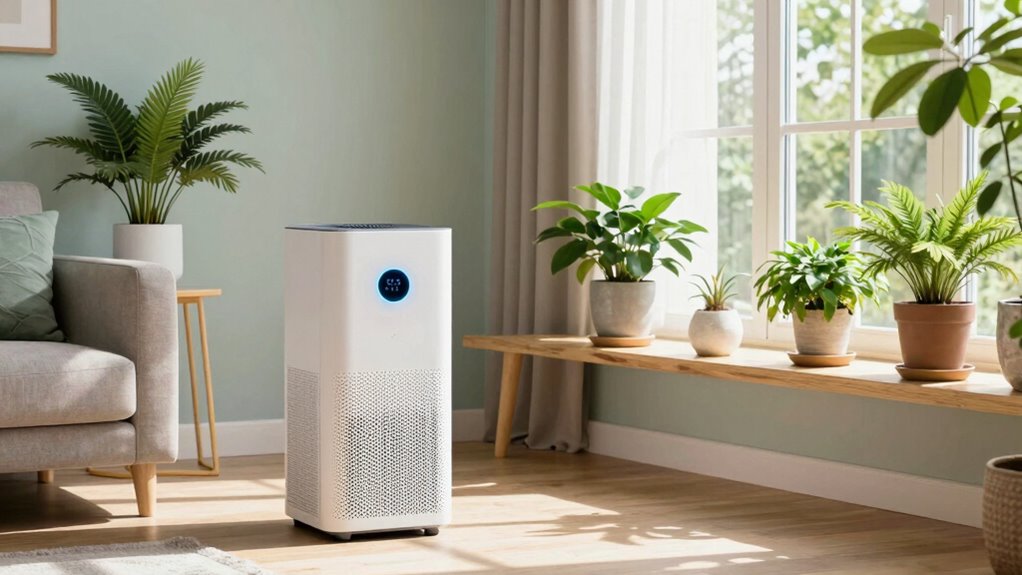
Have you ever wondered what those strange chemical smells in your home are? Those odors are often caused by volatile organic compounds, or VOCs. VOCs are indoor toxins released from products like paints, cleaning supplies, and furniture. They can linger in the air and affect your overall VOC health, especially with prolonged exposure. Breathing in these chemicals may lead to headaches, dizziness, or respiratory issues. Some VOCs are even linked to more serious health problems over time. Understanding what VOCs are helps you recognize the importance of improving indoor air quality. Reducing VOC levels can protect you and your family from unnecessary health risks. Being mindful of air purifier maintenance and other measures can help support better air quality and overall health at home. Regularly ventilating your space is also crucial in dispersing VOCs and maintaining a healthier environment. Additionally, using proper ventilation techniques can significantly reduce the concentration of VOCs indoors. Awareness is the first step toward creating a healthier, toxin-free environment at home.
Common Myths About VOC Removal Products and Techniques
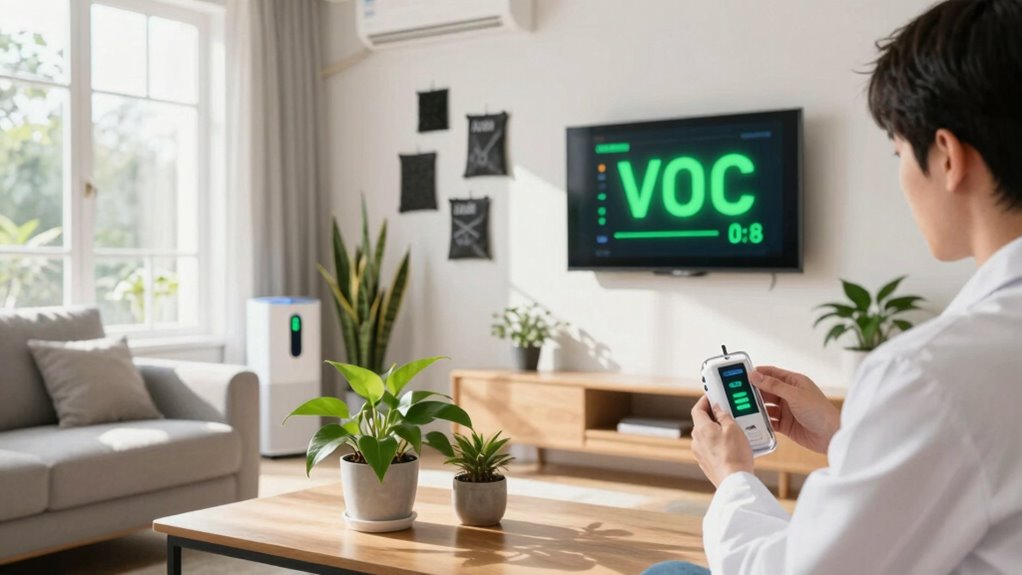
Many people believe that buying specific VOC removal products or using certain techniques can instantly eliminate indoor air toxins, but this isn’t always the case. Not all VOC remediation methods work as advertised, and relying solely on DIY air quality solutions can be misleading. Some common myths include the idea that air purifiers with activated carbon will instantly clear all VOCs, or that houseplants can fully detox indoor air. Others believe that surface cleaning or air fresheners remove VOCs completely, which isn’t true. To improve your understanding, consider these misconceptions:
Many VOC removal methods are ineffective or misleading; no quick fixes for clean indoor air.
- Air purifiers eliminate all indoor VOCs
- Houseplants can replace proper ventilation
- Sealing leaks stops VOC emissions entirely
- DIY air quality fixes are sufficient for all VOC issues
- VOC removal products provide permanent solutions
- Understanding the limitations of various VOC removal techniques is essential for managing indoor air quality effectively. Additionally, effective ventilation strategies are often overlooked but play a crucial role in reducing VOC concentrations over time. Recognizing the limitations of air purifiers and plants helps set realistic expectations for improving indoor air quality. Moreover, being aware of air exchange rates and how they impact indoor pollutant levels is crucial for long-term air quality management. Incorporating proper ventilation practices significantly enhances the effectiveness of other VOC mitigation efforts.
Natural Ways to Reduce VOCs at Home: What Works and What Doesn’t
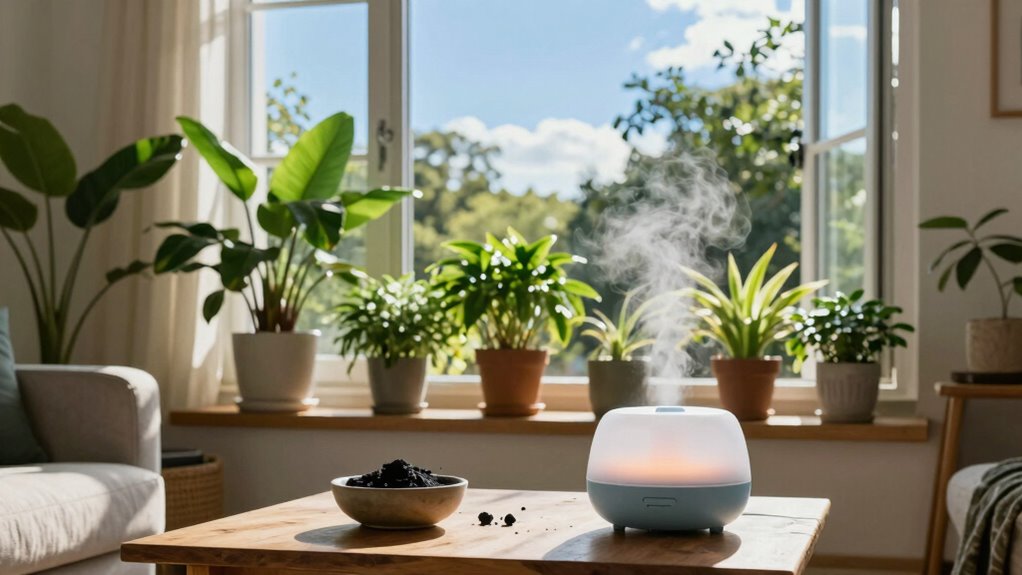
While natural methods can help reduce VOC levels at home, understanding what truly works is essential for effective air quality management. DIY solutions like increasing ventilation and using houseplants can make a difference, but their impact is often limited. Be cautious with chemical cleaners, as they can release VOCs themselves, sometimes worsening indoor air quality. Instead of relying solely on natural remedies, prioritize reducing sources of VOCs, such as avoiding new furniture or paints with high VOC content. Properly ventilate when using any products, and choose low-VOC or VOC-free cleaning options whenever possible. While natural methods are helpful, they shouldn’t replace proven strategies—like removing or sealing VOC sources—for maintaining healthier indoor air. Focus on practical, evidence-based steps to achieve better VOC control at home. Additionally, understanding the types of VOCs present can help tailor more effective mitigation strategies. Incorporating air quality testing can also provide valuable insights into specific VOC levels and sources, enabling more targeted interventions. Recognizing the importance of ventilation strategies is crucial, as proper airflow significantly reduces VOC accumulation indoors. Implementing air exchange techniques can further enhance indoor air quality by continuously removing stale air and introducing fresh outdoor air. Employing air filtration systems with appropriate filters can also significantly decrease indoor VOC concentrations.
How to Choose the Best Air Purifier for VOCs in Your Home
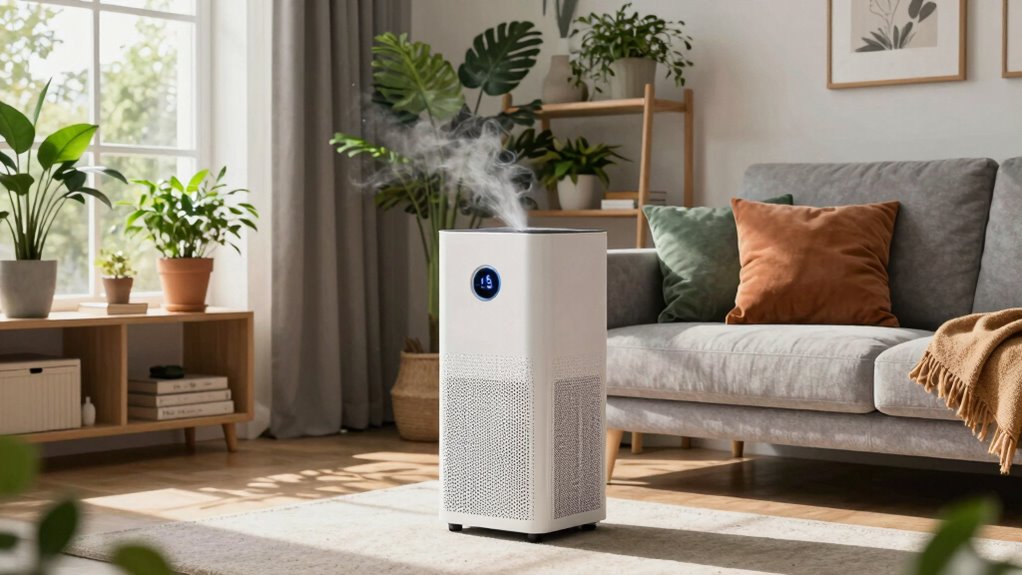
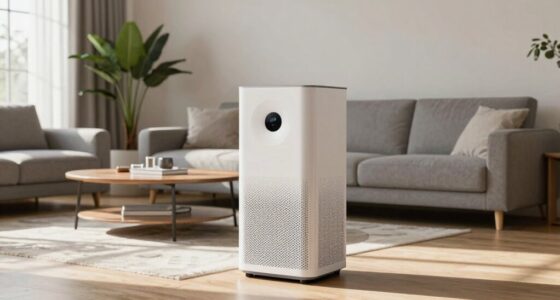
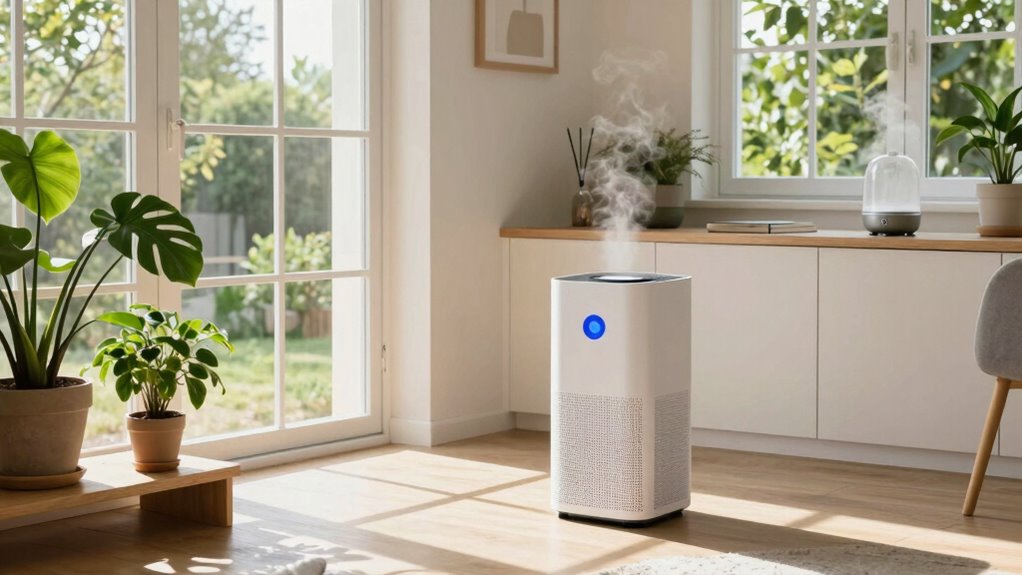
Choosing the right air purifier is a key step in effectively reducing VOCs in your home. Look for models with reliable air quality sensors—these help monitor VOC levels and adjust operation accordingly. Consider purifiers with activated carbon filters, as they excel at absorbing VOCs. Pay attention to filter maintenance; regular replacement guarantees ideal performance and prevents VOCs from recirculating. Check the CADR (Clean Air Delivery Rate) to match the purifier’s capacity to your room size. Noise levels and energy efficiency also matter for ongoing use. Finally, verify that the device is designed specifically for VOC removal, not just general air purification. Incorporating air quality sensors can provide real-time data to optimize filtration. Additionally, selecting a purifier with advanced filtration technologies ensures more effective VOC removal compared to basic models. A well-designed unit will also feature effective filtration stages that target various airborne pollutants for comprehensive air cleaning. Understanding the importance of proper maintenance routines can further enhance the purifier’s performance and longevity. Moreover, choosing units with certifications and testing standards can give you added confidence in their effectiveness against VOCs.
Easy Habits to Keep VOC Levels Low Every Day

You can keep VOC levels low every day by increasing ventilation whenever possible, such as opening windows or using exhaust fans. Incorporating air-purifying plants into your space also helps absorb harmful chemicals naturally. These simple habits make a noticeable difference in maintaining healthier indoor air. Additionally, choosing halal-certified cleaning products and materials can reduce the emission of VOCs from household items. Regularly cleaning and dusting your home can also help reduce the accumulation of indoor pollutants, further supporting better air quality. Engaging with inclusive casting and diverse product options in your household choices can contribute to a more sustainable and healthier environment. Remember to use DIY tools safely to avoid any accidents that could release additional chemicals or dust into your environment.
Increase Ventilation Regularly
Increasing ventilation regularly is one of the simplest and most effective ways to keep VOC levels low in your home. Good ventilation provides ventilation benefits by removing indoor pollutants and improving indoor air quality. It helps dilute VOC concentrations, reducing health risks. To maximize these benefits, open windows and doors daily, especially after cooking or using household products. Use exhaust fans in the kitchen and bathroom to expel contaminated air. Consider cross-ventilation by creating airflow between rooms. Keep vents clean and unobstructed to ensure airflow stays consistent. Regularly ventilating your home is a straightforward habit that makes a noticeable difference in maintaining a healthier environment and lowering VOC exposure.
- Open windows and doors daily
- Use exhaust fans during and after activities
- Create cross-ventilation for better airflow
- Keep vents clean and unobstructed
- Ventilate especially after using household products
Use Air Purifying Plants
Using air-purifying plants is a simple and natural way to reduce VOC levels in your home every day. Incorporate indoor greenery like snake plants, pothos, or peace lilies to help absorb airborne toxins. These plants not only improve air quality but also add a calming touch to your space. To keep them effective, focus on plant maintenance—regular watering, proper lighting, and occasional pruning. Avoid overwatering, which can lead to mold or root rot, negating their benefits. Keep the leaves clean to maximize their pollutant absorption. While air-purifying plants are beneficial, don’t rely solely on them; combine with good ventilation and other VOC reduction strategies for the best results. Proper plant care ensures your indoor greenery remains healthy and effective at filtering VOCs.
When to Call in Experts for Persistent VOC Problems
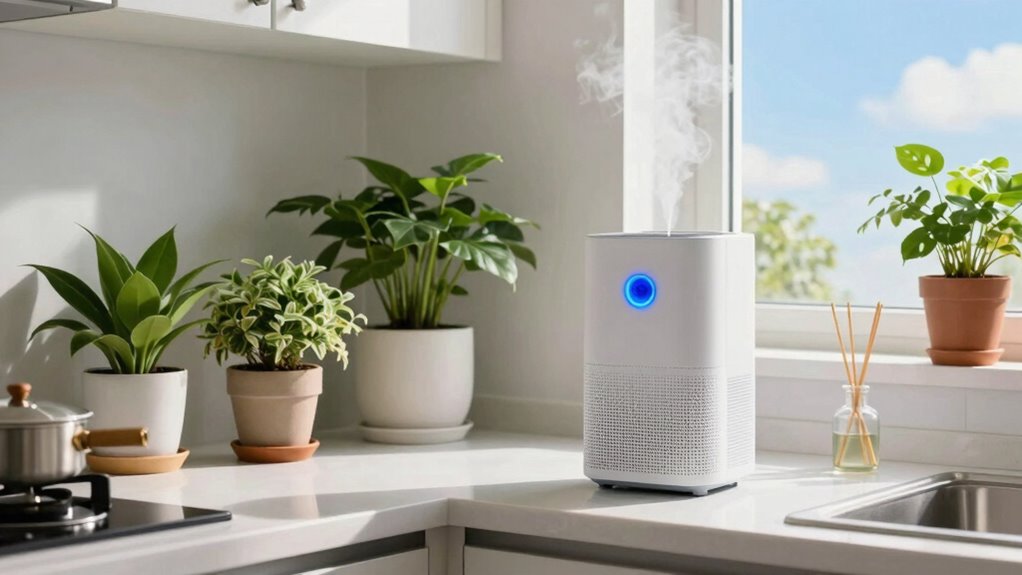
Persistent VOC problems can pose serious health risks, especially when DIY methods no longer reduce odors or symptoms. If you’ve tried air purifiers, ventilation, and natural remedies without success, it’s time to call in experts. A professional assessment can identify hidden sources and evaluate the severity of VOC contamination. Chemical testing provides precise data on VOC levels, helping determine if professional remediation is necessary. You should consider expert help if:
- Odors persist despite cleaning efforts
- Symptoms worsen or linger
- You notice new or unusual chemical smells
- Air quality tests show high VOC levels
- You suspect hidden sources like building materials or appliances
Engaging professionals ensures proper identification and effective removal, protecting your health and home environment.
Frequently Asked Questions
Can Plants Effectively Remove VOCS From Indoor Air?
Plants can help remove VOCs through plant phytoremediation, where they absorb pollutants from the air and soil. You’ll notice that certain houseplants, like snake plants and pothos, excel at soil absorption and VOC reduction. While they won’t eliminate all VOCs instantly, they do contribute to cleaner indoor air over time. Keep in mind, combining plants with proper ventilation maximizes VOC removal for a healthier environment.
Do Air Purifiers With HEPA Filters Eliminate VOCS?
Air purifiers with HEPA filters don’t effectively remove VOCs, since HEPA filters are designed to trap particles, not gases. For VOC reduction, look for purifiers with activated carbon filters, which absorb chemical vapors. You can combine a HEPA filter for dust and allergens with an activated carbon filter for VOCs, providing a more all-encompassing approach to improving your indoor air quality.
Are There Safe DIY Methods to Test VOC Levels at Home?
Yes, you can do DIY testing for VOC levels at home using affordable home sensors designed for indoor air quality. These sensors monitor VOC concentrations and give you real-time data, helping you identify potential issues. While they don’t replace professional testing, they’re useful for regular monitoring. Just make certain you choose reliable, rated devices and follow the manufacturer’s instructions for accurate results.
How Long Does It Take for VOC Levels to Decrease After Mitigation?
It typically takes days to weeks for VOC levels to diminish after mitigation, depending on ventilation effectiveness and chemical absorption. Improving airflow helps clear out VOCs faster, so open windows and use fans. Chemical absorption methods, like activated carbon filters, also speed up removal. Consistent ventilation over time ensures VOCs disperse more quickly, so stay patient and keep airflow steady for the best results.
Do Essential Oils Help or Worsen VOC Contamination Indoors?
Think of essential oils as a double-edged sword in your air quality battle. While they can mask unpleasant odors, they don’t remove VOCs and might even worsen indoor air quality by adding volatile compounds. Using essential oils without proper ventilation could trap VOCs, making your environment less safe. Instead, focus on increasing ventilation and using air purifiers to truly improve air quality and reduce harmful VOC levels.
Conclusion
To reduce VOCs effectively, prioritize proper ventilation, embrace natural cleaning methods, and choose quality air purifiers. Avoid falling for false claims, and stay vigilant about daily habits that lower VOC levels. Keep your environment safe, your air fresh, and your health protected. Stay informed, stay proactive, and remember—small consistent actions make a big difference in creating a healthier home. Your effort today guarantees a safer, cleaner tomorrow.