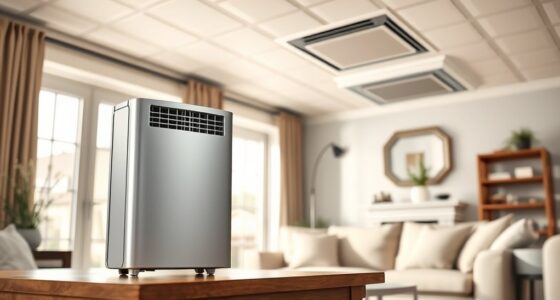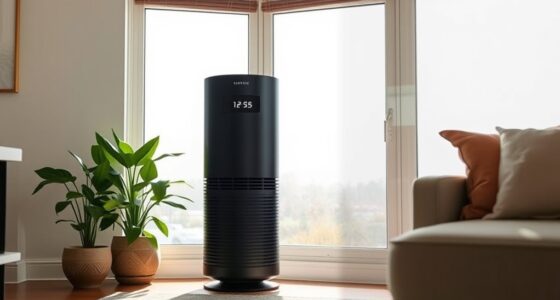
Advancements in HEPA 14 and medical-grade filters now let you trap smaller particles, even those as tiny as 0.1 microns, including viruses and bacteria. New designs use finer fibers and optimized structures to boost filtration efficiency and airflow, while lasting longer and resisting environmental factors. These innovations mean cleaner, healthier indoor spaces with consistent performance over time. If you want to discover how these improvements could benefit you, there’s much more to uncover ahead.
Key Takeaways
- Modern HEPA 14 and medical-grade filters now trap particles as small as 0.1 microns, including viruses and bacteria.
- Design innovations, such as finer fibers and optimized pleating, enhance filtration efficiency and surface area.
- Longer-lasting filters maintain high performance over time, resisting clogging and environmental degradation.
- Enhanced sealing and durability features ensure consistent operation and reduce replacement frequency.
- Ongoing material advancements improve resistance to environmental factors, airflow tolerance, and overall filtration capabilities.
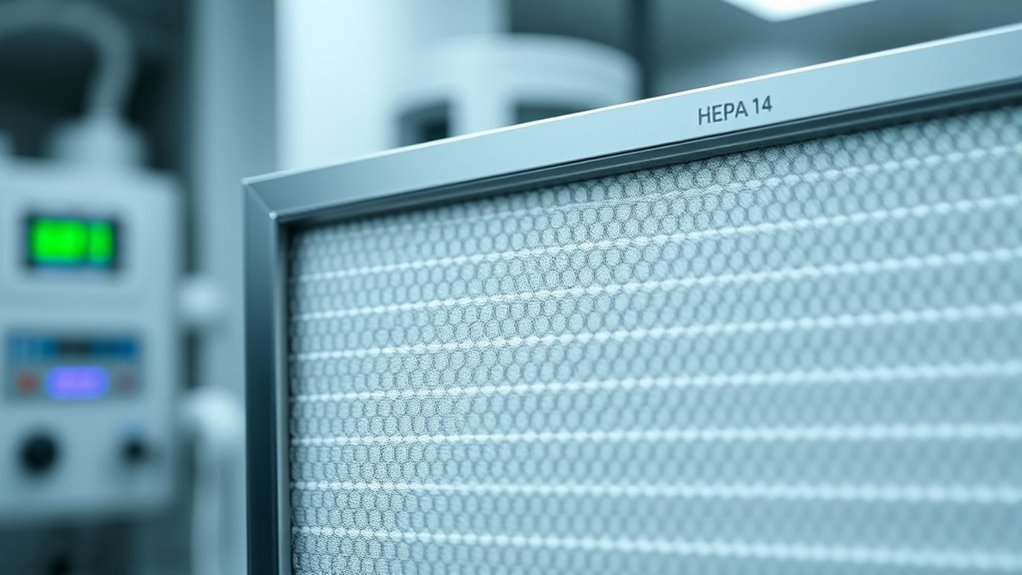
Recent advancements in HEPA 14 filters have considerably enhanced air purification efficiency, making them more effective at capturing tiny airborne particles. These improvements mean you can now enjoy cleaner, healthier indoor environments with greater confidence. HEPA 14 filters are designed to trap particles as small as 0.1 microns, including viruses, bacteria, pollen, and dust mites. This level of filtration is crucial for people with allergies, asthma, or compromised immune systems. As the technology evolves, these filters become even more capable of removing microscopic pollutants, ensuring you breathe in fresher, safer air.
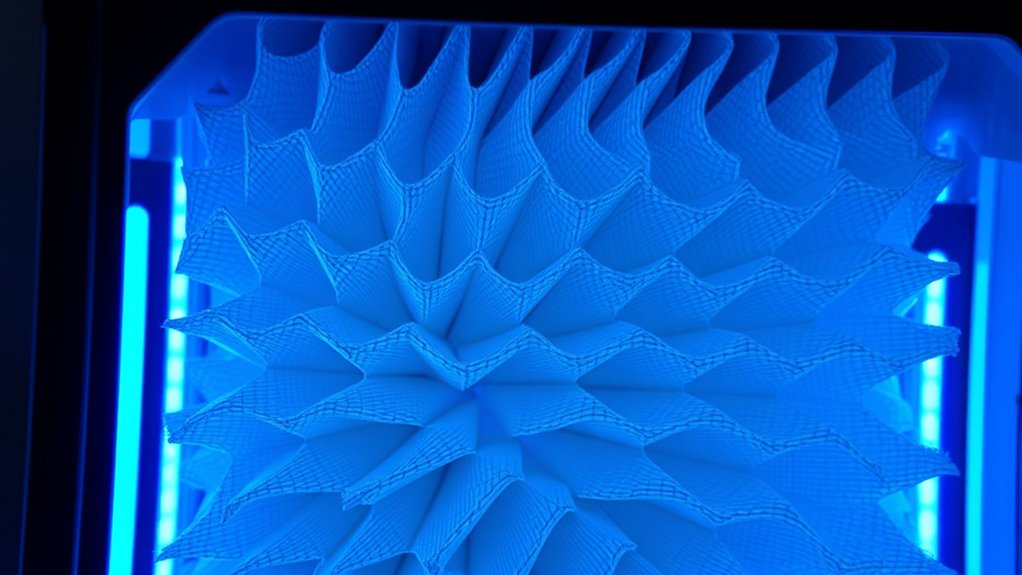
A key factor in maximizing the benefits of HEPA 14 filters is understanding how advancements influence air purification. Modern filters incorporate finer fibers, optimized pleating, and improved sealing techniques, which collectively increase the surface area for trapping contaminants. This means that, despite their compact size, they can hold more particles before becoming clogged. Consequently, the air purification process becomes more efficient, reducing the number of airborne pollutants circulating in your space. These technological improvements also allow the filters to maintain their performance over longer periods, providing consistent air quality without frequent replacements.
Furthermore, the enhanced durability of these filters doesn’t compromise their filtration efficiency. The latest HEPA 14 models are engineered to withstand higher airflow rates and resist degradation from dust, humidity, or other environmental factors. This resilience ensures your air purification system continues to operate at peak performance for longer durations. As a result, your indoor air stays consistently clean, and you can trust that your investment in advanced filtration technology will deliver reliable results over time. Additionally, ongoing innovations in filter materials continue to push the boundaries of what these filters can achieve, offering even better protection and longevity.
Frequently Asked Questions
How Do HEPA 14 Filters Compare to Other High-Efficiency Filters?
You’ll find that HEPA 14 filters have superior filtration efficiency compared to other high-efficiency filters, capturing at least 99.995% of airborne particles. They require minimal maintenance but need regular checks to maintain performance. Unlike standard filters, HEPA 14 filters are ideal for environments demanding the highest air purity, such as hospitals or clean rooms. Their advanced design guarantees you receive ideal air quality while keeping maintenance straightforward.
What Are the Cost Implications of Upgrading to HEPA 14?
Upgrading to HEPA 14 is like investing in a high-performance sports car—you’ll pay more upfront but enjoy superior speed and efficiency. The installation costs are higher, and maintenance expenses can add up due to the need for specialized parts and regular filter replacements. However, these investments can lead to better air quality and long-term savings by reducing health risks and improving system longevity.
How Long Do HEPA 14 Filters Typically Last?
You can expect HEPA 14 filters to last about 6 to 12 months with proper maintenance. To guarantee ideal filtration, follow a regular maintenance schedule and monitor filter replacement needs. Factors like usage, air quality, and environment influence their lifespan. Regularly inspect the filters and replace them promptly when they become dirty or clogged, helping maintain air purity and system efficiency.
Are HEPA 14 Filters Environmentally Friendly?
HEPA 14 filters aren’t inherently eco-friendly, but you can make them more sustainable. Look for filters made with eco-friendly materials and follow proper recycling practices when replacing them. While they effectively trap pollutants, their environmental impact depends on how responsibly you dispose of or recycle them. Choosing filters designed with sustainability in mind helps reduce waste and supports greener practices, making your air purification efforts more environmentally conscious.
Can HEPA 14 Filters Be Used in Residential Settings?
Sure, you can use HEPA 14 filters in your home—because who wouldn’t want the best indoor air quality? Just imagine the filter installation process as your new DIY adventure. They’re designed to trap tiny particles, making your living space healthier. While they’re often found in hospitals, these powerful filters are perfectly suitable for residential settings, giving you professional-grade air purification right at home.
Conclusion
With these advancements in HEPA 14 and medical-grade filters, you’re holding a fortress of purity in your hands. Imagine each filter as a vigilant sentinel, tirelessly capturing invisible threats and guarding your health like a steadfast guardian. As technology sharpens, your environment becomes a sanctuary, a gust of fresh air amid chaos. Embrace these innovations—they’re your shield against unseen dangers, turning everyday spaces into safe havens where clean air reigns supreme.