
To fix uneven temperatures at home, start by checking and adjusting your vents to make certain they’re open and unobstructed, and use dampers to direct airflow better. Seal duct leaks with proper sealants to prevent air loss, and use fans or smart thermostats to balance airflow across rooms. Also, verify your HVAC system’s size and maintenance needs, and improve insulation where needed. Keep exploring tips that can help you create a more consistent and comfortable environment.
Key Takeaways
- Ensure vents are fully open, unobstructed, and properly directed to promote balanced airflow throughout your home.
- Check and seal duct leaks or disconnected sections to improve airflow efficiency and temperature consistency.
- Use ceiling fans and adjustable vent dampers to optimize airflow and reduce hot or cold spots.
- Improve insulation and seal gaps around windows and doors to prevent drafts and maintain even temperatures.
- Regularly maintain your HVAC system, including filter replacement and professional inspections, for optimal airflow and temperature control.
HVAC vent dampers
As an affiliate, we earn on qualifying purchases.
As an affiliate, we earn on qualifying purchases.
Understand Why Your Home Has Uneven Temperatures

Uneven temperatures in your home often stem from imbalanced airflow, which prevents warm or cool air from reaching all rooms equally. Zoning solutions can help by dividing your home into separate zones, allowing for more precise temperature control and reducing hot or cold spots. Additionally, humidity control plays a key role, as excess humidity can make a room feel warmer or cooler than it actually is, affecting comfort levels. Poor insulation or blocked vents can also disrupt airflow, compounding temperature inconsistencies. Understanding these factors helps you identify why some areas feel different from others. Proper airflow management is essential for achieving consistent temperatures throughout your home. Implementing zoning solutions and managing humidity effectively can markedly improve overall comfort, ensuring that each room maintains a consistent, pleasant temperature throughout your home. For optimal results, regularly inspecting and maintaining your ventilation system can prevent common airflow issues and promote even temperature distribution. Additionally, addressing insulation and vent blockages can significantly enhance airflow efficiency and temperature balance.
duct sealant for leaks
As an affiliate, we earn on qualifying purchases.
As an affiliate, we earn on qualifying purchases.
Check and Adjust Vents for Better Airflow
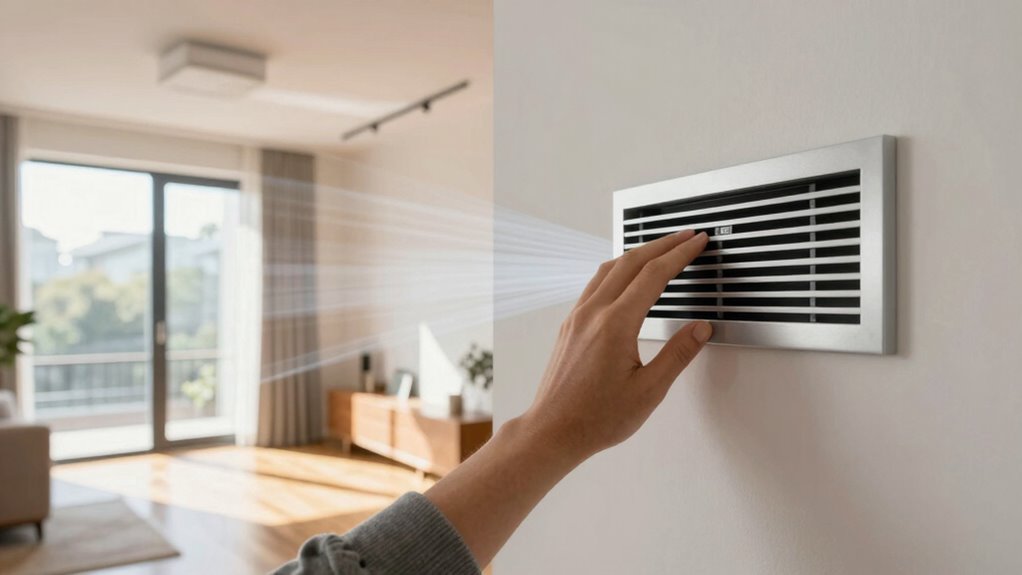
To enhance airflow throughout your home, start by checking each vent to make sure it’s fully open and unobstructed. Proper venting strategies are essential for achieving balanced airflow patterns, so ensure nothing blocks the vents or restricts air movement. Adjust the vent dampers if adjustable, directing more air to rooms that feel stuffy or warmer. For rooms that are cooler or less comfortable, reducing airflow from adjacent vents can help balance temperatures. Keep furniture or curtains away from vents to prevent airflow disruption. Regularly reviewing and fine-tuning your vents is a simple yet effective way to address uneven temperatures and optimize airflow throughout your home. Additionally, understanding airflow patterns can help you identify the most effective adjustments for your space. Recognizing the role of ceiling fans in circulating air can further improve overall comfort and efficiency. Monitoring microplastics in dust and other indoor pollutants can also improve overall air quality as part of your home’s ventilation strategy. Being aware of vent placement can further optimize your home’s airflow and temperature balance, especially when considering air circulation techniques.
smart thermostat for home
As an affiliate, we earn on qualifying purchases.
As an affiliate, we earn on qualifying purchases.
Seal Duct Leaks to Prevent Air Loss

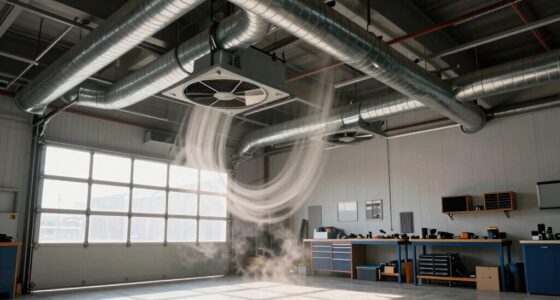
To keep your airflow efficient, you need to inspect your ducts for leaks and seal them properly. Use the right sealants to guarantee a tight fit and prevent air from escaping. Taking these steps helps your system run smoothly and saves energy. Additionally, sealing duct leaks reduces the risk of heat buildup and minimizes the chance of toxic fumes escaping in case of a fire. Ensuring proper air circulation can also improve overall comfort and home safety.
Inspect and Seal Ducts
Inspecting and sealing your ducts is a crucial step in airflow balancing, as leaks can greatly reduce system efficiency. During duct inspection, look for visible gaps, disconnected sections, or damaged areas. Use a flashlight to spot leaks and listen for hissing sounds. Sealant application helps prevent air loss effectively. To organize your approach, consider this table:
| Step | Tools Needed | Key Focus |
|---|---|---|
| Locate leaks | Flashlight, mirror | Identify gaps |
| Clean ducts | Cloth, vacuum | Prepare surface |
| Apply sealant | Duct sealant, caulk | Ensure airtight seal |
| Inspect after sealing | Flashlight | Confirm leak fix |
| Test airflow | Fan, airflow meter | Verify system efficiency |
Proper duct inspection and sealant application ensure your system runs smoothly, saving energy and maintaining consistent temperatures. Additionally, understanding how airflow influences overall system performance can help you identify other areas for improvement. Recognizing the impact of airflow balance on your heating and cooling efficiency can guide you in making more informed adjustments. Ensuring a proper airtight seal not only improves efficiency but also enhances indoor comfort and reduces energy costs. Regularly checking and maintaining duct integrity supports optimal air distribution throughout your home. Being aware of airflow patterns can help you troubleshoot uneven heating or cooling issues more effectively.
Use Appropriate Sealants
Choosing the right sealant is essential for effectively sealing duct leaks and preventing air loss. You want to guarantee you create airtight seals that keep conditioned air flowing efficiently. Use proper caulking designed for ductwork to seal any gaps or cracks thoroughly. Avoid generic or incompatible sealants that might break down over time or fail to adhere properly. Apply the sealant carefully along joints, seams, and connections, making sure there are no gaps left unsealed. Proper caulking not only improves airflow balance but also helps reduce energy waste and enhances comfort. Remember, the goal is to create a durable, airtight seal that lasts, so selecting the appropriate sealant is a critical step in your airflow balancing checklist. Ensuring the use of appropriate sealants contributes to maintaining optimal indoor air quality and HVAC efficiency. Additionally, selecting sealants that are durable and weather-resistant ensures long-term performance and reduces the need for frequent repairs. Using professional-grade materials can further improve the longevity and effectiveness of your sealing efforts.
ceiling fans for airflow circulation
As an affiliate, we earn on qualifying purchases.
As an affiliate, we earn on qualifying purchases.
Use Fans and Thermostats to Balance Airflow
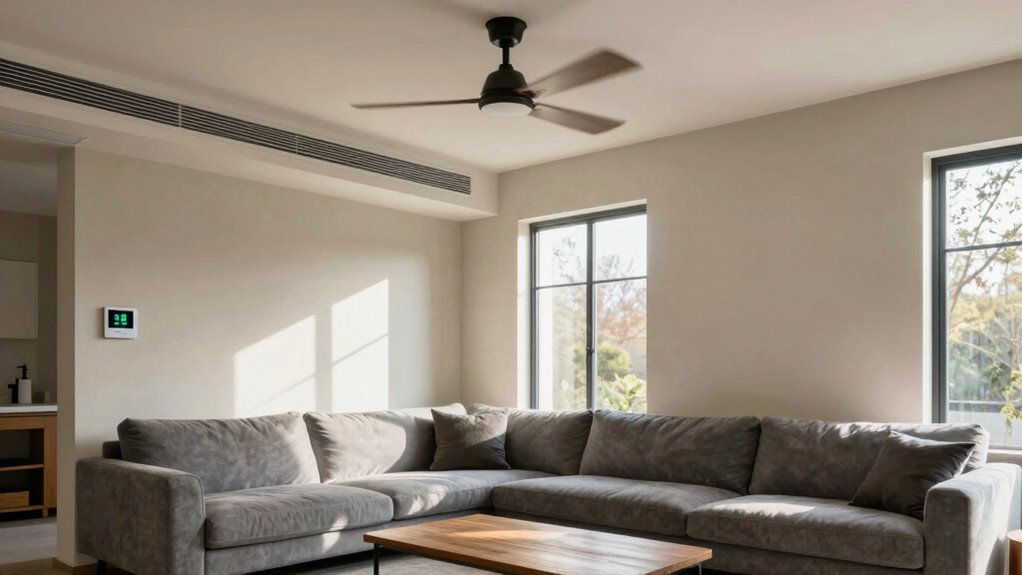
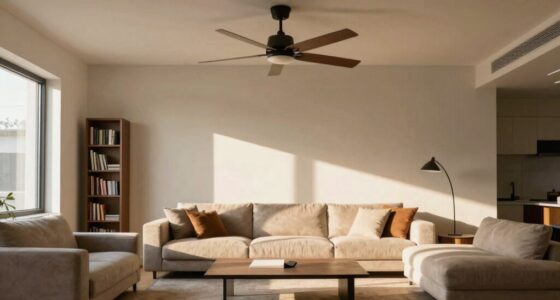
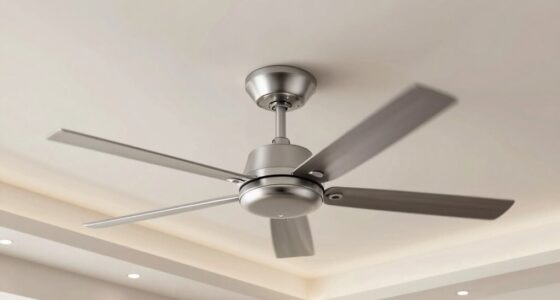
Using fans and thermostats effectively helps you balance airflow throughout your space. Ceiling fans are excellent for circulating air, helping to even out temperature differences between rooms. Set your ceiling fans to rotate counterclockwise in summer to create a cooling breeze, and clockwise in winter to push warm air down. Smart thermostats allow precise control over your heating and cooling systems, enabling you to adjust temperatures based on occupancy and time of day. Use these thermostats to create zones, ensuring each area maintains a comfortable temperature without overworking your HVAC. Incorporating airflow management in your home design can also promote a more welcoming environment for everyone. Proper airflow control can prevent hot or cold spots, ensuring consistent comfort throughout your home. Understanding airflow patterns can help you position fans and vents more effectively for optimal comfort. Additionally, using vent placement strategically can improve overall airflow and temperature balance. Take advantage of these tools to improve overall comfort and airflow balance in your home.
Verify Your HVAC System’s Size and Maintenance
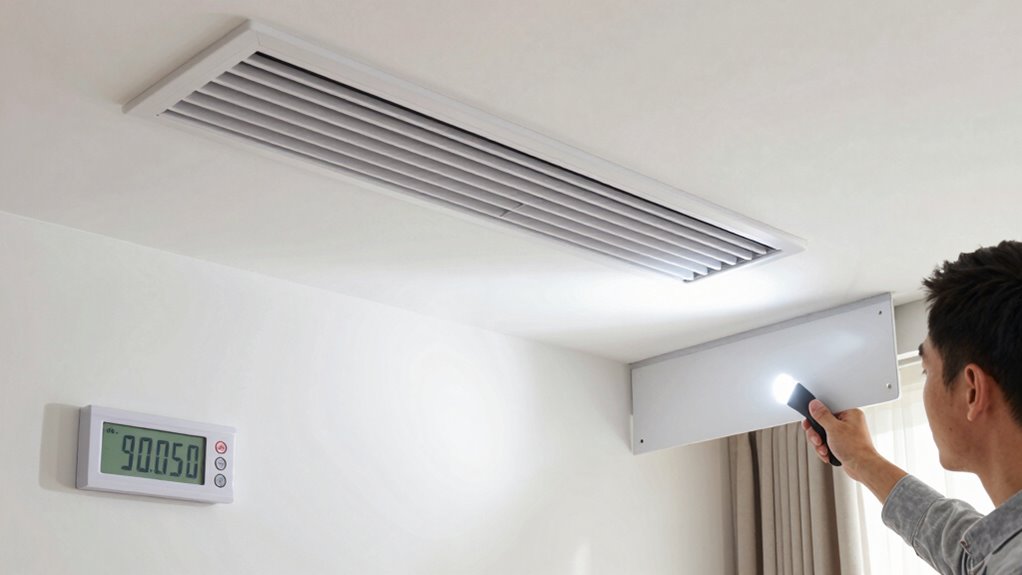
Ensuring your HVAC system is properly sized and well-maintained is essential for effective airflow balancing. An oversized or undersized system struggles to deliver consistent temperatures, while neglecting regular maintenance hampers efficiency. You should verify your HVAC system’s size by consulting a professional to guarantee it matches your home’s needs. Additionally, sticking to a maintenance schedule—like changing filters and scheduling inspections—keeps your system running at its best. Here’s a quick overview:
| Check | Why It Matters | Action Needed |
|---|---|---|
| System size | Prevents inefficient heating/cooling | Professional assessment |
| Air filter condition | Improves airflow and indoor air quality | Replace filters regularly |
| Maintenance schedule | Ensures system longevity and efficiency | Schedule inspections and tune-ups |
Improve Insulation to Boost Airflow and Comfort

Improving your home’s insulation is a key step in boosting airflow and enhancing overall comfort. Proper thermal insulation keeps conditioned air inside and prevents drafts, making your heating and cooling more efficient. Additionally, using effective window treatments reduces heat transfer through windows, stabilizing indoor temperatures. To get started:
- Seal gaps around doors and windows to prevent air leaks.
- Add or upgrade insulation in walls and attic spaces.
- Install thermal curtains or blinds to block drafts and heat loss.
- Consider weatherstripping for windows and doors to improve sealing.
These measures help balance airflow, reduce temperature fluctuations, and create a more comfortable environment throughout your home. Proper insulation and window treatments work together to maximize airflow efficiency and comfort.
Know When to Call a Professional for Help

While many home improvements for airflow can be tackled on your own, there are times when expert help becomes necessary. If you notice persistent uneven temperatures despite your efforts, it’s time to contemplate a professional inspection. A certified HVAC technician can identify underlying issues, such as duct leaks or system inefficiencies, that you might not detect. Sometimes, a system upgrade is the best solution to ensure balanced airflow and comfort throughout your home.
| When to Call a Professional | What They Can Do |
|---|---|
| Persistent airflow issues | Conduct a professional inspection |
| Uneven temperatures | Recommend system upgrades |
| Complex ductwork problems | Optimize your HVAC system for better airflow |
Frequently Asked Questions
How Often Should I Check My HVAC System for Optimal Performance?
You should check your HVAC system for peak performance at least twice a year, ideally during spring and fall. Regular HVAC maintenance helps catch issues early, while airflow troubleshooting ensures even temperatures. During these checks, inspect filters, ducts, and vents, and clean or replace parts as needed. Staying proactive prevents uneven temperatures and keeps your system running efficiently, saving you money and ensuring comfort all year round.
What Are the Signs of Duct Leaks Needing Repair?
Imagine your HVAC system as a water pipe network; if you notice dripping or damp spots, there’s likely a leak. Duct leak signs include uneven airflow, increased energy bills, and musty odors. Repair indicators are visible damage, disconnected ducts, or excessive dust around vents. If you spot these signs, it’s time to inspect and seal your ducts to restore efficiency and comfort in your home.
Can Indoor Plants Affect Airflow and Temperature?
Indoor plants can affect airflow and temperature when placed improperly. If you position plants near vents or airflow pathways, they can cause airflow obstruction, reducing efficient circulation. This may lead to uneven temperatures in your home. To prevent this, keep indoor plants away from heating or cooling vents and make sure they don’t block air vents or ducts. Proper placement allows your HVAC system to work effectively, maintaining balanced indoor temperatures.
How Do Outdoor Weather Changes Influence Indoor Temperature Balance?
Ironically, outdoor weather changes like high outdoor humidity and wind chill can mess with your home’s indoor balance. When humidity rises outside, it often seeps in, making your space feel warmer or damper than it should. Wind chill might cool your walls, pulling heat out through drafts. These fluctuations challenge your indoor temperature, forcing your HVAC to work harder, and leaving you battling unpredictable comfort levels.
Are There Specific Fans or Thermostats Recommended for Uneven Heating?
Yes, you should consider installing smart thermostats and ceiling fans. Smart thermostats allow you to precisely control your indoor temperature, ensuring each room maintains a comfortable level. Ceiling fans help circulate air evenly, preventing hot or cold spots. Together, these tools optimize airflow and temperature regulation, reducing uneven heating. Make sure to choose compatible models that suit your home’s size and layout for the best results.
Conclusion
Think of your home’s airflow like a well-orchestrated symphony; when one instrument falters, the harmony’s off. I once had a neighbor whose uneven temperatures felt like a rollercoaster ride—until she balanced her vents and sealed leaks. Now, her comfort is steady as a metronome. By following this checklist, you’ll turn chaotic drafts into a smooth, even breeze, making your home a cozy refuge where every room feels just right.