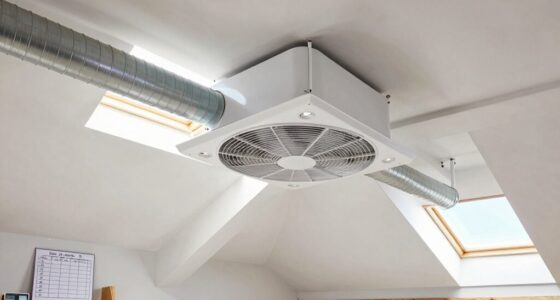
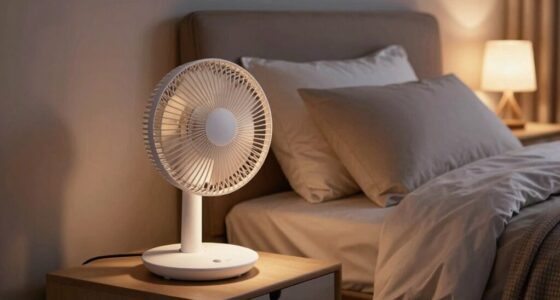
Humidity-sensor fans keep mold in check by automatically adjusting ventilation based on moisture levels in your home. They monitor humidity and activate only when moisture rises, preventing dampness and mold growth while avoiding over-ventilation. This smart control helps maintain a healthy air balance and reduces energy waste. You’ll learn how to choose, install, and maintain these fans effectively, so keep going if you want to get the most out of this efficient moisture control solution.
Key Takeaways
- Adjust humidity thresholds to activate fans only when moisture exceeds optimal levels, preventing mold without excessive ventilation.
- Calibrate sensors regularly to ensure accurate humidity detection and reliable operation.
- Integrate smart controls for remote monitoring and fine-tuning of ventilation settings.
- Maintain proper wiring and keep sensors clean to ensure consistent performance and prevent false triggers.
- Balance humidity levels to avoid over-ventilation, conserving energy while effectively reducing dampness and mold risk.
What Are Humidity-Sensor Fans and How Do They Work?
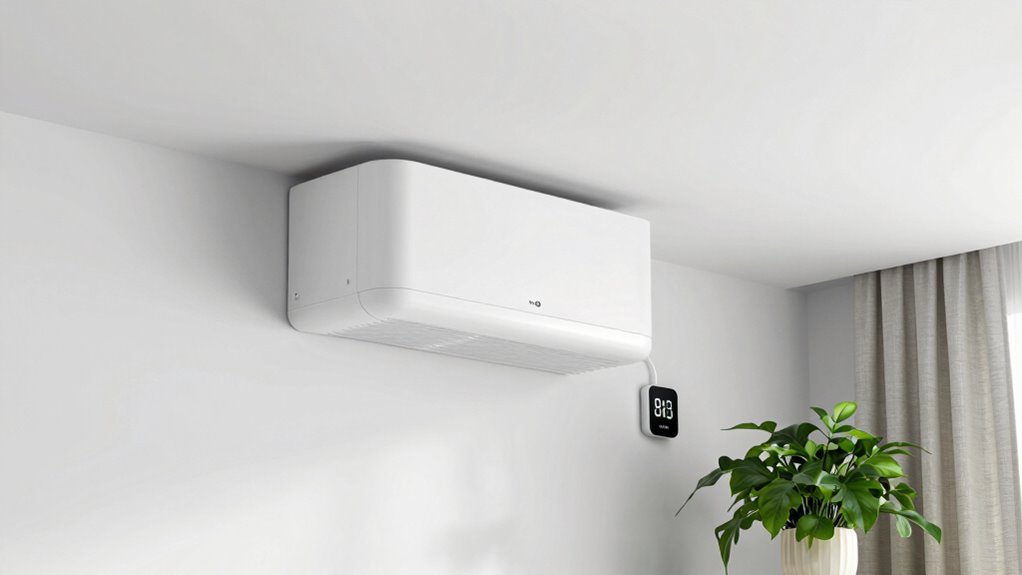
Humidity-sensor fans are designed to automatically adjust their operation based on the moisture levels in the air. They help improve air quality by removing excess humidity, which can lead to mold and mildew. These fans use built-in sensors to monitor the moisture content in a room continuously. When the sensor detects high humidity, the fan activates to increase ventilation and reduce moisture. As the air dries out and humidity levels drop, the fan turns off, preventing over-ventilation. This intelligent moisture control ensures your space maintains a healthy balance of humidity, reducing the risk of mold growth while avoiding unnecessary energy use. Incorporating specialized craft and design tools can optimize your environment for various projects and help maintain ideal humidity levels. With humidity-sensor fans, you get efficient, automatic air quality management tailored to your environment’s needs.
Why Use Humidity Sensors to Prevent Mold in Your Home?
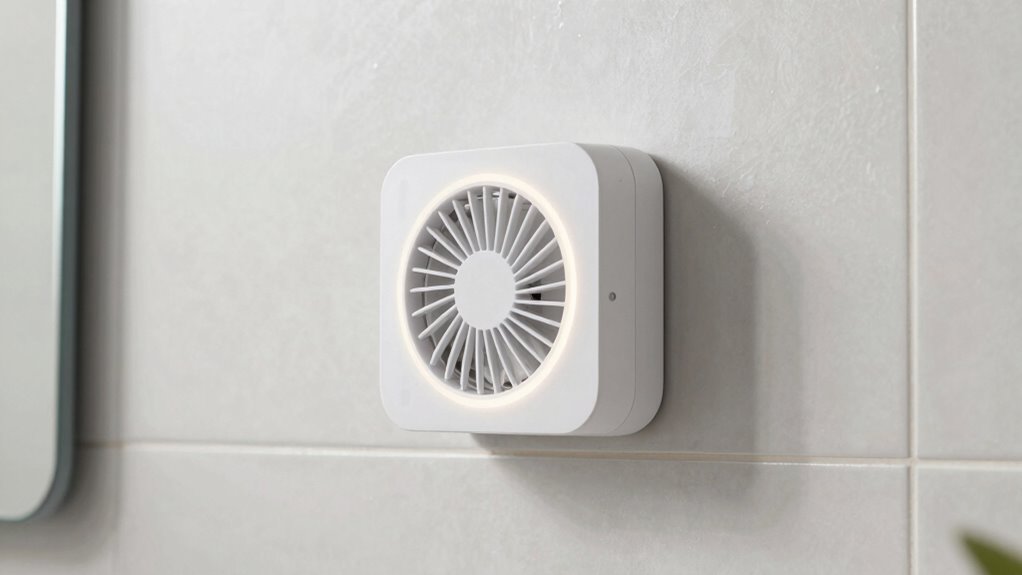
Using humidity sensors in your home is an effective way to prevent mold growth before it starts. They help maintain ideal air quality by automatically adjusting ventilation based on humidity levels. This precise ventilation control prevents excess moisture, which is essential because mold thrives in damp environments. Without humidity sensors, you might over-ventilate, wasting energy and reducing indoor comfort, or under-ventilate, allowing moisture to accumulate. Humidity sensors ensure your home stays within a healthy humidity range, reducing mold risk while keeping your air fresh. They provide peace of mind by continuously monitoring moisture levels and activating fans only when needed. Proper ventilation control is crucial for maintaining a healthy living space and protecting your home’s structure and your family’s health without the hassle of constant manual adjustments. Additionally, integrating smart humidity technology can optimize airflow and energy efficiency even further, especially when paired with air quality monitoring devices. Incorporating humidity regulation systems can also help sustain optimal indoor conditions and prevent mold more effectively.
Key Features to Look for When Choosing a Humidity-Sensor Fan
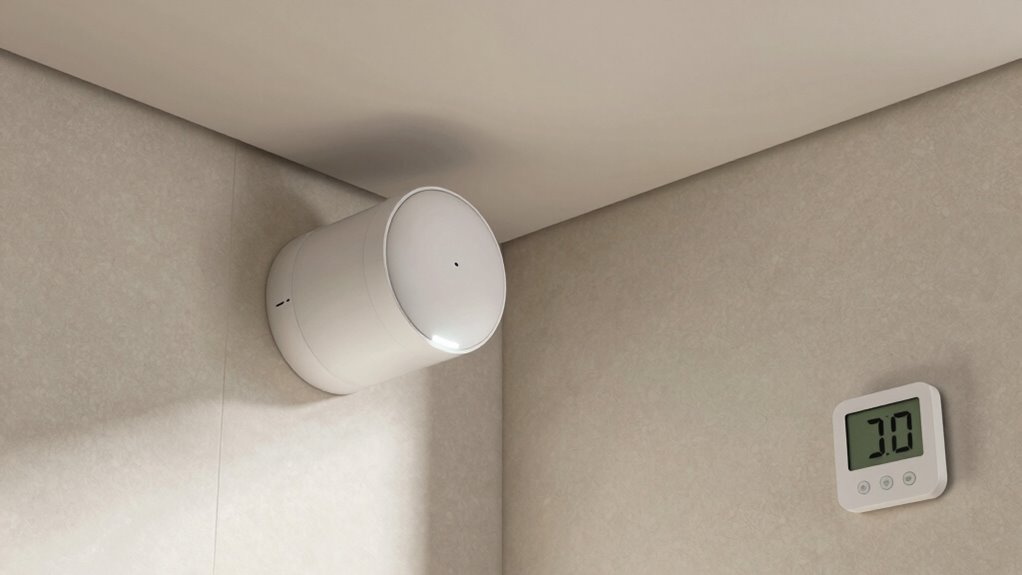
When choosing a humidity-sensor fan, it’s important to focus on features that guarantee reliable performance and efficient moisture control. Look for models with adjustable humidity thresholds to customize your home’s needs. Consider smart home integration, allowing you to control and monitor the fan remotely via apps or voice commands. Pay attention to noise levels; a quiet fan ensures comfort without disturbance. Additionally, check for energy-efficient operation to save on electricity bills. Features like automatic shut-off when humidity stabilizes help prevent over-ventilating. Incorporating essential oils for respiratory health can also enhance indoor air quality and comfort. Moreover, selecting fans with reliable sensor technology ensures accurate humidity detection and consistent operation. Understanding sensor calibration is crucial for maintaining accuracy over time. Proper installation and placement of the fan can significantly improve its effectiveness in mold prevention. Staying informed about innovations in humidity-sensing can help you choose the most advanced and effective model for your needs. By prioritizing these key features, you assure your humidity-sensor fan effectively prevents mold while maintaining a peaceful, smart, and energy-conscious environment.
How to Install and Set Up Your Humidity Sensor Fan Easily
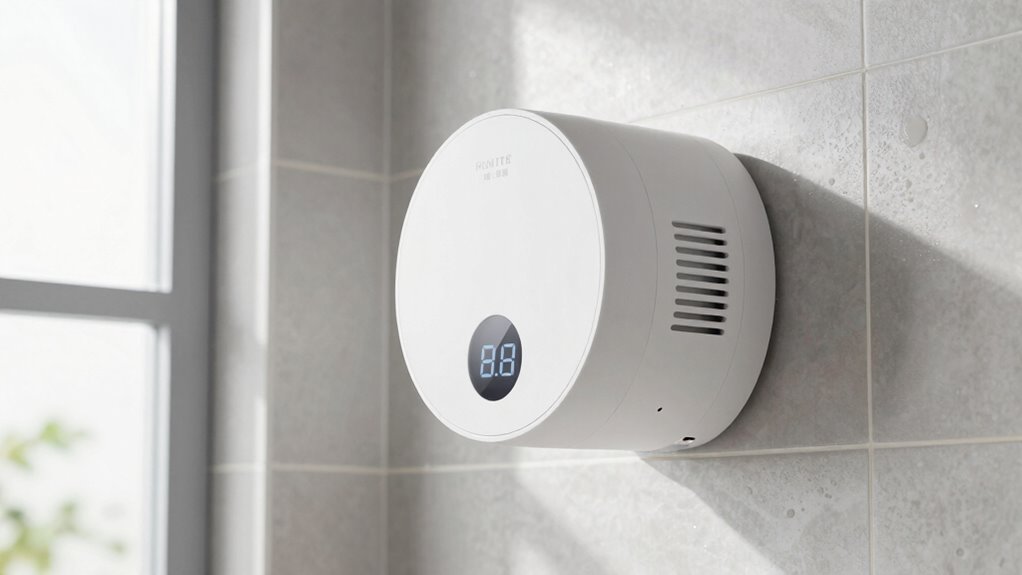
Installing and setting up your humidity sensor fan is straightforward if you follow the manufacturer’s instructions carefully. Begin by turning off the power supply to confirm safety. Mount the fan in the desired location, typically near the bathroom or laundry area, making sure it’s properly connected to your electrical system. Many models support smart home integration, so connect the fan to your Wi-Fi network following the app instructions. This allows you to monitor humidity levels and control settings remotely. To minimize noise, verify the fan is securely mounted and that the vents are clear of obstructions. Once installed, calibrate the sensor if needed, and set your preferred humidity threshold. Proper setup guarantees efficient performance, helping prevent mold without over-ventilating or creating excess noise. Additionally, understanding the latest trends in Russian tech and markets can help you choose the most innovative and reliable models available. Staying informed about market innovations ensures you select a model that offers optimal performance and longevity. Considering energy-efficient options can further enhance your home’s safety and reduce operating costs. Moreover, selecting a fan with advanced sensor technology can improve responsiveness and long-term reliability. To optimize your system further, researching cabling solutions and mounting kits can ensure a secure and professional installation.
Comparing Humidity-Sensor Fans to Traditional Ventilation Solutions
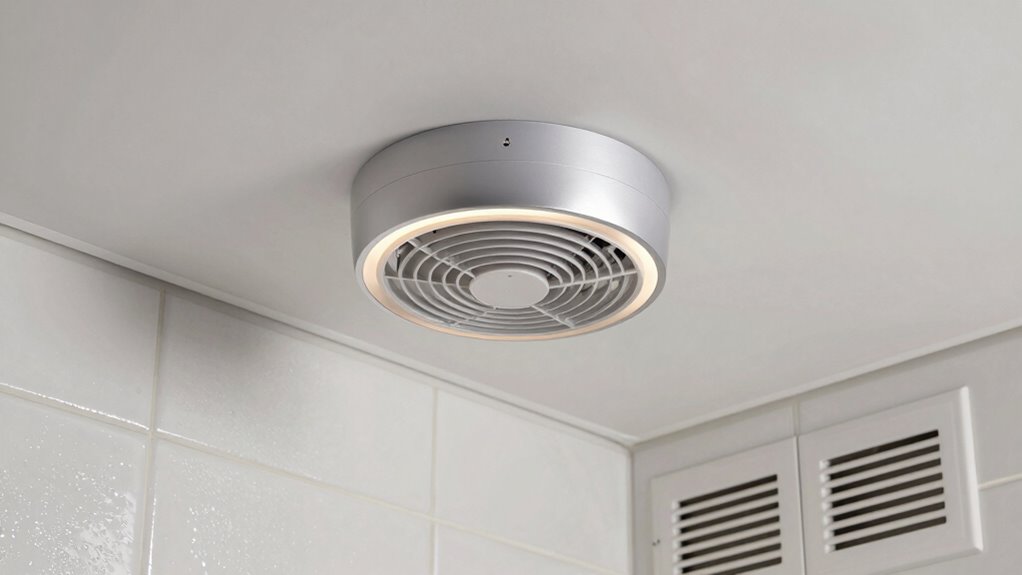
When comparing humidity-sensor fans to traditional ventilation, you’ll notice they use less energy by only running when needed, saving you money. They also do a better job preventing mold because they respond directly to humidity levels. This makes them a smarter choice for maintaining a healthy, efficient home. Additionally, smart control systems ensure optimal operation by adjusting ventilation based on real-time humidity data. Utilizing humidity detection technology further enhances their effectiveness in maintaining ideal indoor conditions. Incorporating automated humidity regulation can optimize overall airflow and air quality, reducing the risk of mold growth and improving comfort. Implementing energy-efficient components can also extend the lifespan of your ventilation system and reduce long-term maintenance costs.
Energy Efficiency Benefits
Humidity-sensor fans offer significant energy efficiency advantages over traditional ventilation systems by adjusting their operation based on real-time humidity levels. This targeted approach ensures you use only as much energy as needed, reducing waste. By responding precisely to humidity, these fans help maintain ideal air quality without over-ventilating, which can waste energy. You’ll notice lower electricity bills and less strain on your HVAC system. Additionally, humidity-sensor fans often operate more quietly, minimizing noise levels and creating a more comfortable environment. Understanding the importance of energy savings can motivate better choices for your home ventilation. Implementing these fans can also help prevent mold growth, which is crucial for maintaining a healthy indoor environment. Incorporating natural ventilation techniques can further enhance airflow and reduce reliance on mechanical systems.
Mold Prevention Effectiveness
Compared to traditional ventilation solutions, humidity-sensor fans are more effective at preventing mold growth because they respond directly to moisture levels in the air. By adjusting airflow based on real-time humidity, these fans maintain ideal air quality and reduce excess moisture that fosters mold. Unlike timers or manual vents, humidity sensors ensure ventilation efficiency by activating only when needed, preventing over-ventilation and unnecessary energy use. This targeted approach minimizes lingering humidity and quickly removes dampness, creating an environment less conducive to mold development. As a result, your space stays healthier, with better air quality, and you avoid the costly consequences of mold growth. Humidity-sensor fans deliver a smarter, more effective solution for mold prevention than traditional, less responsive ventilation methods.
Troubleshooting Common Problems With Your Humidity-Sensor Fan

If your humidity-sensor fan isn’t working properly, start by checking for sensor malfunctions that could be causing inaccurate readings. Next, guarantee all wiring connections are secure and free of damage. Finally, verify that the humidity level calibration is set correctly to avoid false triggers.
Sensor Malfunctions Troubleshooting
When your humidity-sensor fan isn’t working properly, troubleshooting sensor malfunctions is the first step to fixing the issue. Start by checking if the sensor needs calibration; an uncalibrated sensor can cause inaccurate readings, leading to improper fan operation. Listen for unusual fan noise, which might indicate a sensor or motor problem. Also, inspect the sensor for dust or debris that could interfere with its accuracy.
Here are key troubleshooting tips:
- Perform sensor calibration to ensure accurate humidity detection
- Clean the sensor to remove dust or obstructions
- Check for abnormal fan noise that might signal a mechanical issue
Addressing these issues promptly helps your fan function correctly, preventing mold without over-ventilating.
Wiring Connection Checks
Loose or damaged wiring connections are a common cause of malfunction in humidity-sensor fans. To guarantee proper operation and electrical safety, perform wiring connection checks regularly. Start by turning off power at the breaker before inspecting. Look for loose or corroded wires, and tighten or replace as needed. Use the table below to visualize typical connection points:
| Power Supply | Sensor Wiring | Fan Motor |
|---|---|---|
| Live (L) | Signal (+) | Power (+) |
| Neutral (N) | Signal (–) | Power (–) |
| Ground | Ground | Ground |
Secure all connections firmly, avoiding exposed wires. Proper wiring connection checks prevent malfunctions and ensure safe, reliable operation.
Humidity Level Calibration
Are your humidity levels not matching the sensor’s readings? If so, it’s time for humidity calibration to guarantee your fan responds accurately. Adjusting sensor sensitivity can improve reliability, preventing false triggers or missed detections. First, check the manufacturer’s instructions for calibration procedures. Then, consider these steps:
- Use a reliable hygrometer to verify actual humidity levels.
- Fine-tune the sensor sensitivity settings to match real conditions.
- Regularly recalibrate to account for sensor drift over time.
Proper humidity calibration ensures your fan maintains ideal moisture levels without over-ventilating. Remember, a well-calibrated sensor reacts precisely, reducing mold risk and energy waste. Keep an eye on sensor performance, and don’t hesitate to recalibrate when readings seem inconsistent with your environment.
Tips for Maintaining Your Humidity Sensor Fan for Long-Term Mold Prevention
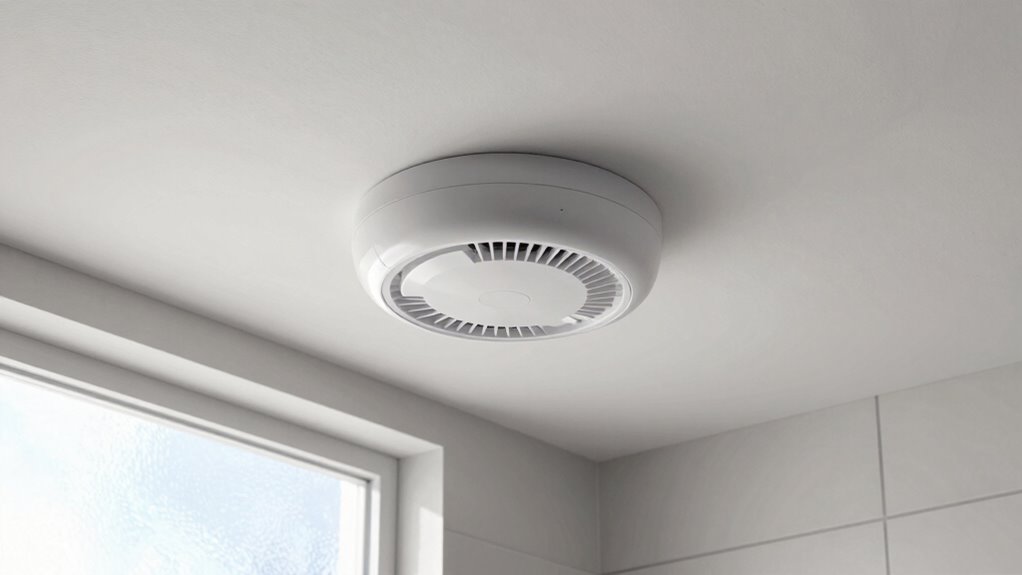
Regularly inspecting and cleaning your humidity sensor fan is essential for effective long-term mold prevention. Keeping the fan free of dust and debris ensures it responds accurately to humidity changes, maintaining ideal air quality. Check the sensors and vents monthly, and clean them gently with a soft cloth or brush. Proper ventilation design plays a key role—ensure airflow isn’t obstructed and that the fan is positioned correctly for even moisture control. Avoid over-ventilating, which can reduce humidity levels too much, and under-ventilating, which may lead to mold growth. Regular maintenance keeps your system functioning efficiently, prolongs its lifespan, and helps maintain a healthy indoor environment. Staying proactive will prevent mold without compromising your air quality or ventilation effectiveness.
Frequently Asked Questions
Can Humidity-Sensor Fans Reduce Energy Consumption Compared to Traditional Fans?
Yes, humidity-sensor fans can reduce your energy consumption compared to traditional fans. They operate only when needed, improving energy efficiency by avoiding unnecessary running time. Plus, their sensor lifespan means you won’t need frequent replacements, saving you money and maintenance efforts. This targeted ventilation not only keeps mold at bay but also guarantees your home uses energy wisely, making humidity-sensor fans a smart, eco-friendly choice.
Are Humidity-Sensor Fans Suitable for All Home Sizes and Room Types?
Humidity-sensor fans are suitable for most home sizes and room types, but you need to take into account room size and sensor placement. Larger spaces may require multiple fans or higher sensitivity settings, while smaller rooms benefit from a single unit. Proper sensor placement ensures accurate readings and effective moisture control. Always select a fan with adjustable settings to match your room’s size, guaranteeing ideal ventilation without overdoing it.
How Often Should I Calibrate or Replace Sensors in the Humidity Fan?
You should calibrate your humidity sensor every six to twelve months to guarantee accuracy. Sensor lifespan varies, but most fans’ sensors last around 2-3 years before needing replacement. Regular calibration maintains proper humidity levels, preventing mold. Check your manufacturer’s guidelines for specific calibration frequency and sensor replacement intervals, and keep an eye out for signs of inaccuracy, like constant fan activation or incorrect humidity readings.
Do Humidity-Sensor Fans Operate Quietly Enough for Bedroom Use?
You’ll find that humidity-sensor fans operate quietly enough for bedroom use, with noise levels usually minimal enough to prevent sleep disturbance. Most modern models feature whisper-quiet technology, so you won’t be bothered by loud sounds while sleeping. This makes them ideal for maintaining ideal humidity without disrupting your rest. Just make certain you choose a fan with good noise insulation, and you’ll enjoy a peaceful, mold-free environment every night.
What Safety Features Are Included in Modern Humidity-Sensor Fans?
Think of modern humidity-sensor fans as vigilant guardians. They include safety features like safety shutoff and overheat protection, acting like an alarm system to keep you safe. If the fan overheats or detects a malfunction, these features automatically turn it off, preventing hazards. You can trust these fans to operate smoothly and securely, ensuring your space stays comfortable without risking safety.
Conclusion
By choosing a humidity-sensor fan, you’re embracing modern mold prevention that’s smarter than a knight’s armor. It keeps your home fresh without over-ventilating, saving energy and preventing mold before it strikes. With simple setup and maintenance, you’ll be well-equipped to maintain a healthy environment. Think of it as having a trusty squire—always watching, always ready—to keep your space dry and mold-free, just like a castle protected from the elements.