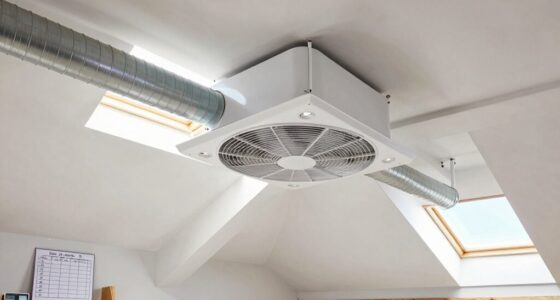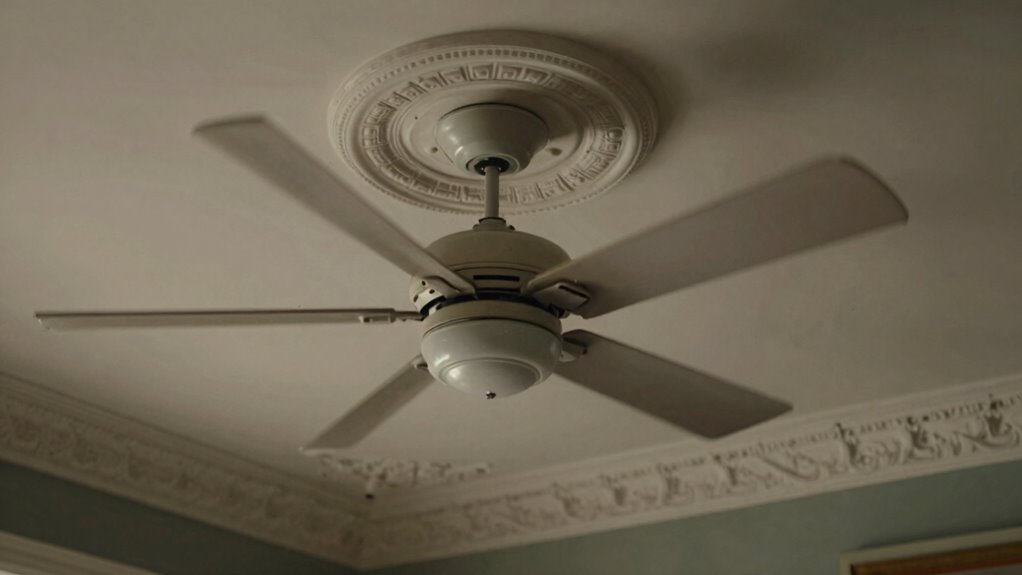

One common mistake that wastes airflow is installing your ceiling fan too low or in a corner where it doesn’t circulate air efficiently. Poor placement can cause uneven airflow, hot or cold spots, and force your HVAC system to work harder, increasing energy bills. If you place the fan too close to walls or furniture, it reduces effectiveness. Proper placement maximizes airflow and energy savings, and you’ll discover more tips to avoid these mistakes as you continue.
Key Takeaways
- Installing fans too low or in corners reduces airflow efficiency and increases energy consumption.
- Placing fans near walls or furniture causes vibrations, noise, and uneven air distribution.
- Positioning fans over sitting or sleeping areas creates hot or cold spots, disrupting airflow.
- High ceiling fans that hang too low or too high diminish airflow and safety.
- Incorrect fan placement can strain the motor, shorten lifespan, and lead to higher maintenance costs.
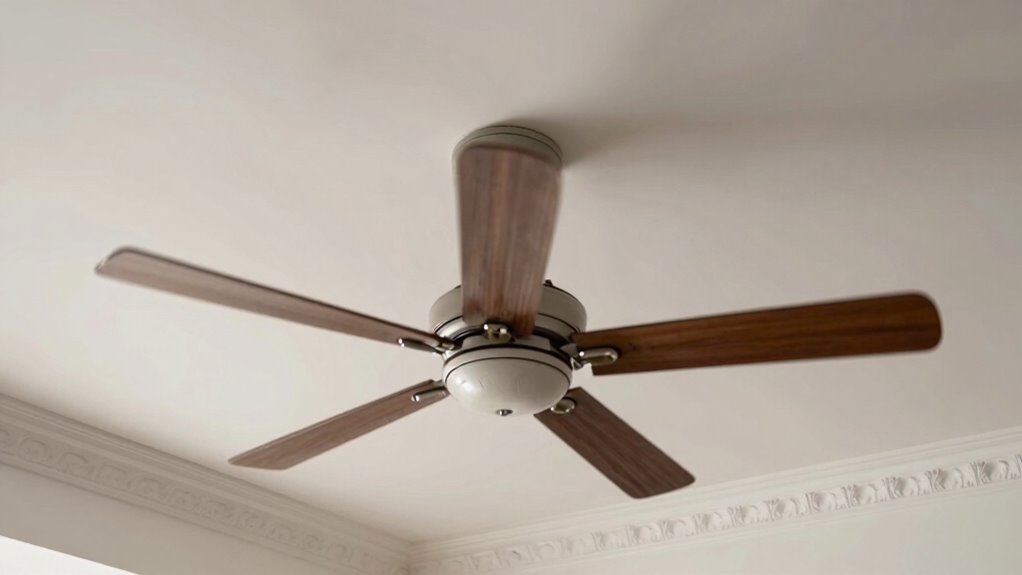
Installing a ceiling fan might seem straightforward, but placing it in the wrong spot can lead to poor airflow and discomfort. When you don’t consider the right location, your fan won’t operate as efficiently as it should, wasting energy and increasing your utility bills. Proper placement is essential for maximizing energy efficiency, which means you get the most cooling or heating benefit with the least power consumption. If your fan is installed too low or in a corner, it won’t circulate air effectively, forcing your HVAC system to work harder to maintain comfort. This extra effort not only wastes energy but also shortens your system’s lifespan.
Proper placement of a ceiling fan ensures efficient airflow and reduces energy waste.
Another key aspect is noise reduction. When you place the fan too close to walls or in cramped spaces, vibrations and airflow noise can become noticeable and disruptive. A poorly positioned fan can create unnecessary noise, making your room less peaceful. To reduce noise, you want to install the fan in a spot where it has enough clearance from walls and furniture, allowing smooth, balanced movement of the blades. This helps minimize vibrations and prevents the motor from straining, which can lead to louder operation over time. Additionally, considering smart design principles can help you select the optimal spot for both comfort and efficiency. Proper placement not only improves airflow but also contributes to a more aesthetically pleasing environment.
You should also avoid installing your ceiling fan directly over furniture or in areas where people often sit or sleep. Doing so can cause uneven airflow, making some parts of the room too cold or too warm, defeating the purpose of your fan’s cooling or heating benefits. Instead, find a central location on the ceiling that allows the blades to sweep across the maximum area of the room. This ensures even distribution of air, reducing the need for additional cooling or heating and maximizing energy use. Proper air circulation is vital for maintaining a comfortable climate and avoiding hot or cold spots.
Pay attention to the height of the ceiling as well. Fans installed too low can cause safety hazards and create more noise due to increased vibrations. Conversely, placing it too high might lessen its effectiveness. Ideally, the blades should hang about 8 to 10 inches below the ceiling for standard-height rooms, and about 10 to 12 inches below for high ceilings. Proper height guarantees maximum airflow and minimizes noise, helping you enjoy a quieter, more energy-efficient environment. Proper installation height is crucial for optimal fan performance and safety.
As an affiliate, we earn on qualifying purchases.
Frequently Asked Questions
How High Should a Ceiling Fan Be Installed for Optimal Airflow?
You should install your ceiling fan so that the blades are about 8 to 9 feet above the floor for ideal airflow efficiency. This height allows the fan to circulate air effectively without causing discomfort or noise. Proper fan height ensures maximum airflow, keeps the room comfortable, and prevents unnecessary strain on the motor. Adjusting the fan to this height helps you enjoy better cooling and energy savings.
Can Ceiling Fan Placement Affect Energy Efficiency?
Like a conductor shaping a symphony, your ceiling fan’s placement influences energy efficiency. Incorrect positioning can disrupt ventilation patterns and cause airflow disruption, making your system work harder. When your fan is poorly placed, it struggles to circulate air properly, increasing energy consumption. Proper placement guarantees smooth airflow, reduces strain on your HVAC, and saves you money, turning your fan into an efficient conductor rather than a disruptive force in your home’s climate harmony.
Is It Better to Install Fans in Corners or Center of the Room?
It’s better to install fans in a centralized position rather than at corners. Centralized placement guarantees even airflow across the entire room, keeping everyone comfortable and reducing hot or cold spots. Corner placement can restrict airflow and create uneven temperature zones, making your cooling or heating less efficient. By placing your ceiling fan in the center, you maximize its effectiveness, improve energy efficiency, and enjoy a more balanced indoor climate.
How Does Ceiling Height Influence Fan Placement Choices?
When ceiling height is tall, you should place fans lower, so airflow reaches everyone, creating a cooling breeze rather than a distant gust. Conversely, in rooms with lower ceilings, fans should be installed closer to the ceiling to avoid obstruction. The right fan placement depends on ceiling height, ensuring ideal airflow and comfort. Ignoring this can make your fan seem ineffective, wasting energy and leaving you feeling less refreshed.
What Are Common Signs of Poor Fan Placement?
If your fan’s fan directional feels off or the room feels unevenly cooled or heated, you likely have poor fan placement. Signs include inconsistent airflow, dead zones, or excessive noise. For larger rooms, the fan should be positioned to maximize airflow across the entire space, while in smaller rooms, it needs proper height and direction. Adjusting the fan’s fan directional and placement can improve comfort and efficiency.
As an affiliate, we earn on qualifying purchases.
Conclusion
By paying a little extra attention to your ceiling fan’s placement, you can subtly enhance your comfort without much fuss. Avoiding common mistakes ensures the breeze flows smoothly, creating a cozy atmosphere that feels just right. When your fan is thoughtfully positioned, it works quietly in the background, whispering coolness throughout the room. Sometimes, a small adjustment can make a world of difference, turning your space into a haven of invigorating ease and gentle, effortless circulation.
As an affiliate, we earn on qualifying purchases.
As an affiliate, we earn on qualifying purchases.